Bacchus | Caravaggio | 1595-97
About the artwork:
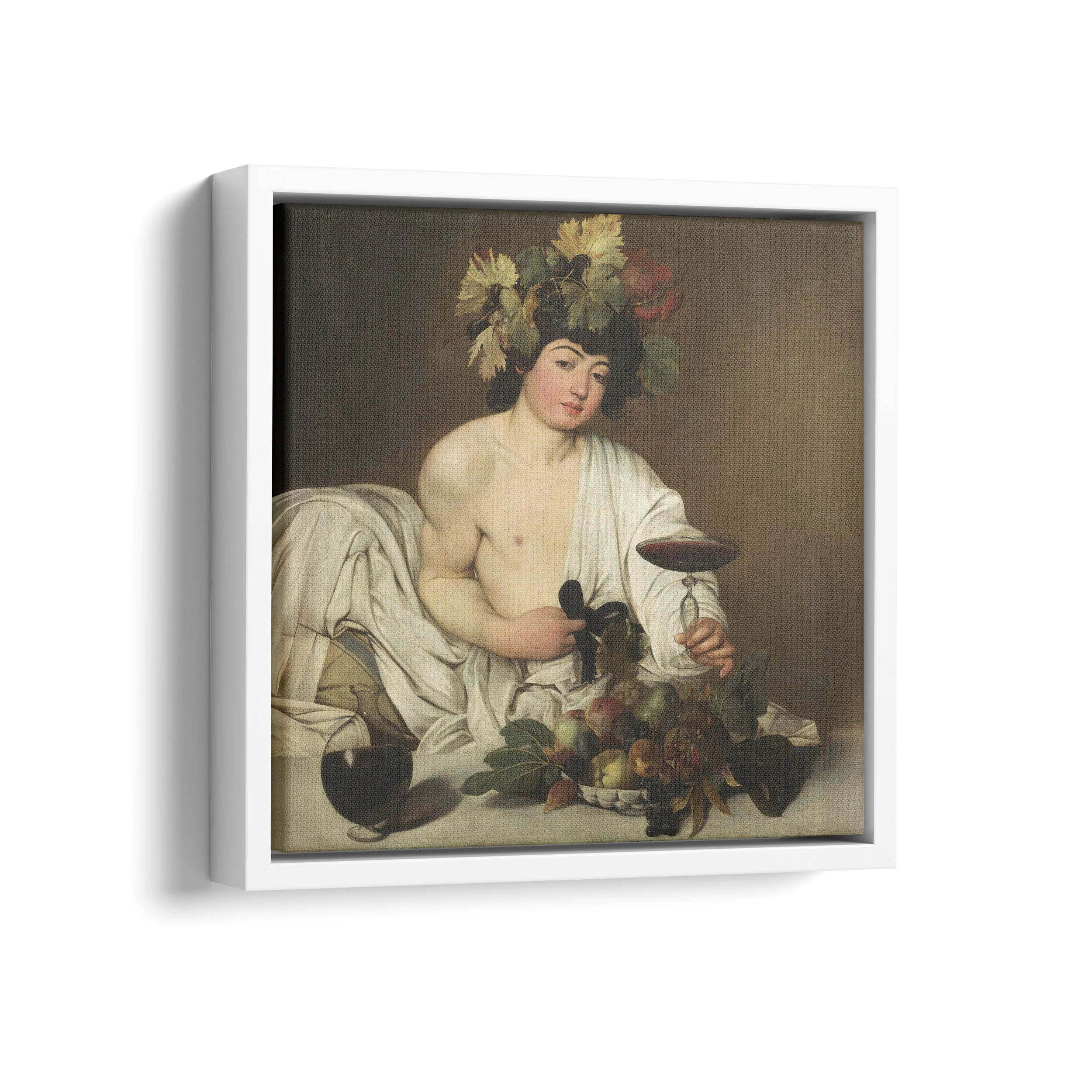
Caravaggio’s Bacchus (1595–97) offers a startlingly humanized vision of the Roman god of wine, shown as a flushed and imperfect youth who invites the viewer to share in his goblet. The table is set with a basket of fruit, simultaneously ripe and decaying, underscoring the vanitas theme of pleasure’s transience. Yet the painting holds another secret: in the glass carafe of wine at the table’s edge, Caravaggio embedded a minuscule self-portrait, visible only with careful examination or modern imaging techniques. This hidden detail transforms the work into a witty act of self-insertion, reminding us that the artist himself lurks behind the myth, controlling the illusion. Through this blend of sensual invitation, symbolic decay, and covert self-revelation, Caravaggio collapses the distance between divinity and humanity, and between artifice and reality.
Product Information
Product Information
Shipping & Returns
Shipping & Returns



Bacchus | Caravaggio | 1595-97
Bacchus | Caravaggio | 1595-97
About the artwork:
Caravaggio’s Bacchus (1595–97) offers a startlingly humanized vision of the Roman god of wine, shown as a flushed and imperfect youth who invites the viewer to share in his goblet. The table is set with a basket of fruit, simultaneously ripe and decaying, underscoring the vanitas theme of pleasure’s transience. Yet the painting holds another secret: in the glass carafe of wine at the table’s edge, Caravaggio embedded a minuscule self-portrait, visible only with careful examination or modern imaging techniques. This hidden detail transforms the work into a witty act of self-insertion, reminding us that the artist himself lurks behind the myth, controlling the illusion. Through this blend of sensual invitation, symbolic decay, and covert self-revelation, Caravaggio collapses the distance between divinity and humanity, and between artifice and reality.
Original: $459.85
-70%$459.85
$137.96Product Information
Product Information
Shipping & Returns
Shipping & Returns
Description
About the artwork:
Caravaggio’s Bacchus (1595–97) offers a startlingly humanized vision of the Roman god of wine, shown as a flushed and imperfect youth who invites the viewer to share in his goblet. The table is set with a basket of fruit, simultaneously ripe and decaying, underscoring the vanitas theme of pleasure’s transience. Yet the painting holds another secret: in the glass carafe of wine at the table’s edge, Caravaggio embedded a minuscule self-portrait, visible only with careful examination or modern imaging techniques. This hidden detail transforms the work into a witty act of self-insertion, reminding us that the artist himself lurks behind the myth, controlling the illusion. Through this blend of sensual invitation, symbolic decay, and covert self-revelation, Caravaggio collapses the distance between divinity and humanity, and between artifice and reality.