David with the Head of Goliath | Caravaggio | 1609-10
About the artwork:
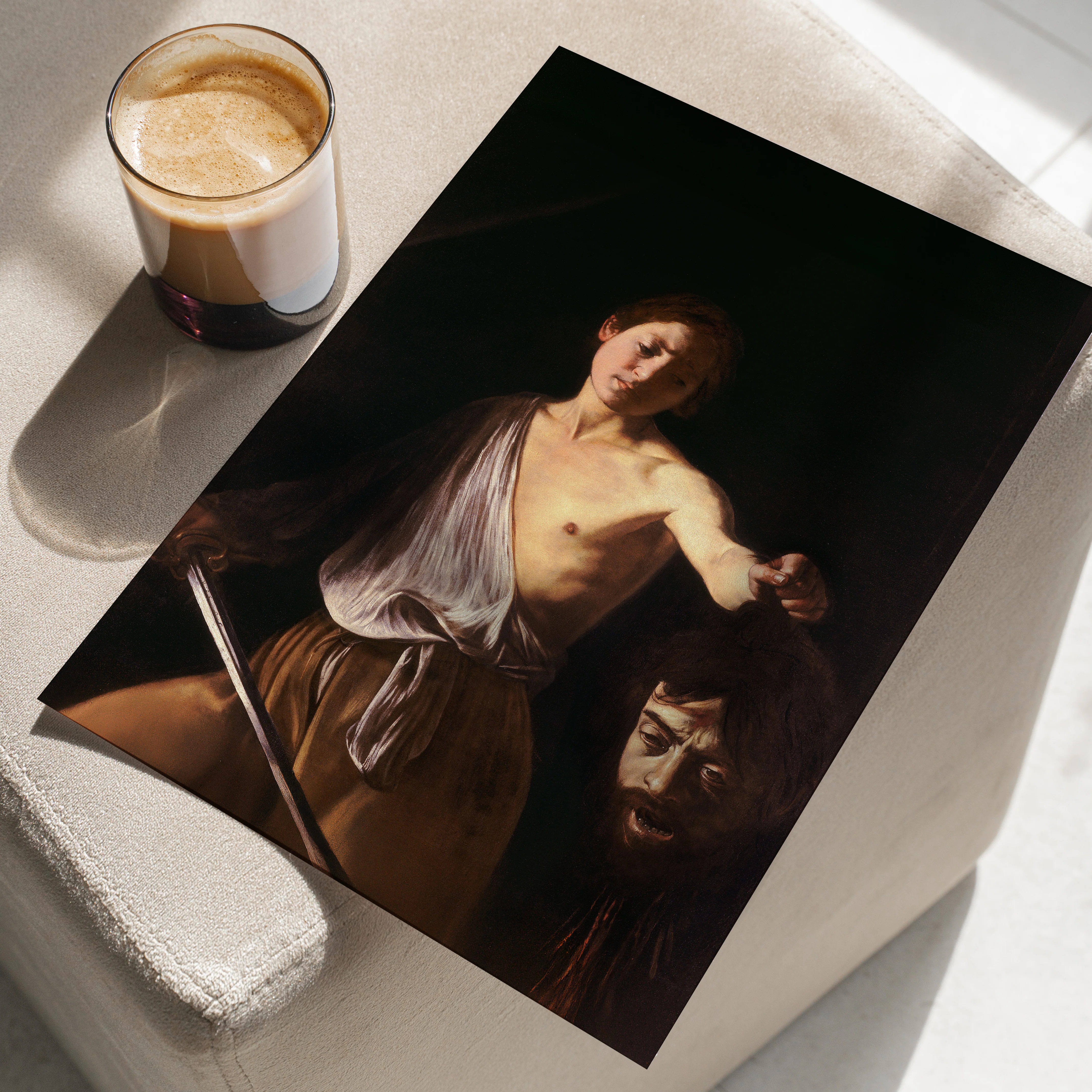
David with the Head of Goliath (1609–10) is one of Caravaggio’s most haunting and introspective works, merging biblical drama with personal confession. At first glance, it depicts the triumphant young David holding the severed head of the giant Goliath—but a closer look reveals something far more unsettling: both figures are Caravaggio. The youthful David is an idealized version of the artist, while the decapitated head is a brutal self-portrait, lifeless and bloodied. Painted during the final years of his life, likely while seeking a papal pardon for a murder he committed, the work becomes a psychological and spiritual reckoning. The inscription on the sword, H-AS OS, is believed to reference the Latin phrase humilitas occidit superbiam ("humility kills pride"), underscoring the painting’s themes of remorse, self-judgment, and the desperate hope for redemption. This is not a scene of biblical victory, but an intimate portrayal of guilt, identity, and inner torment.
Product Information
Product Information
Shipping & Returns
Shipping & Returns


David with the Head of Goliath | Caravaggio | 1609-10
About the artwork:
David with the Head of Goliath (1609–10) is one of Caravaggio’s most haunting and introspective works, merging biblical drama with personal confession. At first glance, it depicts the triumphant young David holding the severed head of the giant Goliath—but a closer look reveals something far more unsettling: both figures are Caravaggio. The youthful David is an idealized version of the artist, while the decapitated head is a brutal self-portrait, lifeless and bloodied. Painted during the final years of his life, likely while seeking a papal pardon for a murder he committed, the work becomes a psychological and spiritual reckoning. The inscription on the sword, H-AS OS, is believed to reference the Latin phrase humilitas occidit superbiam ("humility kills pride"), underscoring the painting’s themes of remorse, self-judgment, and the desperate hope for redemption. This is not a scene of biblical victory, but an intimate portrayal of guilt, identity, and inner torment.
Original: $297.82
-70%$297.82
$89.35Product Information
Product Information
Shipping & Returns
Shipping & Returns
Description
About the artwork:
David with the Head of Goliath (1609–10) is one of Caravaggio’s most haunting and introspective works, merging biblical drama with personal confession. At first glance, it depicts the triumphant young David holding the severed head of the giant Goliath—but a closer look reveals something far more unsettling: both figures are Caravaggio. The youthful David is an idealized version of the artist, while the decapitated head is a brutal self-portrait, lifeless and bloodied. Painted during the final years of his life, likely while seeking a papal pardon for a murder he committed, the work becomes a psychological and spiritual reckoning. The inscription on the sword, H-AS OS, is believed to reference the Latin phrase humilitas occidit superbiam ("humility kills pride"), underscoring the painting’s themes of remorse, self-judgment, and the desperate hope for redemption. This is not a scene of biblical victory, but an intimate portrayal of guilt, identity, and inner torment.