✨ New Arrivals Just Dropped!Explore
HomeStore

Democritus, the Laughing Philosopher | Johannes Moreelse | c. 1630

Product image 1
Product image 2
Product image 3
Product image 4
Product image 5
Product image 6
Product image 7
Product image 8

Democritus, the Laughing Philosopher | Johannes Moreelse | c. 1630

Democritus, the Laughing Philosopher | Johannes Moreelse | c. 1630

About the artwork:

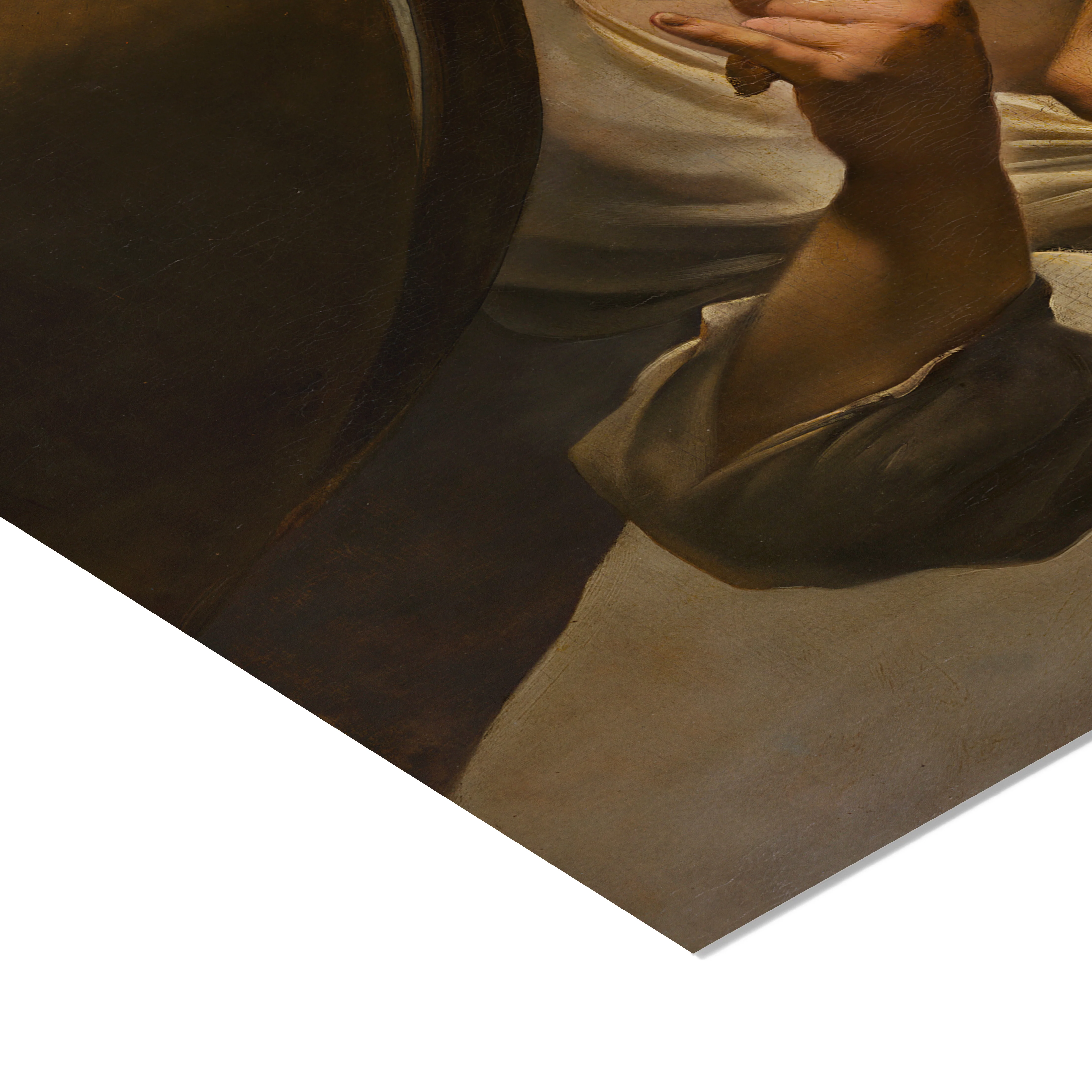
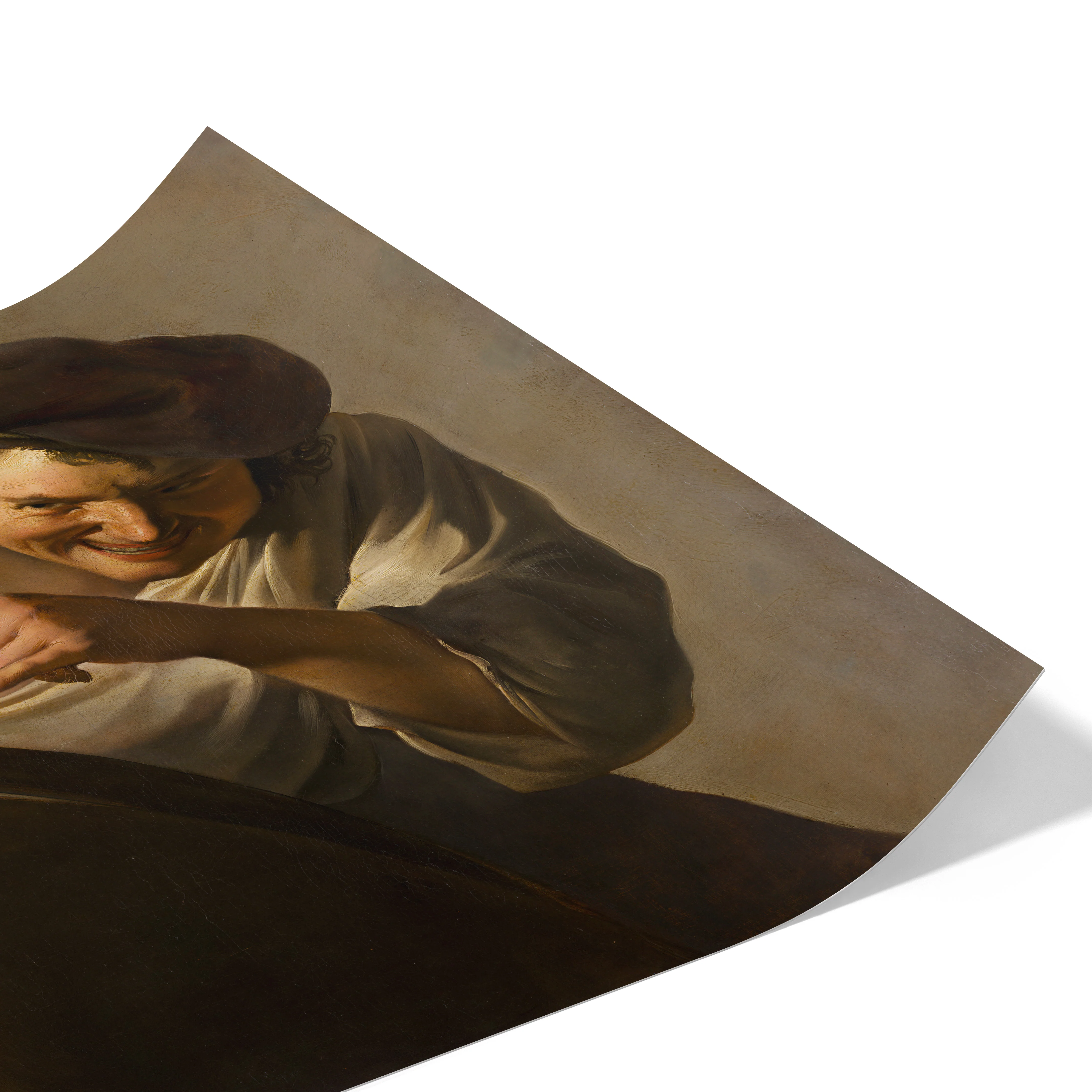
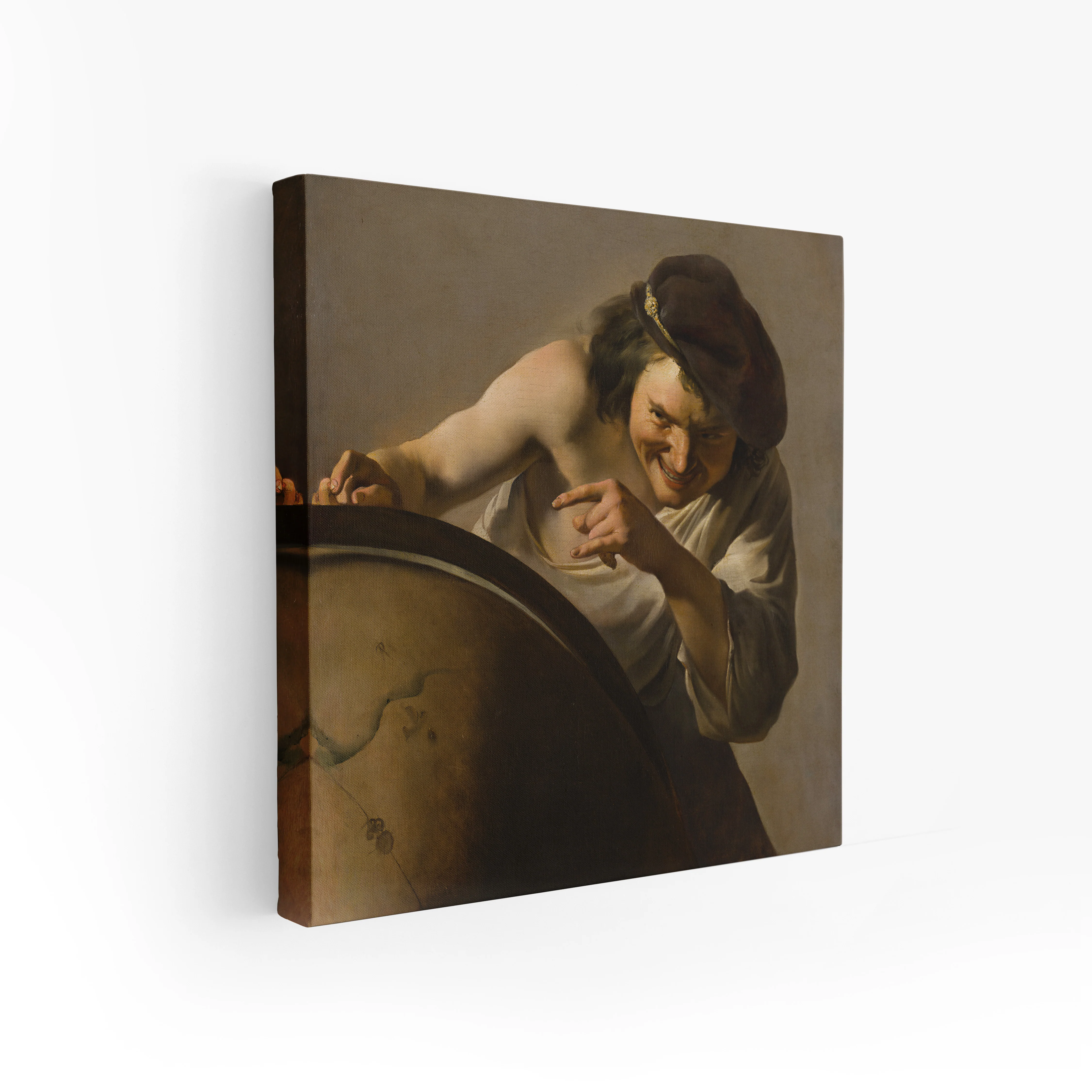
Democritus, the Laughing Philosopher (c. 1630) by Johannes Moreelse captures the ancient Greek thinker famed for his cheerful mockery of human vanity, portraying him in half-length with a broad, almost mischievous grin that embodies the philosopher’s reputation for laughing at the transience and folly of mankind. Moreelse, influenced by Caravaggist chiaroscuro during his time in Rome, uses dramatic contrasts of light and dark to heighten the expressive immediacy of Democritus’s face, creating a vivid tronie-like portrait rather than a formal history painting. The work participates in a broader 17th-century Dutch and European fascination with Democritus paired with his counterpart Heraclitus—the weeping philosopher—symbolizing contrasting attitudes toward life’s absurdities. Through the lively physiognomy and almost theatrical intensity of the laughter, Moreelse transforms philosophical satire into visual energy, suggesting that wisdom can reside in humor as much as in solemn thought.

Select Select Size
Select Frame Options
From $459.85
Democritus, the Laughing Philosopher | Johannes Moreelse | c. 1630
$459.85

Product Information

Shipping & Returns

Description

About the artwork:
Democritus, the Laughing Philosopher (c. 1630) by Johannes Moreelse captures the ancient Greek thinker famed for his cheerful mockery of human vanity, portraying him in half-length with a broad, almost mischievous grin that embodies the philosopher’s reputation for laughing at the transience and folly of mankind. Moreelse, influenced by Caravaggist chiaroscuro during his time in Rome, uses dramatic contrasts of light and dark to heighten the expressive immediacy of Democritus’s face, creating a vivid tronie-like portrait rather than a formal history painting. The work participates in a broader 17th-century Dutch and European fascination with Democritus paired with his counterpart Heraclitus—the weeping philosopher—symbolizing contrasting attitudes toward life’s absurdities. Through the lively physiognomy and almost theatrical intensity of the laughter, Moreelse transforms philosophical satire into visual energy, suggesting that wisdom can reside in humor as much as in solemn thought.