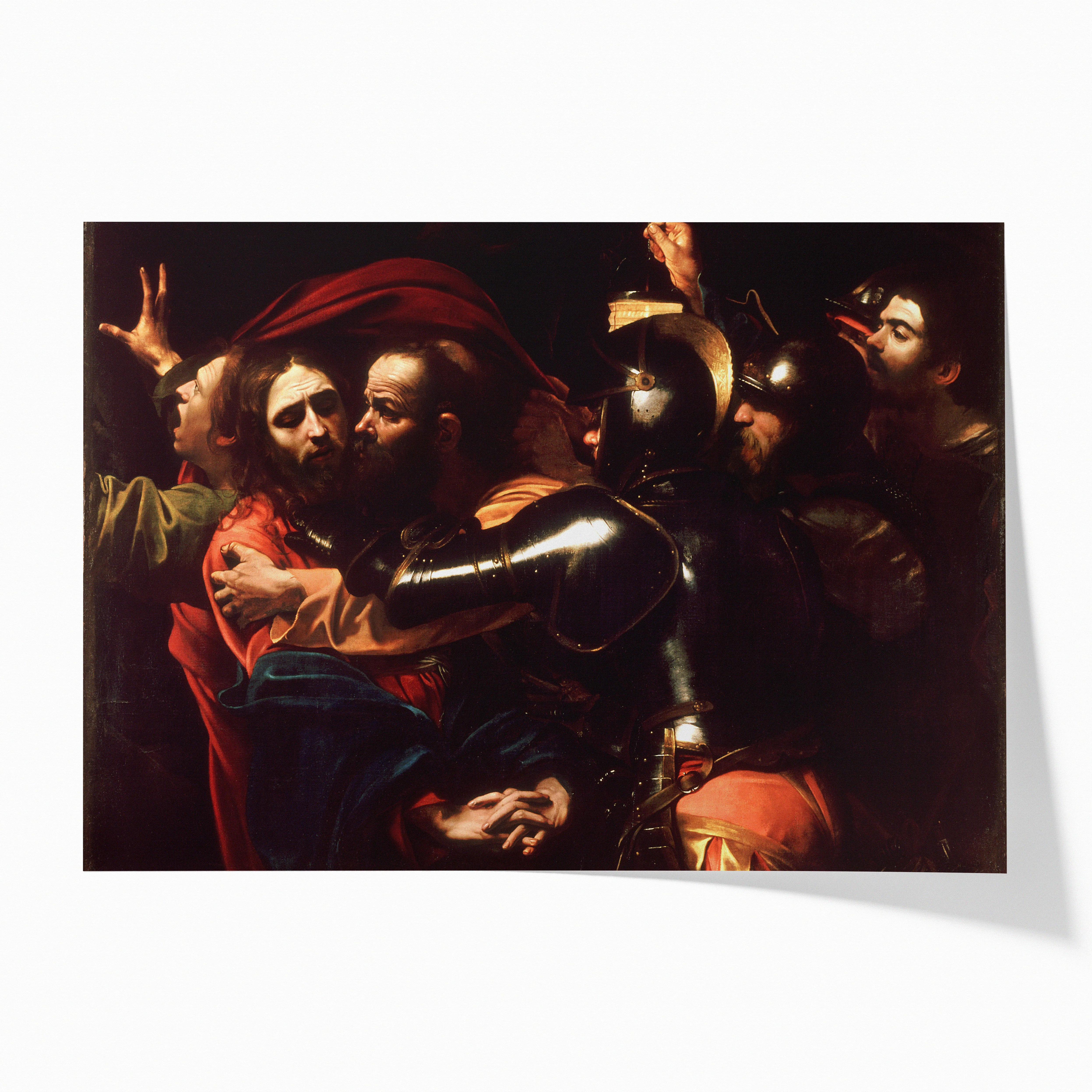
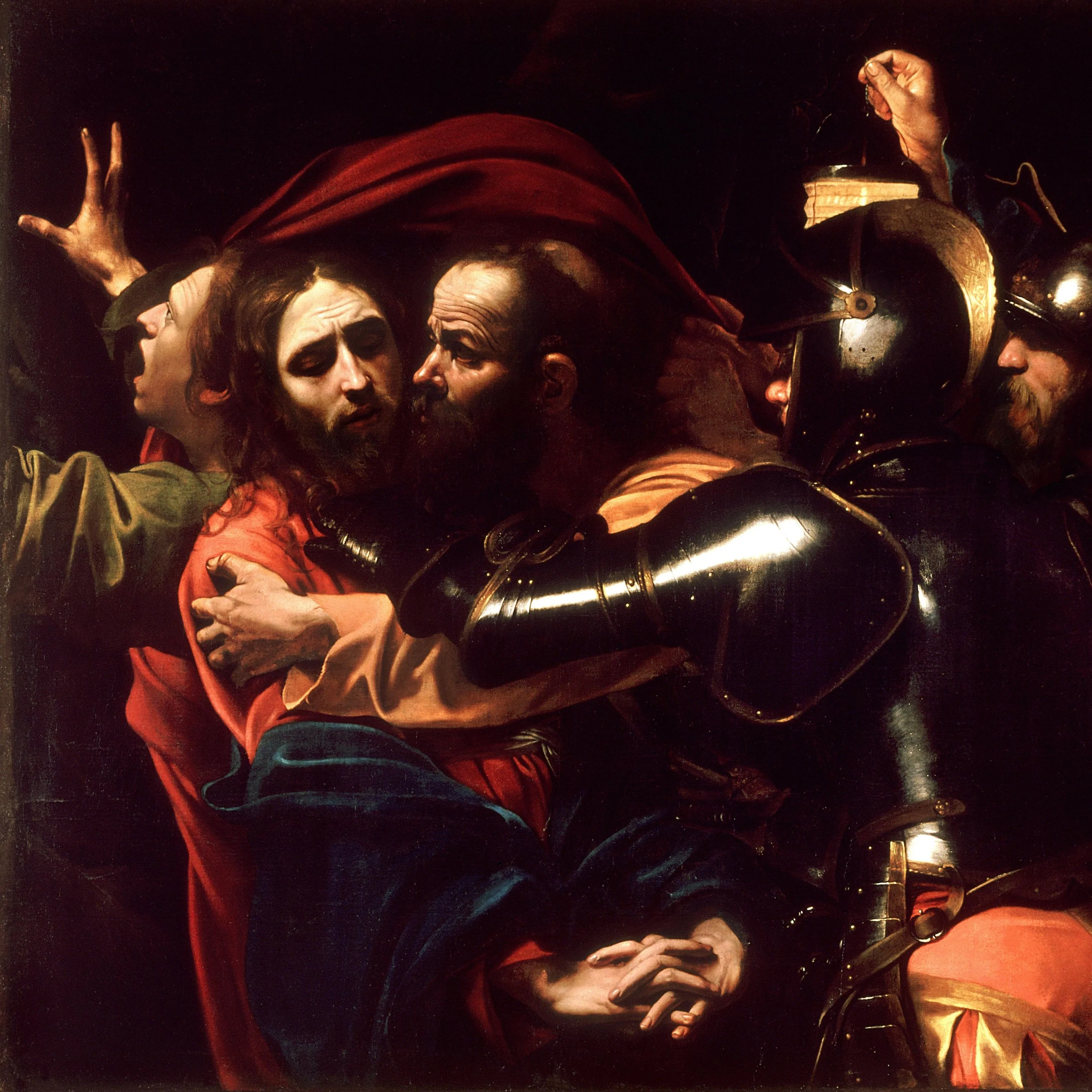
Ecce Homo | José de Ribera | c. 1620
About the artwork:
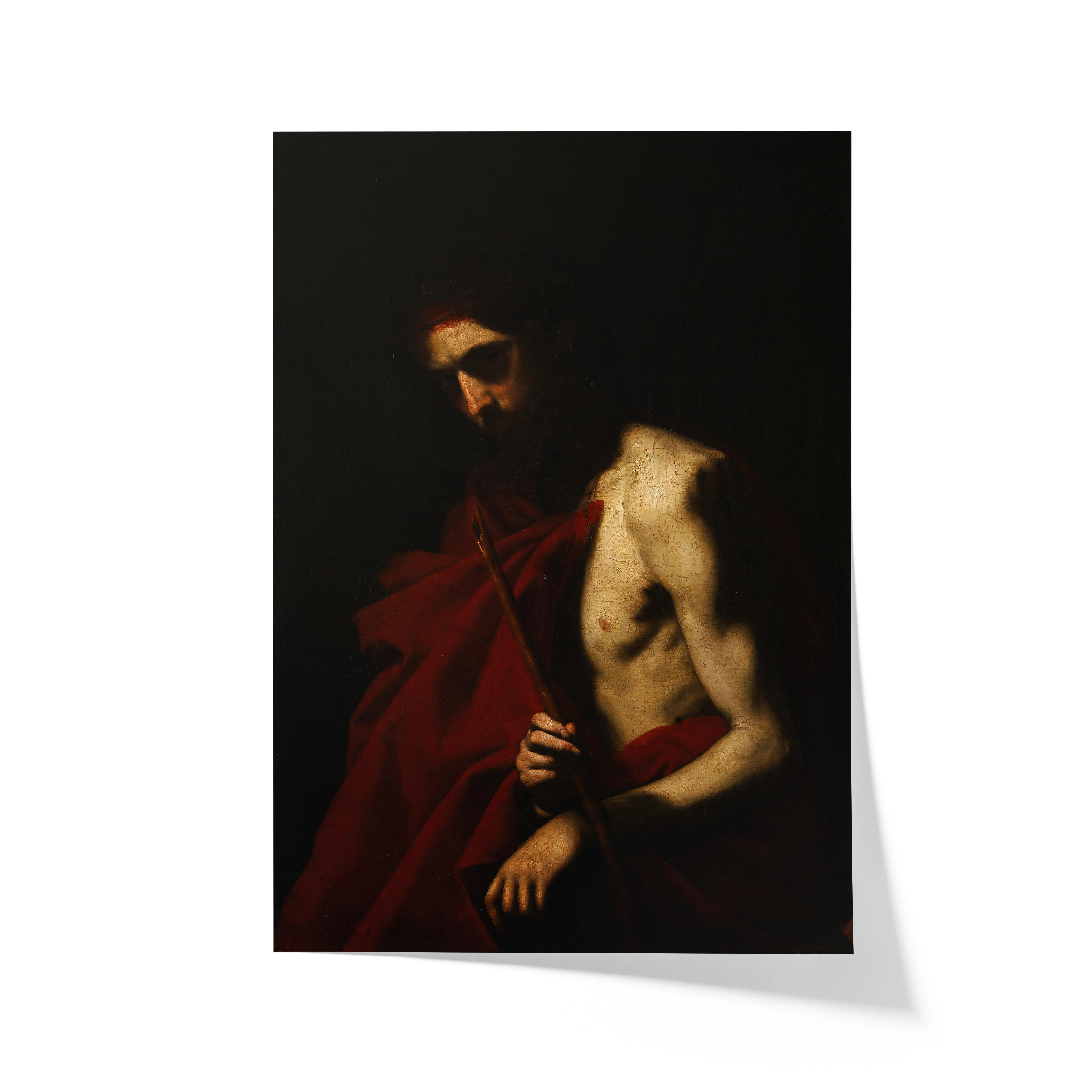
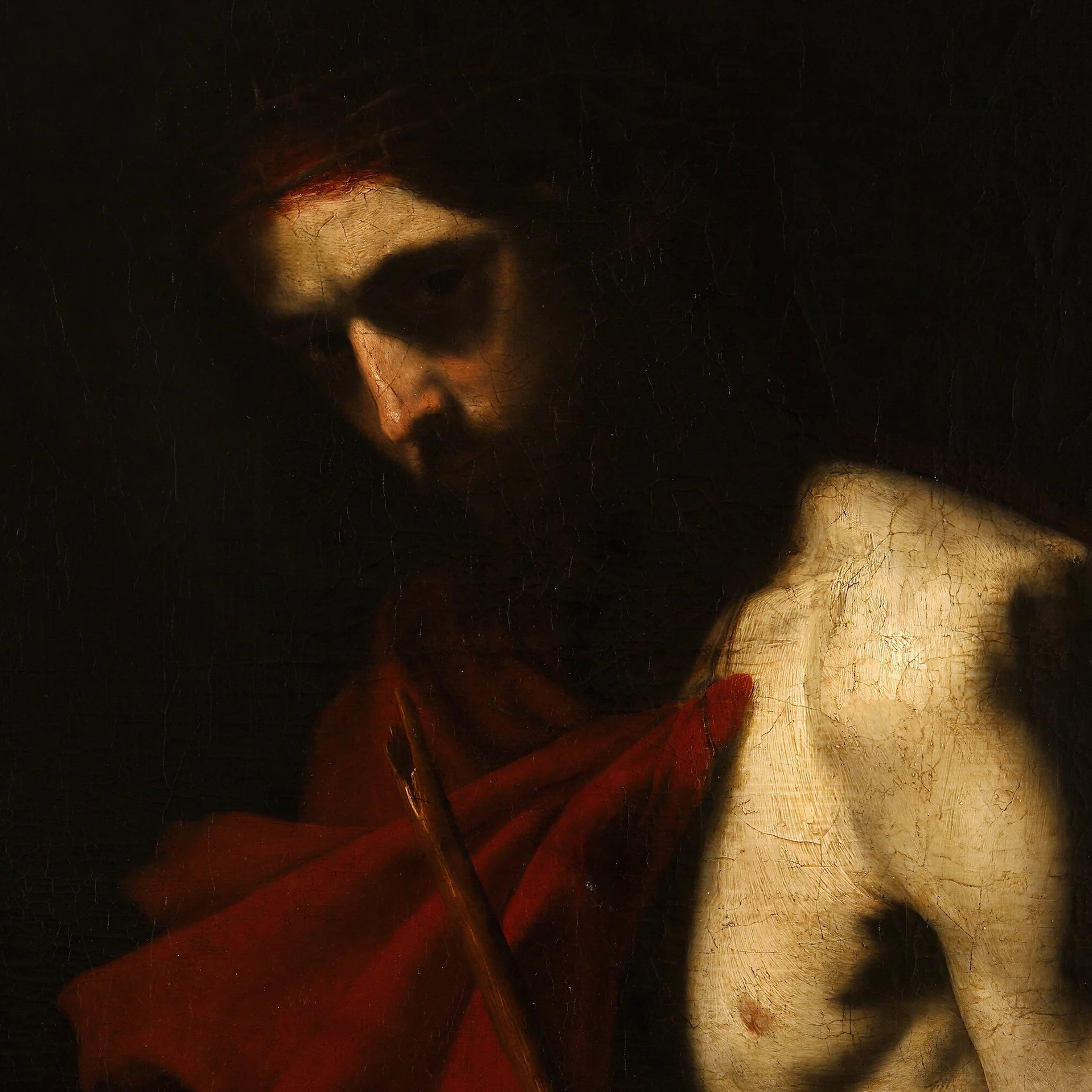
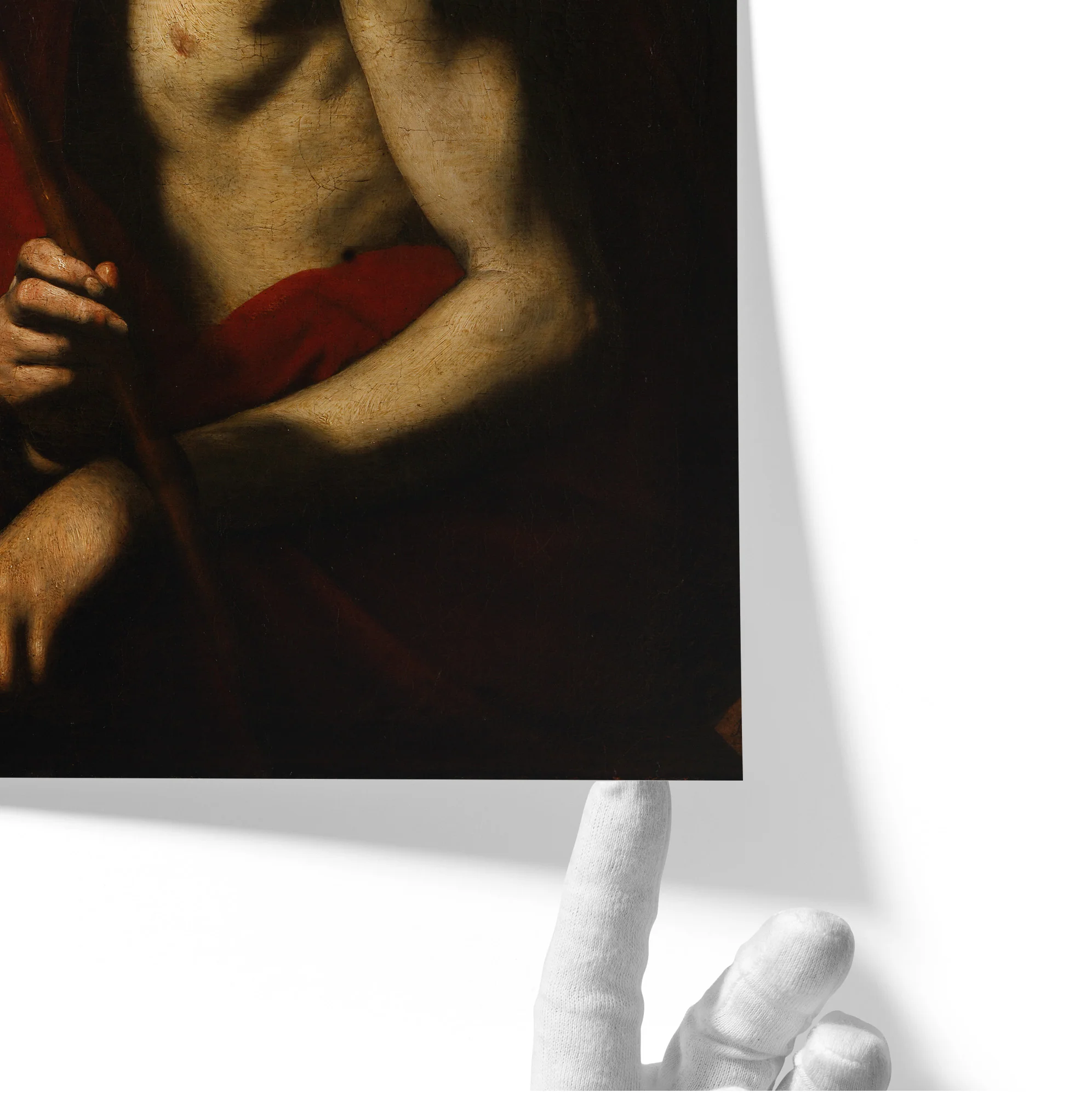
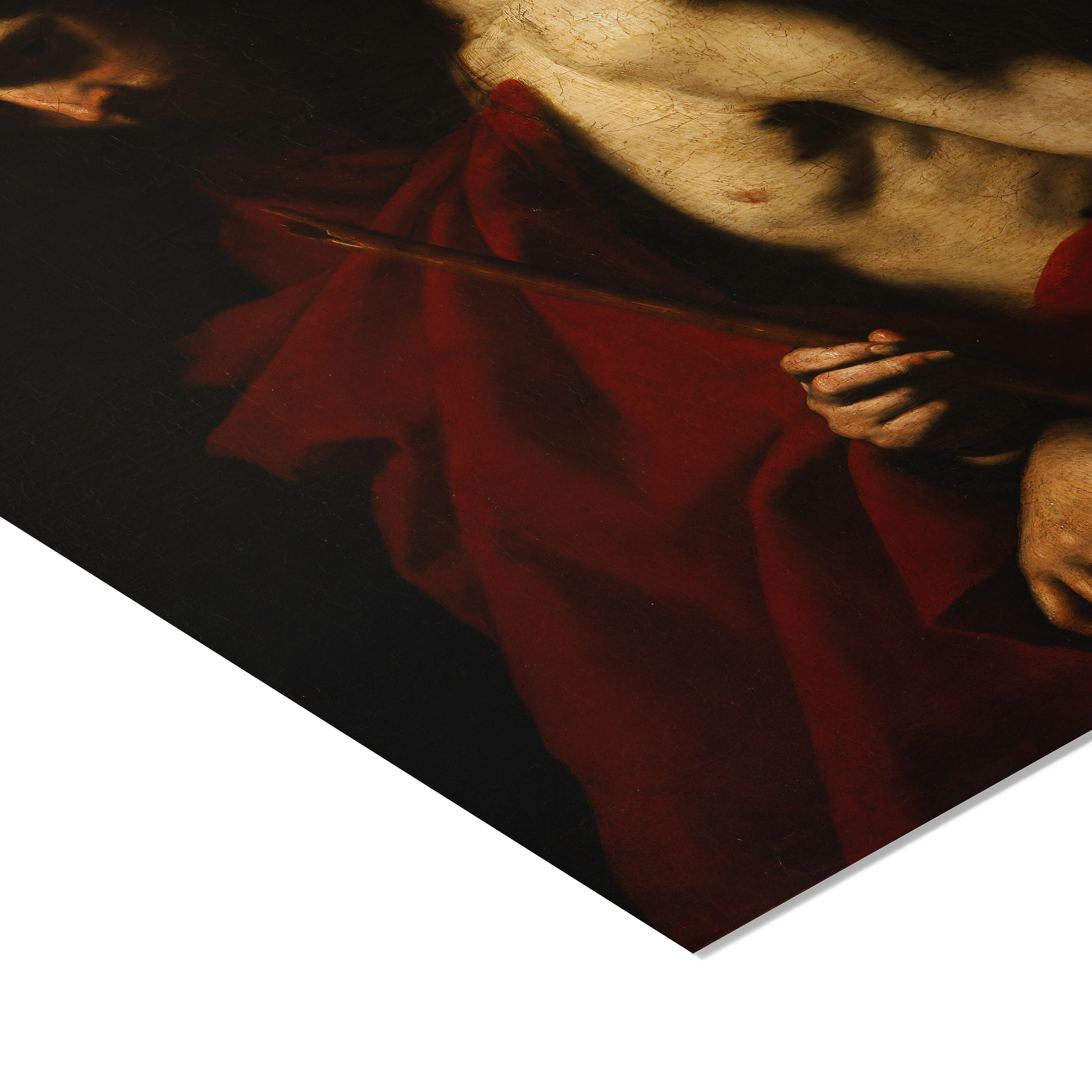
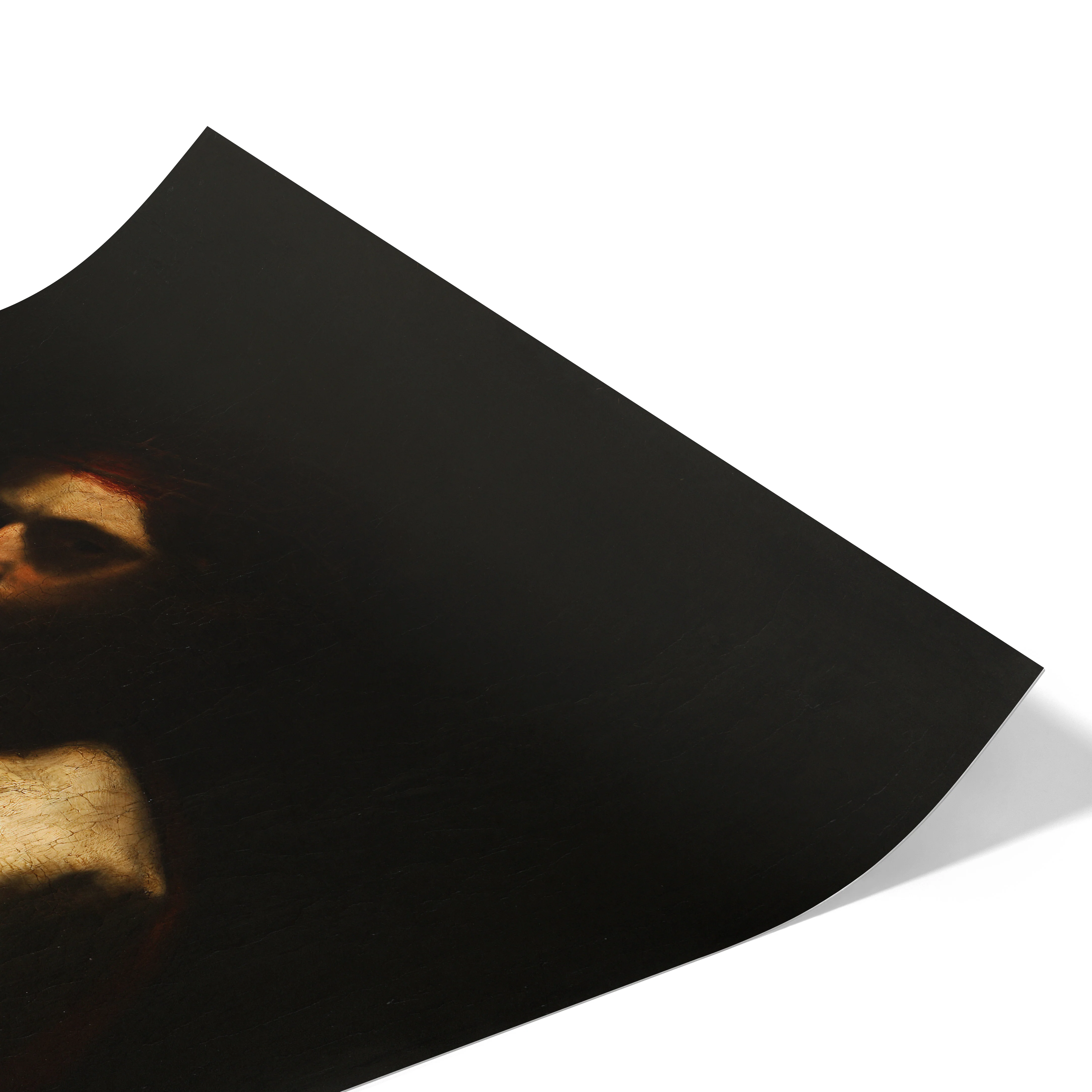
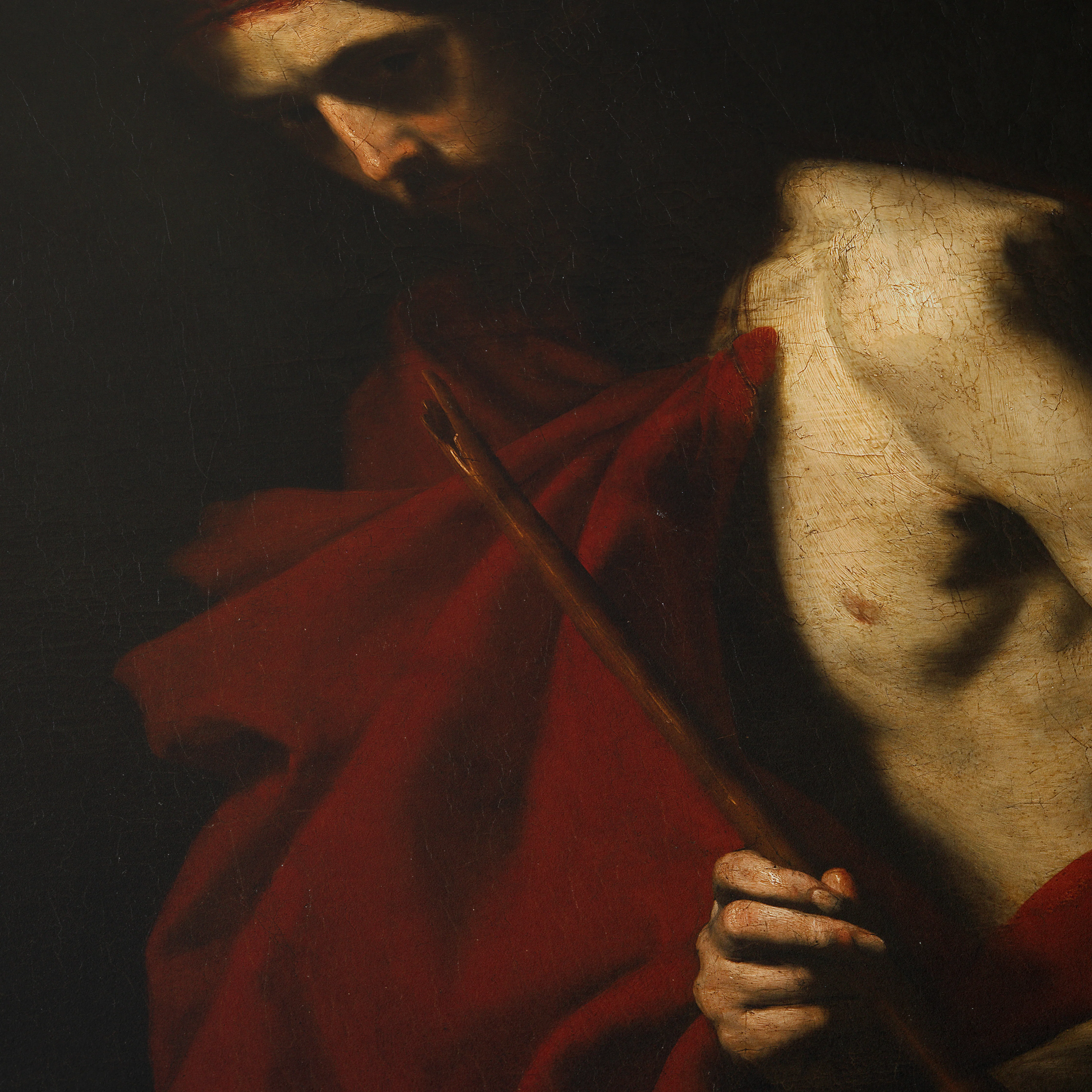
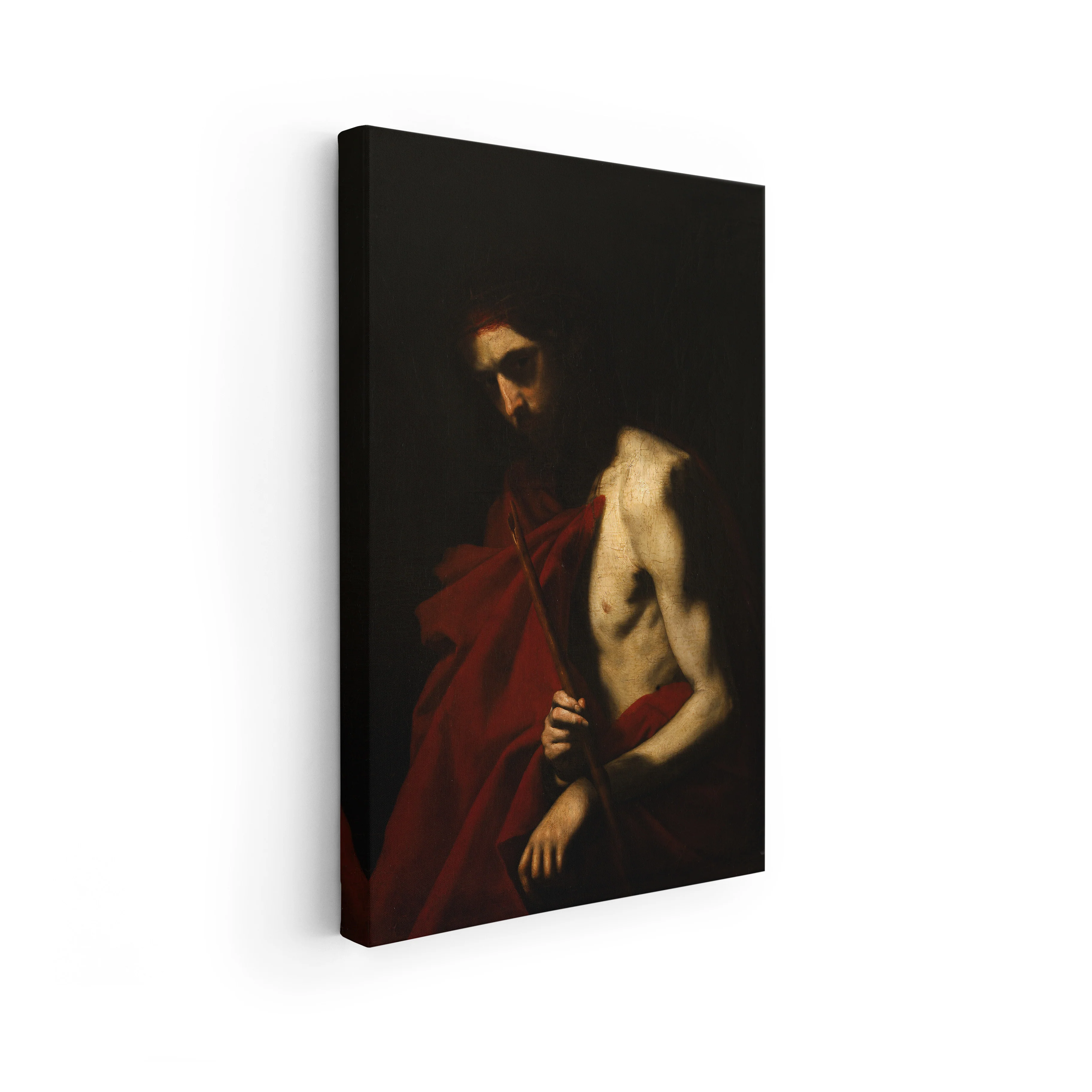
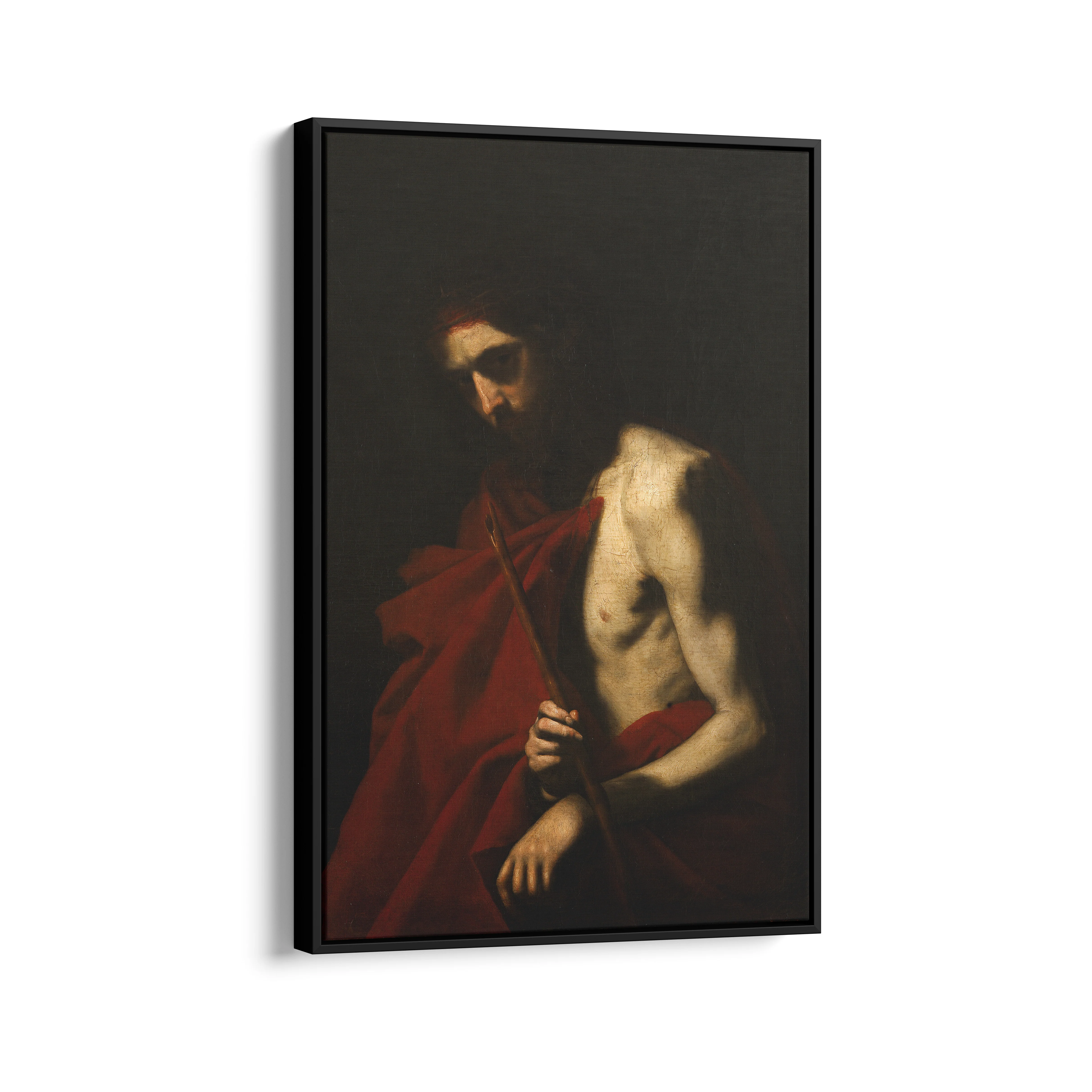
José de Ribera’s Ecce Homo (c. 1620) is a tightly framed, three quarter profile image of Christ presented after the flagellation, marked by the crown of thorns, the robe, and the broken reed, with the figure shifted slightly to one side so the lighting and pose create a strong diagonal through the face and exposed torso. In this early phase of Ribera’s career, the painting is built on tenebrism and uncompromising naturalism, using hard contrasts of light and shadow and an almost clinical attention to anatomy to intensify the theme of public humiliation and physical suffering, qualities that define Ribera’s reputation among the Caravaggisti in Naples. The work in the Real Academia de Bellas Artes de San Fernando is oil on canvas and measures 97 × 81 cm, signed with intertwined initials, and its documented provenance traces it from the Jesuit house in Toledo to the Academy after the Jesuit expulsion ordered by Charles III in 1767, which helps explain how a profoundly Neapolitan image of devotion entered a Spanish institutional collection.
Product Information
Product Information
Shipping & Returns
Shipping & Returns
Ecce Homo | José de Ribera | c. 1620
Ecce Homo | José de Ribera | c. 1620
About the artwork:
José de Ribera’s Ecce Homo (c. 1620) is a tightly framed, three quarter profile image of Christ presented after the flagellation, marked by the crown of thorns, the robe, and the broken reed, with the figure shifted slightly to one side so the lighting and pose create a strong diagonal through the face and exposed torso. In this early phase of Ribera’s career, the painting is built on tenebrism and uncompromising naturalism, using hard contrasts of light and shadow and an almost clinical attention to anatomy to intensify the theme of public humiliation and physical suffering, qualities that define Ribera’s reputation among the Caravaggisti in Naples. The work in the Real Academia de Bellas Artes de San Fernando is oil on canvas and measures 97 × 81 cm, signed with intertwined initials, and its documented provenance traces it from the Jesuit house in Toledo to the Academy after the Jesuit expulsion ordered by Charles III in 1767, which helps explain how a profoundly Neapolitan image of devotion entered a Spanish institutional collection.
Original: $297.82
-70%$297.82
$89.35Product Information
Product Information
Shipping & Returns
Shipping & Returns
Description
About the artwork:
José de Ribera’s Ecce Homo (c. 1620) is a tightly framed, three quarter profile image of Christ presented after the flagellation, marked by the crown of thorns, the robe, and the broken reed, with the figure shifted slightly to one side so the lighting and pose create a strong diagonal through the face and exposed torso. In this early phase of Ribera’s career, the painting is built on tenebrism and uncompromising naturalism, using hard contrasts of light and shadow and an almost clinical attention to anatomy to intensify the theme of public humiliation and physical suffering, qualities that define Ribera’s reputation among the Caravaggisti in Naples. The work in the Real Academia de Bellas Artes de San Fernando is oil on canvas and measures 97 × 81 cm, signed with intertwined initials, and its documented provenance traces it from the Jesuit house in Toledo to the Academy after the Jesuit expulsion ordered by Charles III in 1767, which helps explain how a profoundly Neapolitan image of devotion entered a Spanish institutional collection.