Old Fisherman | Tivadar Csontváry-Kosztka | 1902
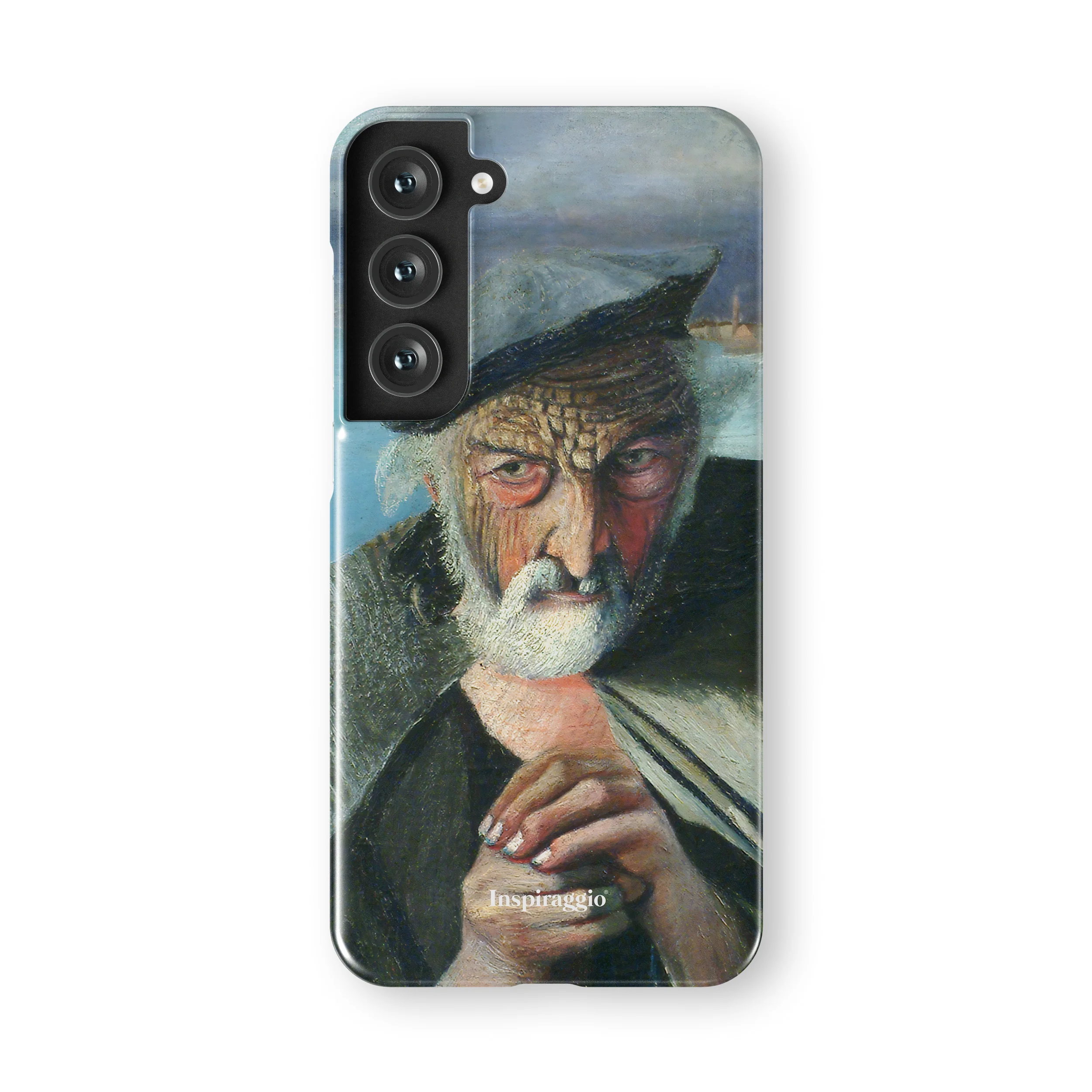
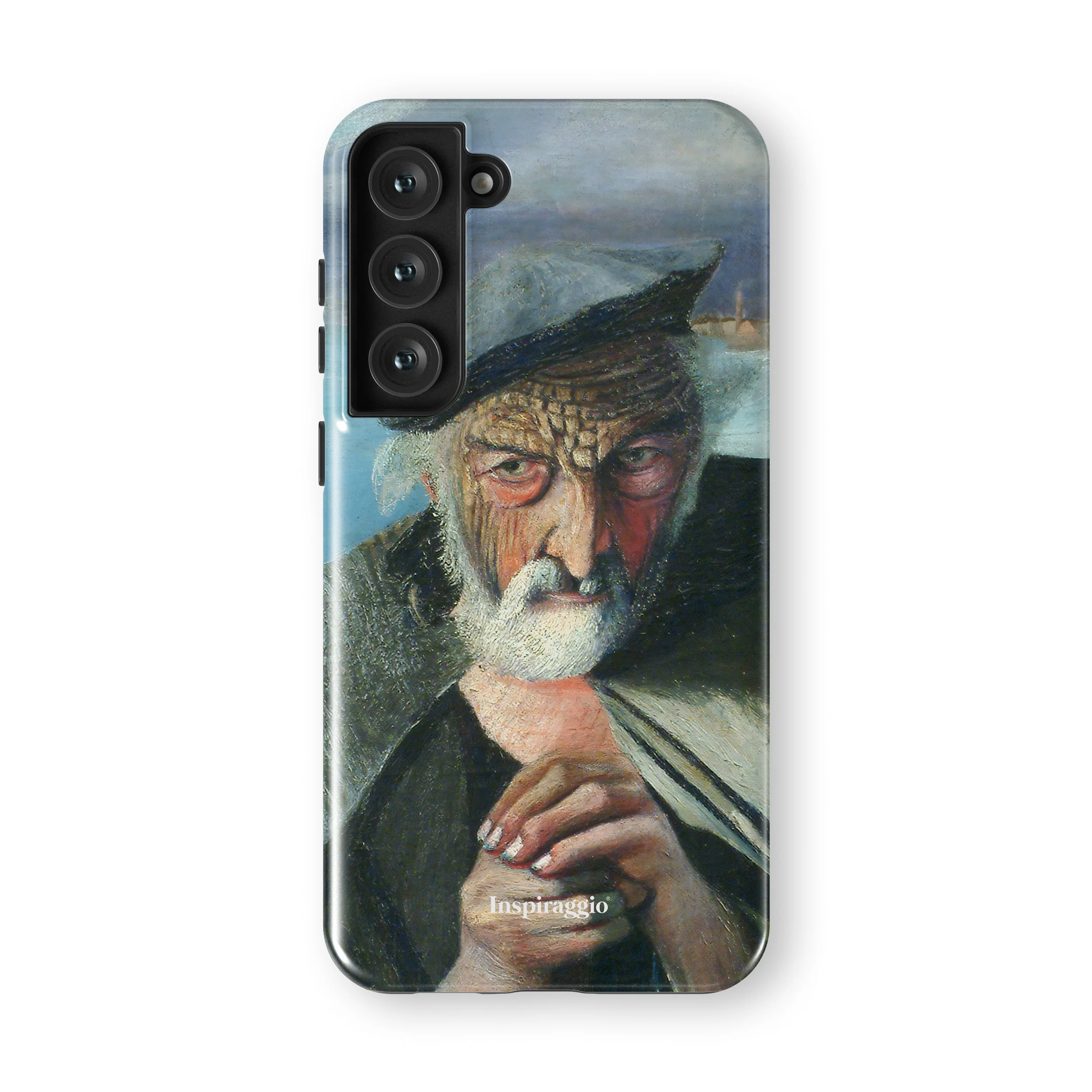
"Old Fisherman" (1902) by Tivadar Csontváry-Kosztka is a haunting and enigmatic painting that reveals its full meaning only through careful observation. At first glance, it seems to portray a humble fisherman sitting by the sea, hands clasped in prayer—but the painting contains a hidden optical illusion: when split down the center with a mirror, each half reveals a completely different persona. The left side depicts a serene, devout old man, gazing toward a calm sea, suggesting faith and inner peace. The right, however, unveils a grotesque, almost demonic face against a turbulent, dark background, embodying chaos or inner torment. This duality—good and evil, peace and turmoil—may reflect Csontváry’s own psychological struggles and philosophical views on human nature. The painting is not merely an optical trick but a symbolic exploration of the duality within the human soul, crafted by an artist who stood at the crossroads between madness and genius.
Product Information
Product Information
Shipping & Returns
Shipping & Returns





Old Fisherman | Tivadar Csontváry-Kosztka | 1902
Old Fisherman | Tivadar Csontváry-Kosztka | 1902
"Old Fisherman" (1902) by Tivadar Csontváry-Kosztka is a haunting and enigmatic painting that reveals its full meaning only through careful observation. At first glance, it seems to portray a humble fisherman sitting by the sea, hands clasped in prayer—but the painting contains a hidden optical illusion: when split down the center with a mirror, each half reveals a completely different persona. The left side depicts a serene, devout old man, gazing toward a calm sea, suggesting faith and inner peace. The right, however, unveils a grotesque, almost demonic face against a turbulent, dark background, embodying chaos or inner torment. This duality—good and evil, peace and turmoil—may reflect Csontváry’s own psychological struggles and philosophical views on human nature. The painting is not merely an optical trick but a symbolic exploration of the duality within the human soul, crafted by an artist who stood at the crossroads between madness and genius.
Original: $316.08
-70%$316.08
$94.82Product Information
Product Information
Shipping & Returns
Shipping & Returns
Description
"Old Fisherman" (1902) by Tivadar Csontváry-Kosztka is a haunting and enigmatic painting that reveals its full meaning only through careful observation. At first glance, it seems to portray a humble fisherman sitting by the sea, hands clasped in prayer—but the painting contains a hidden optical illusion: when split down the center with a mirror, each half reveals a completely different persona. The left side depicts a serene, devout old man, gazing toward a calm sea, suggesting faith and inner peace. The right, however, unveils a grotesque, almost demonic face against a turbulent, dark background, embodying chaos or inner torment. This duality—good and evil, peace and turmoil—may reflect Csontváry’s own psychological struggles and philosophical views on human nature. The painting is not merely an optical trick but a symbolic exploration of the duality within the human soul, crafted by an artist who stood at the crossroads between madness and genius.