Portrait of a Young Boy Holding a Child's Drawing | Giovanni Francesco Caroto | c. 1515
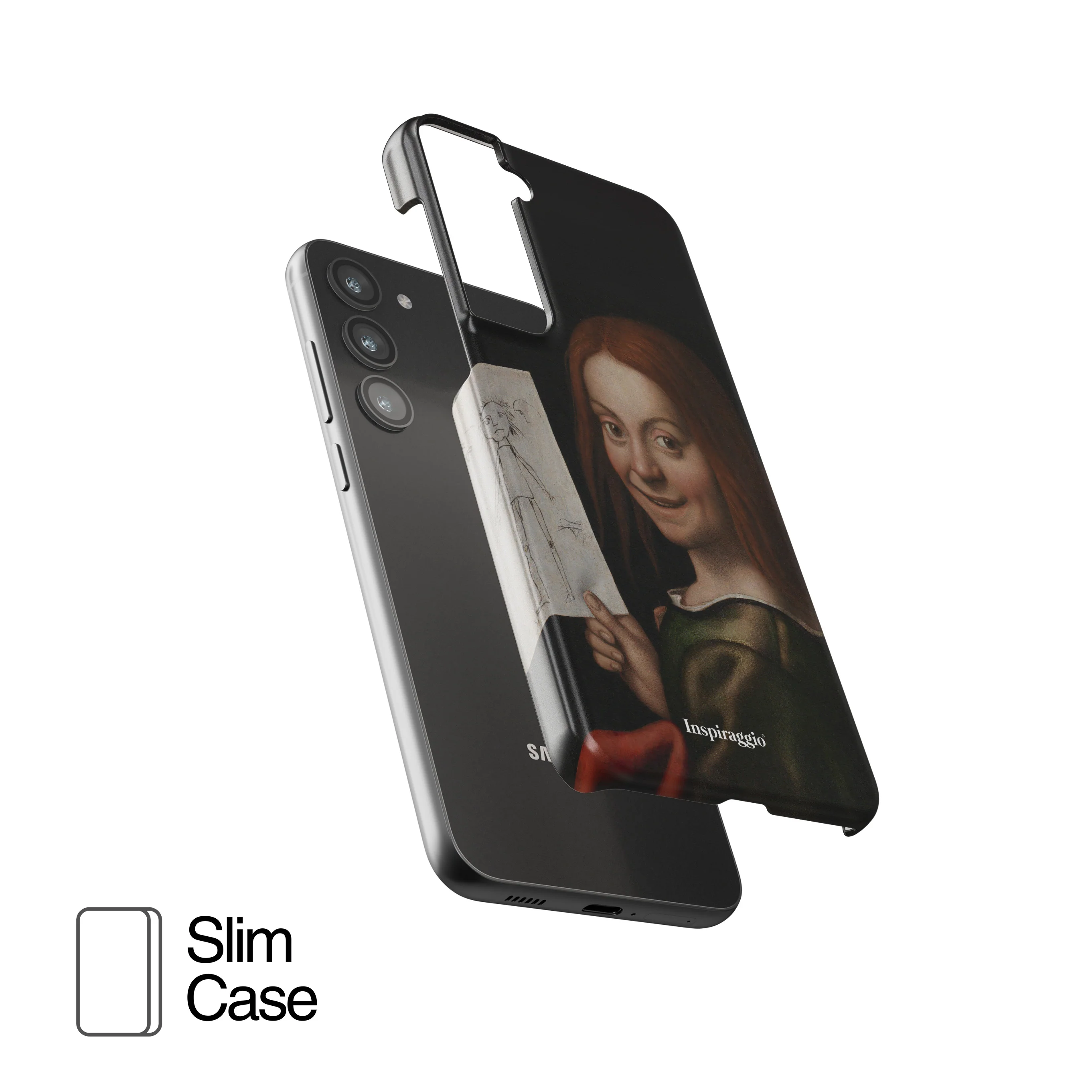
"Portrait of a Young Boy Holding a Child's Drawing" is a work from the Renaissance period, created by Giovanni Francesco Caroto around 1515. This captivating artwork depicts a young boy proudly holding up a simple, childlike drawing of a human figure. The boy's wide smile, rendered with a playful and almost mischievous expression, is a striking feature of the painting. The piece is notable for its exploration of childhood innocence and creativity, as well as for its potential connection to later medical interpretations related to the Angelman Syndrome.
Product Information
Product Information
Shipping & Returns
Shipping & Returns






Portrait of a Young Boy Holding a Child's Drawing | Giovanni Francesco Caroto | c. 1515
Portrait of a Young Boy Holding a Child's Drawing | Giovanni Francesco Caroto | c. 1515
"Portrait of a Young Boy Holding a Child's Drawing" is a work from the Renaissance period, created by Giovanni Francesco Caroto around 1515. This captivating artwork depicts a young boy proudly holding up a simple, childlike drawing of a human figure. The boy's wide smile, rendered with a playful and almost mischievous expression, is a striking feature of the painting. The piece is notable for its exploration of childhood innocence and creativity, as well as for its potential connection to later medical interpretations related to the Angelman Syndrome.
Original: $316.08
-70%$316.08
$94.82Product Information
Product Information
Shipping & Returns
Shipping & Returns
Description
"Portrait of a Young Boy Holding a Child's Drawing" is a work from the Renaissance period, created by Giovanni Francesco Caroto around 1515. This captivating artwork depicts a young boy proudly holding up a simple, childlike drawing of a human figure. The boy's wide smile, rendered with a playful and almost mischievous expression, is a striking feature of the painting. The piece is notable for its exploration of childhood innocence and creativity, as well as for its potential connection to later medical interpretations related to the Angelman Syndrome.