✨ New Arrivals Just Dropped!Explore
HomeStore

Supper at Emmaus (Milan) | Caravaggio | 1606

Product image 1
Product image 2
Product image 3
Product image 4
Product image 5
Product image 6
Product image 7
Product image 8

Supper at Emmaus (Milan) | Caravaggio | 1606

Supper at Emmaus (Milan) | Caravaggio | 1606

About the artwork:

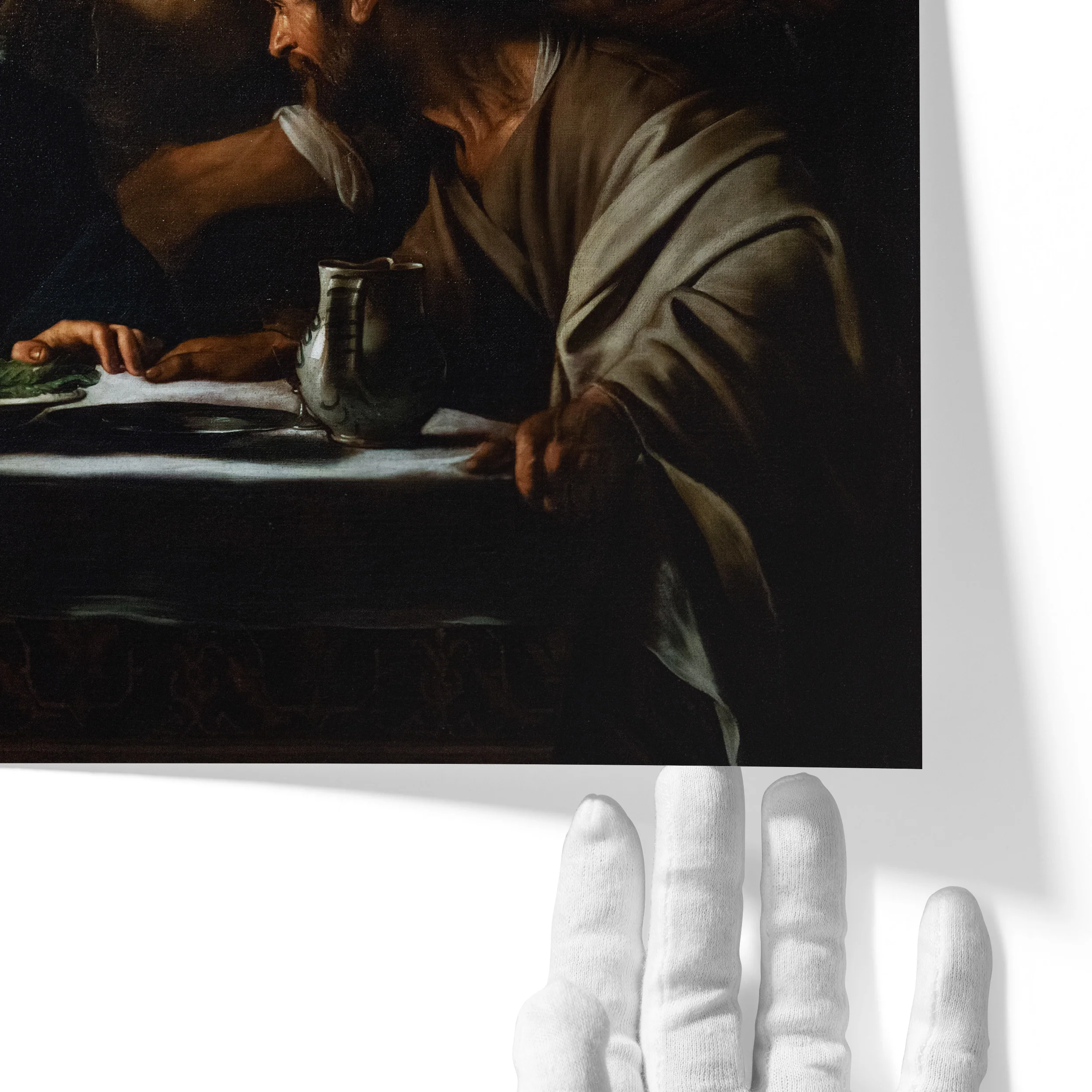
Caravaggio’s Supper at Emmaus, painted in 1606 and now in the Pinacoteca di Brera in Milan, presents the biblical moment when the resurrected Christ is recognized by two disciples during a simple meal. Unlike his earlier and more theatrical version of the same subject from 1601, this painting is darker, quieter, and more introspective, reflecting the artist’s mature style after his flight from Rome. The figures emerge from a deep shadow, their gestures are restrained, and Christ appears with a solemn, almost exhausted presence rather than triumphant grandeur. Caravaggio turns a sacred revelation into an intimate human encounter, emphasizing humility, silence, and spiritual recognition through ordinary faces, worn clothing, and a modest table. The painting’s power lies in its psychological depth, showing faith not as spectacle, but as a sudden realization within the darkness of daily life.

Select Select Size
Select Frame Options
From $89.35

Original: $297.82

-70%
Supper at Emmaus (Milan) | Caravaggio | 1606

$297.82

$89.35

Product Information

Shipping & Returns

Description

About the artwork:
Caravaggio’s Supper at Emmaus, painted in 1606 and now in the Pinacoteca di Brera in Milan, presents the biblical moment when the resurrected Christ is recognized by two disciples during a simple meal. Unlike his earlier and more theatrical version of the same subject from 1601, this painting is darker, quieter, and more introspective, reflecting the artist’s mature style after his flight from Rome. The figures emerge from a deep shadow, their gestures are restrained, and Christ appears with a solemn, almost exhausted presence rather than triumphant grandeur. Caravaggio turns a sacred revelation into an intimate human encounter, emphasizing humility, silence, and spiritual recognition through ordinary faces, worn clothing, and a modest table. The painting’s power lies in its psychological depth, showing faith not as spectacle, but as a sudden realization within the darkness of daily life.