The Bearded Woman | José de Ribera | 1631
About the artwork:
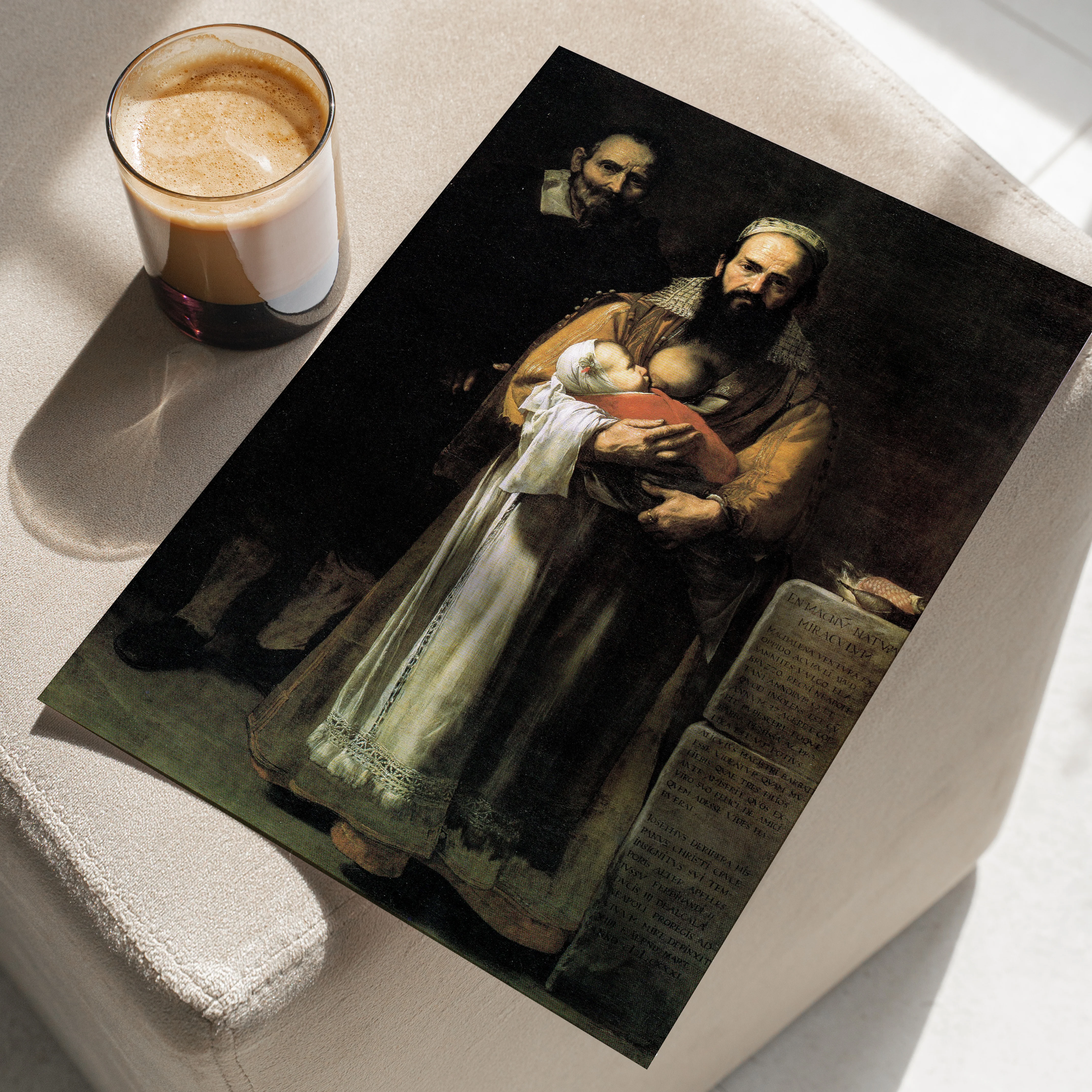
José de Ribera's "The Bearded Woman" (1631) is a striking and unconventional portrait that challenges traditional notions of beauty and gender in Baroque art. The painting depicts Magdalena Ventura, a woman with a full beard, alongside her husband and a child. Ribera's meticulous attention to detail captures the texture of her skin, the thickness of her beard, and the weariness in her expression, evoking both admiration and discomfort in the viewer. The inclusion of the child, likely symbolic, and her husband emphasizes her role as a mother and wife, presenting her as a figure of resilience rather than ridicule. Commissioned by the Duke of Alcalá, the work blends naturalism with curiosity, aligning with the period's fascination with "wonders of nature." The inscription in the painting highlights her rare condition, known today as hirsutism, and reflects societal attempts to document and understand such anomalies. Ribera's empathetic yet unflinching portrayal invites reflection on the intersection of identity, societal expectations, and the human condition.
Product Information
Product Information
Shipping & Returns
Shipping & Returns




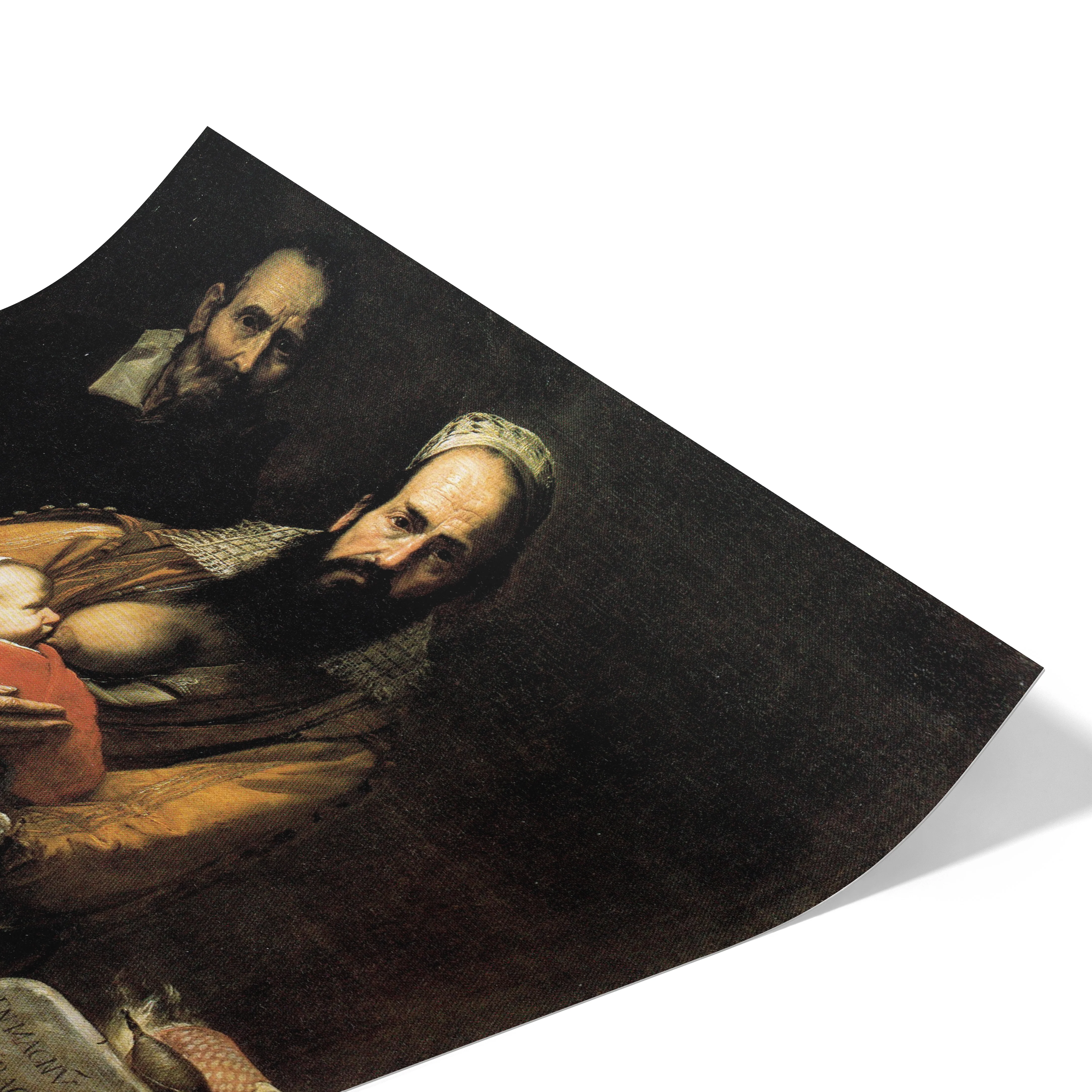


The Bearded Woman | José de Ribera | 1631
The Bearded Woman | José de Ribera | 1631
About the artwork:
José de Ribera's "The Bearded Woman" (1631) is a striking and unconventional portrait that challenges traditional notions of beauty and gender in Baroque art. The painting depicts Magdalena Ventura, a woman with a full beard, alongside her husband and a child. Ribera's meticulous attention to detail captures the texture of her skin, the thickness of her beard, and the weariness in her expression, evoking both admiration and discomfort in the viewer. The inclusion of the child, likely symbolic, and her husband emphasizes her role as a mother and wife, presenting her as a figure of resilience rather than ridicule. Commissioned by the Duke of Alcalá, the work blends naturalism with curiosity, aligning with the period's fascination with "wonders of nature." The inscription in the painting highlights her rare condition, known today as hirsutism, and reflects societal attempts to document and understand such anomalies. Ribera's empathetic yet unflinching portrayal invites reflection on the intersection of identity, societal expectations, and the human condition.
Original: $297.82
-70%$297.82
$89.35Product Information
Product Information
Shipping & Returns
Shipping & Returns
Description
About the artwork:
José de Ribera's "The Bearded Woman" (1631) is a striking and unconventional portrait that challenges traditional notions of beauty and gender in Baroque art. The painting depicts Magdalena Ventura, a woman with a full beard, alongside her husband and a child. Ribera's meticulous attention to detail captures the texture of her skin, the thickness of her beard, and the weariness in her expression, evoking both admiration and discomfort in the viewer. The inclusion of the child, likely symbolic, and her husband emphasizes her role as a mother and wife, presenting her as a figure of resilience rather than ridicule. Commissioned by the Duke of Alcalá, the work blends naturalism with curiosity, aligning with the period's fascination with "wonders of nature." The inscription in the painting highlights her rare condition, known today as hirsutism, and reflects societal attempts to document and understand such anomalies. Ribera's empathetic yet unflinching portrayal invites reflection on the intersection of identity, societal expectations, and the human condition.