✨ New Arrivals Just Dropped!Explore
HomeStore

The Proposition | David Ryckaert III | 1665

Product image 1
Product image 2
Product image 3
Product image 4
Product image 5
Product image 6
Product image 7
Product image 8

The Proposition | David Ryckaert III | 1665

The Proposition | David Ryckaert III | 1665

About the artwork:

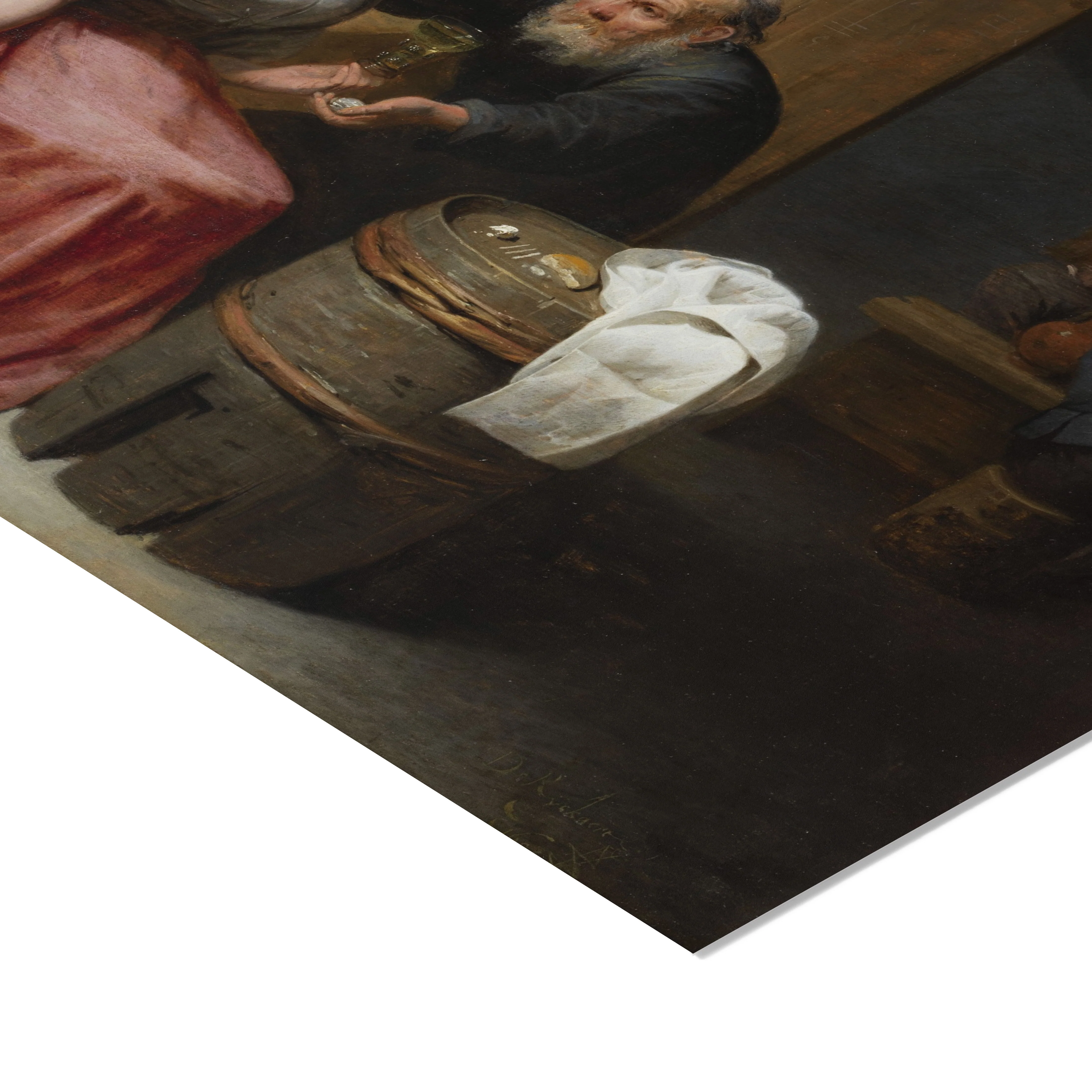
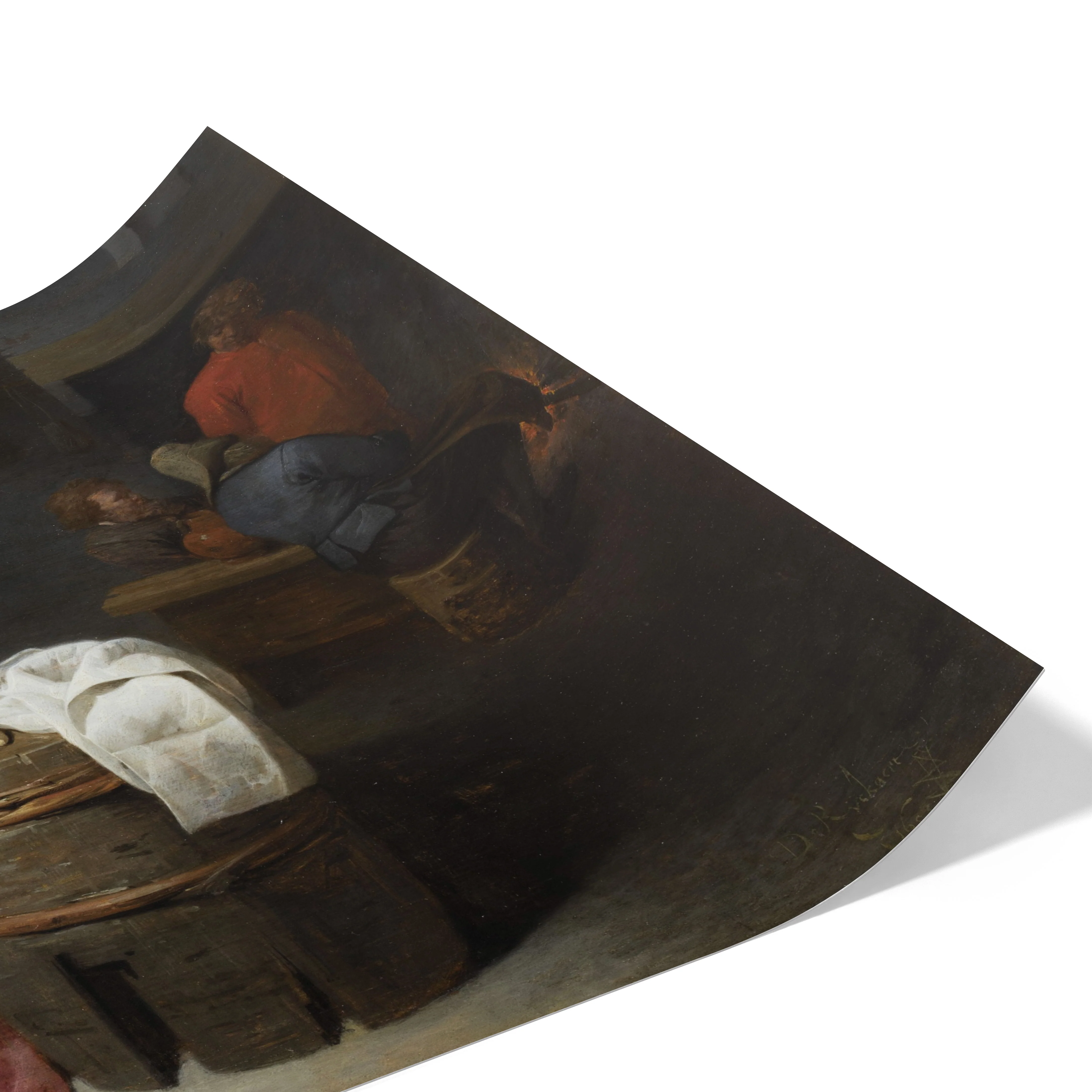
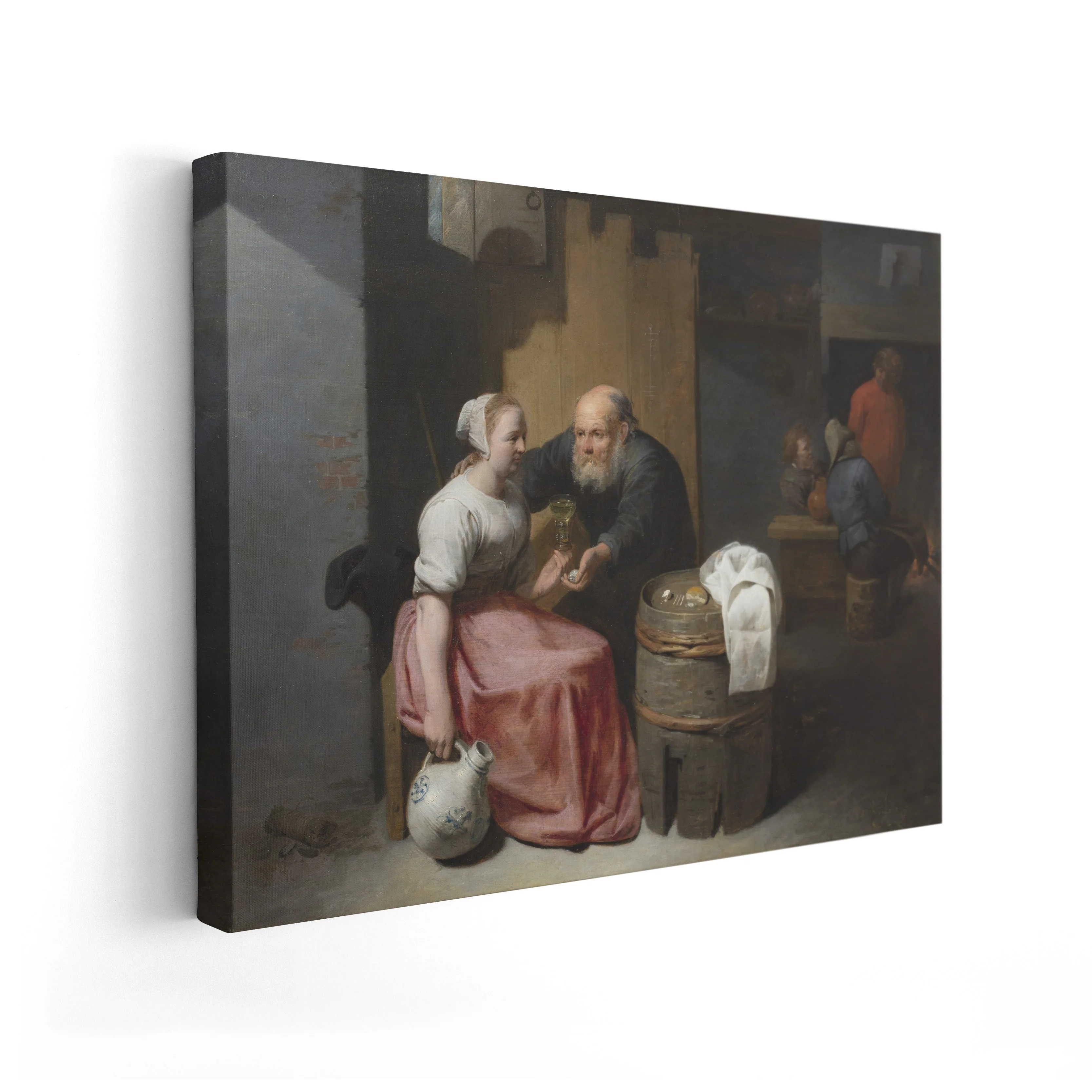
The Proposition (1665) by David Ryckaert III captures the everyday atmosphere of a 17th-century Dutch tavern, while also revealing subtle layers of social commentary. An older man leans toward a young woman, offering money as she holds a glass of wine, her expression calm and detached. At first, the three white marks on the table might suggest something modern to us, but in Ryckaert’s time they simply indicated, in chalk, the number of drinks consumed—three in this case—hinting at the man’s drunken state. Rather than depicting a dramatic confrontation, the painting shows a familiar exchange in a public setting, where other patrons nearby continue their merrymaking, unconcerned with what unfolds. This neutrality emphasizes how normalized such propositions were in tavern culture, while Ryckaert’s careful detail invites us to look beyond the surface and consider the blurred boundaries between commerce, desire, and routine social life in the Dutch Golden Age.

Select Select Size
Select Frame Options
From $89.35

Original: $297.82

-70%
The Proposition | David Ryckaert III | 1665

$297.82

$89.35

Product Information

Shipping & Returns

Description

About the artwork:
The Proposition (1665) by David Ryckaert III captures the everyday atmosphere of a 17th-century Dutch tavern, while also revealing subtle layers of social commentary. An older man leans toward a young woman, offering money as she holds a glass of wine, her expression calm and detached. At first, the three white marks on the table might suggest something modern to us, but in Ryckaert’s time they simply indicated, in chalk, the number of drinks consumed—three in this case—hinting at the man’s drunken state. Rather than depicting a dramatic confrontation, the painting shows a familiar exchange in a public setting, where other patrons nearby continue their merrymaking, unconcerned with what unfolds. This neutrality emphasizes how normalized such propositions were in tavern culture, while Ryckaert’s careful detail invites us to look beyond the surface and consider the blurred boundaries between commerce, desire, and routine social life in the Dutch Golden Age.