✨ New Arrivals Just Dropped!Explore
HomeStore

Trompe l'oeil with Studio Wall and Vanitas Still Life | Cornelis Norbertus Gysbrechts | 1668

Product image 1
Product image 2
Product image 3
Product image 4
Product image 5
Product image 6
Product image 7
Product image 8
Product image 9

Trompe l'oeil with Studio Wall and Vanitas Still Life | Cornelis Norbertus Gysbrechts | 1668

Trompe l'oeil with Studio Wall and Vanitas Still Life | Cornelis Norbertus Gysbrechts | 1668

About the artwork:

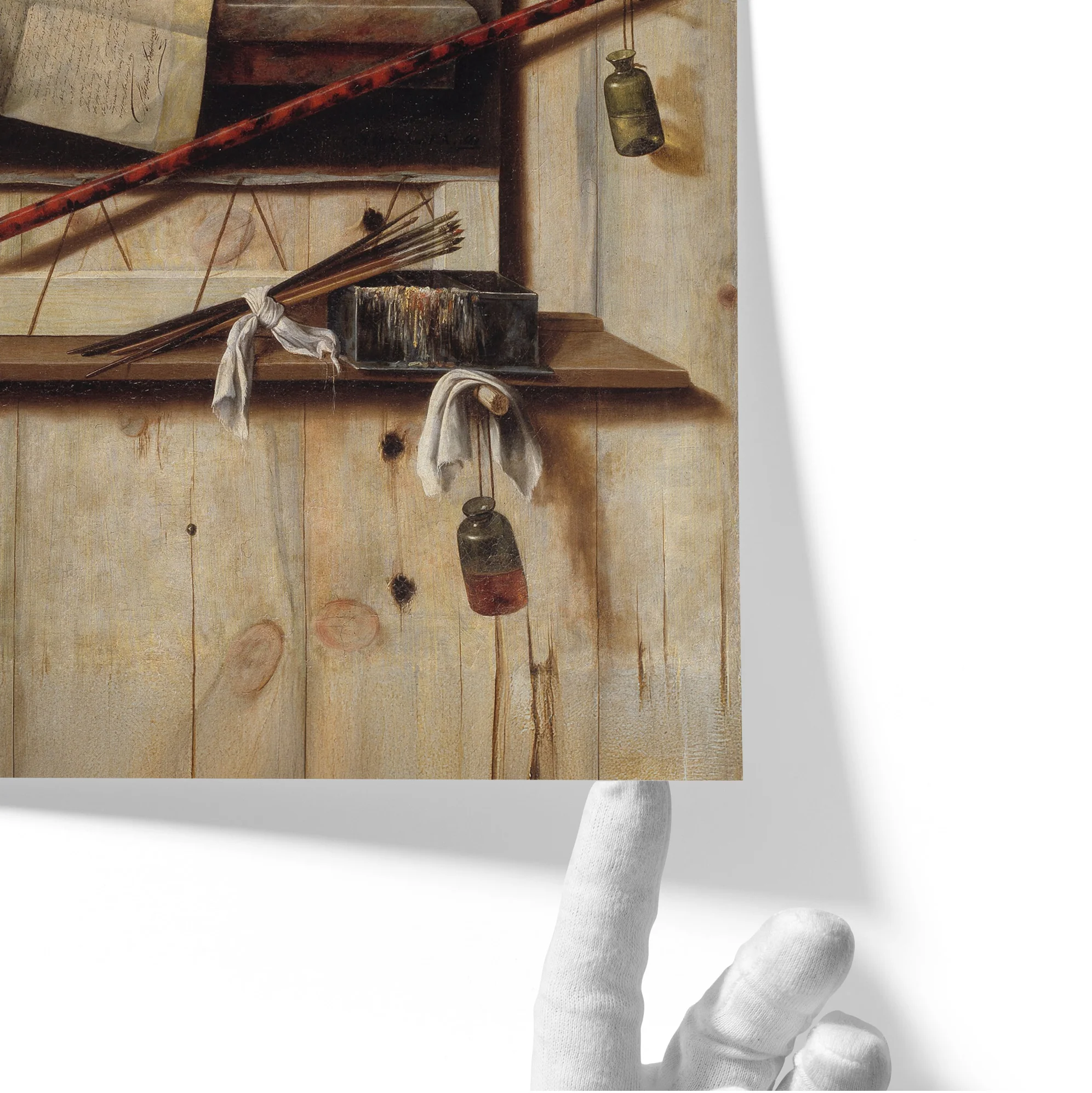
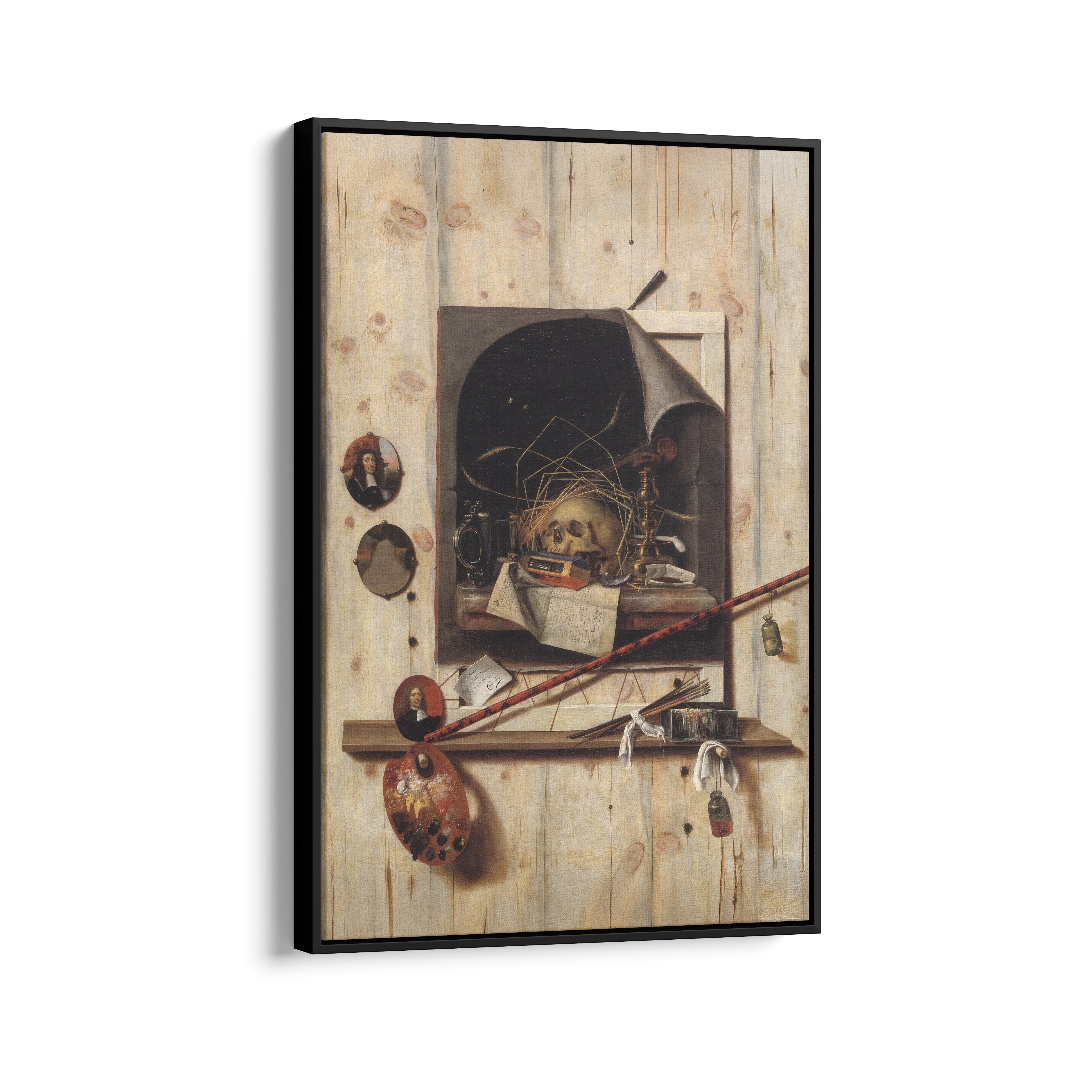
This remarkable painting is one of the finest examples of the trompe l’oeil technique—literally, “deceive the eye.” Gysbrechts has created the illusion of a painter’s studio wall cluttered with objects: a framed canvas turned backward, a curtain draped to one side, and an arrangement of vanitas elements such as a skull, extinguished candle, and hourglass. Each item is painted with such precision that the viewer momentarily forgets they are looking at a flat surface.

At its heart, the painting is both a display of artistic virtuosity and a meditation on mortality. The vanitas still life elements serve as memento mori—reminders of the fleeting nature of life and earthly pursuits. By juxtaposing these with the tools of an artist’s trade, Gysbrechts invites reflection not only on death but on the illusion of permanence in art itself. In doing so, he challenges us to question what is real and what is merely the trickery of the eye.

Select Select Size
Select Frame Options
From $89.35

Original: $297.82

-70%
Trompe l'oeil with Studio Wall and Vanitas Still Life | Cornelis Norbertus Gysbrechts | 1668

$297.82

$89.35

Product Information

Shipping & Returns

Description

About the artwork:
This remarkable painting is one of the finest examples of the trompe l’oeil technique—literally, “deceive the eye.” Gysbrechts has created the illusion of a painter’s studio wall cluttered with objects: a framed canvas turned backward, a curtain draped to one side, and an arrangement of vanitas elements such as a skull, extinguished candle, and hourglass. Each item is painted with such precision that the viewer momentarily forgets they are looking at a flat surface.

At its heart, the painting is both a display of artistic virtuosity and a meditation on mortality. The vanitas still life elements serve as memento mori—reminders of the fleeting nature of life and earthly pursuits. By juxtaposing these with the tools of an artist’s trade, Gysbrechts invites reflection not only on death but on the illusion of permanence in art itself. In doing so, he challenges us to question what is real and what is merely the trickery of the eye.