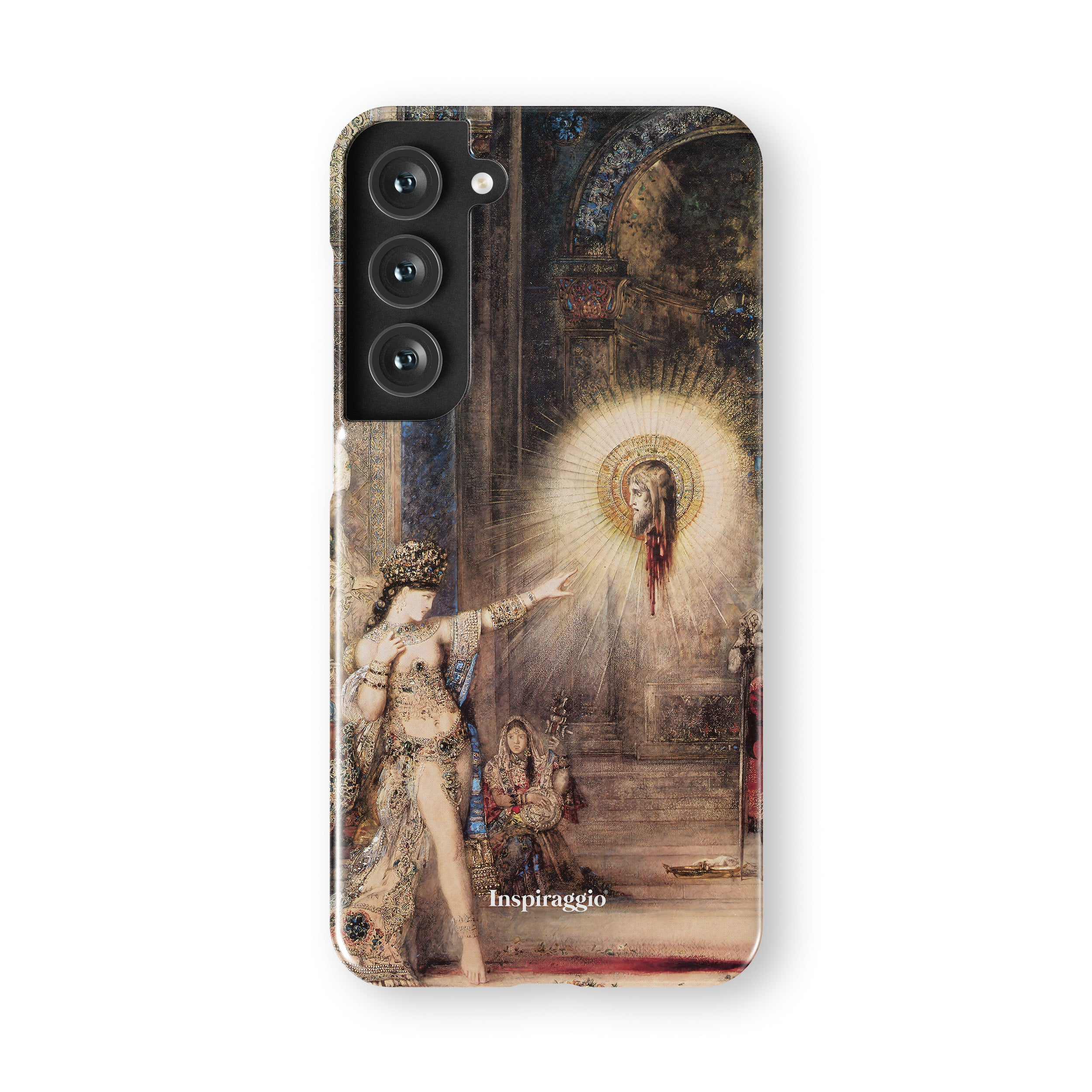
Witches Going to Their Sabbath | Luis Ricardo Falero | 1878
Witches Going to Their Sabbath (1878) by Luis Ricardo Falero is a sensual and fantastical depiction of supernatural rebellion, blending academic painting technique with occult and erotic themes. The canvas bursts with dynamic movement as nude witches soar through a moonlit sky, riding goats and broomsticks toward their unholy gathering. Falero, a master of mythological and esoteric subjects, renders the bodies with anatomical precision and soft, glowing flesh tones, contrasting sharply with the dark, ominous atmosphere of the night. The scene is charged with both allure and unease—an inversion of celestial ascension, where beauty and corruption coexist. At the time, the painting stirred both fascination and discomfort, tapping into 19th-century Europe’s dual obsession with female sexuality and the occult. Beyond its visual seduction, the work can be read as a metaphor for forbidden knowledge and liberation from patriarchal norms, with the witches symbolizing defiant, transgressive power unleashed beneath a veil of fantasy.
Product Information
Product Information
Shipping & Returns
Shipping & Returns







Witches Going to Their Sabbath | Luis Ricardo Falero | 1878
Witches Going to Their Sabbath | Luis Ricardo Falero | 1878
Witches Going to Their Sabbath (1878) by Luis Ricardo Falero is a sensual and fantastical depiction of supernatural rebellion, blending academic painting technique with occult and erotic themes. The canvas bursts with dynamic movement as nude witches soar through a moonlit sky, riding goats and broomsticks toward their unholy gathering. Falero, a master of mythological and esoteric subjects, renders the bodies with anatomical precision and soft, glowing flesh tones, contrasting sharply with the dark, ominous atmosphere of the night. The scene is charged with both allure and unease—an inversion of celestial ascension, where beauty and corruption coexist. At the time, the painting stirred both fascination and discomfort, tapping into 19th-century Europe’s dual obsession with female sexuality and the occult. Beyond its visual seduction, the work can be read as a metaphor for forbidden knowledge and liberation from patriarchal norms, with the witches symbolizing defiant, transgressive power unleashed beneath a veil of fantasy.
Original: $316.08
-70%$316.08
$94.82Product Information
Product Information
Shipping & Returns
Shipping & Returns
Description
Witches Going to Their Sabbath (1878) by Luis Ricardo Falero is a sensual and fantastical depiction of supernatural rebellion, blending academic painting technique with occult and erotic themes. The canvas bursts with dynamic movement as nude witches soar through a moonlit sky, riding goats and broomsticks toward their unholy gathering. Falero, a master of mythological and esoteric subjects, renders the bodies with anatomical precision and soft, glowing flesh tones, contrasting sharply with the dark, ominous atmosphere of the night. The scene is charged with both allure and unease—an inversion of celestial ascension, where beauty and corruption coexist. At the time, the painting stirred both fascination and discomfort, tapping into 19th-century Europe’s dual obsession with female sexuality and the occult. Beyond its visual seduction, the work can be read as a metaphor for forbidden knowledge and liberation from patriarchal norms, with the witches symbolizing defiant, transgressive power unleashed beneath a veil of fantasy.