✨ New Arrivals Just Dropped!Explore
HomeStore

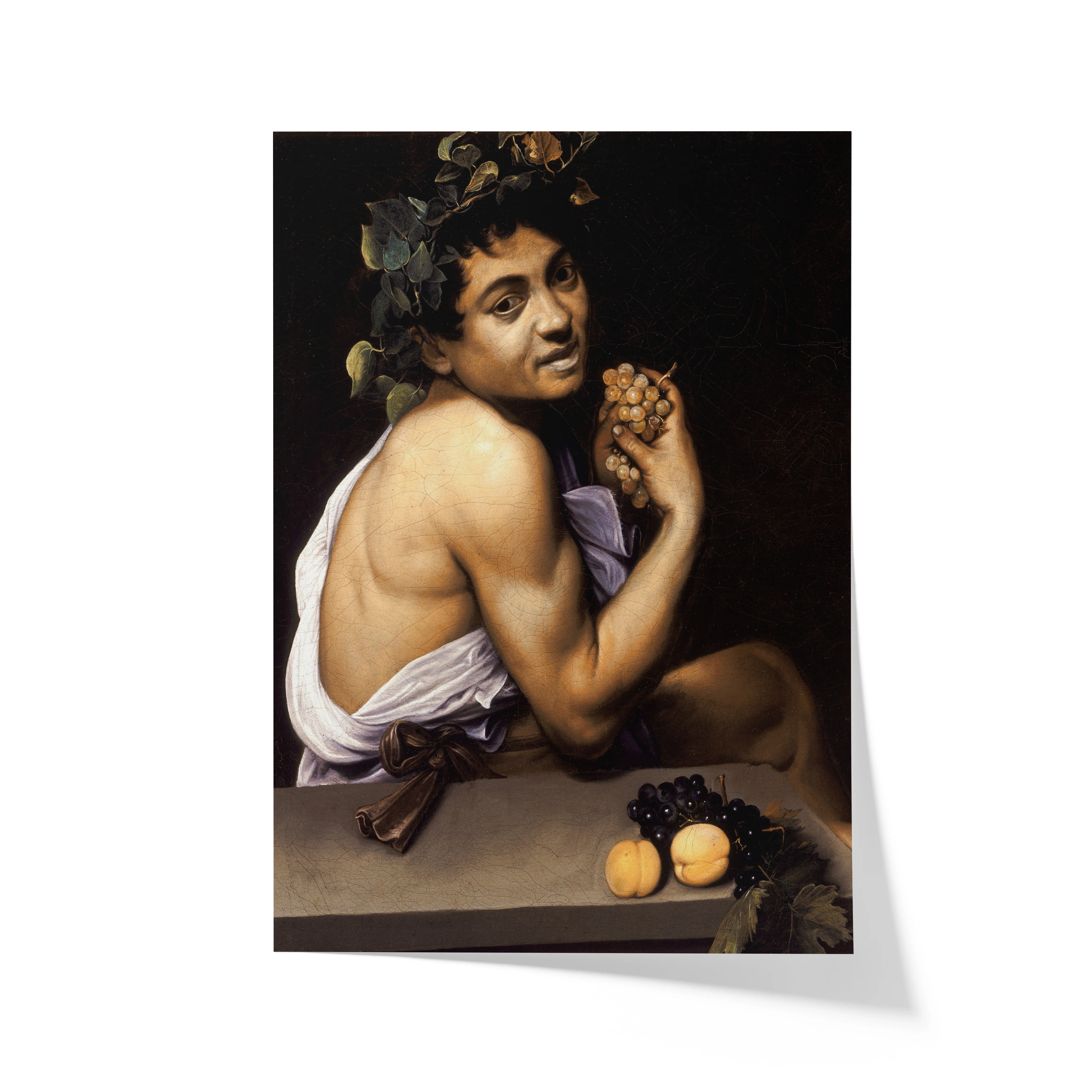
Young Sick Bacchus | Caravaggio | 1593

Product image 1
Product image 2
Product image 3
Product image 4
Product image 5
Product image 6
Product image 7
Product image 8

Young Sick Bacchus | Caravaggio | 1593

Young Sick Bacchus | Caravaggio | 1593

About the artwork:

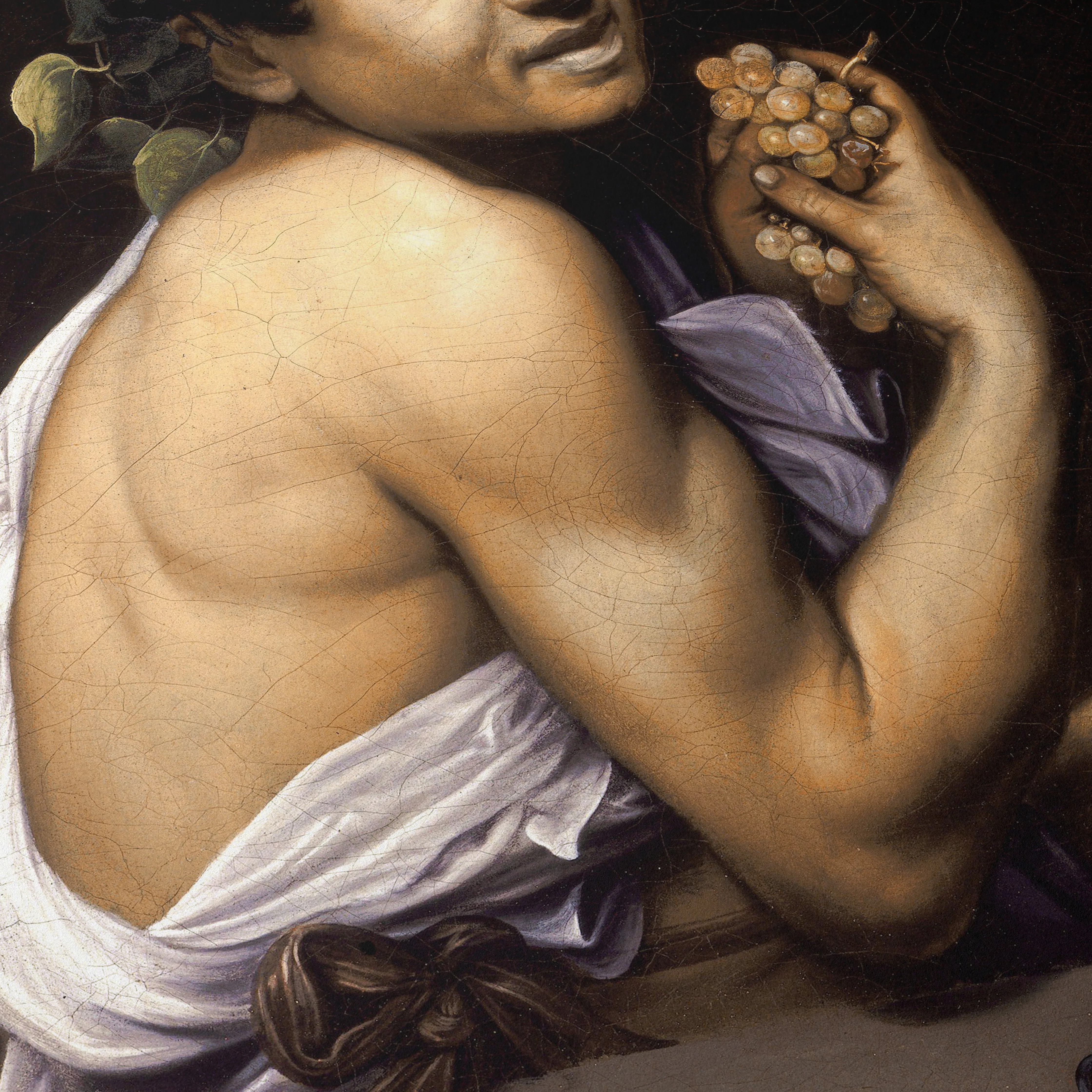
Caravaggio’s Young Sick Bacchus (1593) is a striking early self-portrait in which the artist depicts himself as the god of wine, but with a frailty that undermines divine vitality. Painted shortly after his own recovery from illness, the work shows a pale, almost greenish youth crowned with vine leaves, holding a cluster of grapes with languid detachment. His lips are discolored, his eyes heavy, and his body carries the unmistakable weight of convalescence. Unlike the exuberant Bacchus of classical tradition, this figure embodies mortality and vulnerability, blurring the line between myth and lived experience. Caravaggio transforms the god of revelry into a symbol of decay and human fragility, while also asserting his own presence as both subject and storyteller—a raw, intimate glimpse of the artist’s early realism and personal suffering.

Select Select Size
Select Frame Options
From $89.35

Original: $297.82

-70%
Young Sick Bacchus | Caravaggio | 1593

$297.82

$89.35

Product Information

Shipping & Returns

Description

About the artwork:
Caravaggio’s Young Sick Bacchus (1593) is a striking early self-portrait in which the artist depicts himself as the god of wine, but with a frailty that undermines divine vitality. Painted shortly after his own recovery from illness, the work shows a pale, almost greenish youth crowned with vine leaves, holding a cluster of grapes with languid detachment. His lips are discolored, his eyes heavy, and his body carries the unmistakable weight of convalescence. Unlike the exuberant Bacchus of classical tradition, this figure embodies mortality and vulnerability, blurring the line between myth and lived experience. Caravaggio transforms the god of revelry into a symbol of decay and human fragility, while also asserting his own presence as both subject and storyteller—a raw, intimate glimpse of the artist’s early realism and personal suffering.