A Giant Claw (Breast Cancer) | Richard Tennant Cooper | 20th Century
About the artwork:
Richard Tennant Cooper was a British artist whose work uniquely bridged the realms of medical illustration and surrealism, creating haunting depictions of human suffering and disease. His paintings often explored the physical and psychological toll of illness, sometimes portraying diseases as grotesque, anthropomorphic entities attacking their victims. Cooper's background as a medical illustrator during the early 20th century, including his experiences during World War I, deeply influenced his art, leading to pieces that viscerally conveyed the horrors of human frailty. His use of dark, unsettling imagery—such as skeletal figures, distorted anatomy, and surreal dreamscapes—reflected both the medical realities of his time and broader existential fears. Cooper's work stands out as a commentary on the fragility of life in an era marked by medical advancements and the trauma of global conflict, blending scientific observation with artistic imagination to evoke a deep emotional response.
Product Information
Product Information
Shipping & Returns
Shipping & Returns


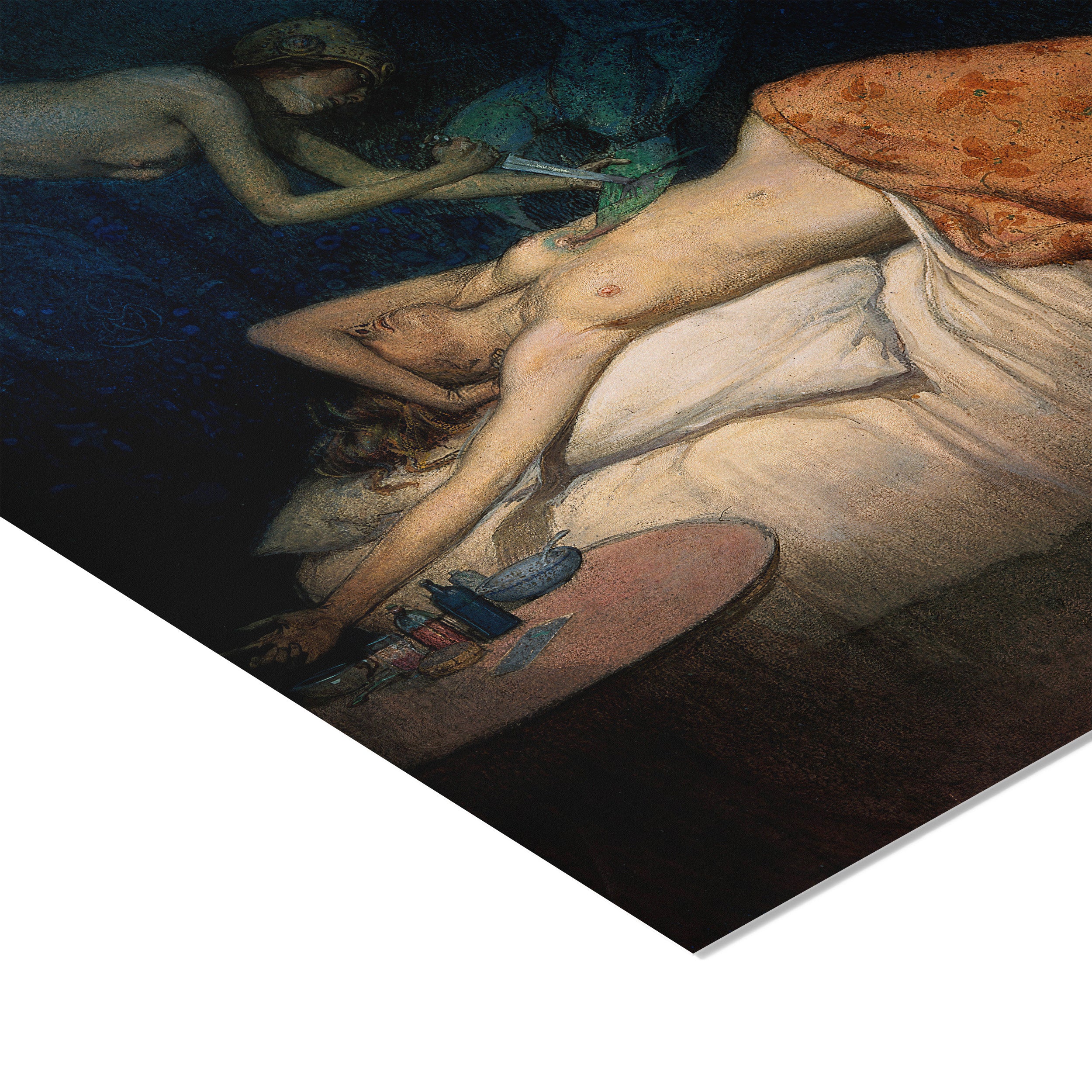


A Giant Claw (Breast Cancer) | Richard Tennant Cooper | 20th Century
A Giant Claw (Breast Cancer) | Richard Tennant Cooper | 20th Century
About the artwork:
Richard Tennant Cooper was a British artist whose work uniquely bridged the realms of medical illustration and surrealism, creating haunting depictions of human suffering and disease. His paintings often explored the physical and psychological toll of illness, sometimes portraying diseases as grotesque, anthropomorphic entities attacking their victims. Cooper's background as a medical illustrator during the early 20th century, including his experiences during World War I, deeply influenced his art, leading to pieces that viscerally conveyed the horrors of human frailty. His use of dark, unsettling imagery—such as skeletal figures, distorted anatomy, and surreal dreamscapes—reflected both the medical realities of his time and broader existential fears. Cooper's work stands out as a commentary on the fragility of life in an era marked by medical advancements and the trauma of global conflict, blending scientific observation with artistic imagination to evoke a deep emotional response.
Original: $297.82
-70%$297.82
$89.35Product Information
Product Information
Shipping & Returns
Shipping & Returns
Description
About the artwork:
Richard Tennant Cooper was a British artist whose work uniquely bridged the realms of medical illustration and surrealism, creating haunting depictions of human suffering and disease. His paintings often explored the physical and psychological toll of illness, sometimes portraying diseases as grotesque, anthropomorphic entities attacking their victims. Cooper's background as a medical illustrator during the early 20th century, including his experiences during World War I, deeply influenced his art, leading to pieces that viscerally conveyed the horrors of human frailty. His use of dark, unsettling imagery—such as skeletal figures, distorted anatomy, and surreal dreamscapes—reflected both the medical realities of his time and broader existential fears. Cooper's work stands out as a commentary on the fragility of life in an era marked by medical advancements and the trauma of global conflict, blending scientific observation with artistic imagination to evoke a deep emotional response.