✨ New Arrivals Just Dropped!Explore
HomeStore

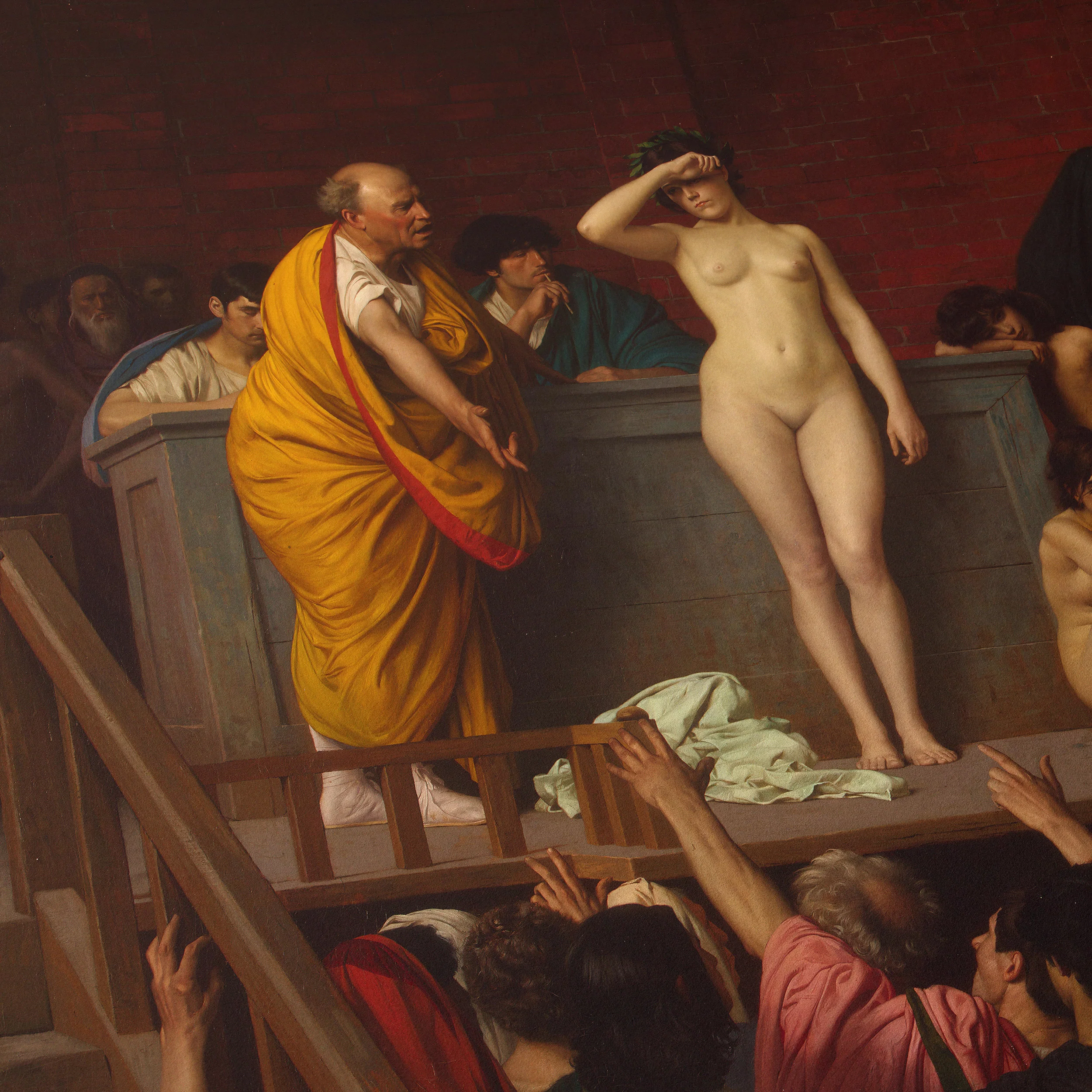
A Roman Slave Market | Jean-Léon Gerôme | c. 1884

Product image 1
Product image 2
Product image 3
Product image 4
Product image 5
Product image 6
Product image 7
Product image 8
Product image 9
Product image 10

A Roman Slave Market | Jean-Léon Gerôme | c. 1884

A Roman Slave Market | Jean-Léon Gerôme | c. 1884

About the artwork:

Jean‑Léon Gérôme’s A Roman Slave Market (c. 1884) confronts viewers with a scene of stark realism and theatrical staging: at its center, a nude woman shields her face in shame as a slave dealer displays her on a raised platform before a crowd of leering men bidding her price. Nearby, another terrified woman crouches in resignation, while a mother clutching her child emphasizes the cruel reality of families torn apart. Executed in Gérôme’s hallmark academic style, the work is meticulously detailed—from the smooth folds of fabric to the architecture framing the scene. It melds sensuality and moral outrage, creating a visual tension that forces us to both admire the craftsmanship and recoil from the humiliation on display. In its blend of classical subject matter and unflinching depiction of human cruelty, the painting remains a powerful testament to the era’s fascination with antiquity and orientalism.

Select Select Size
Select Frame Options
From $89.35

Original: $297.82

-70%
A Roman Slave Market | Jean-Léon Gerôme | c. 1884

$297.82

$89.35

Product Information

Shipping & Returns

Description

About the artwork:
Jean‑Léon Gérôme’s A Roman Slave Market (c. 1884) confronts viewers with a scene of stark realism and theatrical staging: at its center, a nude woman shields her face in shame as a slave dealer displays her on a raised platform before a crowd of leering men bidding her price. Nearby, another terrified woman crouches in resignation, while a mother clutching her child emphasizes the cruel reality of families torn apart. Executed in Gérôme’s hallmark academic style, the work is meticulously detailed—from the smooth folds of fabric to the architecture framing the scene. It melds sensuality and moral outrage, creating a visual tension that forces us to both admire the craftsmanship and recoil from the humiliation on display. In its blend of classical subject matter and unflinching depiction of human cruelty, the painting remains a powerful testament to the era’s fascination with antiquity and orientalism.