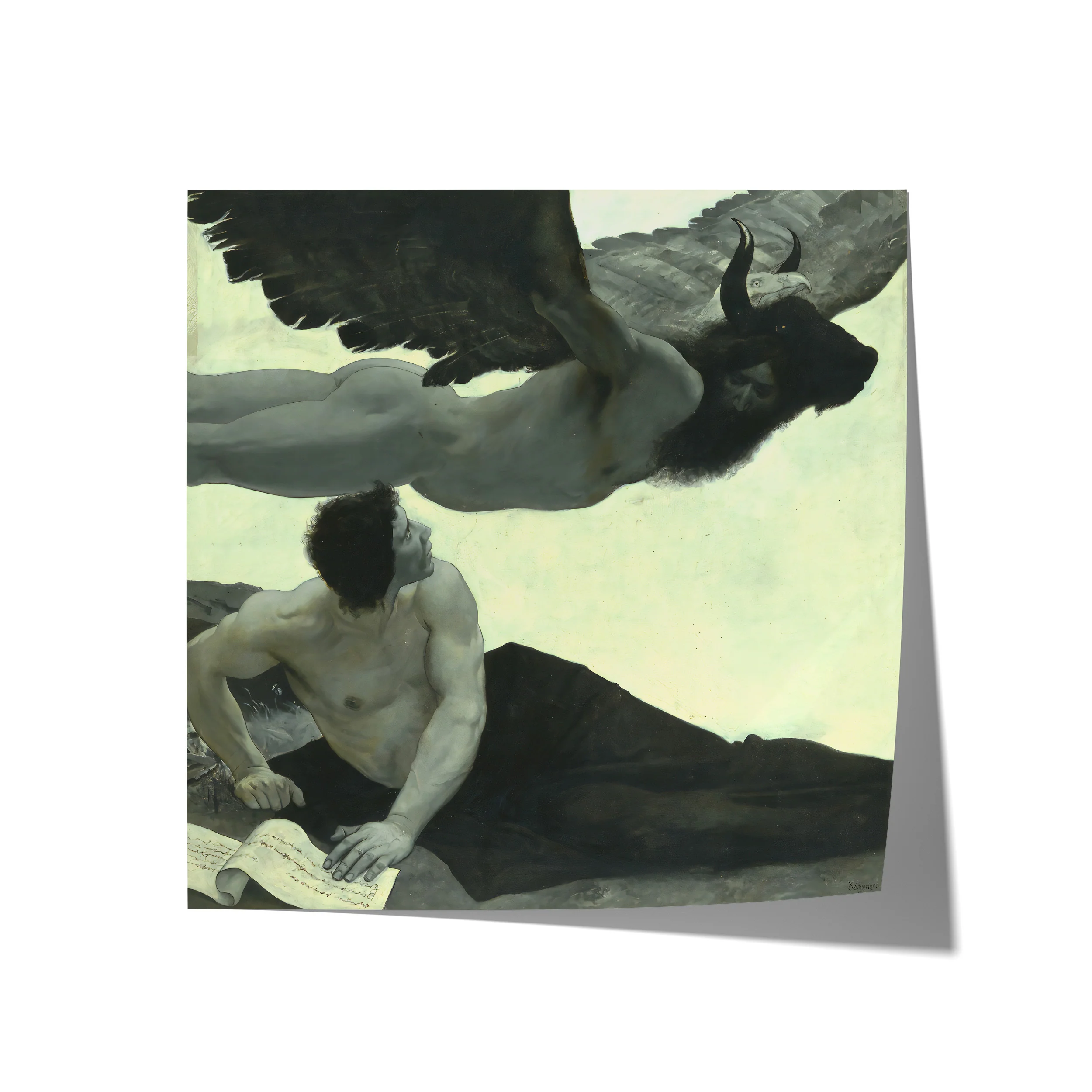
A Vision | Sascha Schneider | 1897
About the artwork:
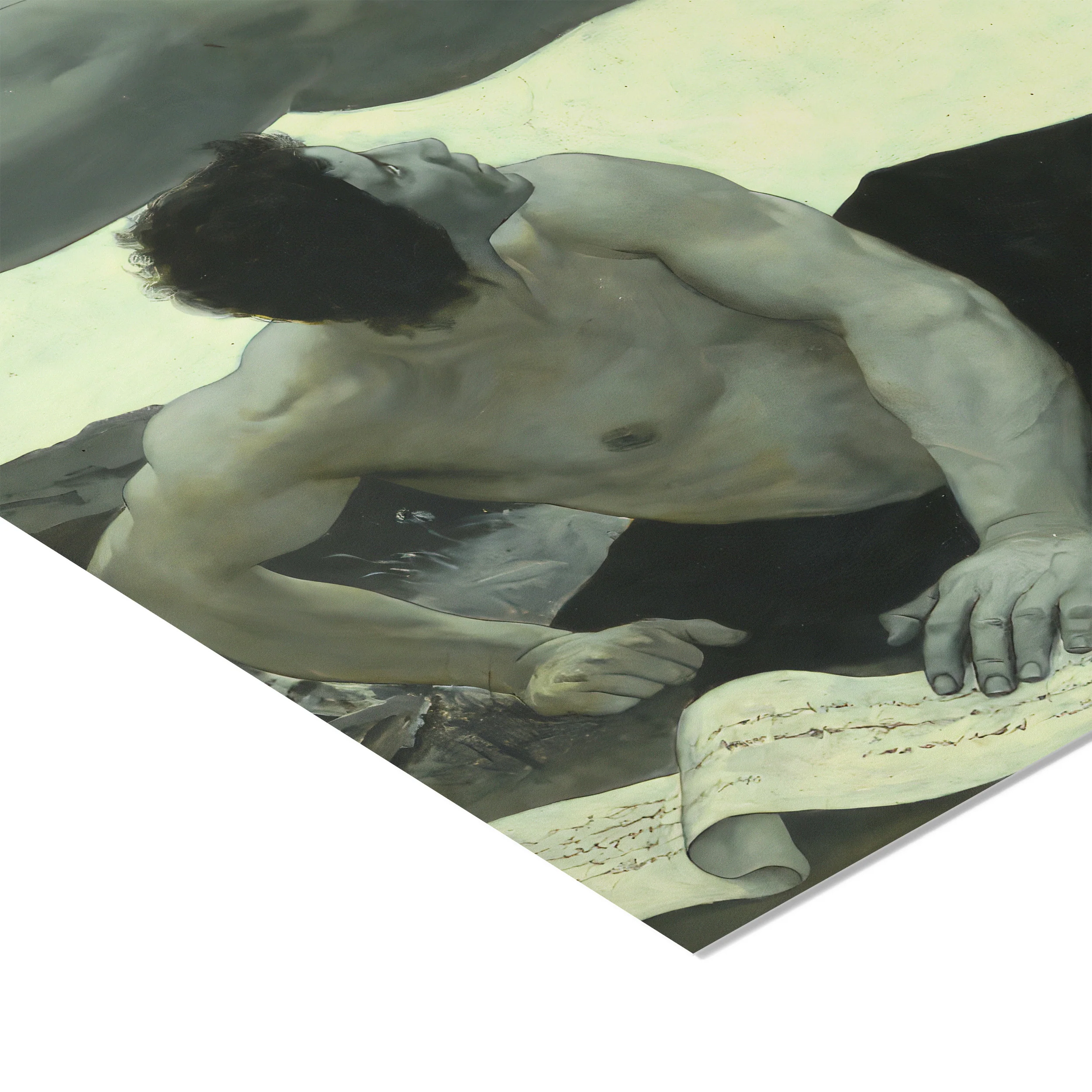
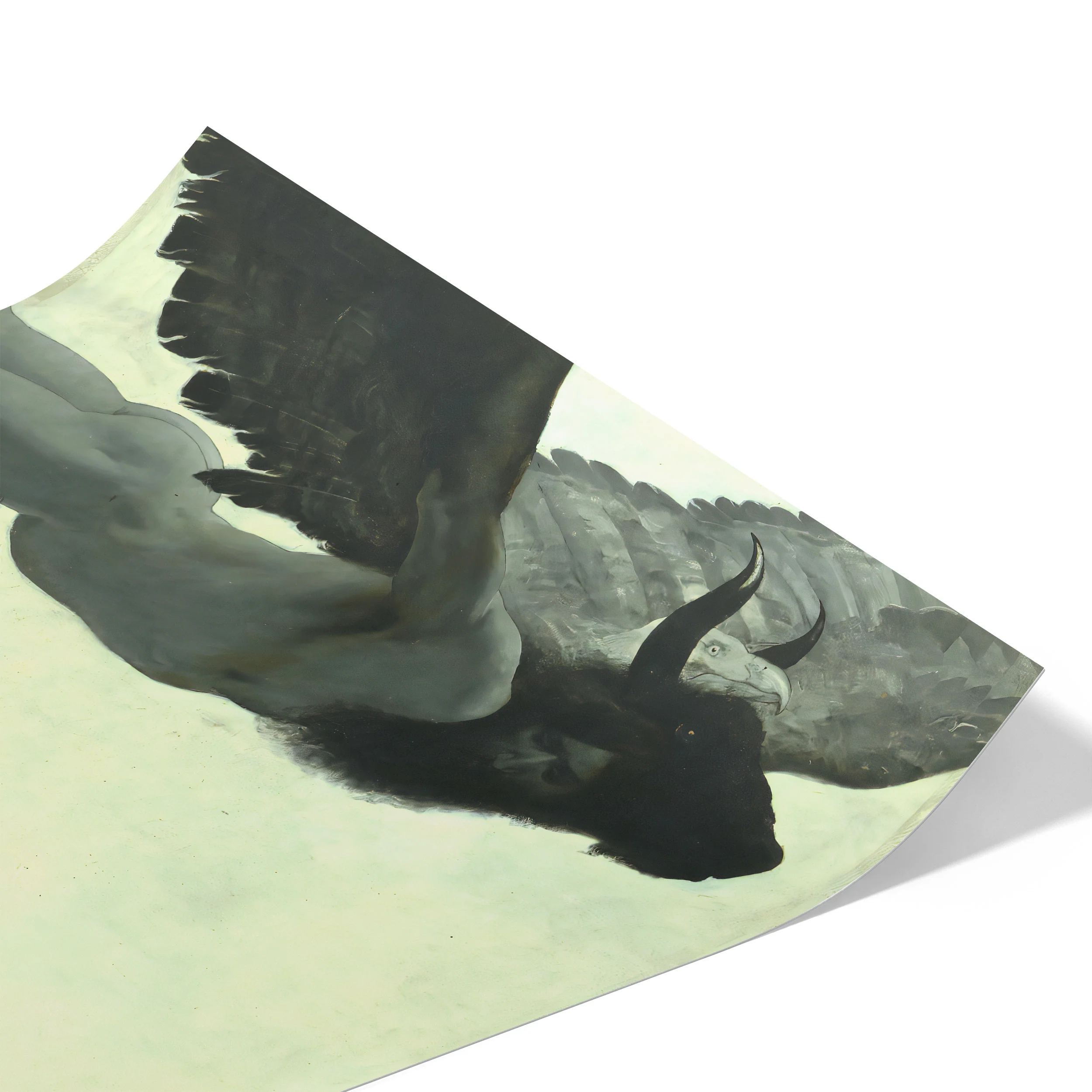
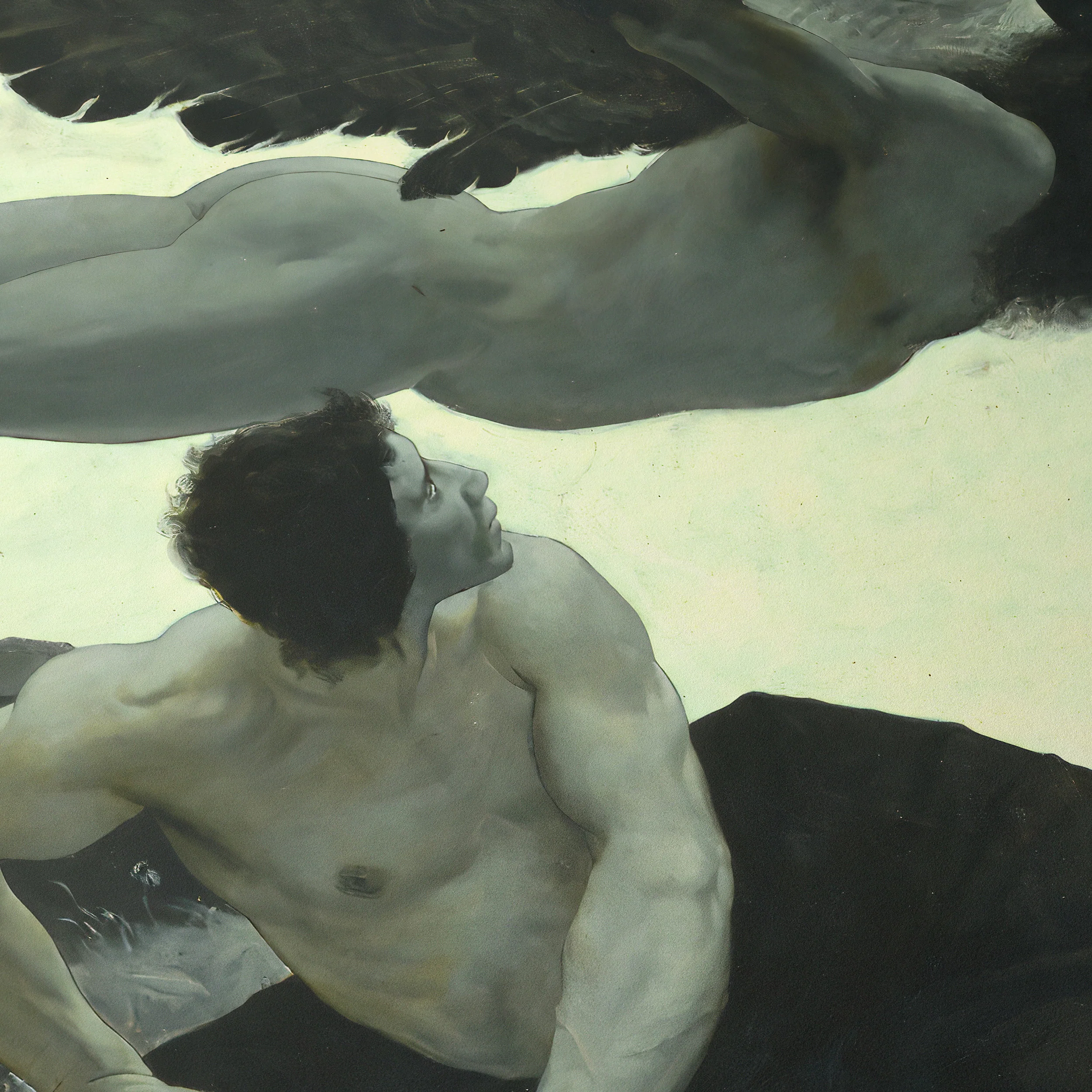
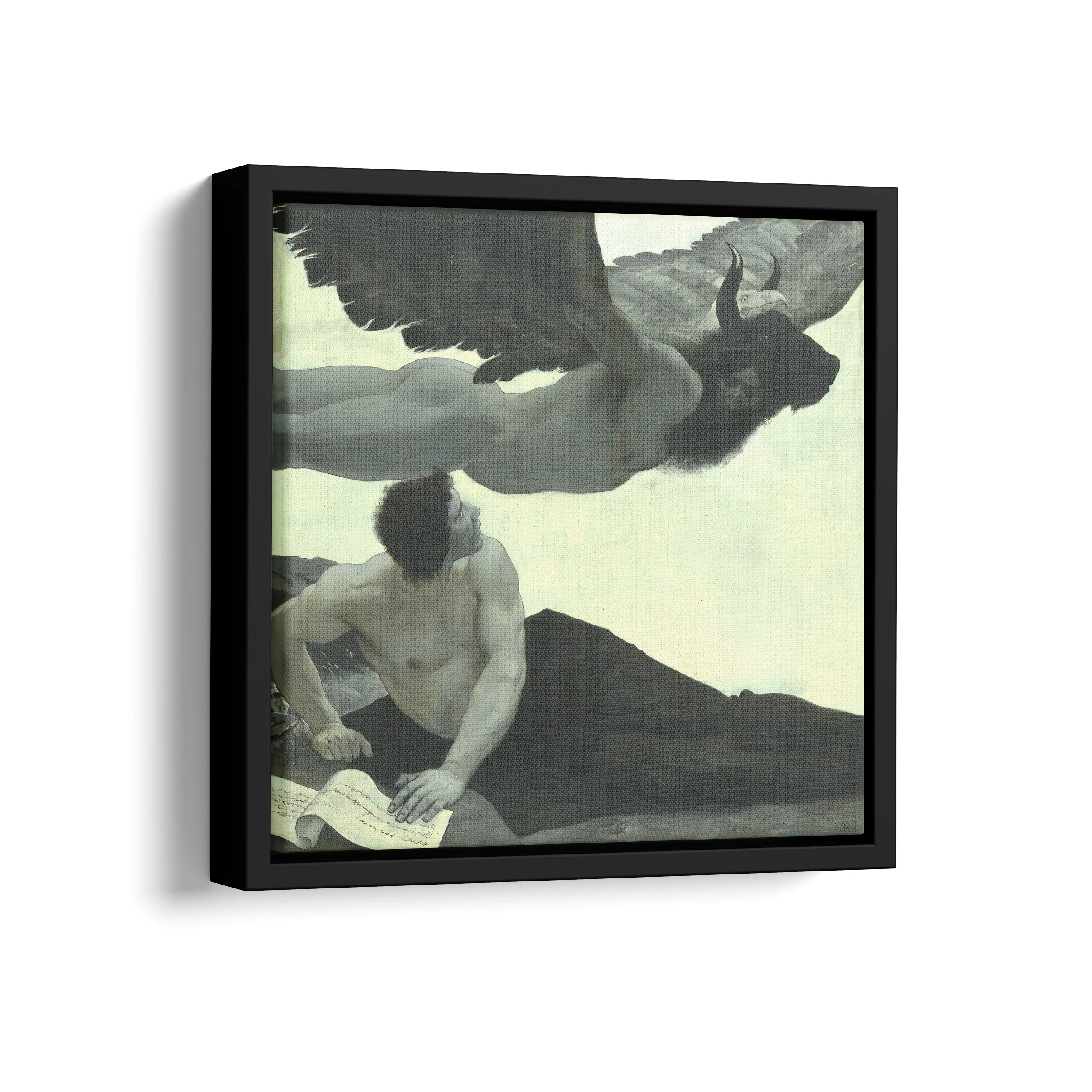
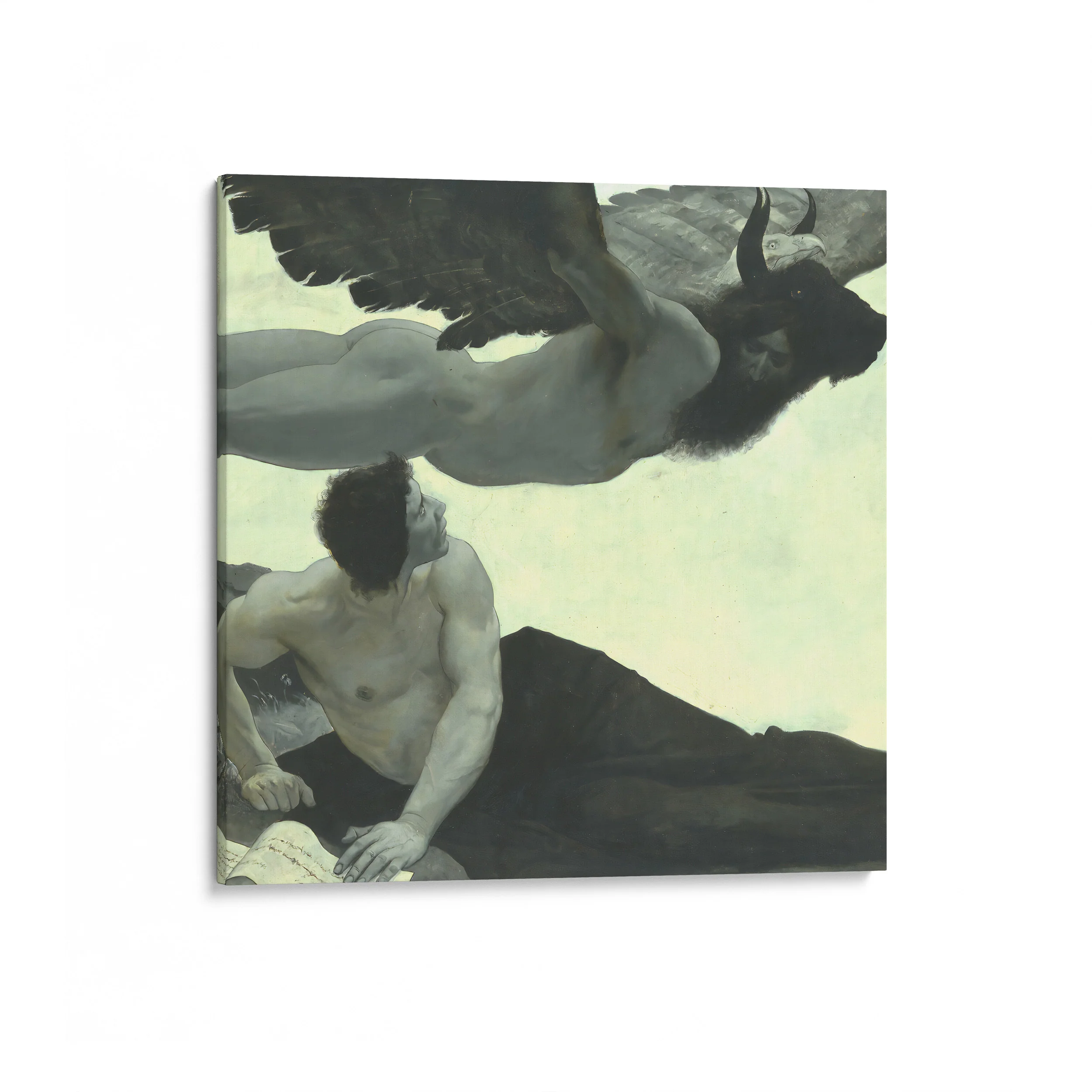
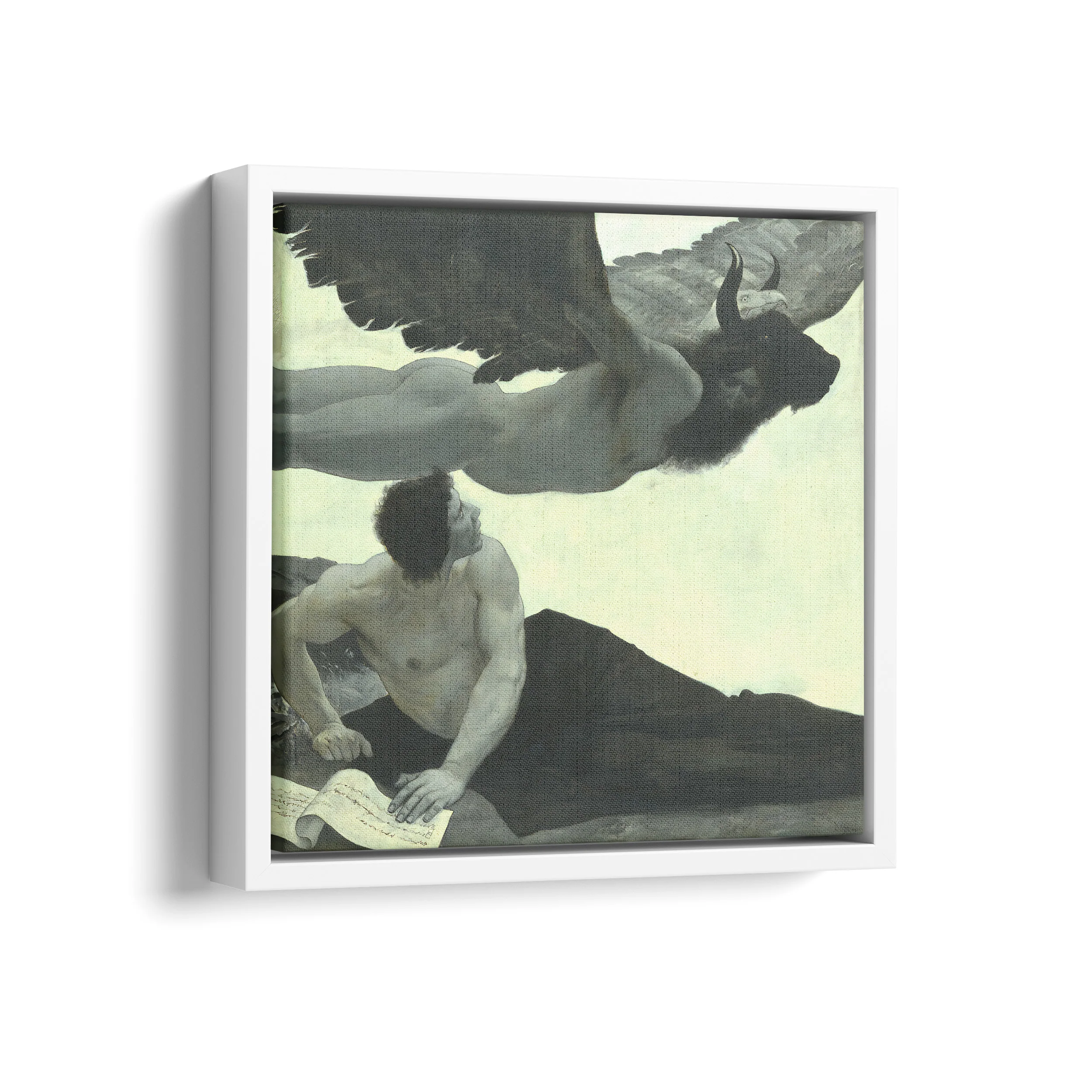
Sascha Schneider’s A Vision (1897) is a powerful Symbolist wood engraving that stages a dramatic encounter between human fragility and overwhelming spiritual force. At the lower left, a semi-nude man clutches a book, the emblem of knowledge and rational thought, while he turns upward to face a winged, demonic figure descending upon him with imposing intensity. The juxtaposition of the vulnerable, illuminated body with the shadowy apparition highlights the Symbolist fascination with inner visions, temptation, and transcendence. By replacing the paper with a book, Schneider anchors the scene in the tension between learning and revelation, suggesting that reason itself may be shaken when confronted with darker, irrational powers. The result is an image that fuses eroticism, mysticism, and intellectual struggle, emblematic of fin-de-siècle anxieties and the artist’s personal exploration of the body as a vessel of both desire and spiritual vulnerability.
Product Information
Product Information
Shipping & Returns
Shipping & Returns


A Vision | Sascha Schneider | 1897
A Vision | Sascha Schneider | 1897
About the artwork:
Sascha Schneider’s A Vision (1897) is a powerful Symbolist wood engraving that stages a dramatic encounter between human fragility and overwhelming spiritual force. At the lower left, a semi-nude man clutches a book, the emblem of knowledge and rational thought, while he turns upward to face a winged, demonic figure descending upon him with imposing intensity. The juxtaposition of the vulnerable, illuminated body with the shadowy apparition highlights the Symbolist fascination with inner visions, temptation, and transcendence. By replacing the paper with a book, Schneider anchors the scene in the tension between learning and revelation, suggesting that reason itself may be shaken when confronted with darker, irrational powers. The result is an image that fuses eroticism, mysticism, and intellectual struggle, emblematic of fin-de-siècle anxieties and the artist’s personal exploration of the body as a vessel of both desire and spiritual vulnerability.
Original: $459.85
-70%$459.85
$137.96Product Information
Product Information
Shipping & Returns
Shipping & Returns
Description
About the artwork:
Sascha Schneider’s A Vision (1897) is a powerful Symbolist wood engraving that stages a dramatic encounter between human fragility and overwhelming spiritual force. At the lower left, a semi-nude man clutches a book, the emblem of knowledge and rational thought, while he turns upward to face a winged, demonic figure descending upon him with imposing intensity. The juxtaposition of the vulnerable, illuminated body with the shadowy apparition highlights the Symbolist fascination with inner visions, temptation, and transcendence. By replacing the paper with a book, Schneider anchors the scene in the tension between learning and revelation, suggesting that reason itself may be shaken when confronted with darker, irrational powers. The result is an image that fuses eroticism, mysticism, and intellectual struggle, emblematic of fin-de-siècle anxieties and the artist’s personal exploration of the body as a vessel of both desire and spiritual vulnerability.