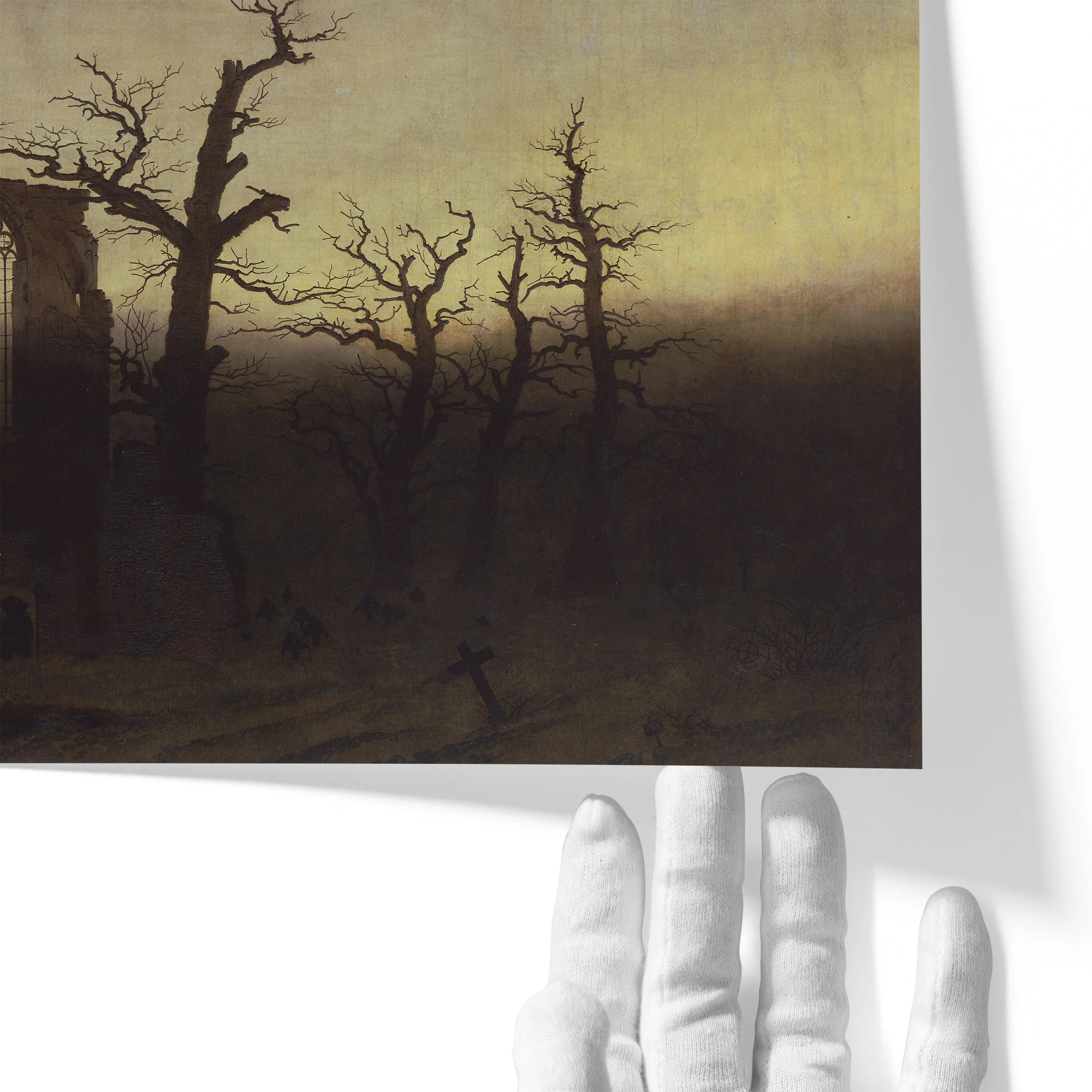
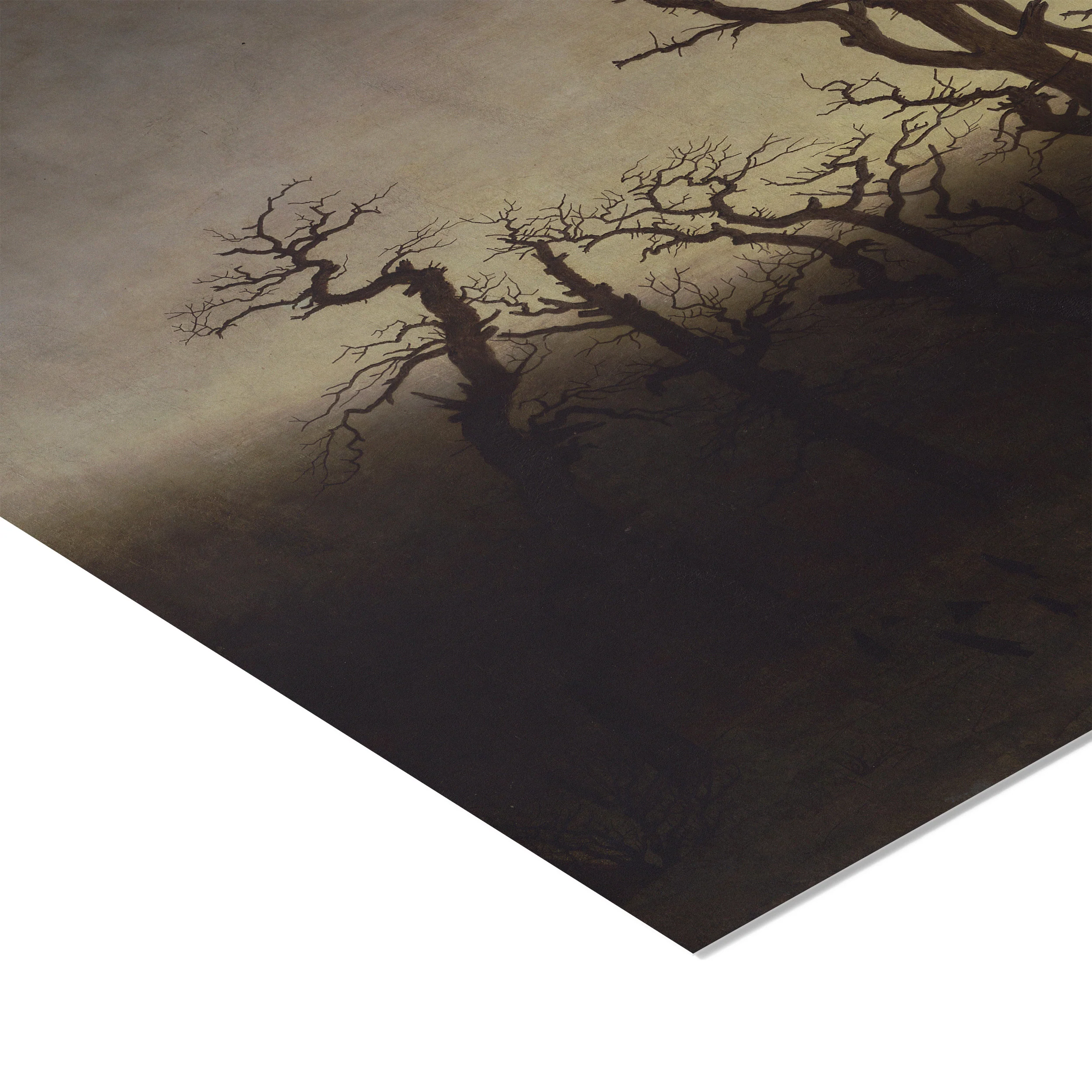
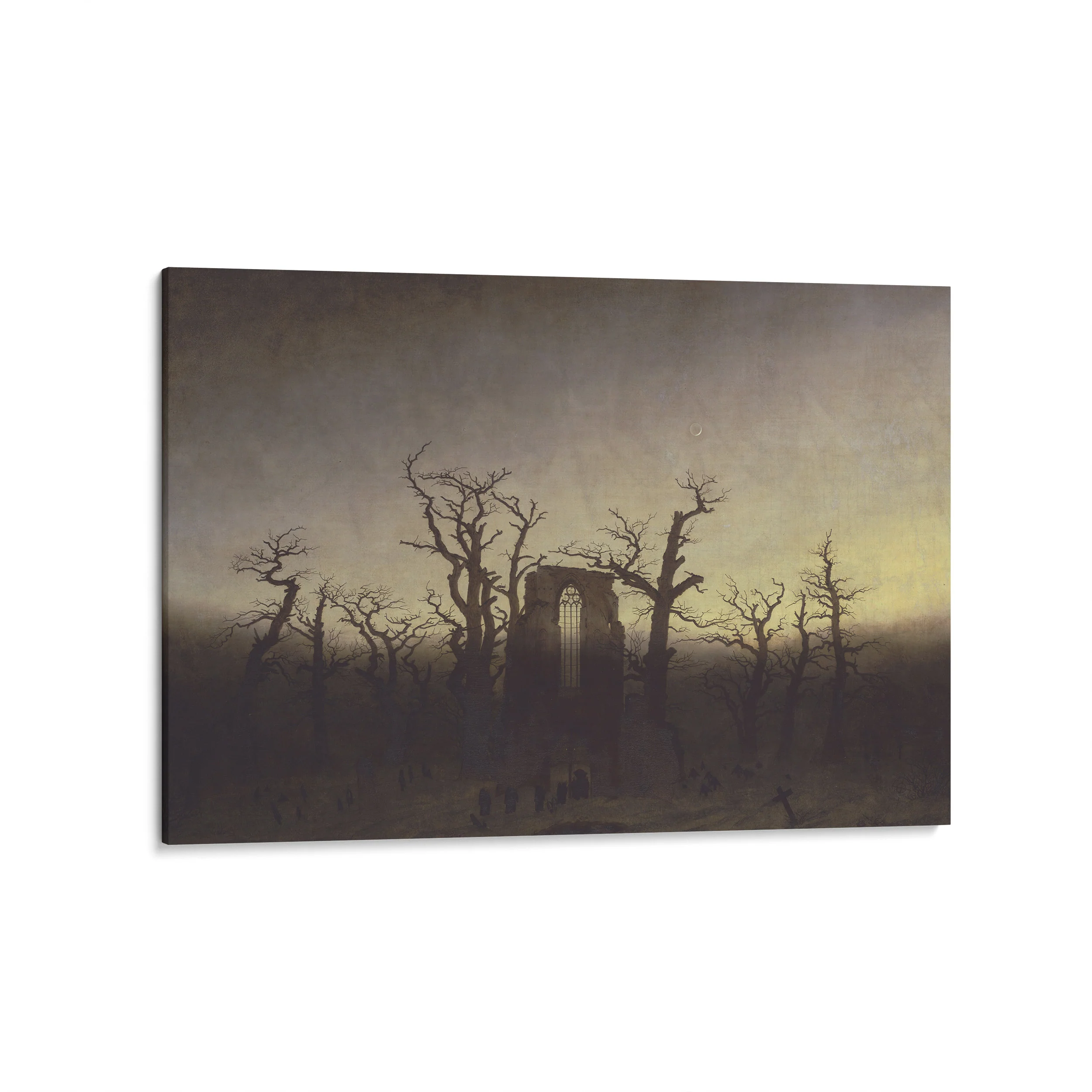
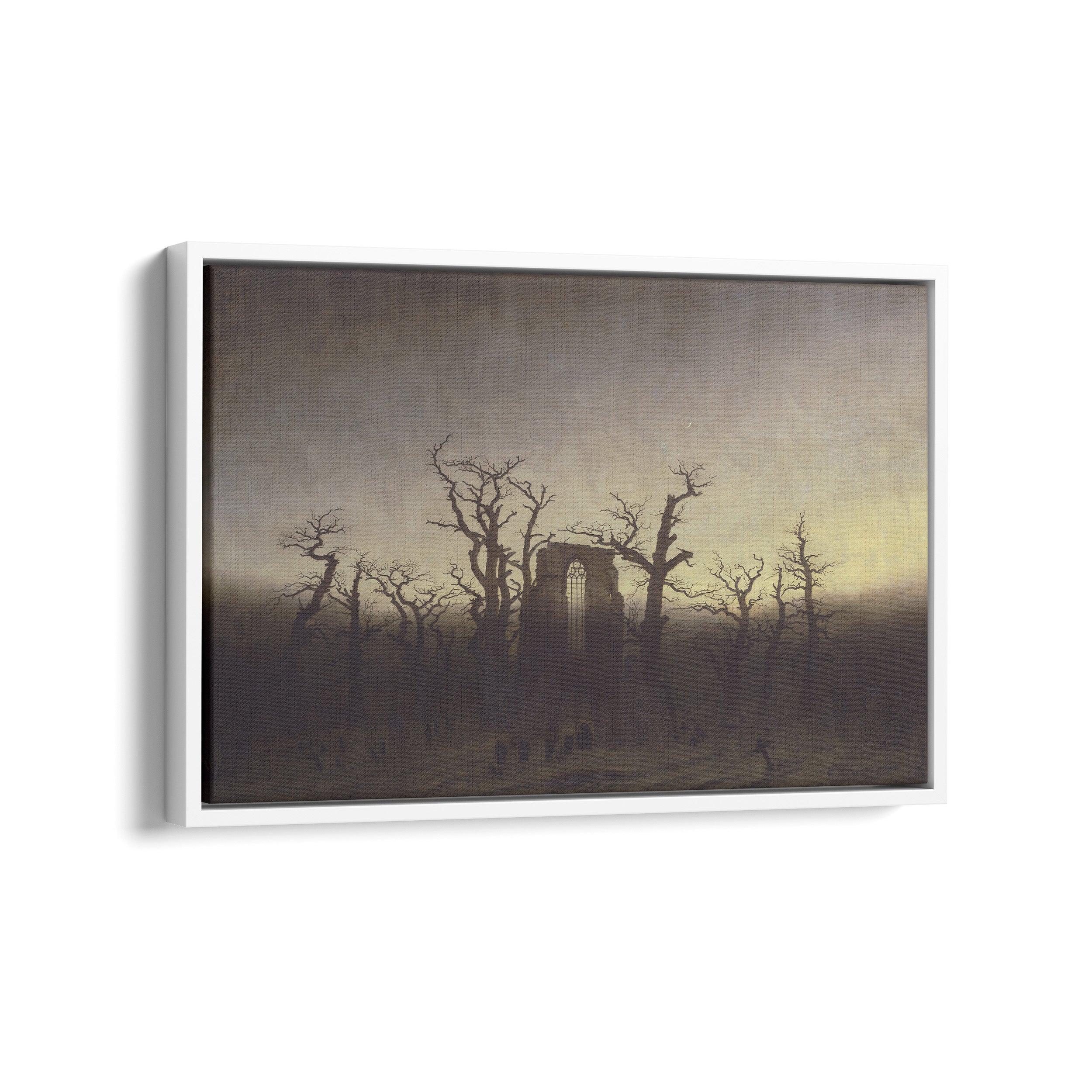
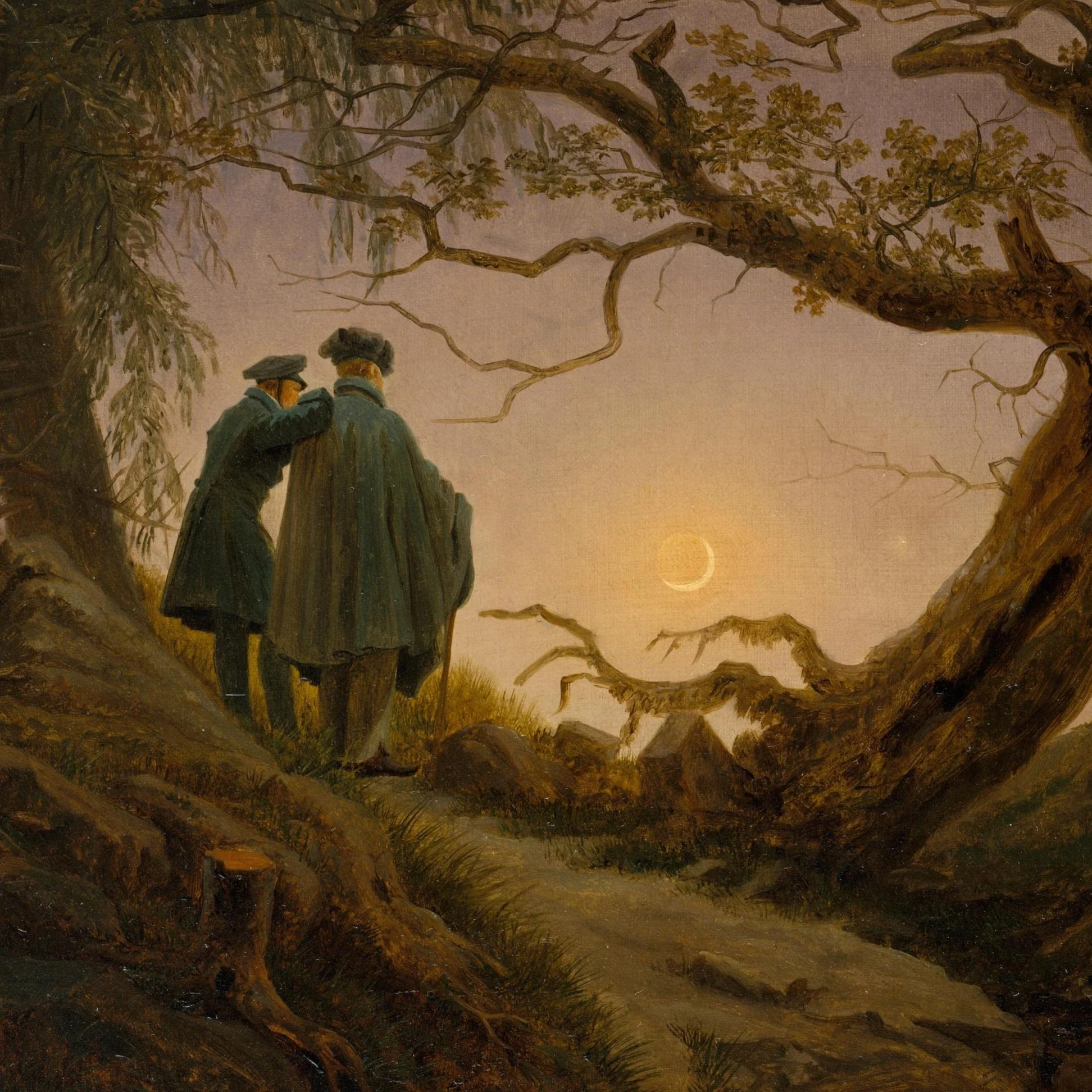
Caspar David Friedrich's Abbey in the Oakwood (1809–10) is a deeply evocative exploration of mortality, faith, and the passage of time, embodying the Romantic fascination with the sublime. The painting depicts the ruins of a Gothic abbey framed by skeletal oak trees, their stark, barren forms silhouetted against a cold, twilight sky. In the foreground, a somber funeral procession moves toward the abbey, their presence dwarfed by the monumental ruins and towering trees. The crumbling abbey symbolizes the transience of human achievements, while the enduring oak trees suggest nature's unyielding permanence. Friedrich's palette of muted grays and browns enhances the desolate atmosphere, evoking a sense of reverence and melancholy. The diffused light of the setting (or rising) sun, barely breaking through the clouds, introduces a glimmer of hope or divine presence amid the gloom. Abbey in the Oakwood is a profound meditation on the intersection of life, death, and spirituality, inviting viewers to contemplate the fleeting nature of existence and the eternal mysteries beyond.