✨ New Arrivals Just Dropped!Explore
HomeStore

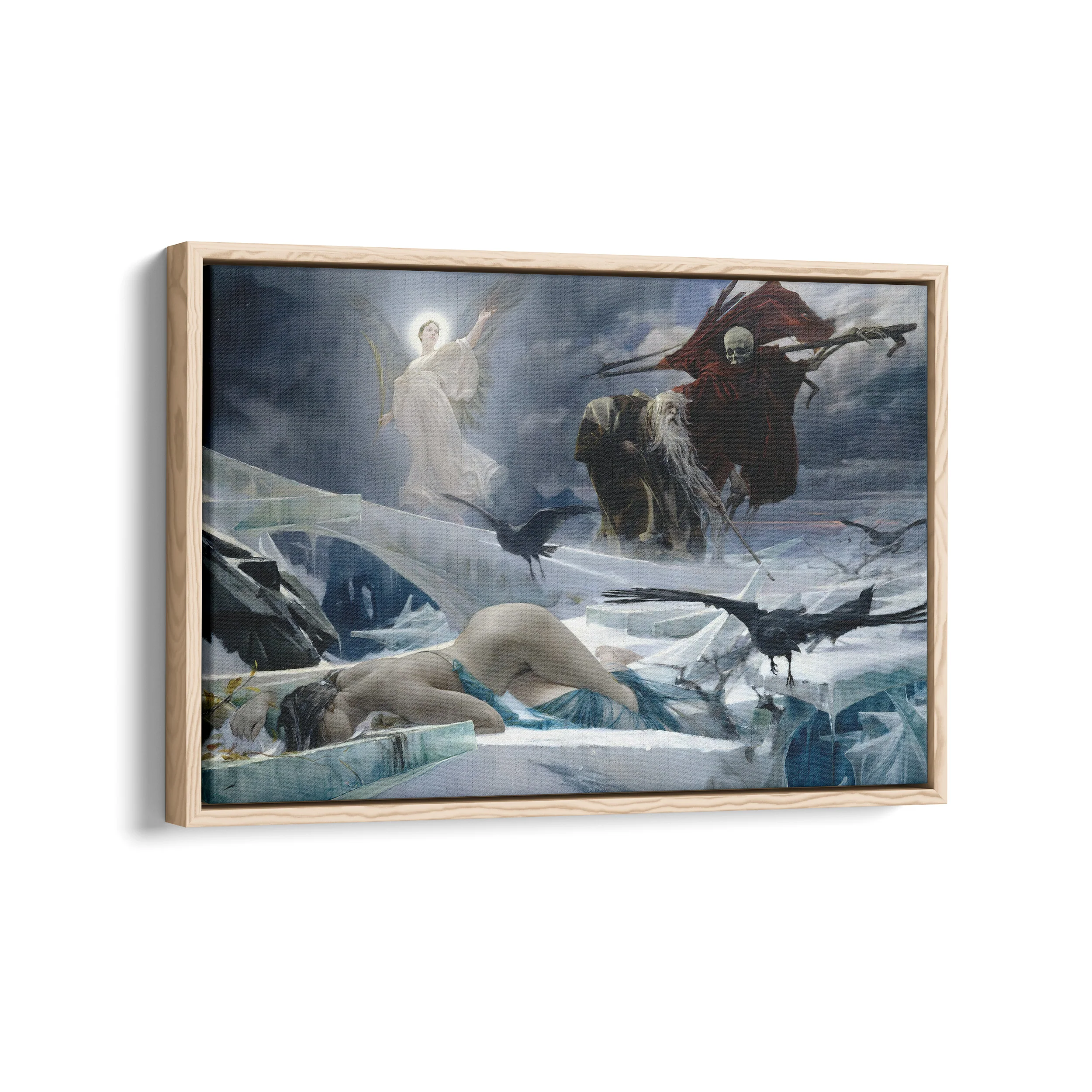
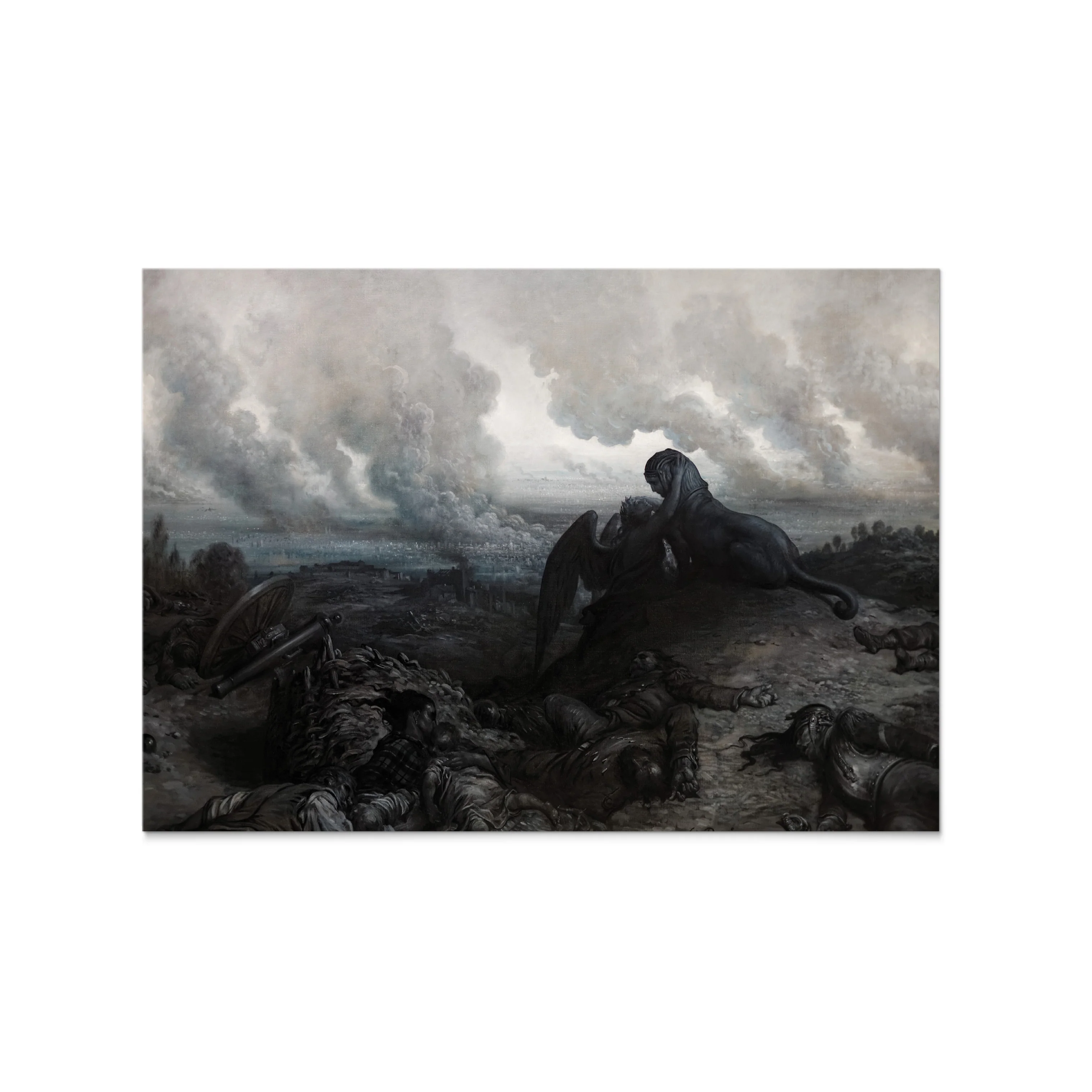
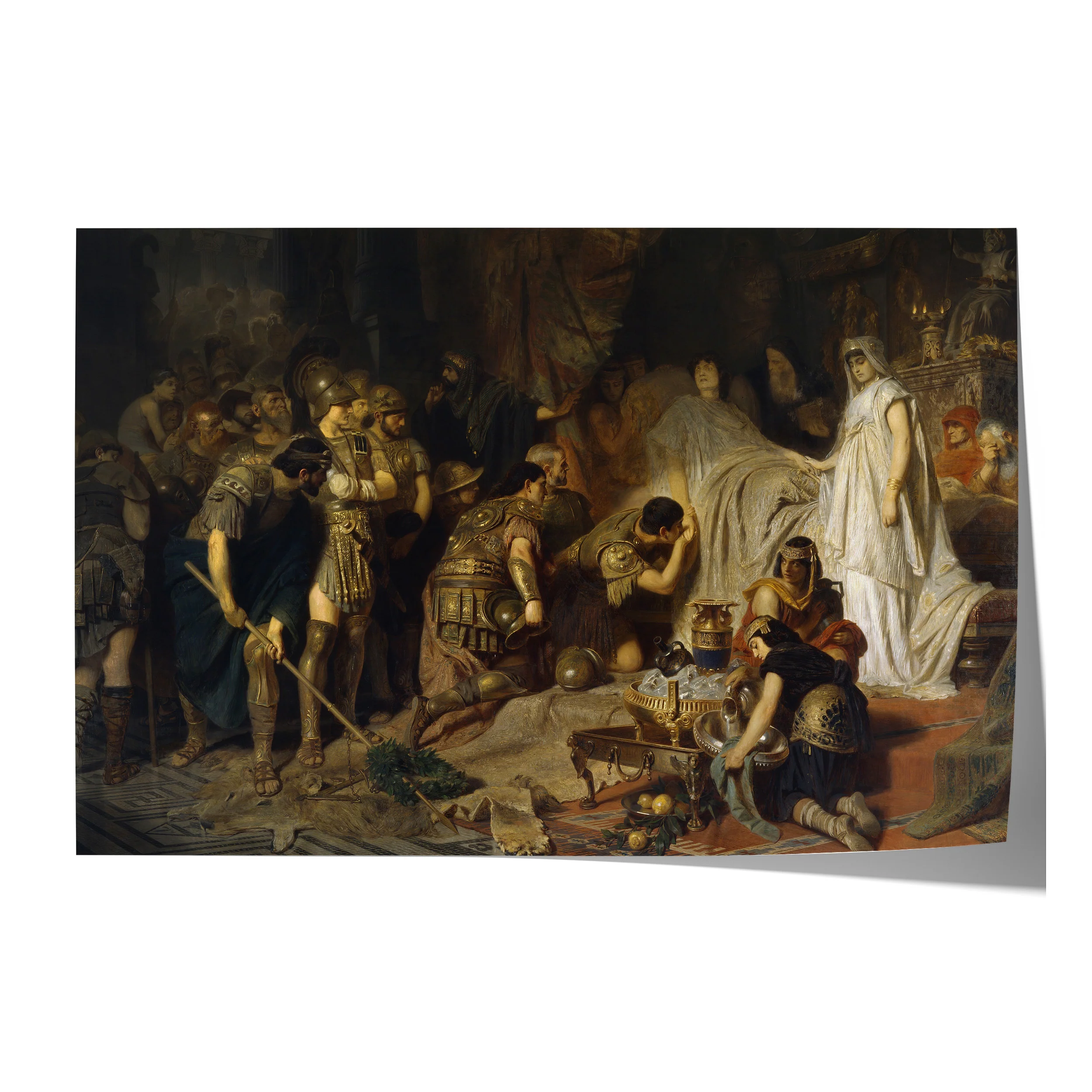
Ahasuerus at the End of the World | Adolf Hirémy-Hirschl | 1888

Product image 1
Product image 2
Product image 3
Product image 4
Product image 5
Product image 6
Product image 7
Product image 8
Product image 9
Product image 10

Ahasuerus at the End of the World | Adolf Hirémy-Hirschl | 1888

Ahasuerus at the End of the World | Adolf Hirémy-Hirschl | 1888

About the artwork:

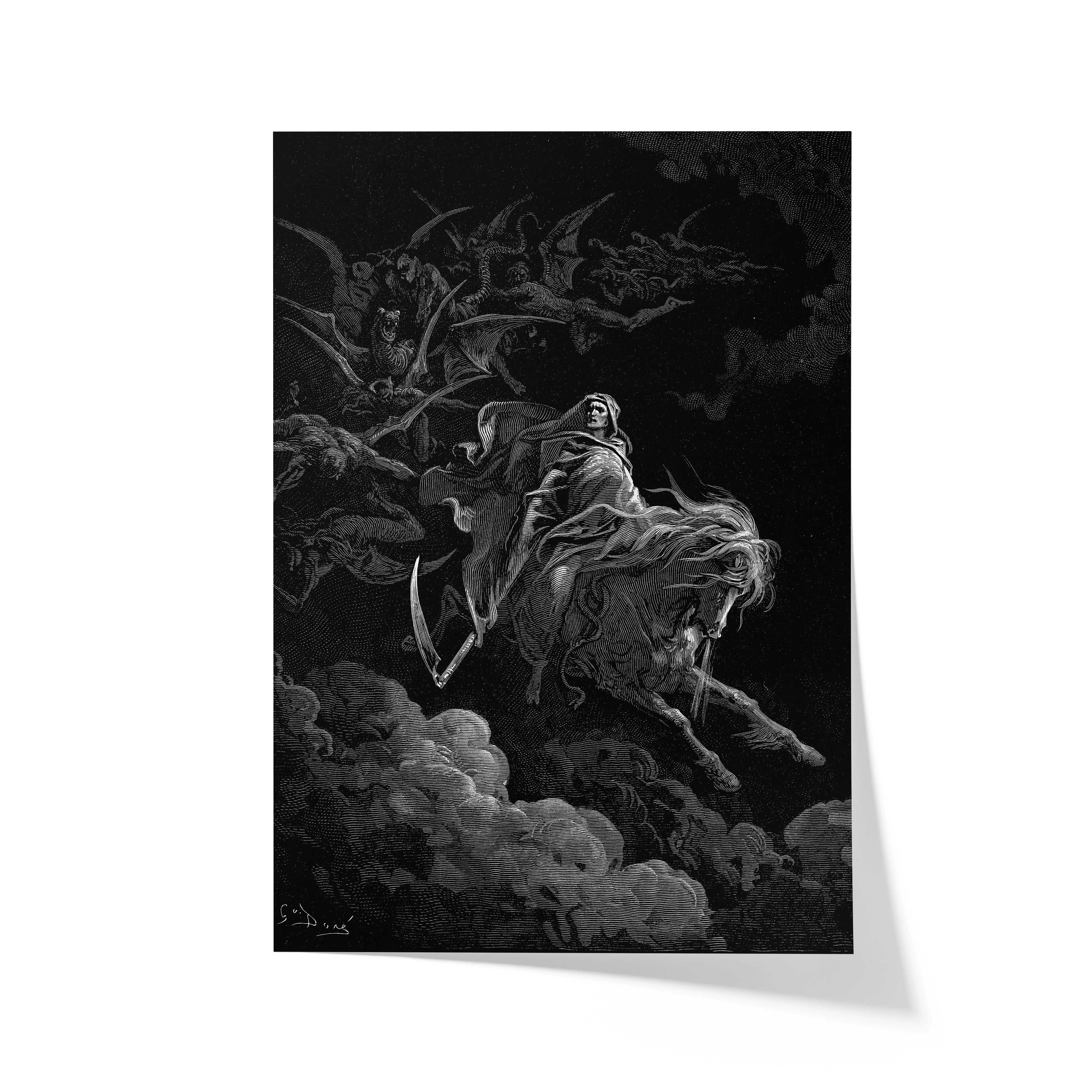
Adolf Hirémy-Hirschl’s Ahasuerus at the End of the World (1888) is a haunting Symbolist oil painting that visualizes the legend of the Wandering Jew—Ahasuerus—condemned to eternal life as punishment for mocking Christ, now witnessing the apocalypse itself. Here, the ancient wanderer stands alone in a stark, polar landscape, caught between the spectral figures of Death and an angelic emblem of hope, while the lifeless body of humanity lies frozen before him and ominous crows circle above, amplifying the painting’s existential dread. The restricted palette of blues, grays, and blacks, with only muted touches of warmth, heightens the sense of desolation and underscores the burden of immortality and the isolation of existential witness, making the work a profound meditation on time, suffering, and the human condition at the end of all things.

Select Select Size
Select Frame Options
From $89.35

Original: $297.82

-70%
Ahasuerus at the End of the World | Adolf Hirémy-Hirschl | 1888

$297.82

$89.35

Product Information

Shipping & Returns

Description

About the artwork:
Adolf Hirémy-Hirschl’s Ahasuerus at the End of the World (1888) is a haunting Symbolist oil painting that visualizes the legend of the Wandering Jew—Ahasuerus—condemned to eternal life as punishment for mocking Christ, now witnessing the apocalypse itself. Here, the ancient wanderer stands alone in a stark, polar landscape, caught between the spectral figures of Death and an angelic emblem of hope, while the lifeless body of humanity lies frozen before him and ominous crows circle above, amplifying the painting’s existential dread. The restricted palette of blues, grays, and blacks, with only muted touches of warmth, heightens the sense of desolation and underscores the burden of immortality and the isolation of existential witness, making the work a profound meditation on time, suffering, and the human condition at the end of all things.