American Gothic | Grant Wood | 1930
About the artwork:
American Gothic (1930) by Grant Wood is one of the most iconic images of American art, depicting a stern farmer holding a pitchfork beside a woman, often assumed to be his wife or daughter, in front of a simple wooden house with a pointed Gothic window. The painting embodies both pride and unease: on one hand, it reflects the resilience, hard work, and moral values associated with rural America during the Great Depression; on the other, its rigid poses, austere expressions, and sharp geometry hint at satire, suggesting the suffocating conservatism of small-town life. This ambiguity—whether the work is a tribute to Midwestern virtue or a subtle critique of it—is precisely what has made American Gothic endlessly debated and deeply ingrained in the cultural imagination.
Product Information
Product Information
Shipping & Returns
Shipping & Returns


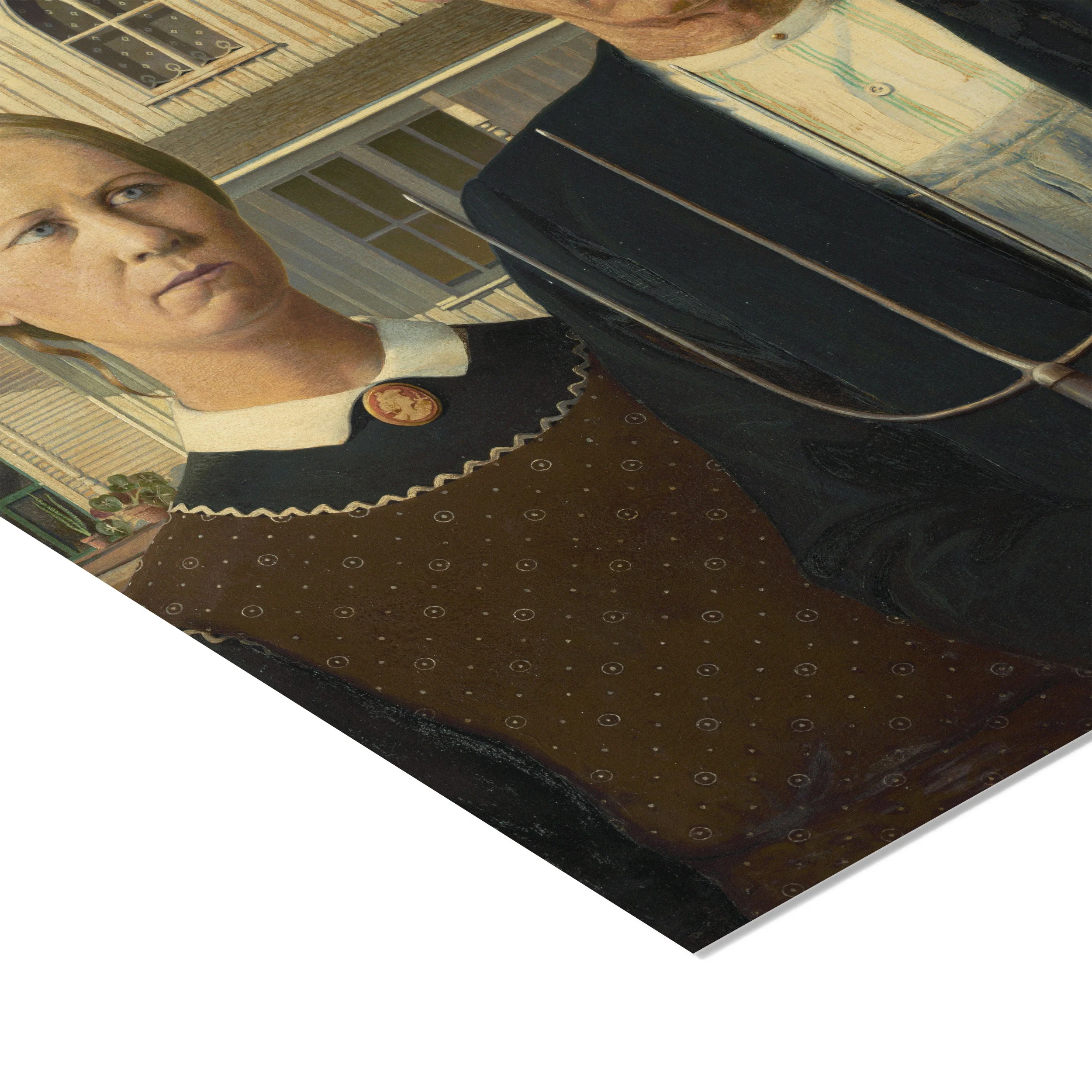
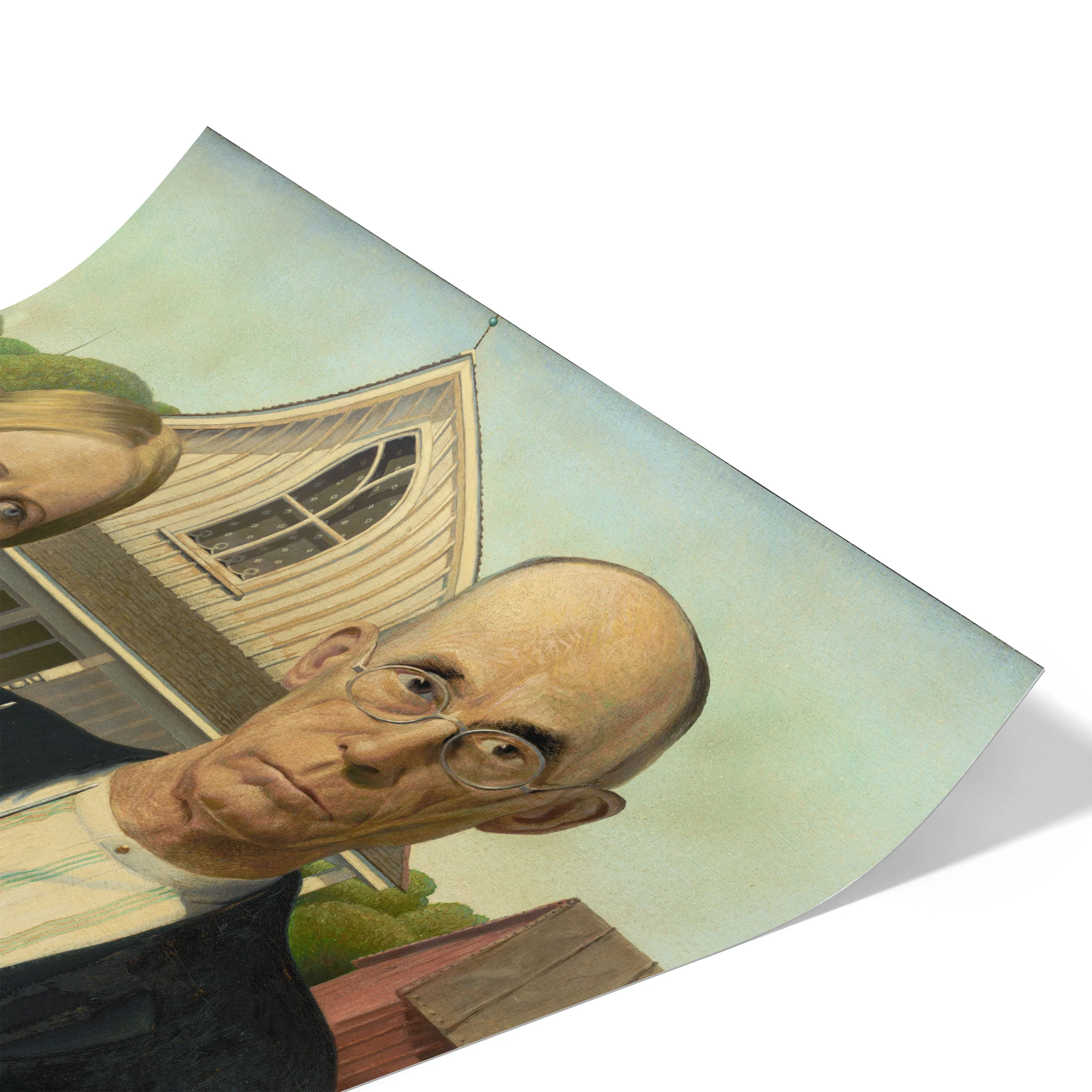

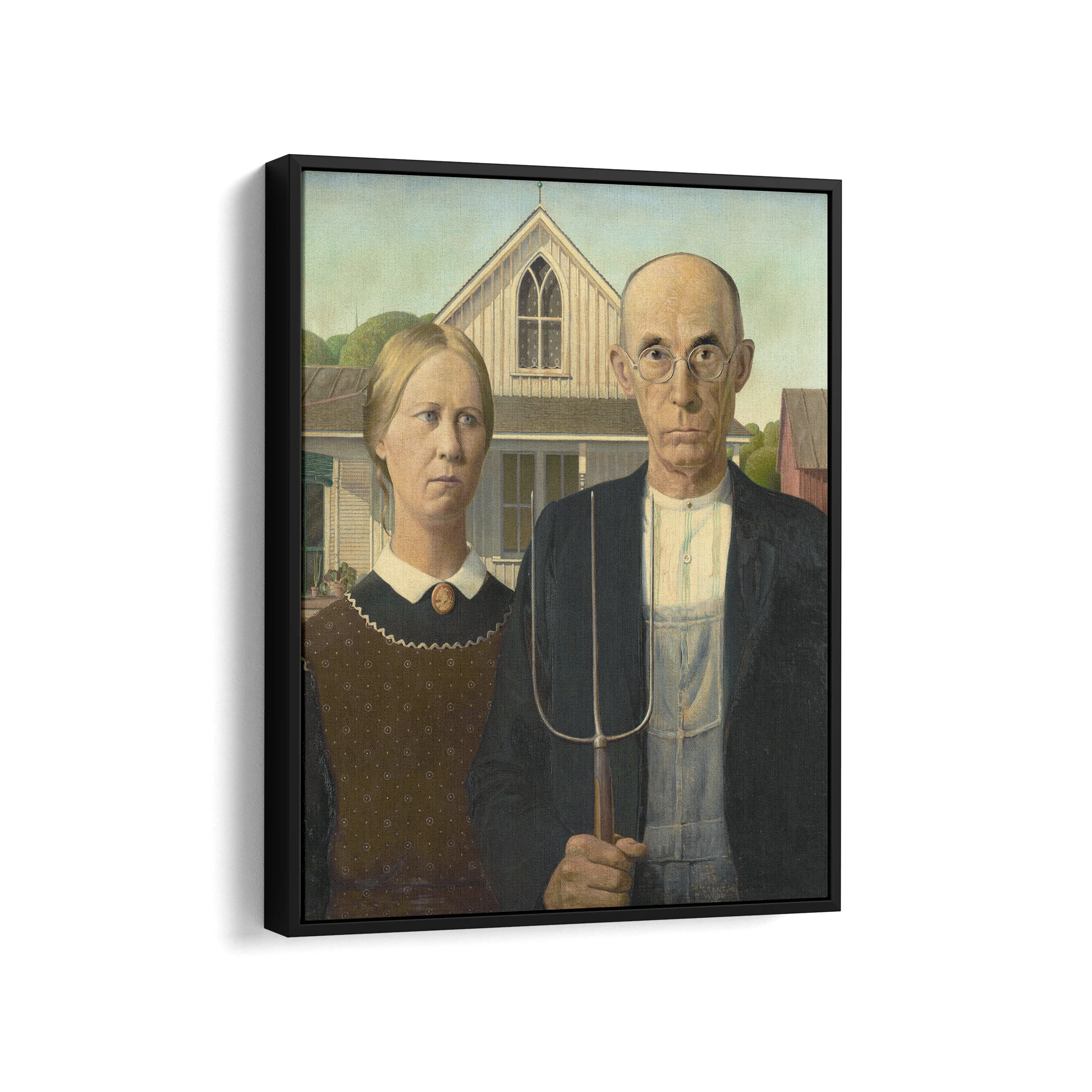


American Gothic | Grant Wood | 1930
American Gothic | Grant Wood | 1930
About the artwork:
American Gothic (1930) by Grant Wood is one of the most iconic images of American art, depicting a stern farmer holding a pitchfork beside a woman, often assumed to be his wife or daughter, in front of a simple wooden house with a pointed Gothic window. The painting embodies both pride and unease: on one hand, it reflects the resilience, hard work, and moral values associated with rural America during the Great Depression; on the other, its rigid poses, austere expressions, and sharp geometry hint at satire, suggesting the suffocating conservatism of small-town life. This ambiguity—whether the work is a tribute to Midwestern virtue or a subtle critique of it—is precisely what has made American Gothic endlessly debated and deeply ingrained in the cultural imagination.
Original: $297.82
-70%$297.82
$89.35Product Information
Product Information
Shipping & Returns
Shipping & Returns
Description
About the artwork:
American Gothic (1930) by Grant Wood is one of the most iconic images of American art, depicting a stern farmer holding a pitchfork beside a woman, often assumed to be his wife or daughter, in front of a simple wooden house with a pointed Gothic window. The painting embodies both pride and unease: on one hand, it reflects the resilience, hard work, and moral values associated with rural America during the Great Depression; on the other, its rigid poses, austere expressions, and sharp geometry hint at satire, suggesting the suffocating conservatism of small-town life. This ambiguity—whether the work is a tribute to Midwestern virtue or a subtle critique of it—is precisely what has made American Gothic endlessly debated and deeply ingrained in the cultural imagination.