Ascent of the Blessed | Hieronymus Bosch | c. 1505-15
About the artwork:
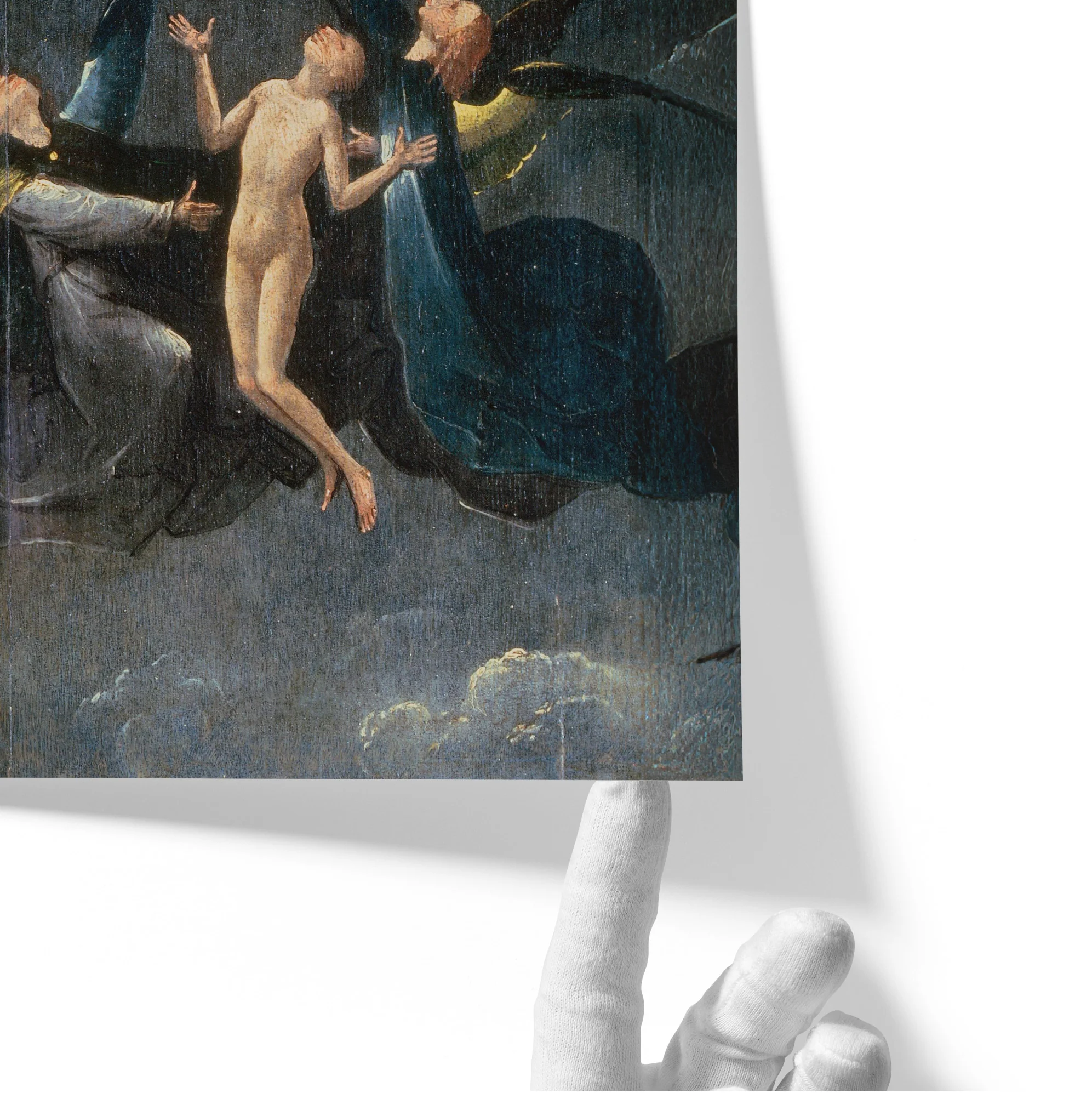
Hieronymus Bosch’s Ascent of the Blessed, painted around 1505 to 1515, is one of the four panels of Visions of the Hereafter, now in the Gallerie dell’Accademia in Venice. It shows angels guiding human souls upward through a luminous circular passage toward divine light, reducing the afterlife to a stark contrast between darkness and salvation. What makes the painting so powerful is its unusual simplicity. Instead of filling the scene with Bosch’s more familiar monsters and crowded symbols, he builds the image around movement, light, and spiritual direction, which gives it an almost visionary clarity. The work is often linked to late medieval mystical literature and devotional texts, and the museum itself notes that Bosch’s imagery likely drew on such writings, especially their symbolic contrast between light and shadow. A relevant detail is that this panel is still discussed today because its tunnel of light has often been compared to modern descriptions of near death experience, although that remains a later interpretation rather than a historical explanation of Bosch’s intention.
Product Information
Product Information
Shipping & Returns
Shipping & Returns




Ascent of the Blessed | Hieronymus Bosch | c. 1505-15
Ascent of the Blessed | Hieronymus Bosch | c. 1505-15
About the artwork:
Hieronymus Bosch’s Ascent of the Blessed, painted around 1505 to 1515, is one of the four panels of Visions of the Hereafter, now in the Gallerie dell’Accademia in Venice. It shows angels guiding human souls upward through a luminous circular passage toward divine light, reducing the afterlife to a stark contrast between darkness and salvation. What makes the painting so powerful is its unusual simplicity. Instead of filling the scene with Bosch’s more familiar monsters and crowded symbols, he builds the image around movement, light, and spiritual direction, which gives it an almost visionary clarity. The work is often linked to late medieval mystical literature and devotional texts, and the museum itself notes that Bosch’s imagery likely drew on such writings, especially their symbolic contrast between light and shadow. A relevant detail is that this panel is still discussed today because its tunnel of light has often been compared to modern descriptions of near death experience, although that remains a later interpretation rather than a historical explanation of Bosch’s intention.
Original: $504.35
-70%$504.35
$151.31Product Information
Product Information
Shipping & Returns
Shipping & Returns
Description
About the artwork:
Hieronymus Bosch’s Ascent of the Blessed, painted around 1505 to 1515, is one of the four panels of Visions of the Hereafter, now in the Gallerie dell’Accademia in Venice. It shows angels guiding human souls upward through a luminous circular passage toward divine light, reducing the afterlife to a stark contrast between darkness and salvation. What makes the painting so powerful is its unusual simplicity. Instead of filling the scene with Bosch’s more familiar monsters and crowded symbols, he builds the image around movement, light, and spiritual direction, which gives it an almost visionary clarity. The work is often linked to late medieval mystical literature and devotional texts, and the museum itself notes that Bosch’s imagery likely drew on such writings, especially their symbolic contrast between light and shadow. A relevant detail is that this panel is still discussed today because its tunnel of light has often been compared to modern descriptions of near death experience, although that remains a later interpretation rather than a historical explanation of Bosch’s intention.