Blue | Ad Reinhardt | 1953
About the artwork:
Ad Reinhardt was an American abstract painter closely associated with the Abstract Expressionist and Minimalist movements, although his works largely defy strict classification into any one genre. Known for his deep intellectual grounding in art history and philosophy, Reinhardt's art evolved over his career, but he is best remembered for his "black" or "ultimate" paintings, which he began developing in the early 1950s. These paintings typically consist of a black or nearly black square format, subtly divided into a grid that is painted with slight variations in hue and form. This subtlety often requires careful and prolonged viewing to perceive its complexities. Reinhardt described these works as “the last paintings” one can make, asserting they were the culmination of a reductionist ethos in modern art. His work has been interpreted as a critique of the commercialization of art and a profound exploration of the spiritual and contemplative dimensions of painting.
Product Information
Product Information
Shipping & Returns
Shipping & Returns
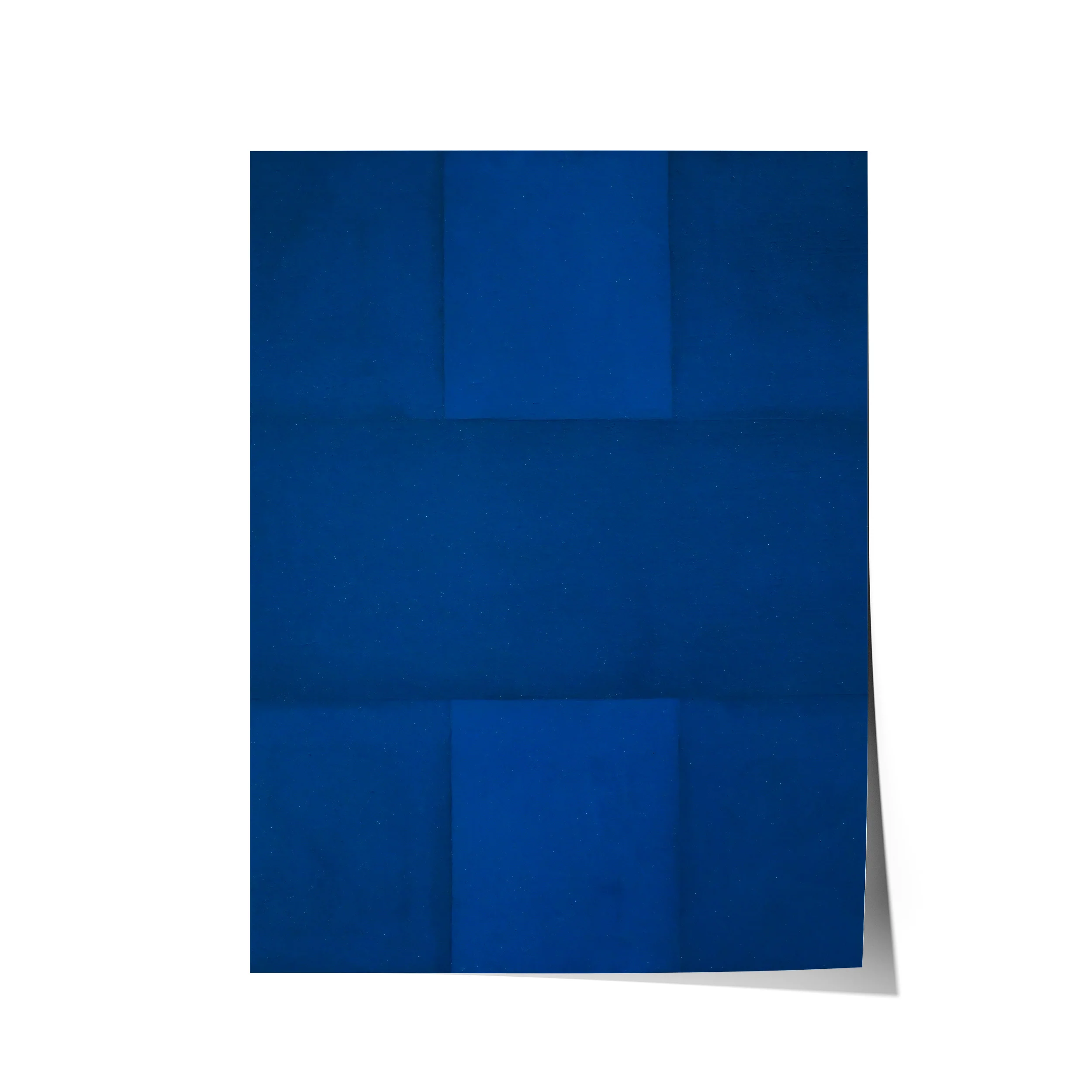


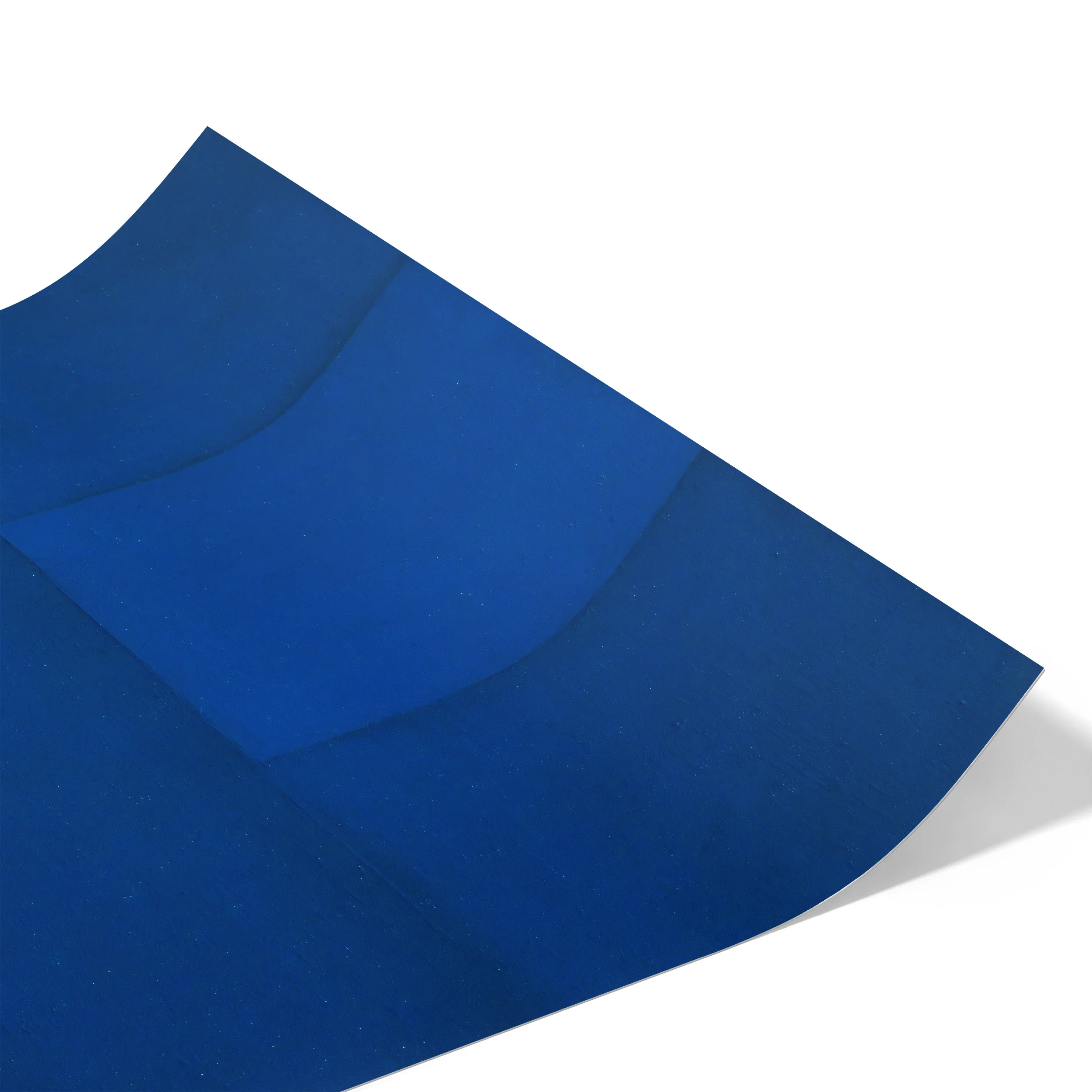

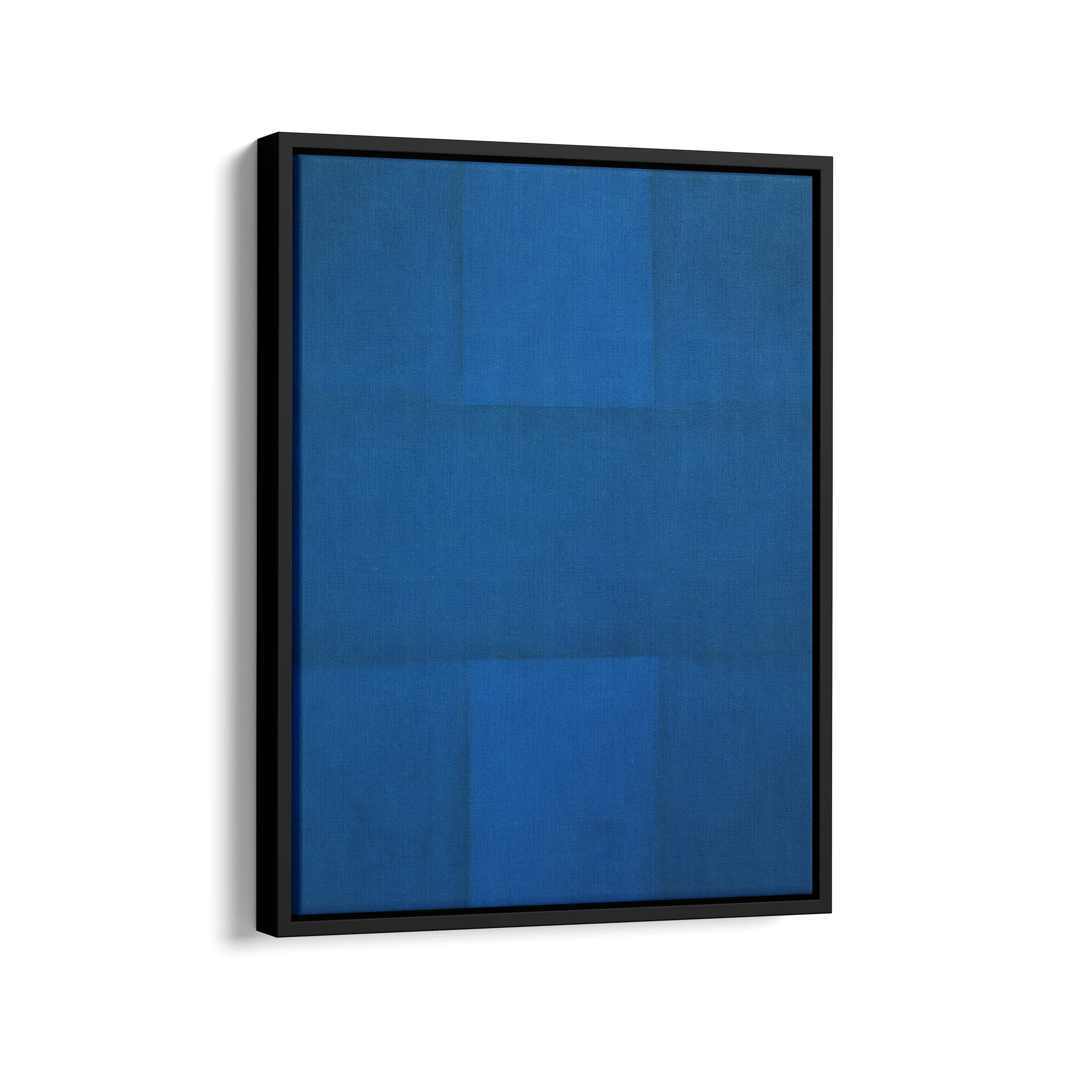
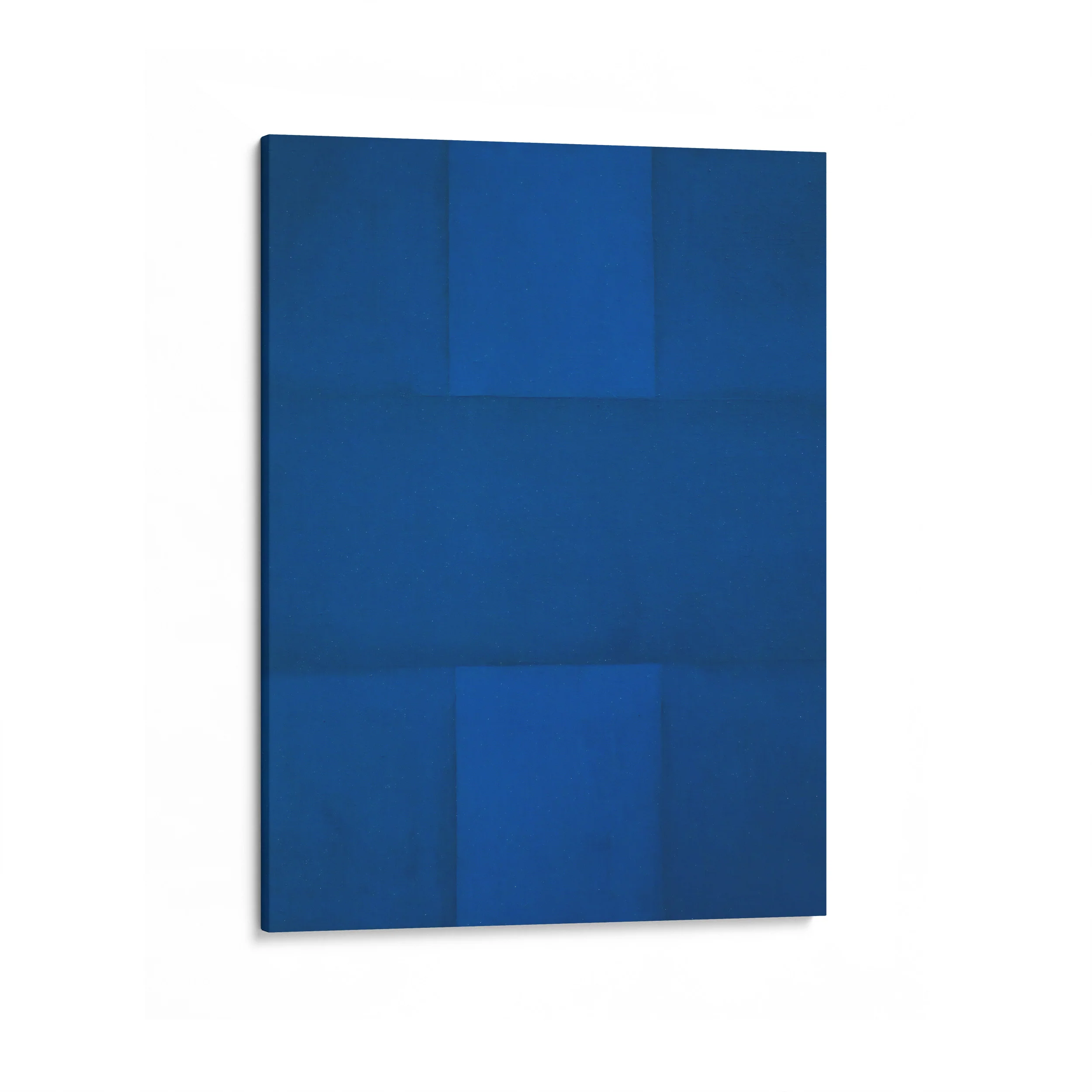


Blue | Ad Reinhardt | 1953
Blue | Ad Reinhardt | 1953
About the artwork:
Ad Reinhardt was an American abstract painter closely associated with the Abstract Expressionist and Minimalist movements, although his works largely defy strict classification into any one genre. Known for his deep intellectual grounding in art history and philosophy, Reinhardt's art evolved over his career, but he is best remembered for his "black" or "ultimate" paintings, which he began developing in the early 1950s. These paintings typically consist of a black or nearly black square format, subtly divided into a grid that is painted with slight variations in hue and form. This subtlety often requires careful and prolonged viewing to perceive its complexities. Reinhardt described these works as “the last paintings” one can make, asserting they were the culmination of a reductionist ethos in modern art. His work has been interpreted as a critique of the commercialization of art and a profound exploration of the spiritual and contemplative dimensions of painting.
Original: $297.82
-70%$297.82
$89.35Product Information
Product Information
Shipping & Returns
Shipping & Returns
Description
About the artwork:
Ad Reinhardt was an American abstract painter closely associated with the Abstract Expressionist and Minimalist movements, although his works largely defy strict classification into any one genre. Known for his deep intellectual grounding in art history and philosophy, Reinhardt's art evolved over his career, but he is best remembered for his "black" or "ultimate" paintings, which he began developing in the early 1950s. These paintings typically consist of a black or nearly black square format, subtly divided into a grid that is painted with slight variations in hue and form. This subtlety often requires careful and prolonged viewing to perceive its complexities. Reinhardt described these works as “the last paintings” one can make, asserting they were the culmination of a reductionist ethos in modern art. His work has been interpreted as a critique of the commercialization of art and a profound exploration of the spiritual and contemplative dimensions of painting.