Caresses | Fernand Khnopff | 1896
About the artwork:
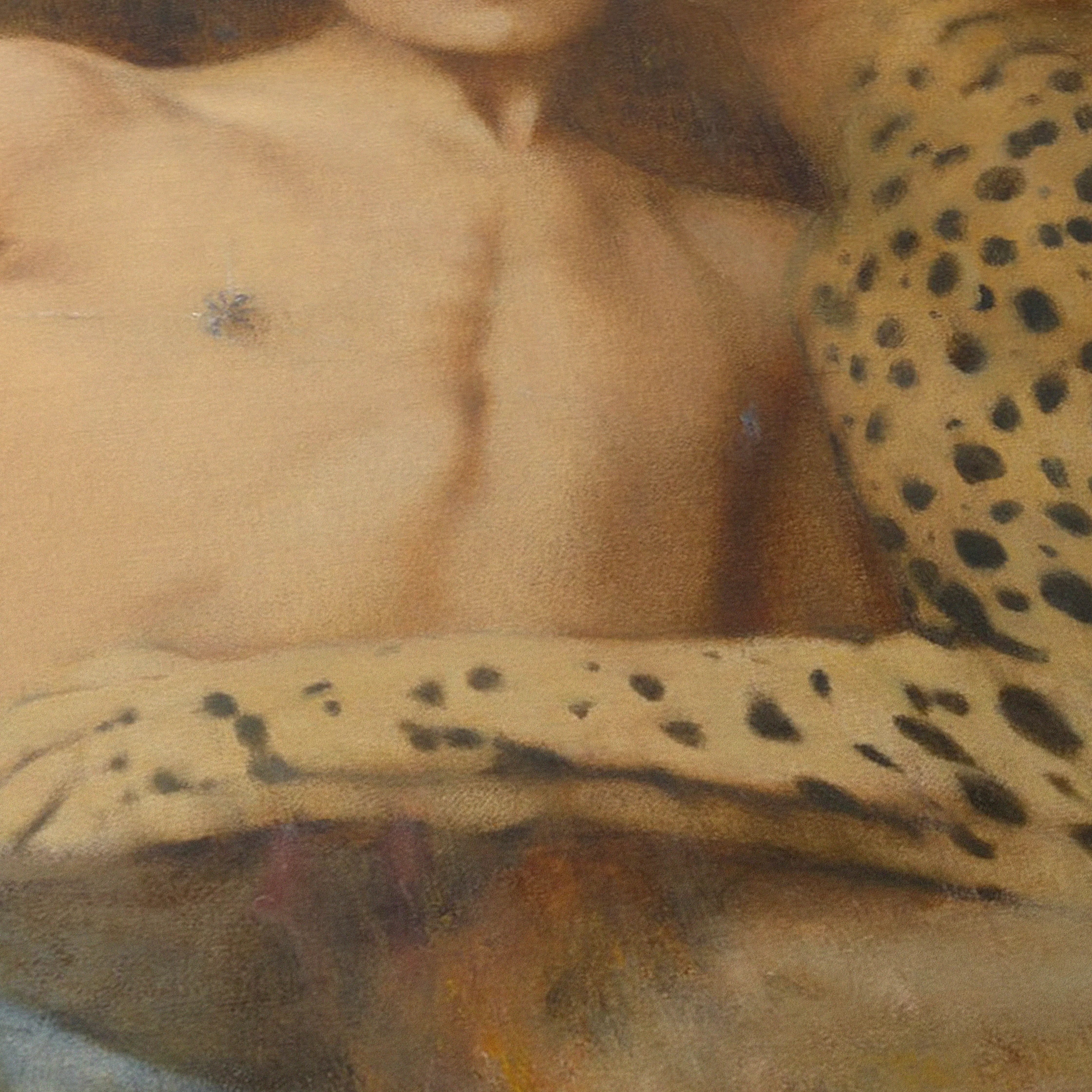
In Caresses (1896), Fernand Khnopff presents a haunting, dreamlike encounter between a youthful, androgynous figure and a female sphinx—half woman, half beast. Though their faces nearly touch, neither looks at the other, creating a charged silence filled with ambiguity and symbolic weight. The sphinx’s gesture suggests intimacy, yet her feline body implies danger, evoking the archetype of the femme fatale so central to Symbolist art. Rather than a literal narrative, the painting offers a psychological and emotional tableau—one that explores the themes of seduction, submission, and dual identity. The scene may reflect Khnopff’s own inner world, haunted by muses, ideals, and the mysterious power of the feminine, which he, like many Symbolists, saw as both muse and menace.
Product Information
Product Information
Shipping & Returns
Shipping & Returns




Caresses | Fernand Khnopff | 1896
Caresses | Fernand Khnopff | 1896
About the artwork:
In Caresses (1896), Fernand Khnopff presents a haunting, dreamlike encounter between a youthful, androgynous figure and a female sphinx—half woman, half beast. Though their faces nearly touch, neither looks at the other, creating a charged silence filled with ambiguity and symbolic weight. The sphinx’s gesture suggests intimacy, yet her feline body implies danger, evoking the archetype of the femme fatale so central to Symbolist art. Rather than a literal narrative, the painting offers a psychological and emotional tableau—one that explores the themes of seduction, submission, and dual identity. The scene may reflect Khnopff’s own inner world, haunted by muses, ideals, and the mysterious power of the feminine, which he, like many Symbolists, saw as both muse and menace.
Original: $504.35
-70%$504.35
$151.31Product Information
Product Information
Shipping & Returns
Shipping & Returns
Description
About the artwork:
In Caresses (1896), Fernand Khnopff presents a haunting, dreamlike encounter between a youthful, androgynous figure and a female sphinx—half woman, half beast. Though their faces nearly touch, neither looks at the other, creating a charged silence filled with ambiguity and symbolic weight. The sphinx’s gesture suggests intimacy, yet her feline body implies danger, evoking the archetype of the femme fatale so central to Symbolist art. Rather than a literal narrative, the painting offers a psychological and emotional tableau—one that explores the themes of seduction, submission, and dual identity. The scene may reflect Khnopff’s own inner world, haunted by muses, ideals, and the mysterious power of the feminine, which he, like many Symbolists, saw as both muse and menace.