✨ New Arrivals Just Dropped!Explore
HomeStore

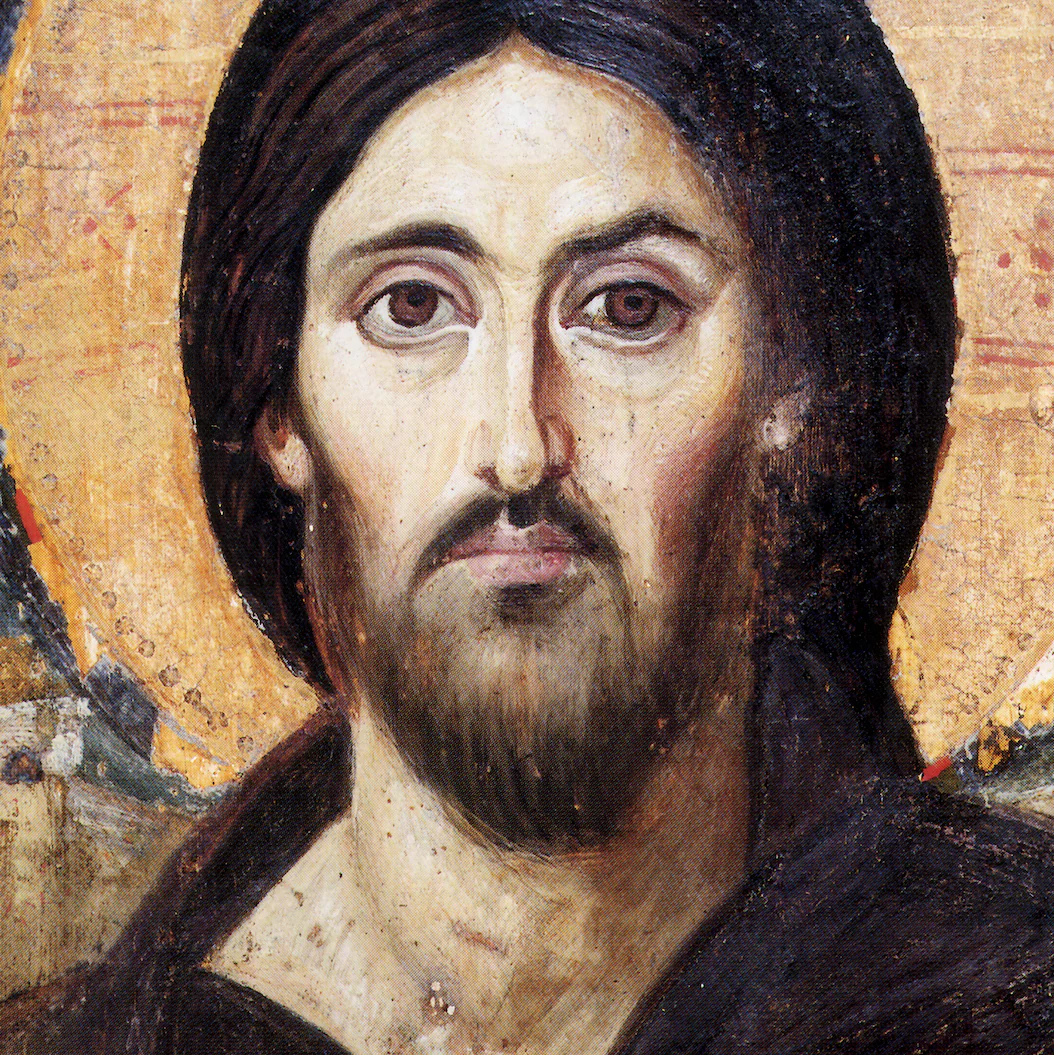
Christ Pantocrator (Sinai) | Unknown | 6th Century

Product image 1
Product image 2
Product image 3
Product image 4
Product image 5
Product image 6
Product image 7

Christ Pantocrator (Sinai) | Unknown | 6th Century

Christ Pantocrator (Sinai) | Unknown | 6th Century

About the artwork:

The Christ Pantocrator of Sinai, painted in the 6th century, derives its visual power from a carefully controlled tension between symmetry and asymmetry. The overall composition is frontal, stable, and balanced, conveying a sense of eternal order and divine authority associated with Christ as Pantocrator, the ruler of all. Yet this structural harmony is subtly unsettled by the face itself, which is not fully symmetrical: one side appears more severe and distant, while the other seems gentler and more human. This contrast does not disrupt the image but deepens it, introducing a psychological complexity that is extraordinary for such an early icon. Through this deliberate asymmetry, Christ is not presented as a static symbol but as a living presence, capable of judgment and mercy at the same time. Rather than narrating an event or provoking emotion through action, the icon asserts its power through stillness, direct gaze, and a quiet tension that confronts the viewer with a figure that is both fully human and fully divine.

Select Select Size
Select Frame Options
From $151.31

Original: $504.35

-70%
Christ Pantocrator (Sinai) | Unknown | 6th Century

$504.35

$151.31

Product Information

Shipping & Returns

Description

About the artwork:
The Christ Pantocrator of Sinai, painted in the 6th century, derives its visual power from a carefully controlled tension between symmetry and asymmetry. The overall composition is frontal, stable, and balanced, conveying a sense of eternal order and divine authority associated with Christ as Pantocrator, the ruler of all. Yet this structural harmony is subtly unsettled by the face itself, which is not fully symmetrical: one side appears more severe and distant, while the other seems gentler and more human. This contrast does not disrupt the image but deepens it, introducing a psychological complexity that is extraordinary for such an early icon. Through this deliberate asymmetry, Christ is not presented as a static symbol but as a living presence, capable of judgment and mercy at the same time. Rather than narrating an event or provoking emotion through action, the icon asserts its power through stillness, direct gaze, and a quiet tension that confronts the viewer with a figure that is both fully human and fully divine.