Circe Invidiosa | John William Waterhouse | 1892
About the artwork:
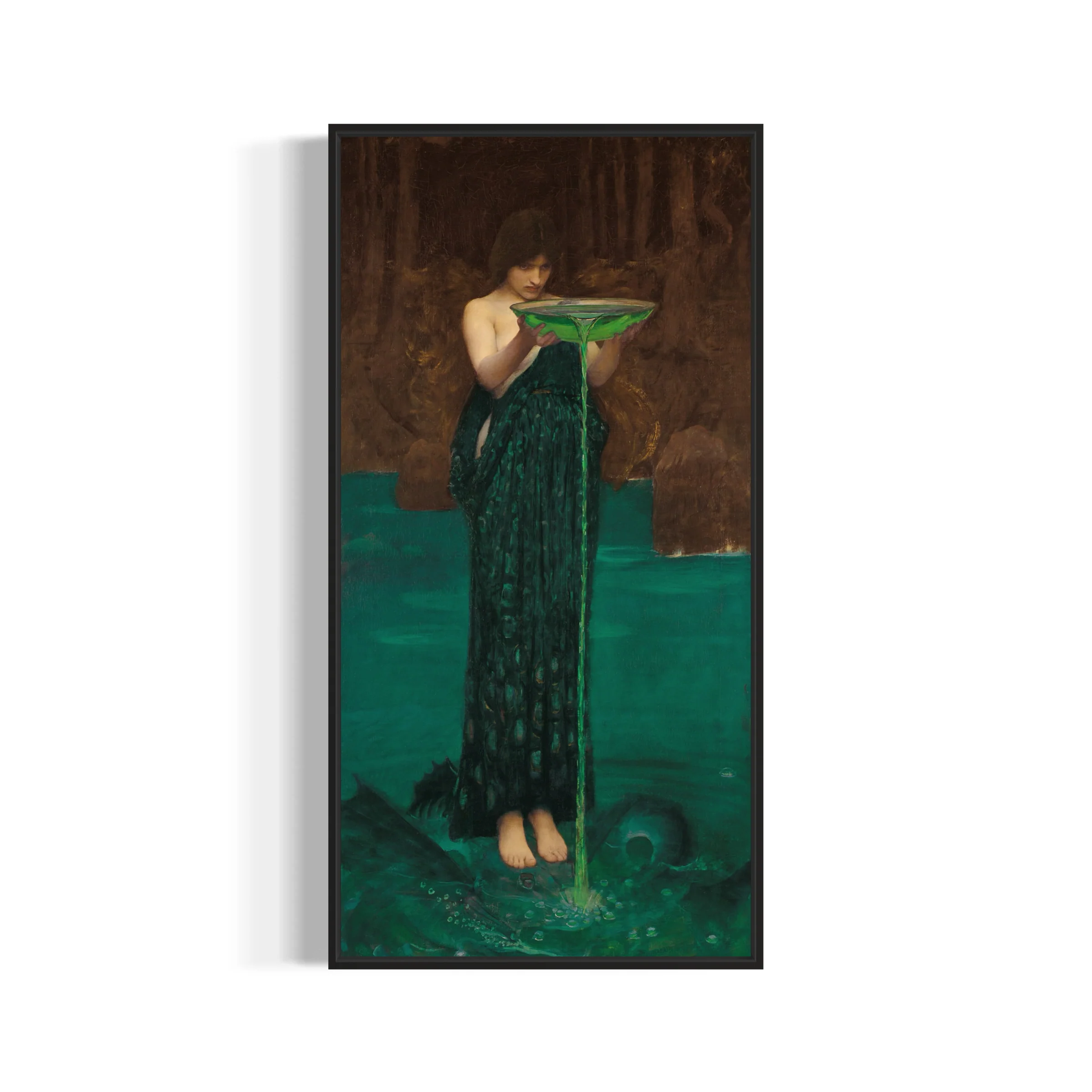
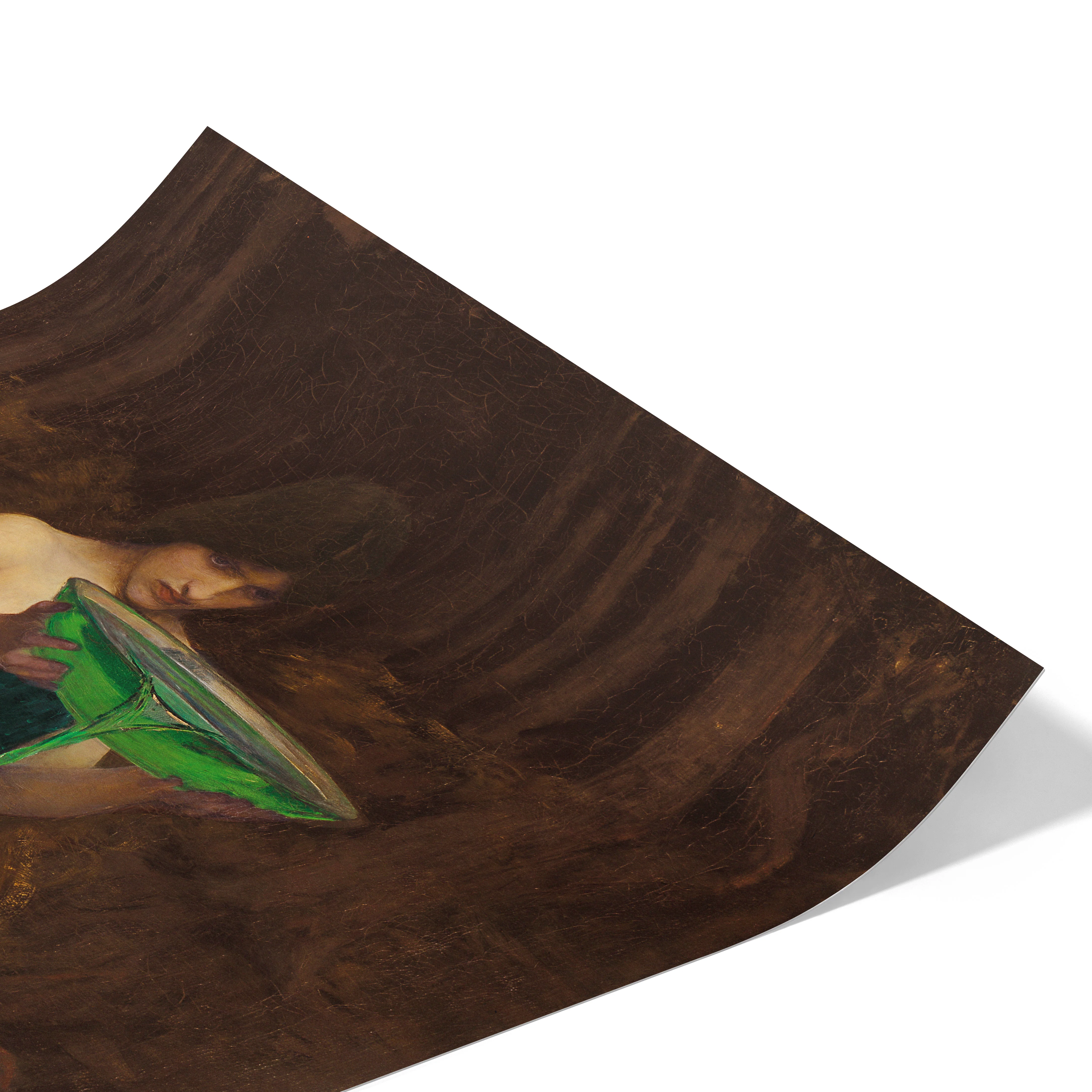
In Circe Invidiosa (1892), John William Waterhouse portrays jealousy not as a violent outburst, but as a slow, poisonous force that seeps into the world. Circe strides forward with icy determination, pouring a vivid stream of green venom into the sea below, her elongated figure isolated against a cold, architectural backdrop that heightens her emotional detachment. Unlike traditional depictions of Circe as seductive or overtly magical, Waterhouse emphasizes psychological intensity: her rigid posture, averted gaze, and controlled movement suggest calculated vengeance rather than impulsive rage. The unnatural green liquid becomes a visual metaphor for corrosive envy, staining the water just as resentment contaminates the mind. By focusing on this precise narrative moment—Circe’s transformation of Scylla—Waterhouse turns myth into an exploration of obsessive emotion, aligning the sorceress with late-Victorian fears surrounding female power, suppressed desire, and the destructive potential of passions that are inwardly restrained yet relentlessly acted upon.
Product Information
Product Information
Shipping & Returns
Shipping & Returns



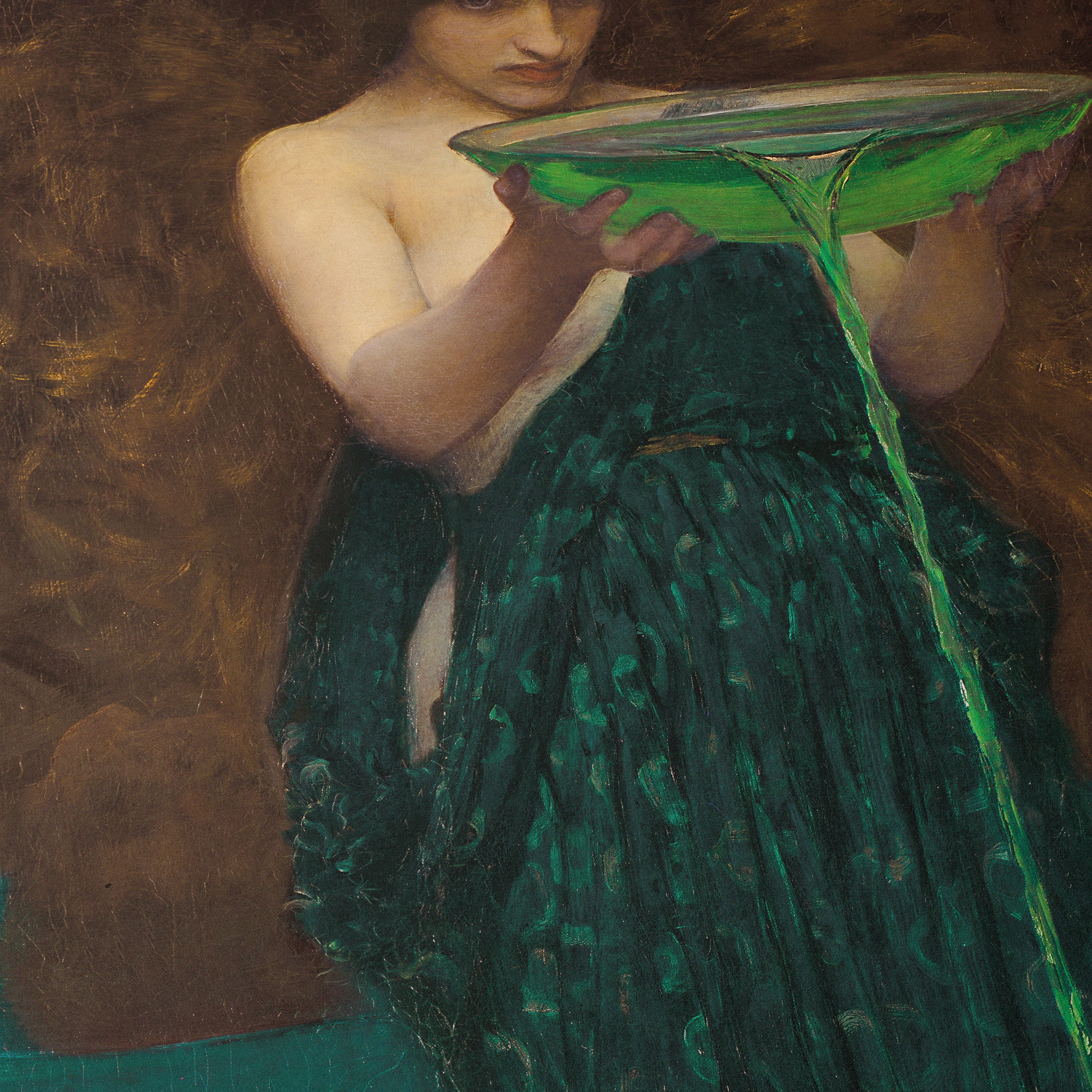
Circe Invidiosa | John William Waterhouse | 1892
Circe Invidiosa | John William Waterhouse | 1892
About the artwork:
In Circe Invidiosa (1892), John William Waterhouse portrays jealousy not as a violent outburst, but as a slow, poisonous force that seeps into the world. Circe strides forward with icy determination, pouring a vivid stream of green venom into the sea below, her elongated figure isolated against a cold, architectural backdrop that heightens her emotional detachment. Unlike traditional depictions of Circe as seductive or overtly magical, Waterhouse emphasizes psychological intensity: her rigid posture, averted gaze, and controlled movement suggest calculated vengeance rather than impulsive rage. The unnatural green liquid becomes a visual metaphor for corrosive envy, staining the water just as resentment contaminates the mind. By focusing on this precise narrative moment—Circe’s transformation of Scylla—Waterhouse turns myth into an exploration of obsessive emotion, aligning the sorceress with late-Victorian fears surrounding female power, suppressed desire, and the destructive potential of passions that are inwardly restrained yet relentlessly acted upon.
Original: $504.35
-70%$504.35
$151.31Product Information
Product Information
Shipping & Returns
Shipping & Returns
Description
About the artwork:
In Circe Invidiosa (1892), John William Waterhouse portrays jealousy not as a violent outburst, but as a slow, poisonous force that seeps into the world. Circe strides forward with icy determination, pouring a vivid stream of green venom into the sea below, her elongated figure isolated against a cold, architectural backdrop that heightens her emotional detachment. Unlike traditional depictions of Circe as seductive or overtly magical, Waterhouse emphasizes psychological intensity: her rigid posture, averted gaze, and controlled movement suggest calculated vengeance rather than impulsive rage. The unnatural green liquid becomes a visual metaphor for corrosive envy, staining the water just as resentment contaminates the mind. By focusing on this precise narrative moment—Circe’s transformation of Scylla—Waterhouse turns myth into an exploration of obsessive emotion, aligning the sorceress with late-Victorian fears surrounding female power, suppressed desire, and the destructive potential of passions that are inwardly restrained yet relentlessly acted upon.