✨ New Arrivals Just Dropped!Explore
HomeStore

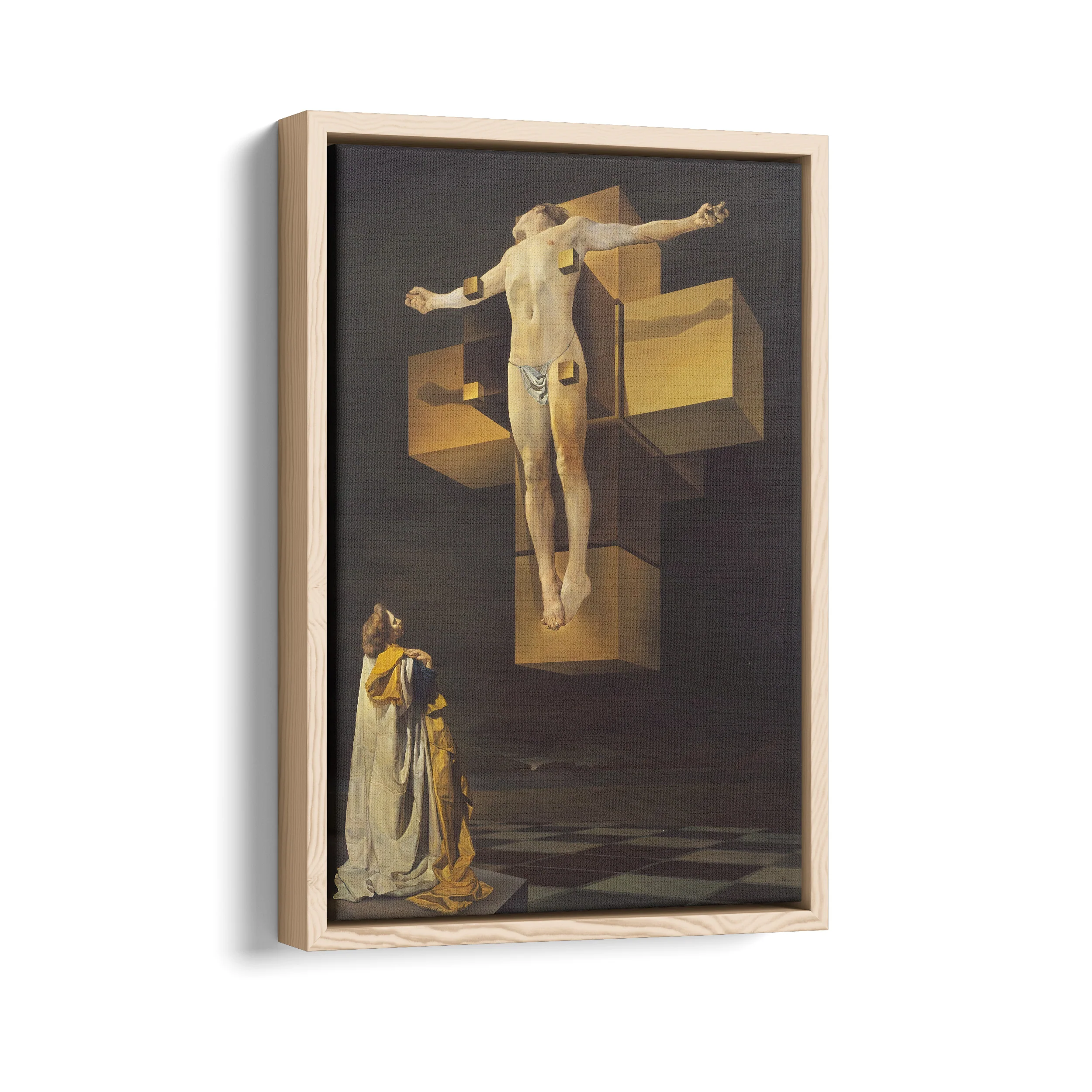
Crucifixion (Corpus Hypercubus) | Salvador Dalí | 1954

Product image 1
Product image 2
Product image 3
Product image 4
Product image 5
Product image 6
Product image 7
Product image 8
Product image 9
Product image 10

Crucifixion (Corpus Hypercubus) | Salvador Dalí | 1954

Crucifixion (Corpus Hypercubus) | Salvador Dalí | 1954

About the artwork:

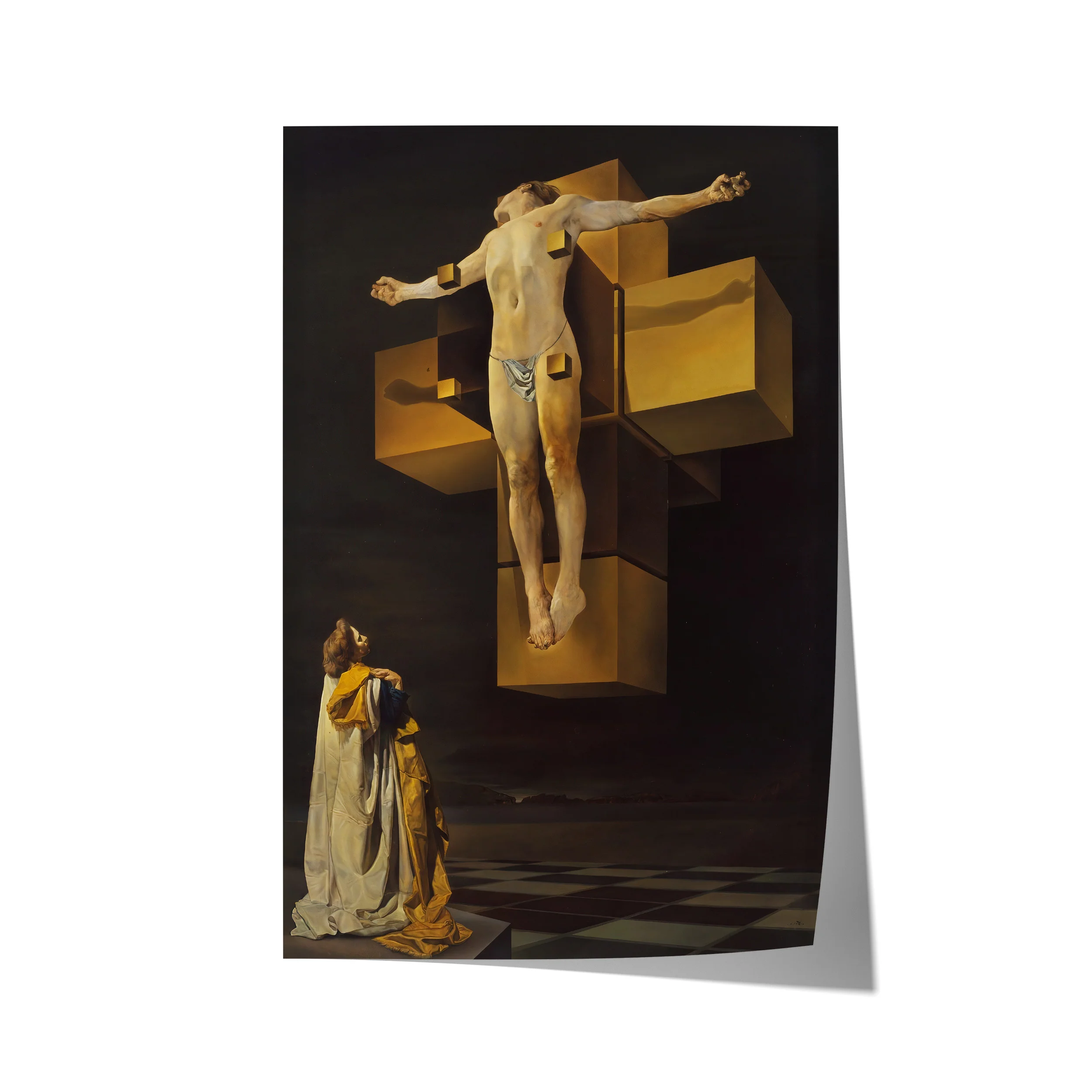
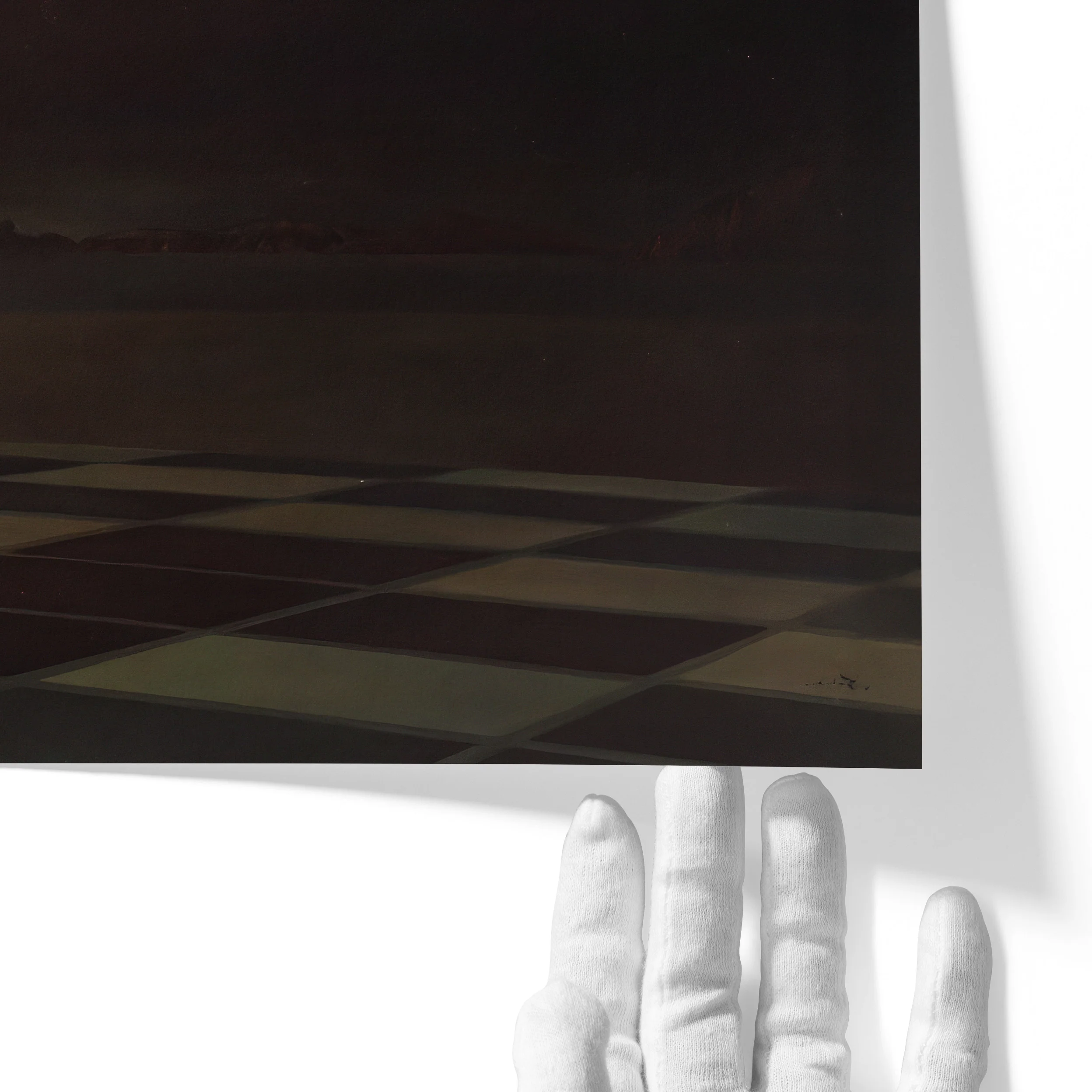
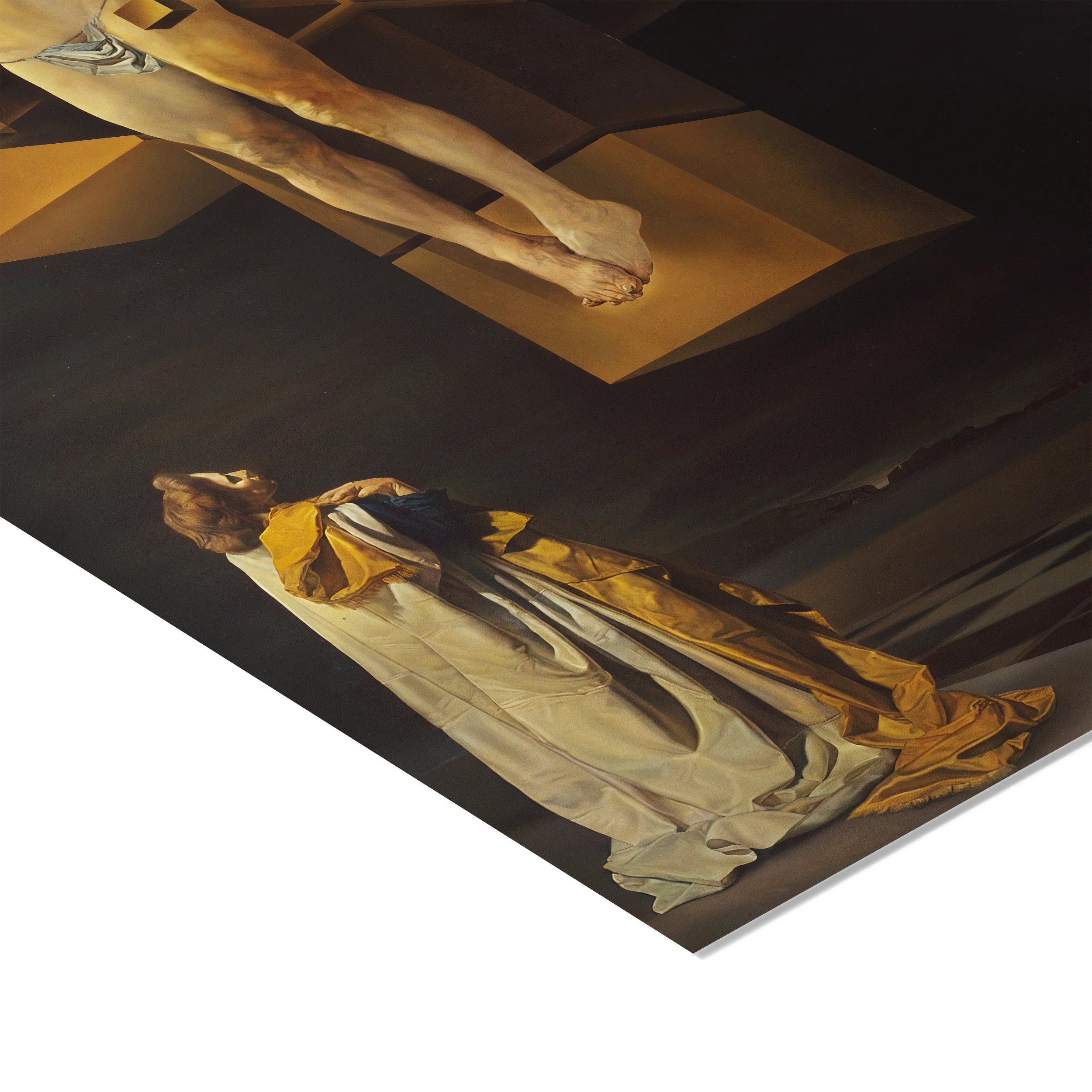
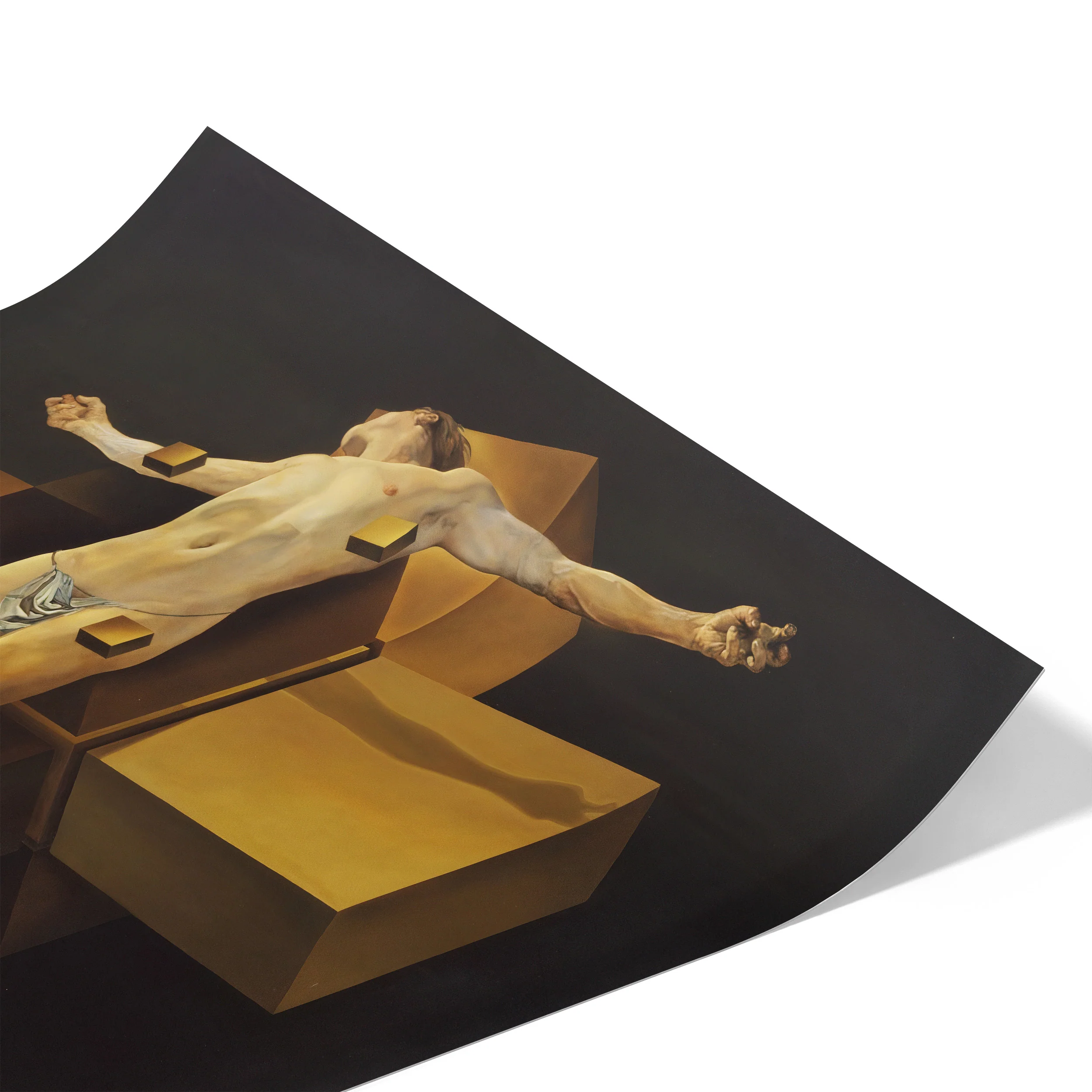
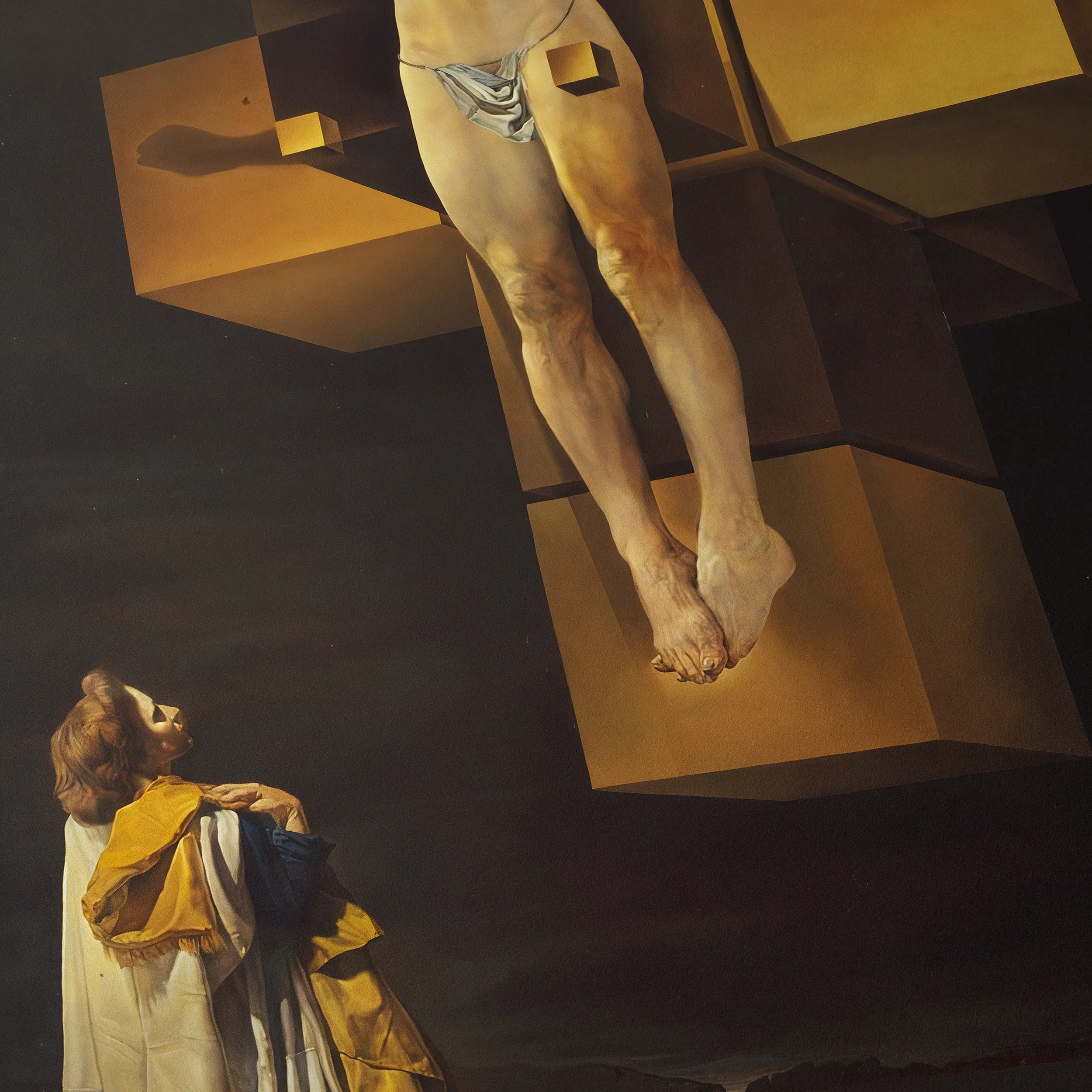
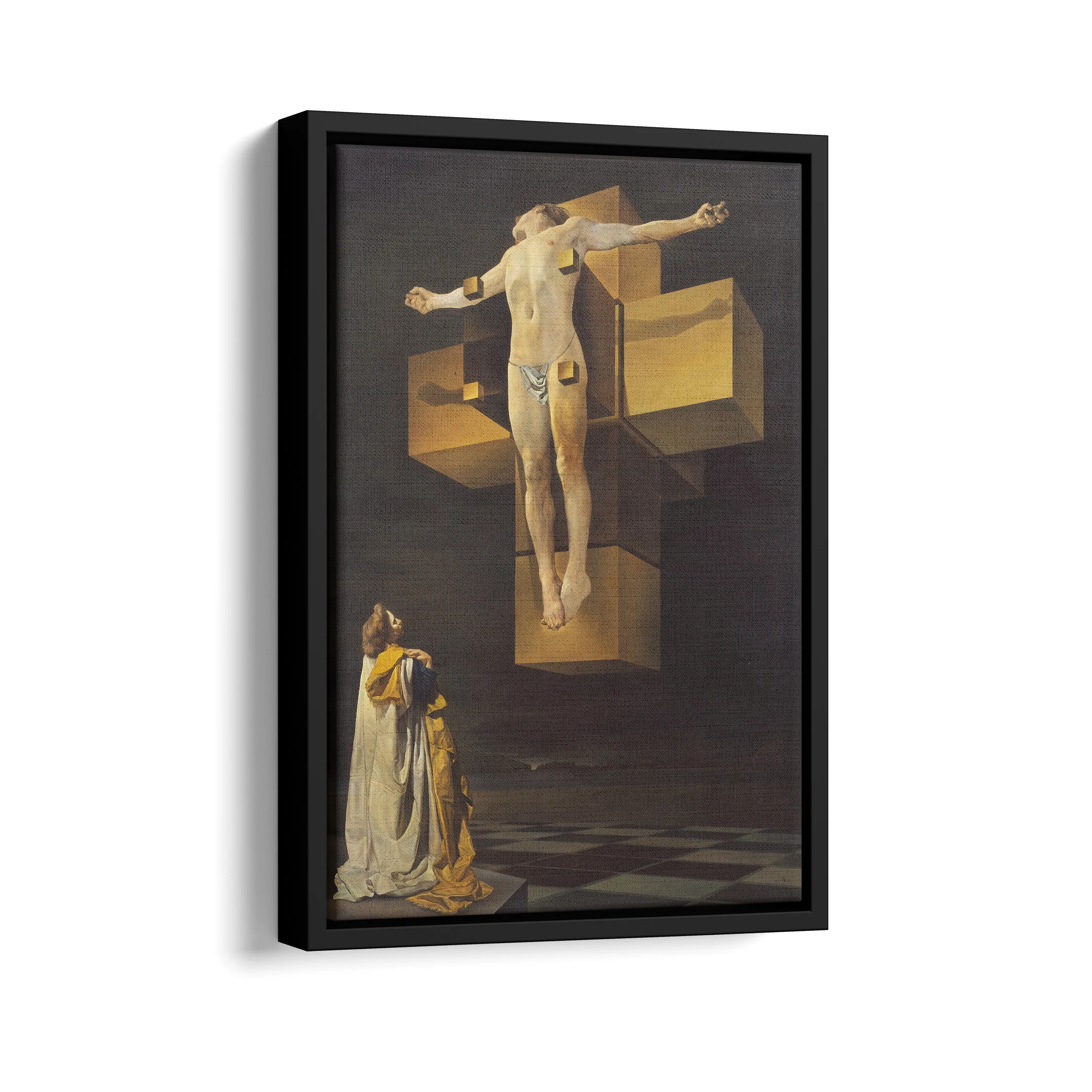
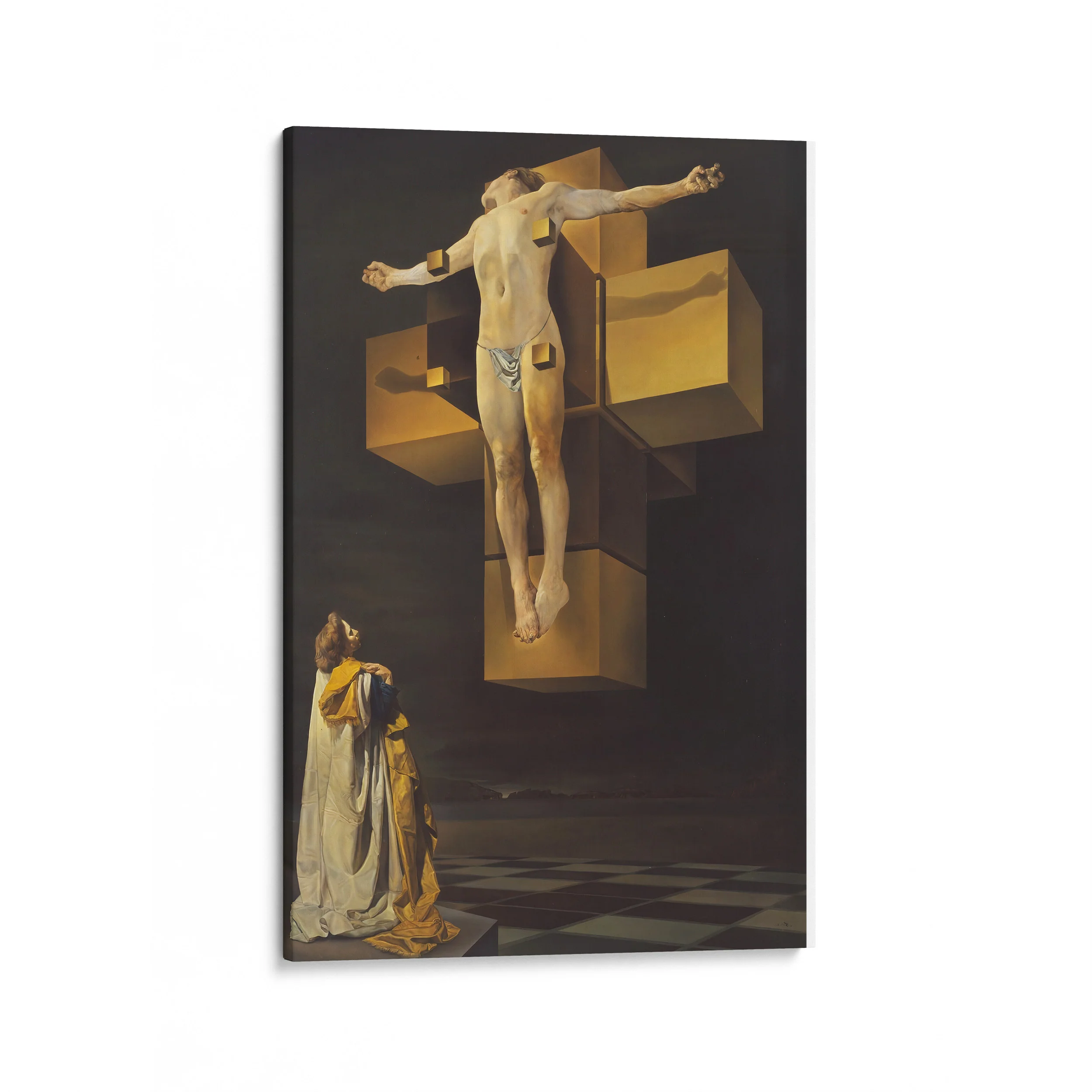
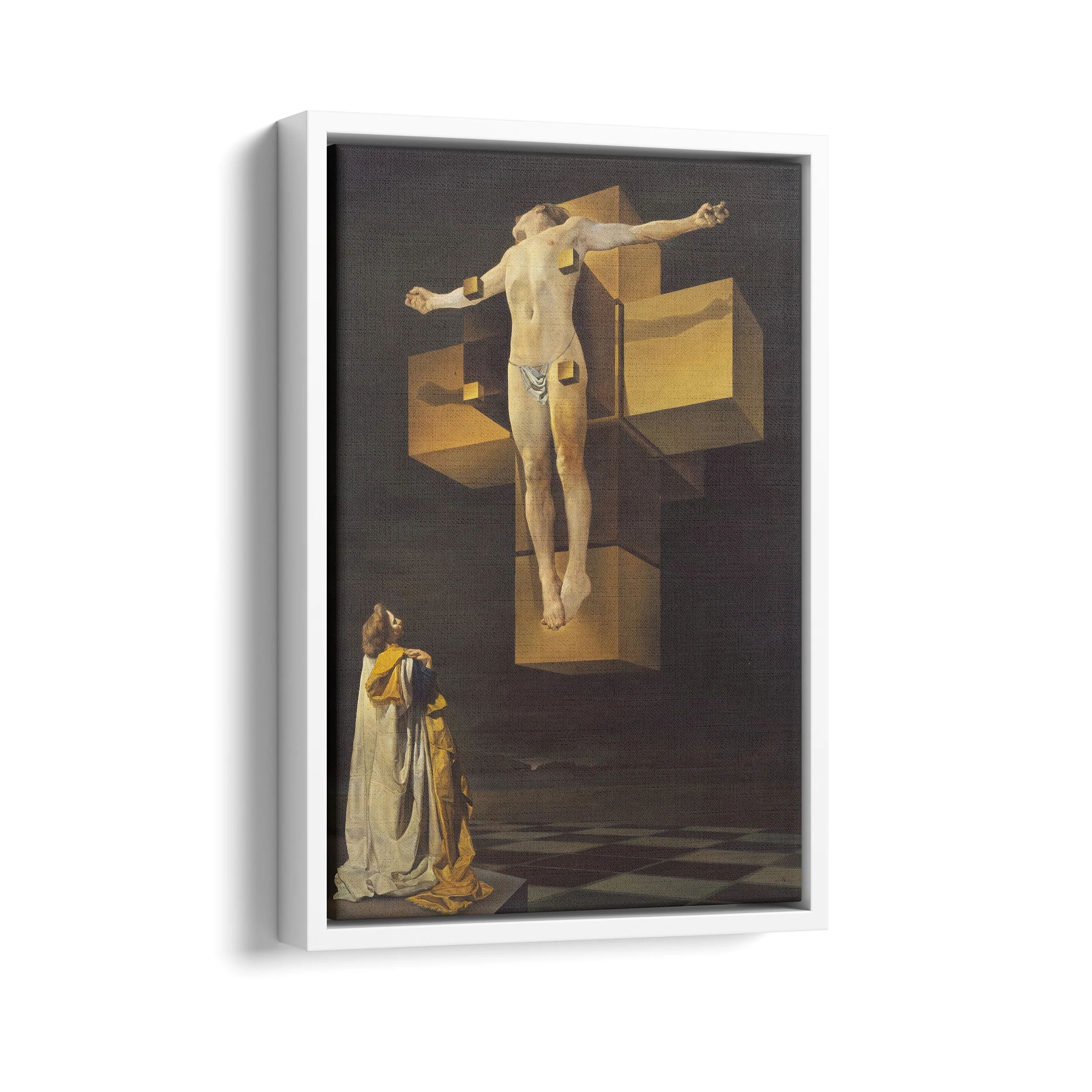
Salvador Dalí’s Crucifixion (Corpus Hypercubus) (1954) reimagines the traditional crucifixion through his “nuclear mysticism,” melding Catholic symbolism with advanced mathematics and atomic-age science. Instead of a wooden cross, Christ is suspended on the unfolded net of a tesseract—an abstract, four-dimensional hypercube—suggesting that divine truths transcend human comprehension. The figure of Christ is pristine and muscular, purposely devoid of wounds, nails, or a crown of thorns, evoking spiritual triumph rather than physical agony. Gala, depicted as a devotional onlooker at the foot of the hypercube, anchors the scene in earthly human experience while echoing classical religious portraiture. Set against a void-like landscape and illuminated with Caravaggesque chiaroscuro, the work reinforces the unity of science, faith, and art—pointing to a higher dimension where pain is transcended and geometric perfection mirrors spiritual elevation.

Select Select Size
Select Frame Options
From $89.35

Original: $297.82

-70%
Crucifixion (Corpus Hypercubus) | Salvador Dalí | 1954

$297.82

$89.35

Product Information

Shipping & Returns

Description

About the artwork:
Salvador Dalí’s Crucifixion (Corpus Hypercubus) (1954) reimagines the traditional crucifixion through his “nuclear mysticism,” melding Catholic symbolism with advanced mathematics and atomic-age science. Instead of a wooden cross, Christ is suspended on the unfolded net of a tesseract—an abstract, four-dimensional hypercube—suggesting that divine truths transcend human comprehension. The figure of Christ is pristine and muscular, purposely devoid of wounds, nails, or a crown of thorns, evoking spiritual triumph rather than physical agony. Gala, depicted as a devotional onlooker at the foot of the hypercube, anchors the scene in earthly human experience while echoing classical religious portraiture. Set against a void-like landscape and illuminated with Caravaggesque chiaroscuro, the work reinforces the unity of science, faith, and art—pointing to a higher dimension where pain is transcended and geometric perfection mirrors spiritual elevation.