Cutting the Stone | Hieronymus Bosch | c. 1500-10
About the artwork:
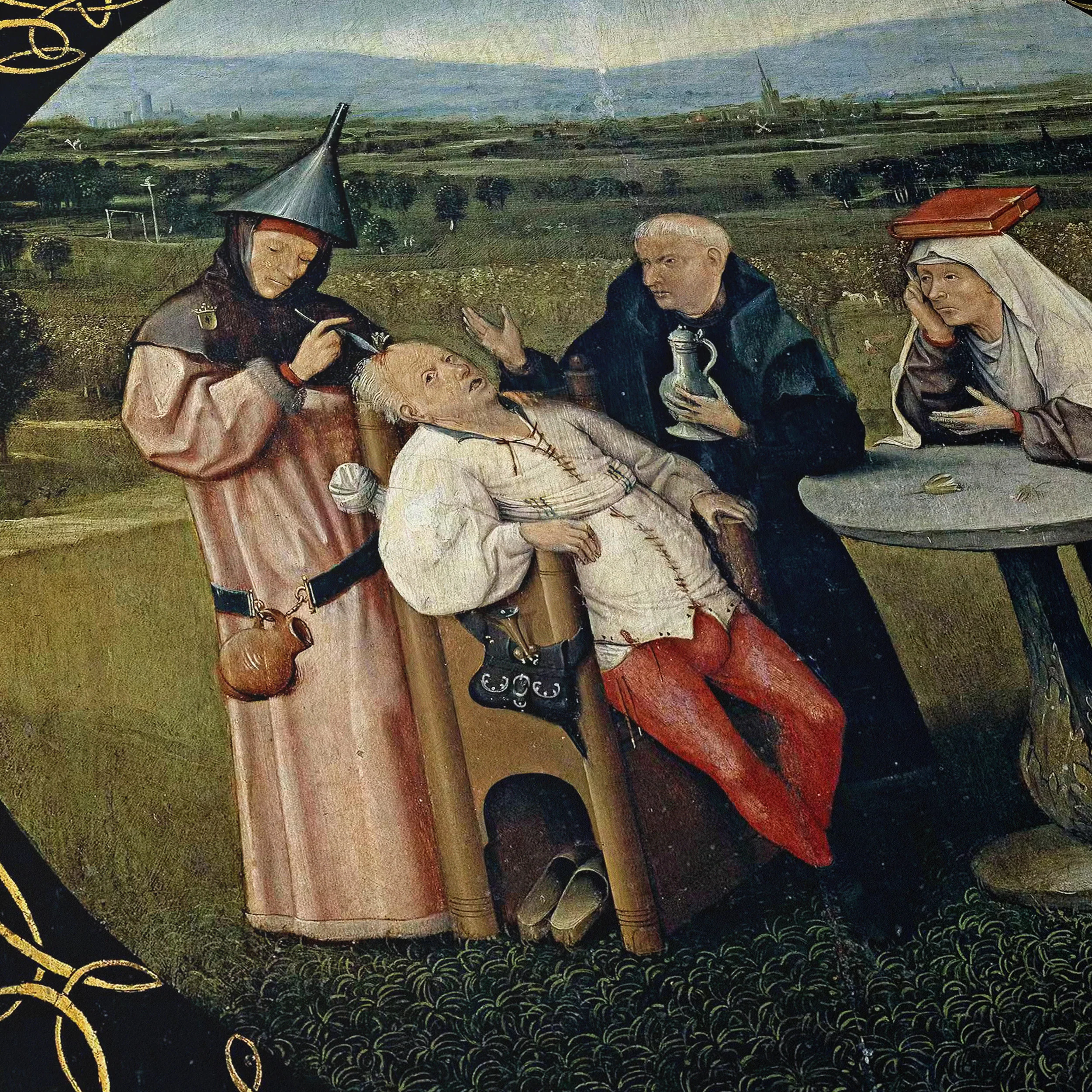
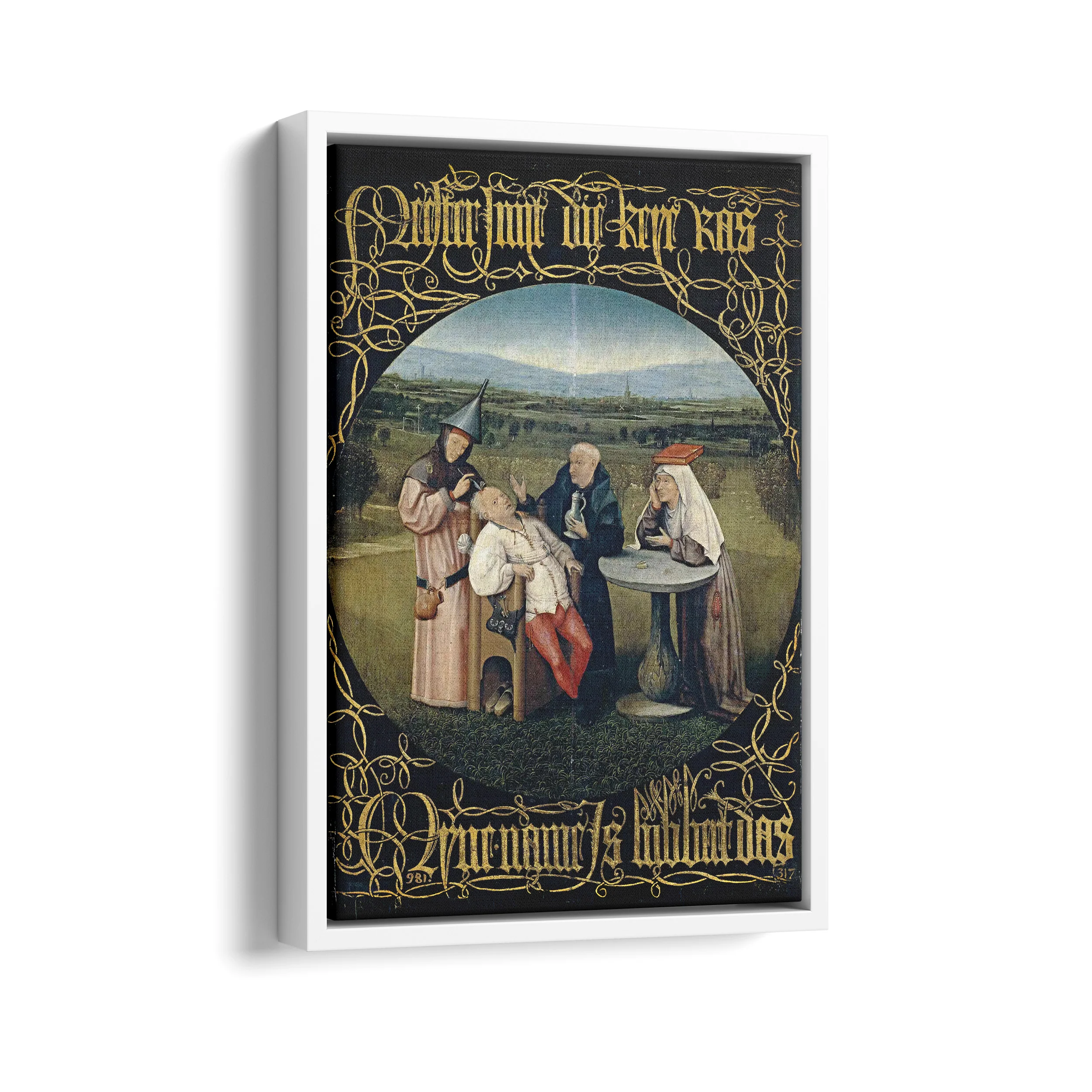
"Cutting the Stone" by Hieronymus Bosch is a satirical and enigmatic painting that critiques the quackery and ignorance of the late medieval period. The scene depicts a surgeon performing the supposed extraction of a "stone of madness" from a patient’s head, a practice rooted in the absurd belief that mental illness or foolishness could be cured by such means. Bosch’s signature surrealism is evident in the bizarre setting and the strange funnel worn by the surgeon, a symbol of ignorance rather than wisdom. The inclusion of a nun holding a book, but wearing a vessel on her head, suggests a critique of misguided spirituality or clerical complicity in perpetuating folly. The patient, immobilized and vulnerable, reflects the human condition subjected to exploitation under the guise of science and faith. Bosch's work combines humor, grotesque imagery, and sharp social commentary, challenging the viewer to question the intersection of knowledge, superstition, and human folly.
Product Information
Product Information
Shipping & Returns
Shipping & Returns





Cutting the Stone | Hieronymus Bosch | c. 1500-10
Cutting the Stone | Hieronymus Bosch | c. 1500-10
About the artwork:
"Cutting the Stone" by Hieronymus Bosch is a satirical and enigmatic painting that critiques the quackery and ignorance of the late medieval period. The scene depicts a surgeon performing the supposed extraction of a "stone of madness" from a patient’s head, a practice rooted in the absurd belief that mental illness or foolishness could be cured by such means. Bosch’s signature surrealism is evident in the bizarre setting and the strange funnel worn by the surgeon, a symbol of ignorance rather than wisdom. The inclusion of a nun holding a book, but wearing a vessel on her head, suggests a critique of misguided spirituality or clerical complicity in perpetuating folly. The patient, immobilized and vulnerable, reflects the human condition subjected to exploitation under the guise of science and faith. Bosch's work combines humor, grotesque imagery, and sharp social commentary, challenging the viewer to question the intersection of knowledge, superstition, and human folly.
Original: $297.82
-70%$297.82
$89.35Product Information
Product Information
Shipping & Returns
Shipping & Returns
Description
About the artwork:
"Cutting the Stone" by Hieronymus Bosch is a satirical and enigmatic painting that critiques the quackery and ignorance of the late medieval period. The scene depicts a surgeon performing the supposed extraction of a "stone of madness" from a patient’s head, a practice rooted in the absurd belief that mental illness or foolishness could be cured by such means. Bosch’s signature surrealism is evident in the bizarre setting and the strange funnel worn by the surgeon, a symbol of ignorance rather than wisdom. The inclusion of a nun holding a book, but wearing a vessel on her head, suggests a critique of misguided spirituality or clerical complicity in perpetuating folly. The patient, immobilized and vulnerable, reflects the human condition subjected to exploitation under the guise of science and faith. Bosch's work combines humor, grotesque imagery, and sharp social commentary, challenging the viewer to question the intersection of knowledge, superstition, and human folly.