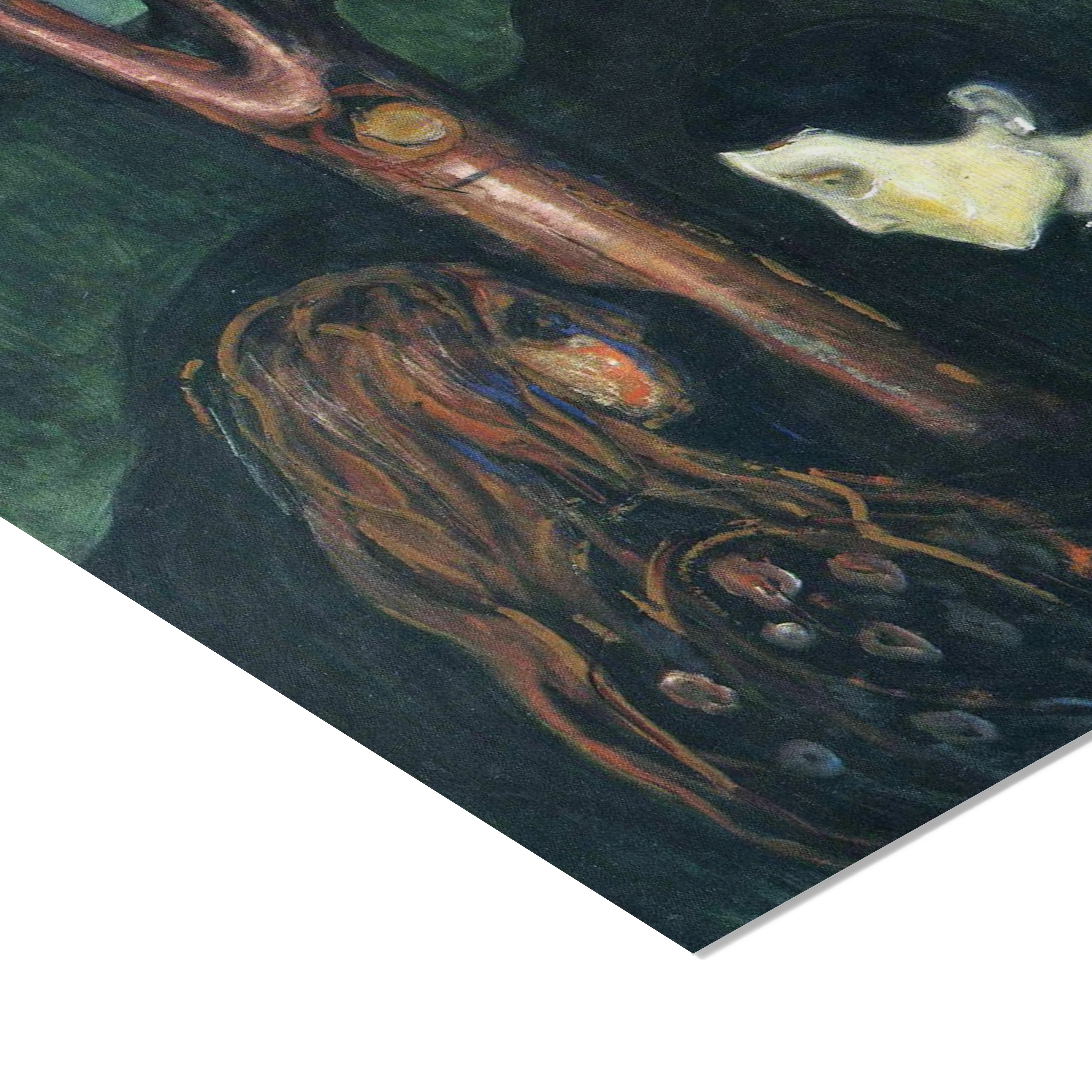
Edvard Munch’s Eye in Eye (1899-1900) is an unsettling exploration of human connection, alienation, and existential unease. The painting features a man and a woman standing face to face in an eerily barren landscape, their eyes locked in an ambiguous gaze. Rather than evoking intimacy, their expressions seem tense, almost confrontational, as if they are attempting to penetrate each other’s souls but remain emotionally distant. The distorted, elongated figures and Munch’s characteristic use of swirling, unnatural colors heighten the psychological tension, making the scene feel dreamlike or nightmarish. The space between them feels charged with an invisible force, suggesting an unbridgeable gap between individuals, even in moments of supposed closeness. This theme of emotional estrangement, a hallmark of Munch’s work, reflects his deep anxieties about love, relationships, and the human condition, making Eye in Eye a striking visual meditation on the complexities of intimacy and isolation.