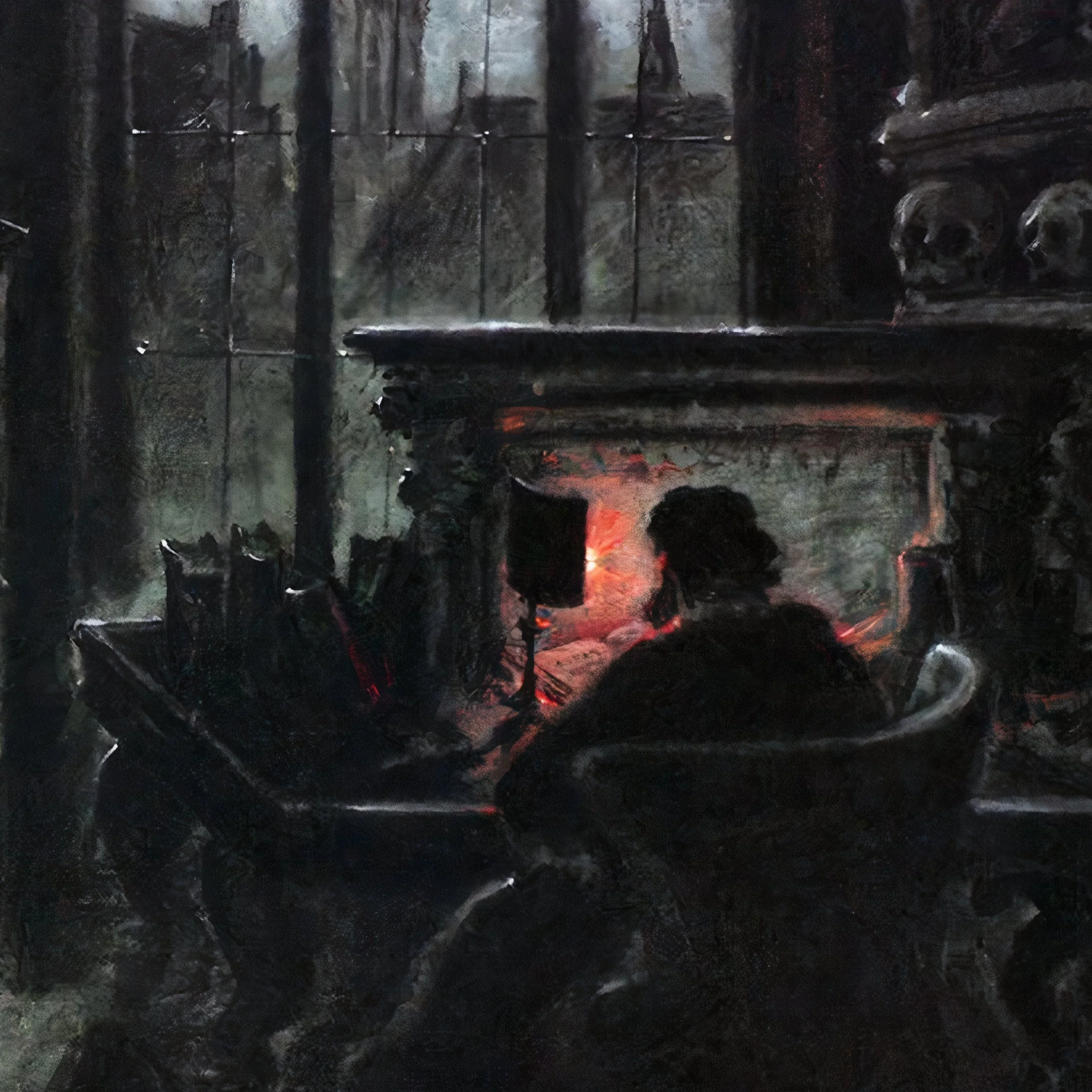
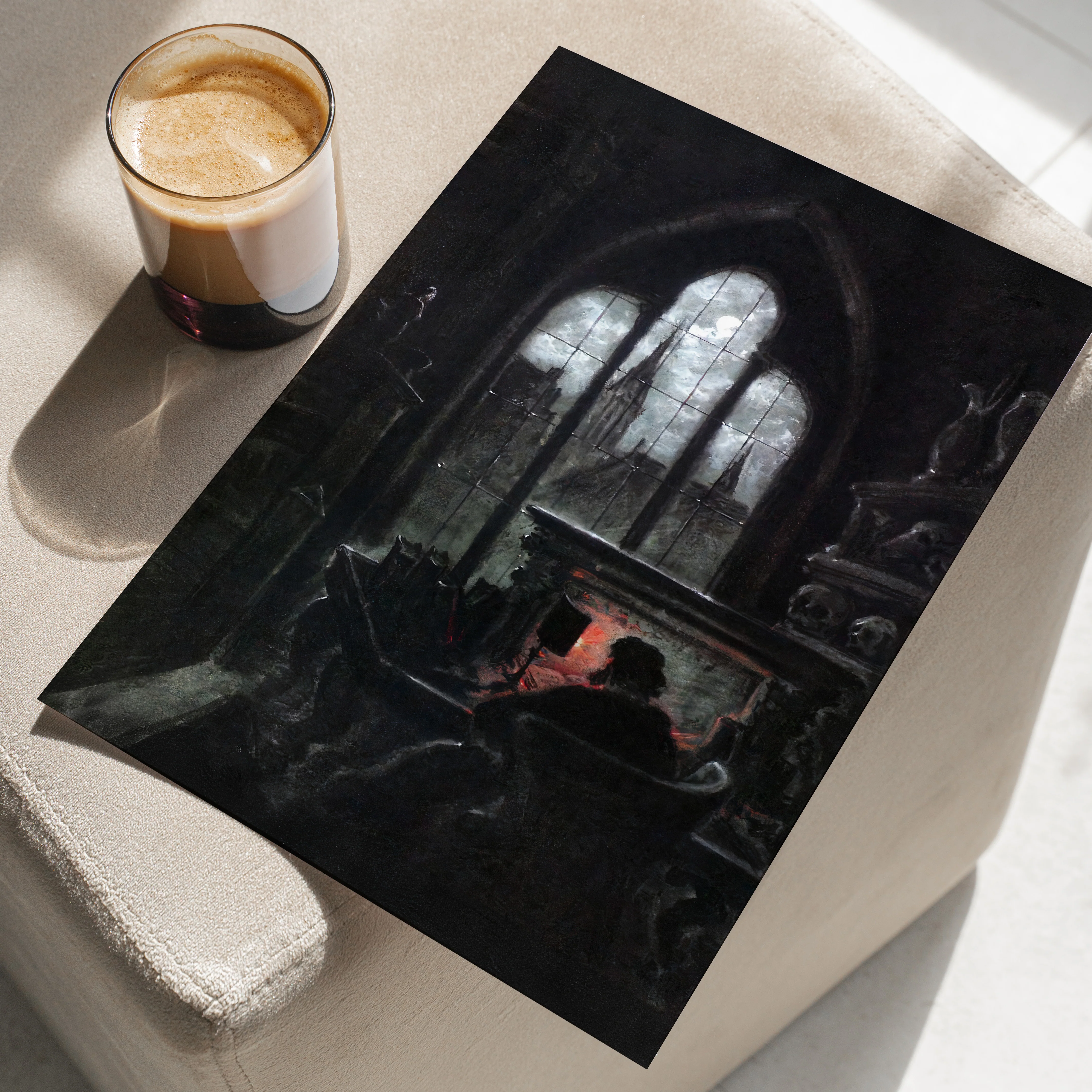
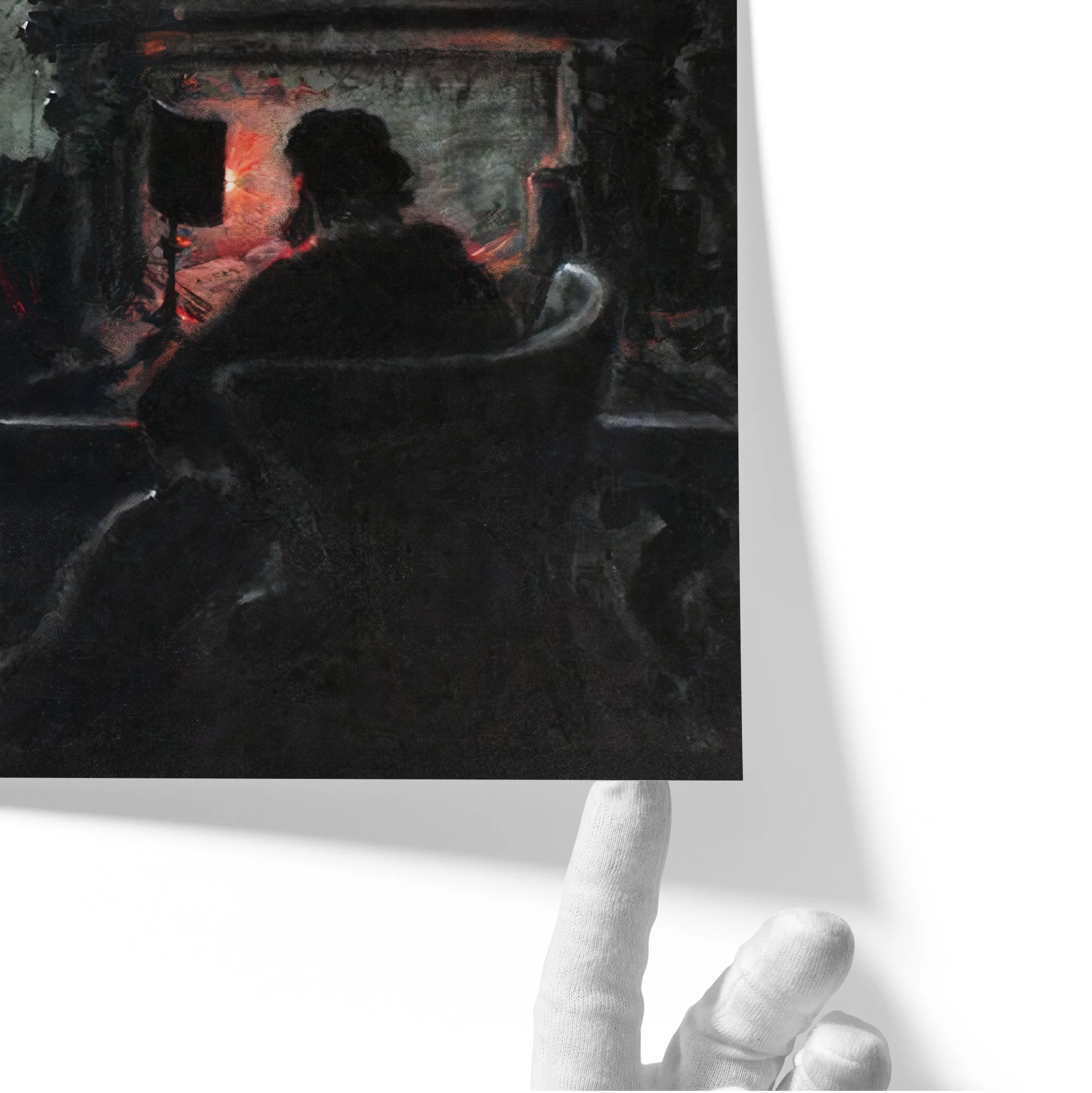
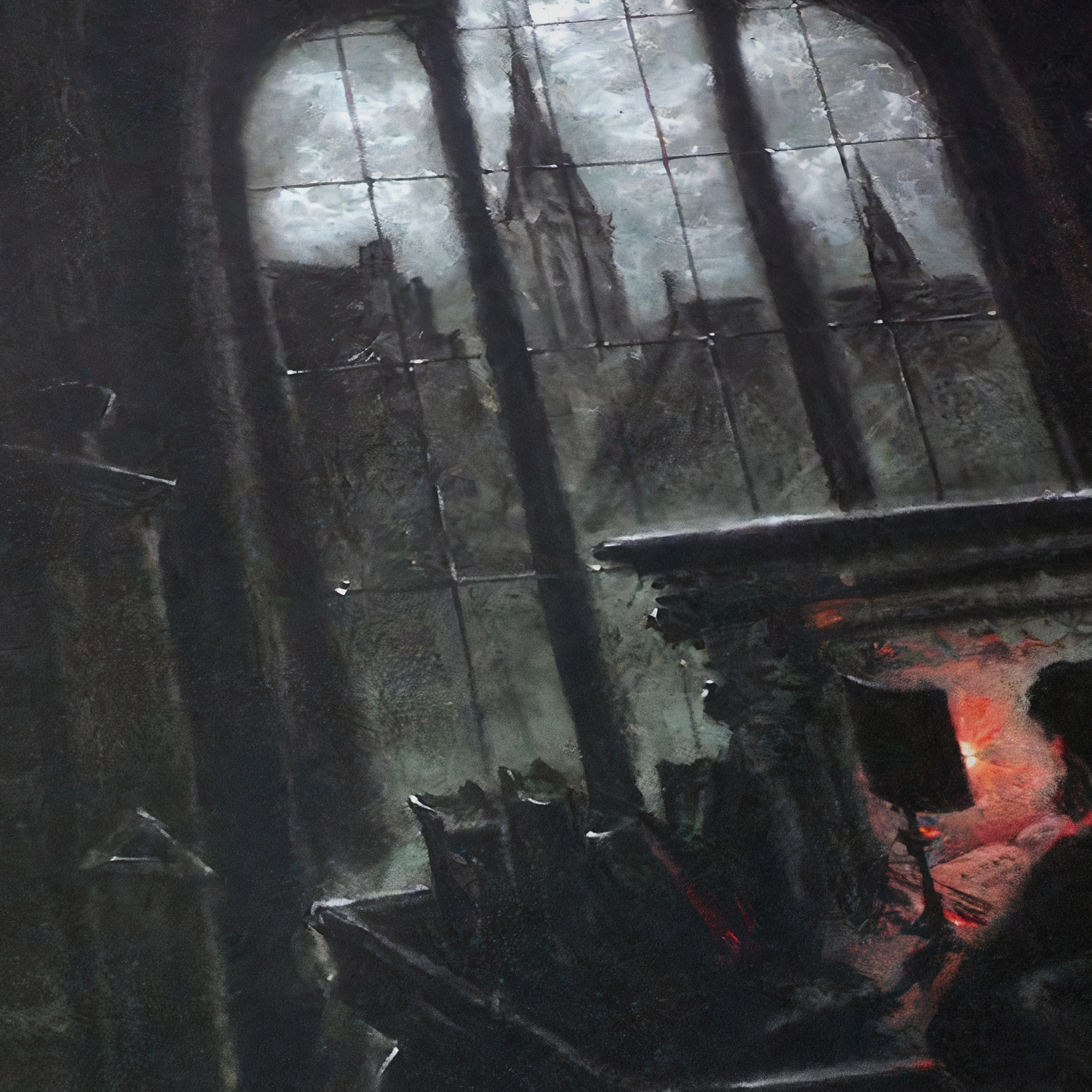
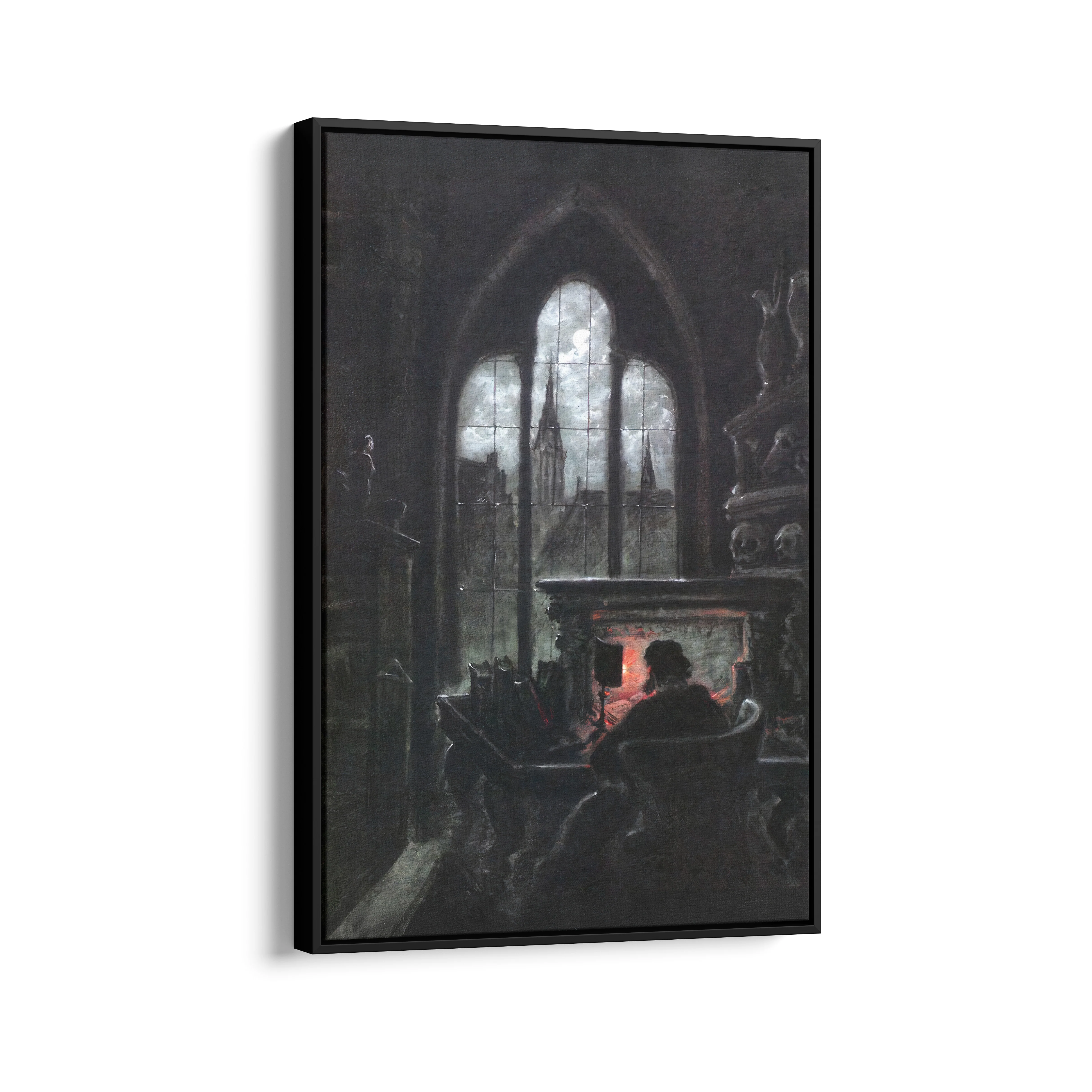
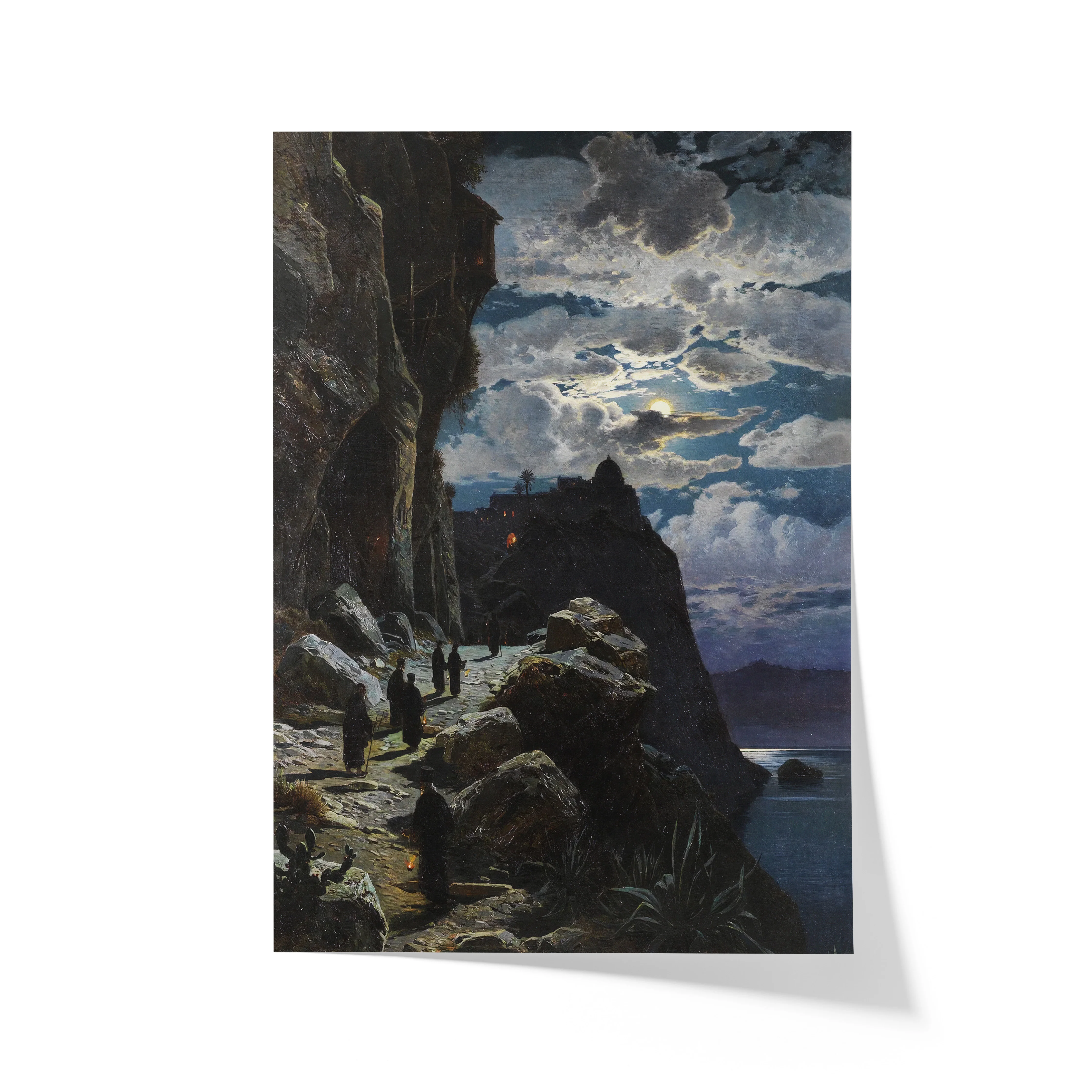
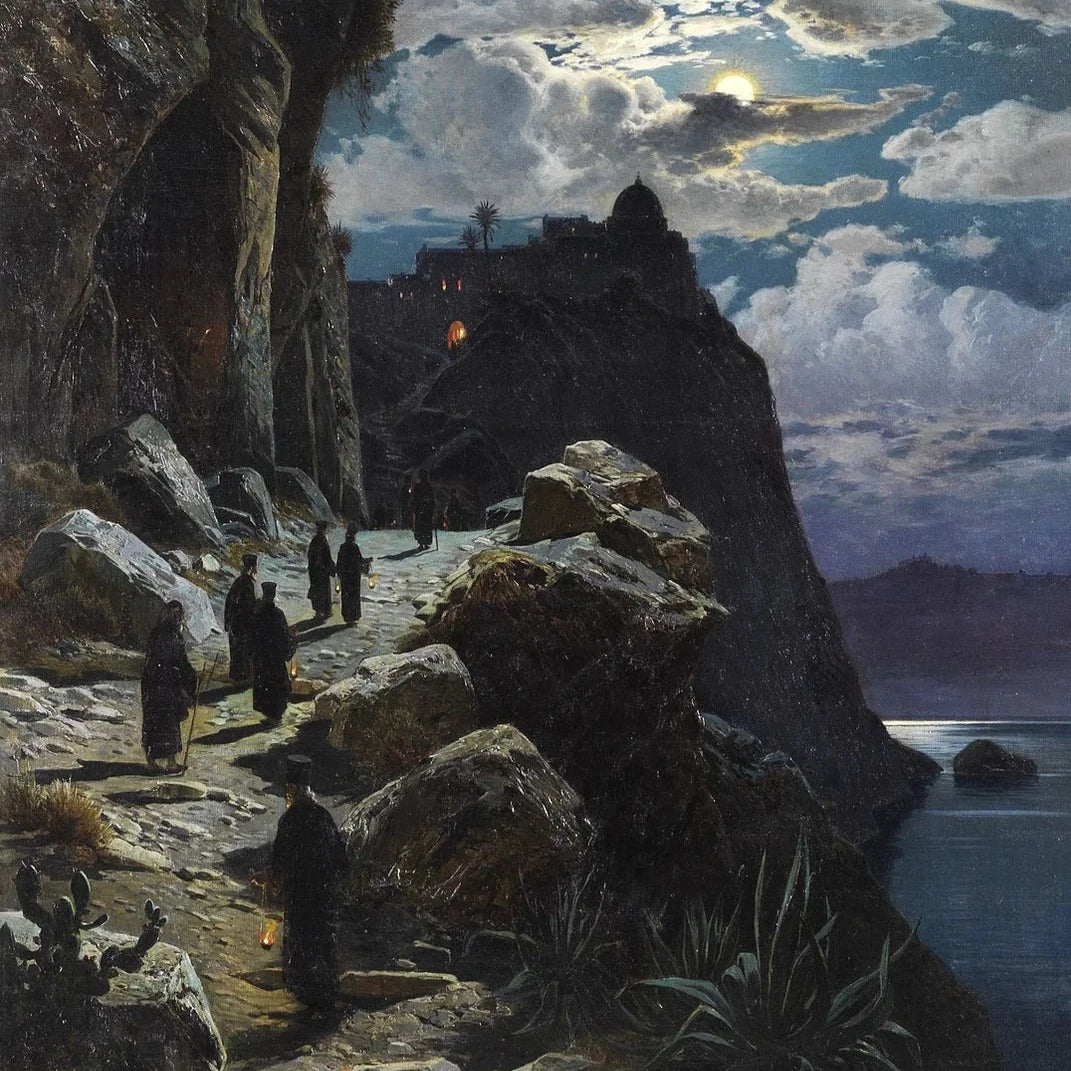
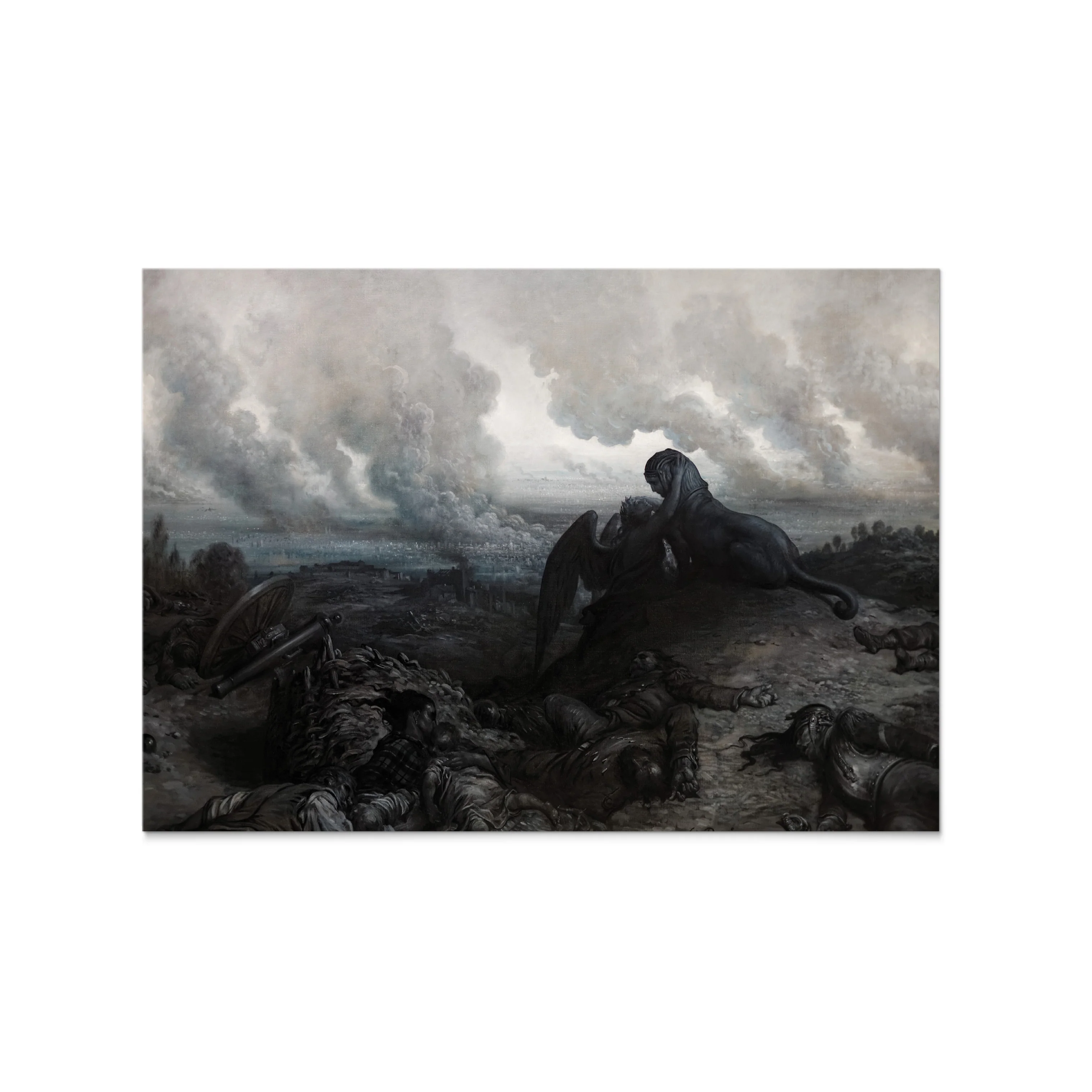
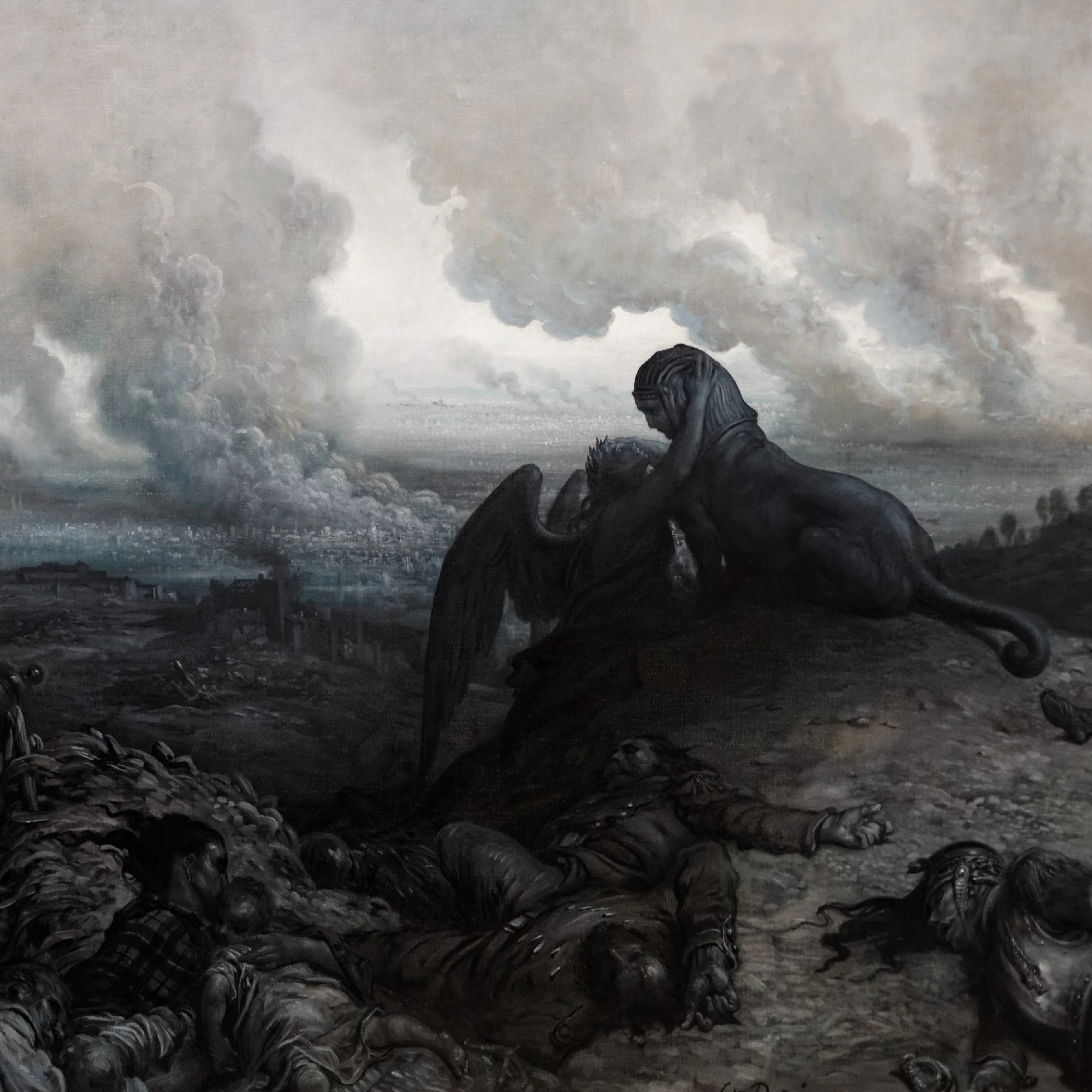
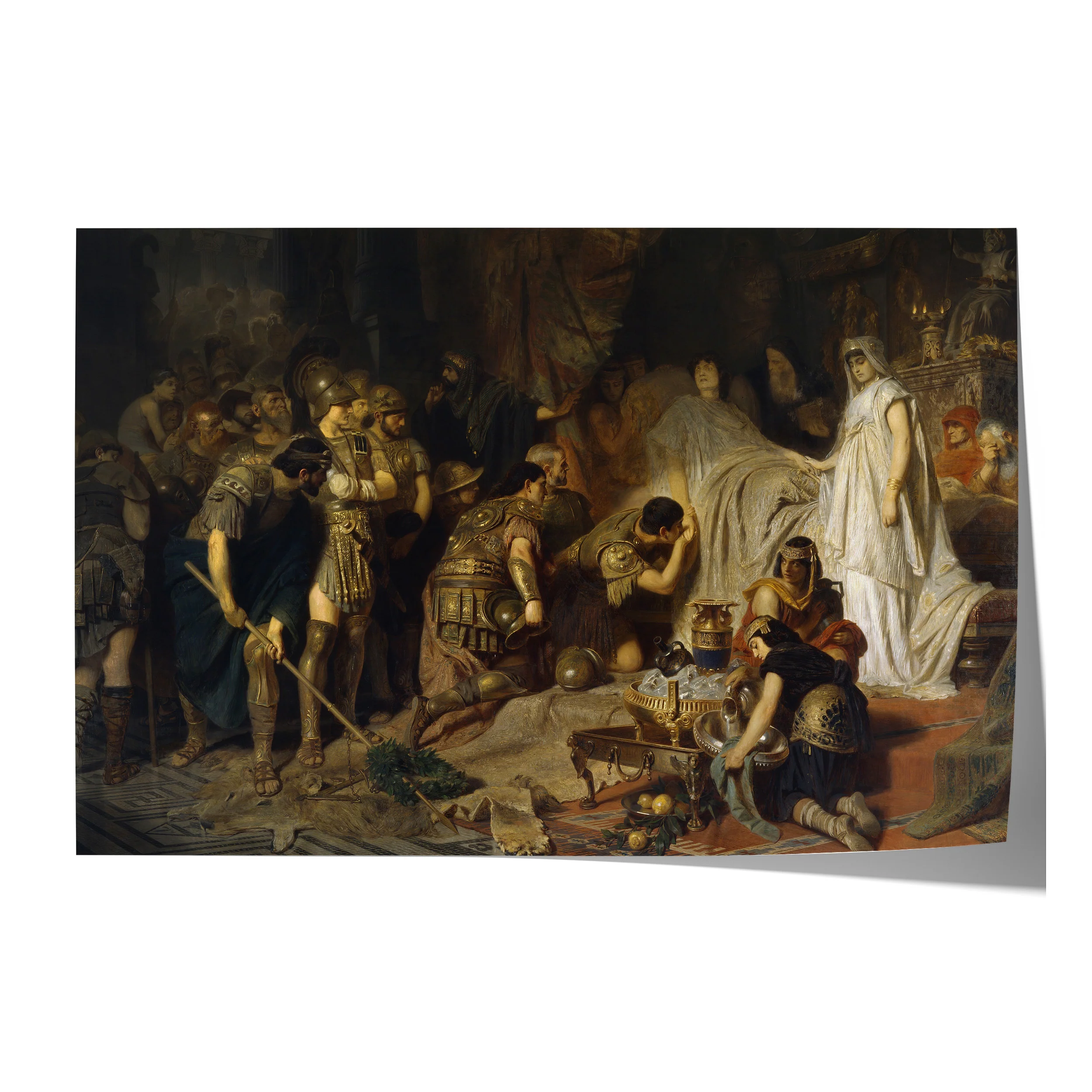
Faust in His Study (1852) by Carl Gustav Carus is a haunting meditation on knowledge, ambition, and the limits of human understanding. Drawing from Goethe’s iconic character, Carus places Faust in a shadowy, contemplative space—alone, surrounded by books and arcane instruments, yet dwarfed by the vastness of a moonlit night glimpsed through his window. The tension between interior and exterior, reason and mystery, is palpable. While the warm glow of the candle illuminates Faust’s immediate surroundings, it is the eerie, almost supernatural light of the moon that dominates the composition, hinting at forces beyond his control. Carus, a Romantic painter and physician, uses this contrast to emphasize the spiritual yearning at the heart of Faust’s quest—a desire not just for knowledge, but for transcendence. The painting becomes a visual allegory of Romanticism itself: the pursuit of the infinite through the lens of the finite, and the solitary struggle of the thinker confronting the unknown.