✨ New Arrivals Just Dropped!Explore
HomeStore

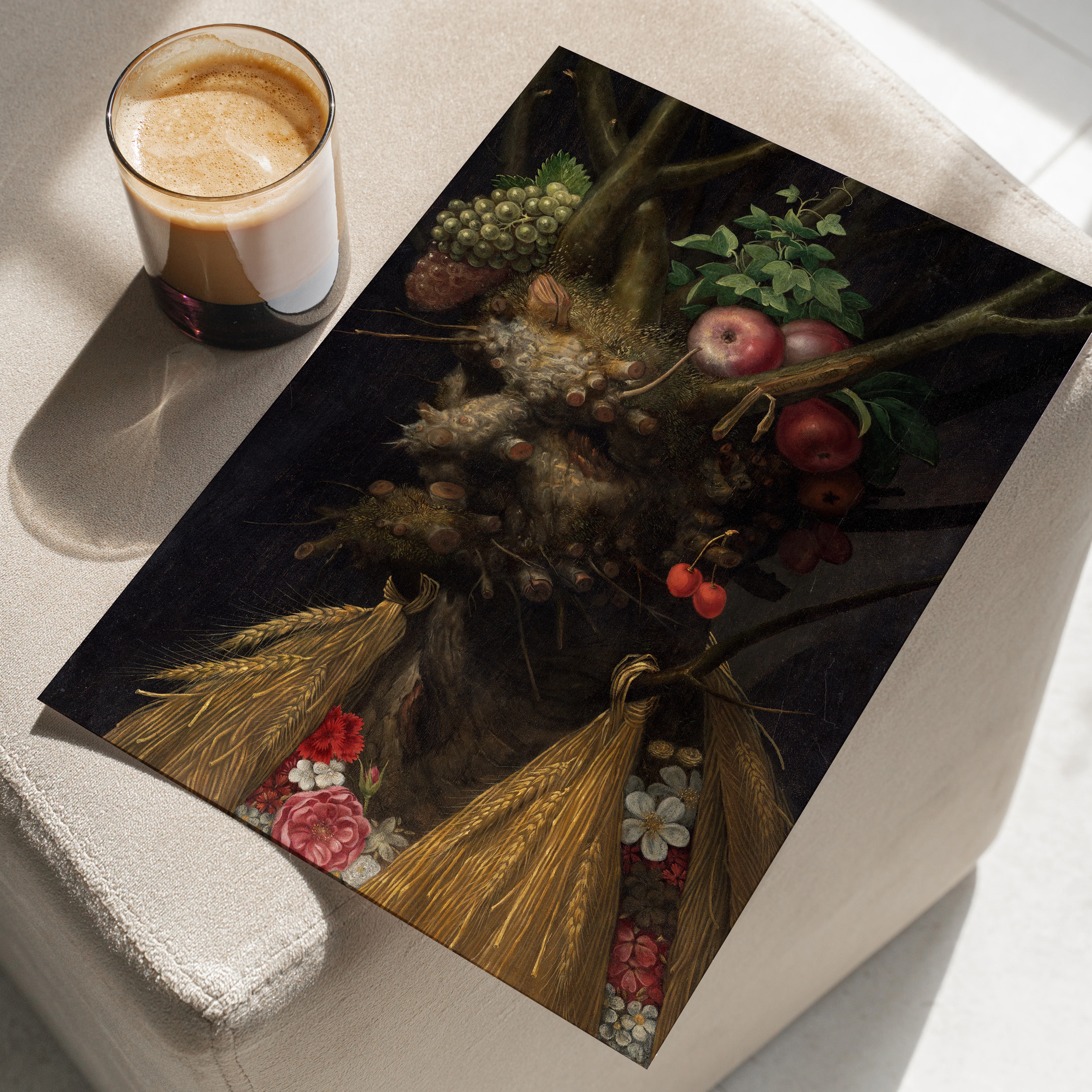
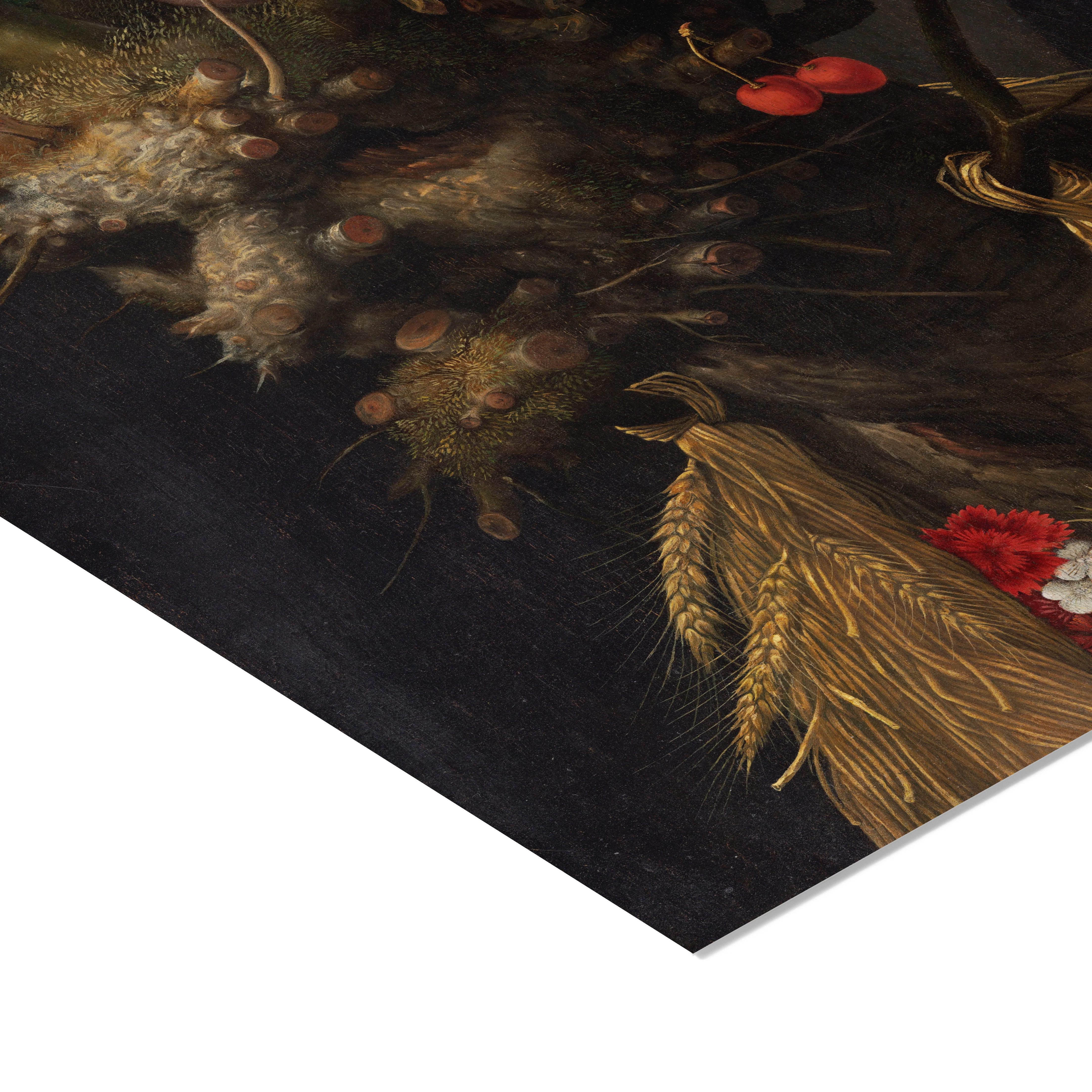
Four Seasons in One Head | Giuseppe Arcimboldo | 1590

Product image 1
Product image 2
Product image 3
Product image 4
Product image 5
Product image 6
Product image 7
Product image 8
Product image 9

Four Seasons in One Head | Giuseppe Arcimboldo | 1590

Four Seasons in One Head | Giuseppe Arcimboldo | 1590

About the artwork:

Four Seasons in One Head by Giuseppe Arcimboldo is a masterful composite portrait that unites elements from spring, summer, autumn, and winter into a single, surreal visage. The face, constructed from blooming flowers, ripe fruits, golden leaves, and barren twigs, becomes a visual allegory for the cycle of life and the passage of time. Unlike his other portraits that represent a single season, this painting layers temporal contradictions, creating a figure that is both vibrant and decaying, fertile and withered. The fusion of opposites highlights Arcimboldo’s fascination with nature’s dualities and the Renaissance belief in the interconnectedness of all things. As a work likely intended for the court of Rudolf II, it may also serve as a philosophical meditation on balance, transformation, and the fleeting nature of beauty and power, embodying the emperor’s intellectual and alchemical interests.

Select Select Size
Select Frame Options
From $89.35

Original: $297.82

-70%
Four Seasons in One Head | Giuseppe Arcimboldo | 1590

$297.82

$89.35

Product Information

Shipping & Returns

Description

About the artwork:
Four Seasons in One Head by Giuseppe Arcimboldo is a masterful composite portrait that unites elements from spring, summer, autumn, and winter into a single, surreal visage. The face, constructed from blooming flowers, ripe fruits, golden leaves, and barren twigs, becomes a visual allegory for the cycle of life and the passage of time. Unlike his other portraits that represent a single season, this painting layers temporal contradictions, creating a figure that is both vibrant and decaying, fertile and withered. The fusion of opposites highlights Arcimboldo’s fascination with nature’s dualities and the Renaissance belief in the interconnectedness of all things. As a work likely intended for the court of Rudolf II, it may also serve as a philosophical meditation on balance, transformation, and the fleeting nature of beauty and power, embodying the emperor’s intellectual and alchemical interests.