Guernica | Pablo Picasso | 1937
About the artwork:
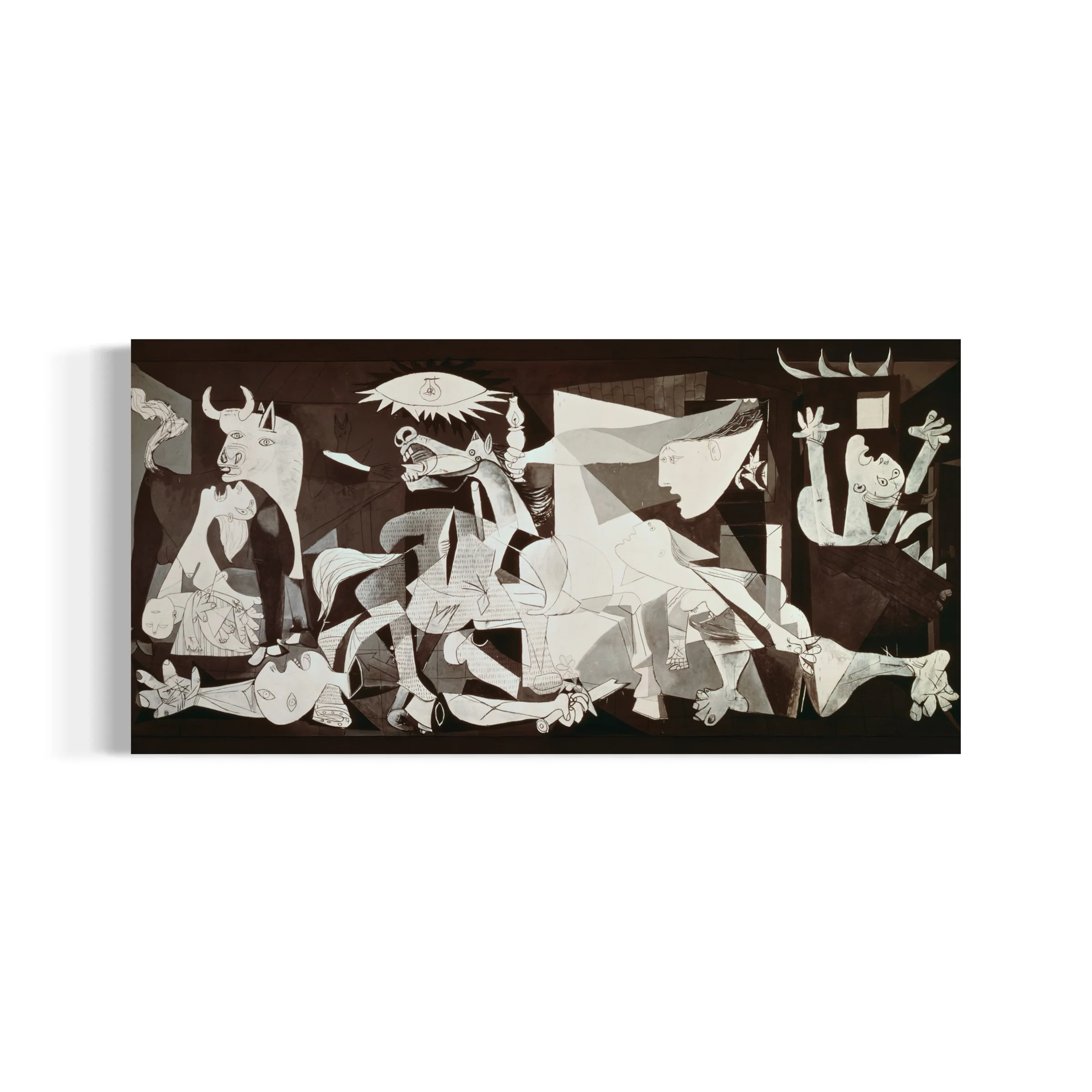
Guernica (1937) by Pablo Picasso is a monumental anti-war statement born from the horrors of the bombing of the Basque town of Guernica during the Spanish Civil War. In stark black, white, and gray, Picasso crafts a chaotic scene filled with fragmented figures—a screaming woman holding her dead child, a fallen warrior with a broken sword, a bull, and a terrified horse—all twisted in anguish. The absence of color intensifies the emotional impact, stripping the scene to its rawest form of suffering. Rather than depicting the attack realistically, Picasso uses Cubist distortion and symbolism to evoke the universal tragedy of civilian victims in wartime. The composition reads like a scream on canvas—disjointed, frantic, and unforgettable.
Product Information
Product Information
Shipping & Returns
Shipping & Returns




Guernica | Pablo Picasso | 1937
Guernica | Pablo Picasso | 1937
About the artwork:
Guernica (1937) by Pablo Picasso is a monumental anti-war statement born from the horrors of the bombing of the Basque town of Guernica during the Spanish Civil War. In stark black, white, and gray, Picasso crafts a chaotic scene filled with fragmented figures—a screaming woman holding her dead child, a fallen warrior with a broken sword, a bull, and a terrified horse—all twisted in anguish. The absence of color intensifies the emotional impact, stripping the scene to its rawest form of suffering. Rather than depicting the attack realistically, Picasso uses Cubist distortion and symbolism to evoke the universal tragedy of civilian victims in wartime. The composition reads like a scream on canvas—disjointed, frantic, and unforgettable.
Original: $504.35
-70%$504.35
$151.31Product Information
Product Information
Shipping & Returns
Shipping & Returns
Description
About the artwork:
Guernica (1937) by Pablo Picasso is a monumental anti-war statement born from the horrors of the bombing of the Basque town of Guernica during the Spanish Civil War. In stark black, white, and gray, Picasso crafts a chaotic scene filled with fragmented figures—a screaming woman holding her dead child, a fallen warrior with a broken sword, a bull, and a terrified horse—all twisted in anguish. The absence of color intensifies the emotional impact, stripping the scene to its rawest form of suffering. Rather than depicting the attack realistically, Picasso uses Cubist distortion and symbolism to evoke the universal tragedy of civilian victims in wartime. The composition reads like a scream on canvas—disjointed, frantic, and unforgettable.