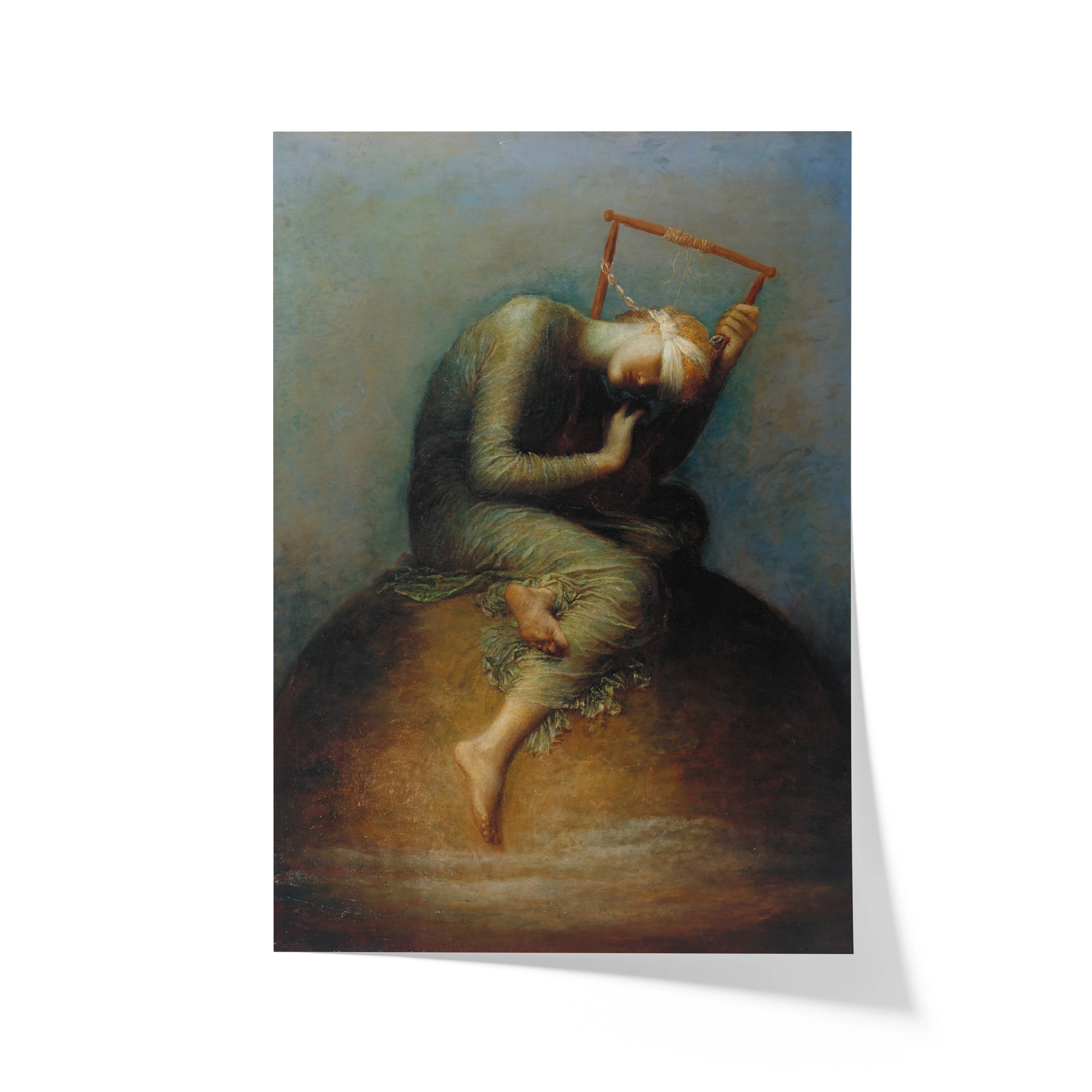
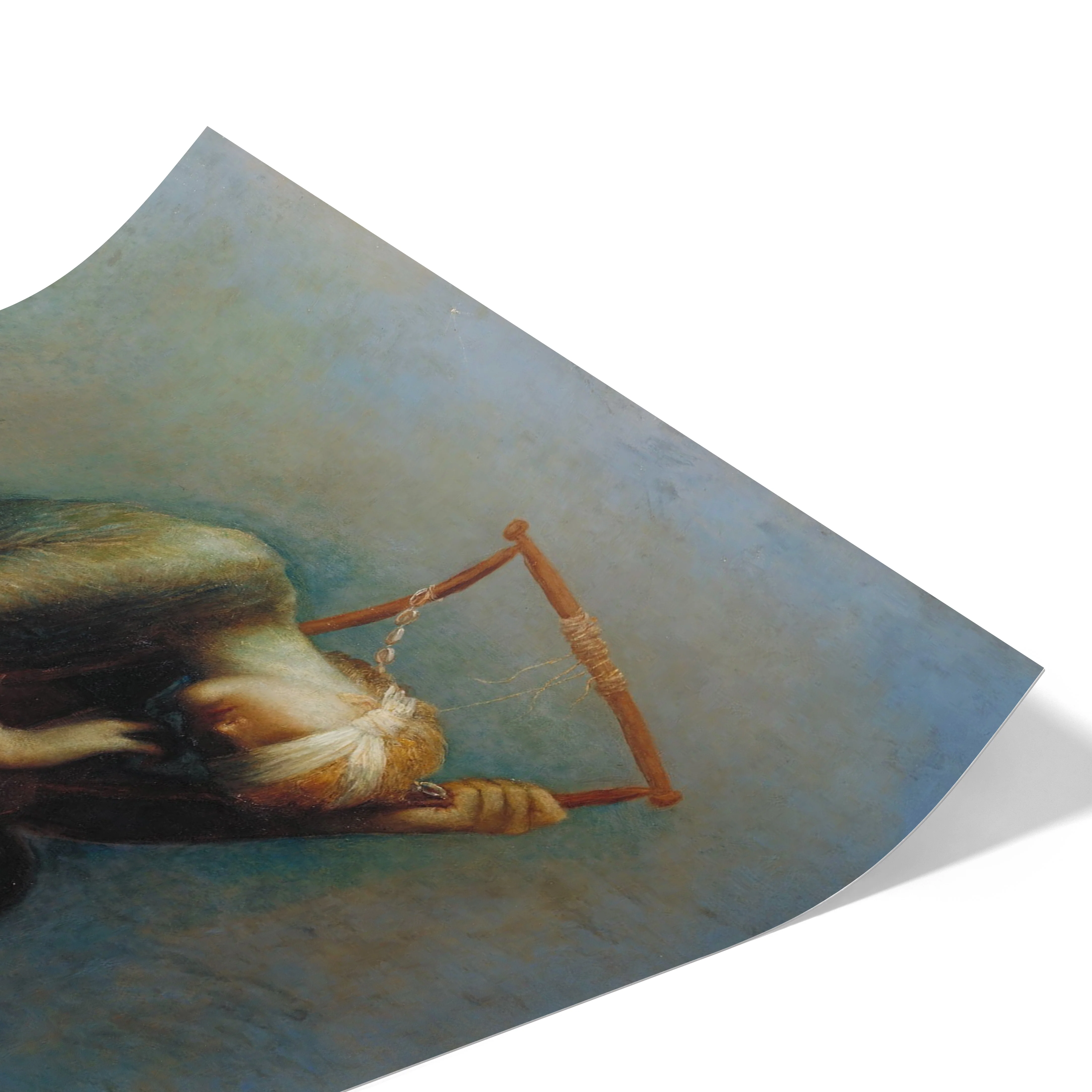
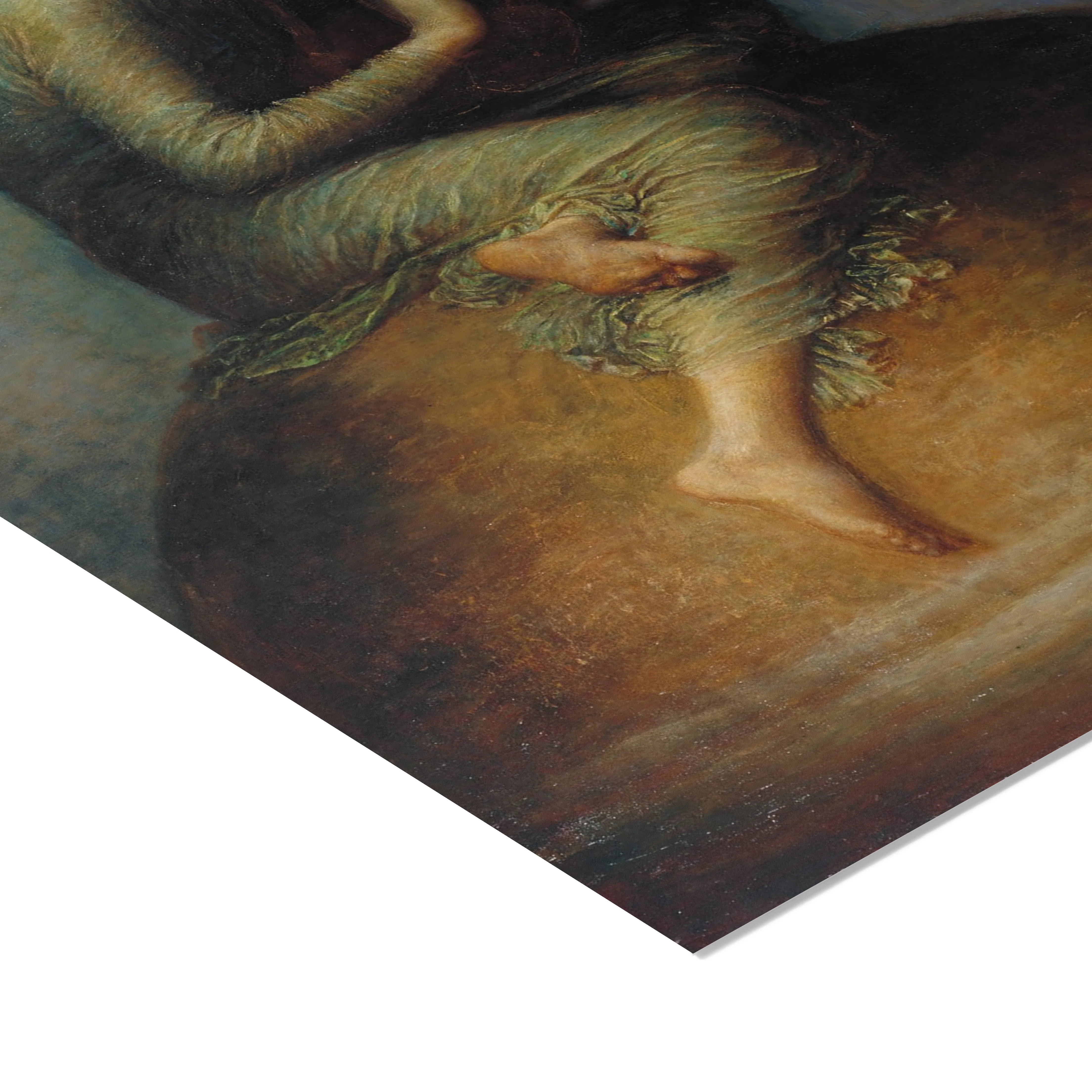
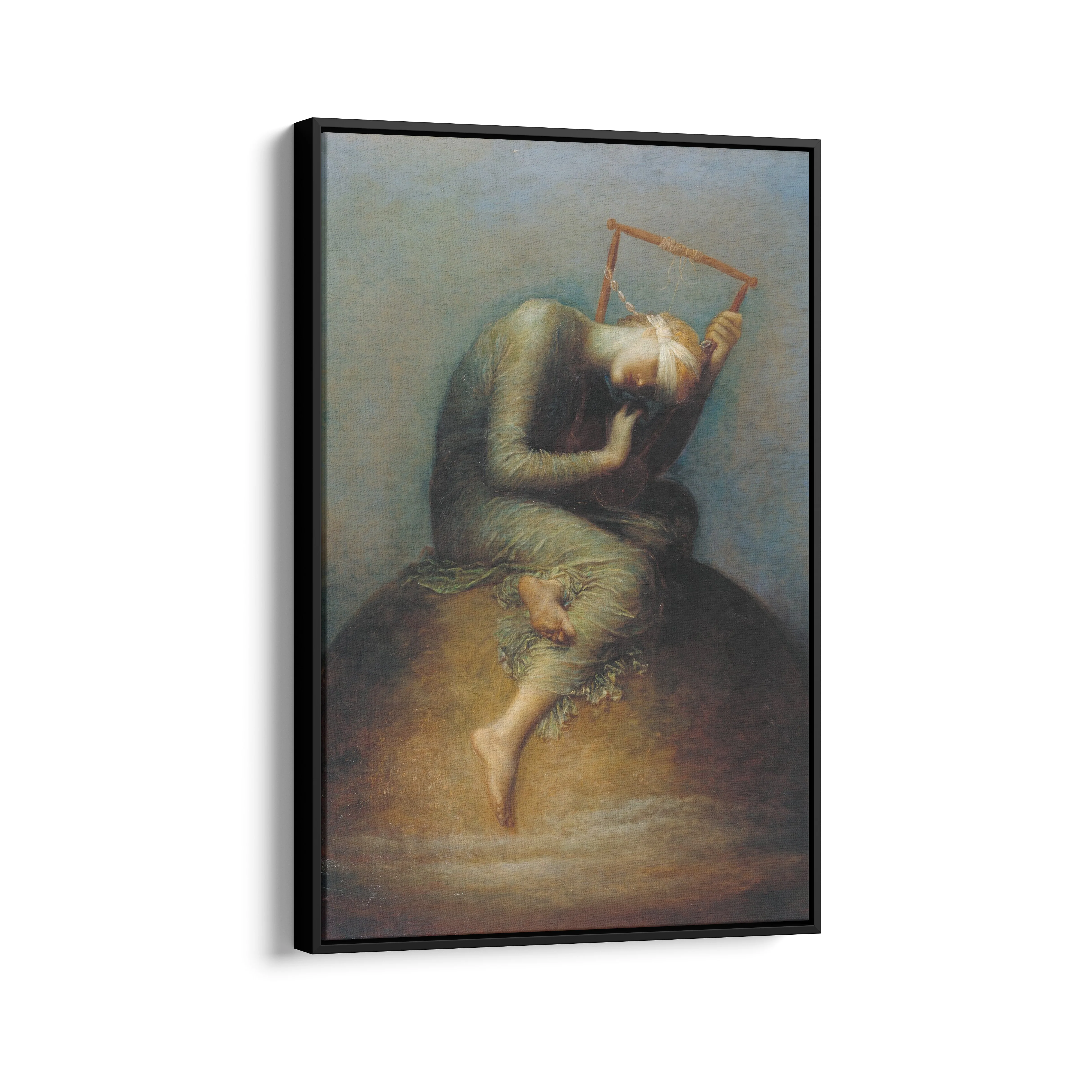
George Frederic Watts’ Hope (1886) is a poignant allegory that redefines the concept of optimism through a lens of resilience and introspection. The painting depicts a blindfolded female figure seated on a globe, clutching a lyre with only one remaining string. The muted tones and subdued light evoke a sense of melancholy, emphasizing the fragility of hope amidst despair. Despite the seemingly dire circumstances, the figure’s posture—leaning forward to play the single string—symbolizes perseverance and the human capacity to find solace in even the faintest glimmers of possibility. Watts’ use of soft, atmospheric brushwork and a dreamlike composition invites viewers to engage with the painting emotionally and philosophically. Rather than presenting hope as triumph or certainty, Watts offers a deeply human and universal portrayal of hope as an act of endurance, resonating with viewers across time as they navigate their own struggles and uncertainties.