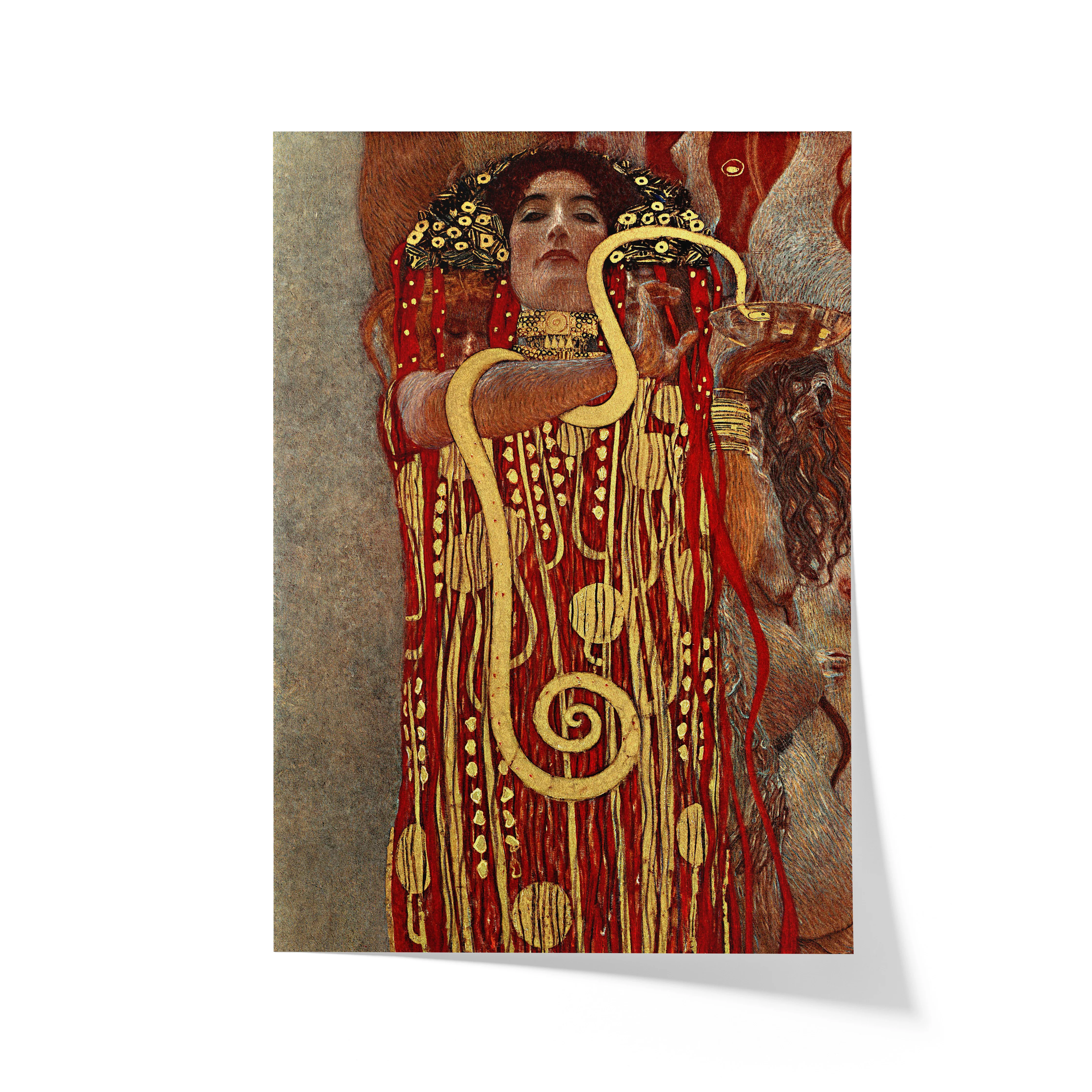
Klimt’s Hygieia (1901) embodies the height of his Golden Phase, blending opulent ornamentation with a sense of unsettling mysticism. Depicting the goddess of health from Greek mythology, the figure stands tall, her serpent coiling around the chalice—a symbol of healing but also of temptation and danger. Draped in gold and red, Hygieia’s rigid, almost hieratic pose contrasts with the sensual fluidity of her form, illustrating Klimt’s fascination with the duality between purity and desire, science and spirituality. Her direct, penetrating gaze—at once seductive and detached—reflects the fin-de-siècle tension between the rational world of medicine and the erotic undercurrents of human nature. The flat, decorative background filled with intricate mosaics recalls Byzantine art, turning the painting into both an icon and a warning: beauty, health, and knowledge are powerful forces, but none are free from corruption.