✨ New Arrivals Just Dropped!Explore
HomeStore

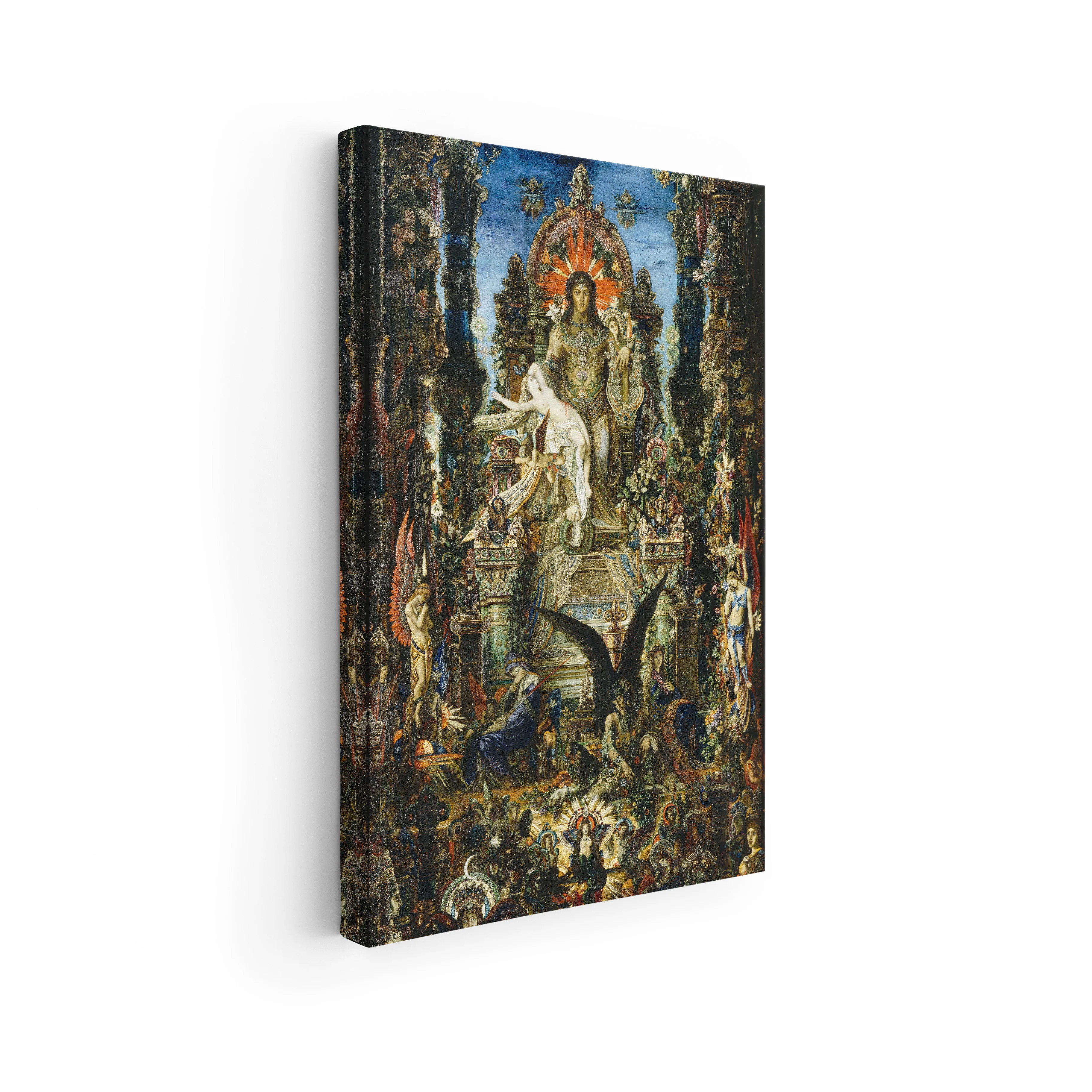
Jupiter and Semele | Gustave Moreau | 1894-95

Product image 1
Product image 2
Product image 3
Product image 4
Product image 5
Product image 6
Product image 7
Product image 8
Product image 9

Jupiter and Semele | Gustave Moreau | 1894-95

Jupiter and Semele | Gustave Moreau | 1894-95

About the artwork:

Gustave Moreau’s Jupiter and Semele (1894-95) is a masterpiece of Symbolist art, teeming with intricate detail and mythological grandeur. The painting depicts the climactic moment from Greek mythology when Semele, a mortal, beholds Jupiter (Zeus) in his divine form, resulting in her mortal demise. Moreau saturates the composition with rich, jewel-toned colors and an overwhelming density of symbolic elements, from celestial beings to otherworldly flora and fauna, encapsulating the overwhelming majesty of divine revelation. Jupiter looms at the center, a radiant figure of authority and godly splendor, while the fragile, lifeless Semele contrasts sharply with his overpowering aura. The surreal and dreamlike quality of the painting reflects Moreau’s fascination with mysticism, transcendence, and the interplay between mortality and divinity. Through this work, Moreau not only revisits a classic myth but also explores themes of desire, destruction, and the limits of human experience when confronted with the sublime.

Select Select Size
Select Frame Options
From $89.35

Original: $297.82

-70%
Jupiter and Semele | Gustave Moreau | 1894-95

$297.82

$89.35

Product Information

Shipping & Returns

Description

About the artwork:

Gustave Moreau’s Jupiter and Semele (1894-95) is a masterpiece of Symbolist art, teeming with intricate detail and mythological grandeur. The painting depicts the climactic moment from Greek mythology when Semele, a mortal, beholds Jupiter (Zeus) in his divine form, resulting in her mortal demise. Moreau saturates the composition with rich, jewel-toned colors and an overwhelming density of symbolic elements, from celestial beings to otherworldly flora and fauna, encapsulating the overwhelming majesty of divine revelation. Jupiter looms at the center, a radiant figure of authority and godly splendor, while the fragile, lifeless Semele contrasts sharply with his overpowering aura. The surreal and dreamlike quality of the painting reflects Moreau’s fascination with mysticism, transcendence, and the interplay between mortality and divinity. Through this work, Moreau not only revisits a classic myth but also explores themes of desire, destruction, and the limits of human experience when confronted with the sublime.