The Bell of Huesca | José Casado del Alisal | 1880
About the artwork:
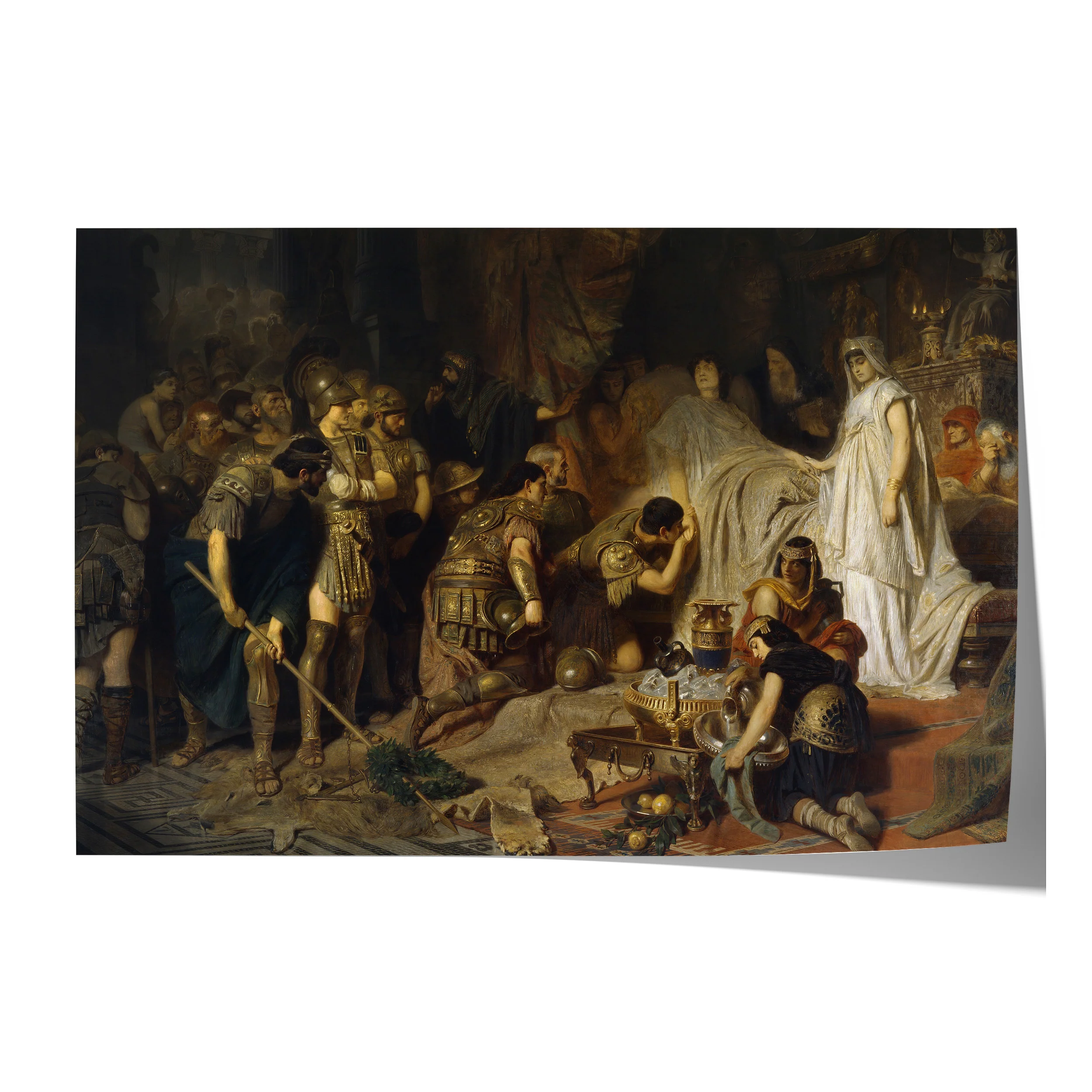
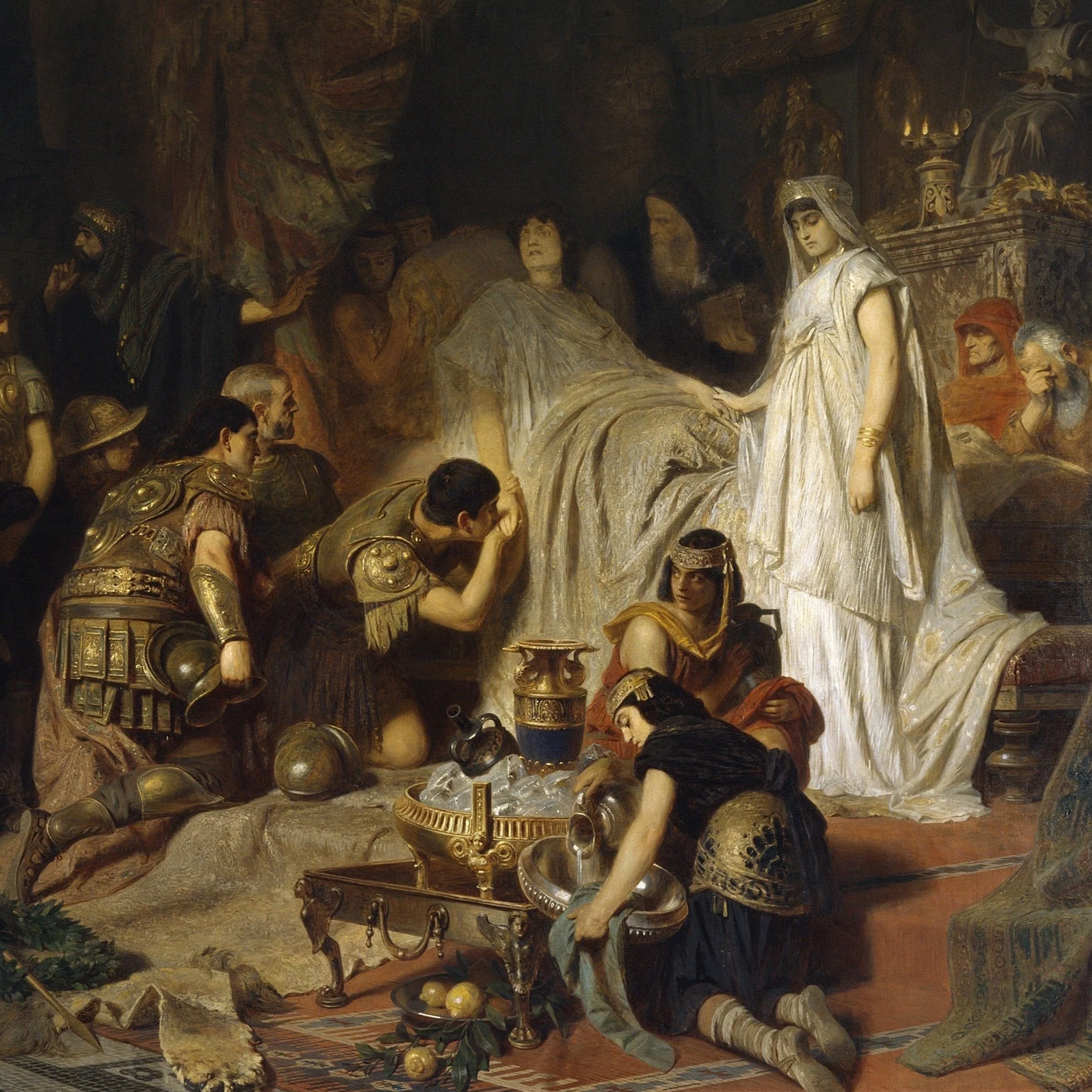
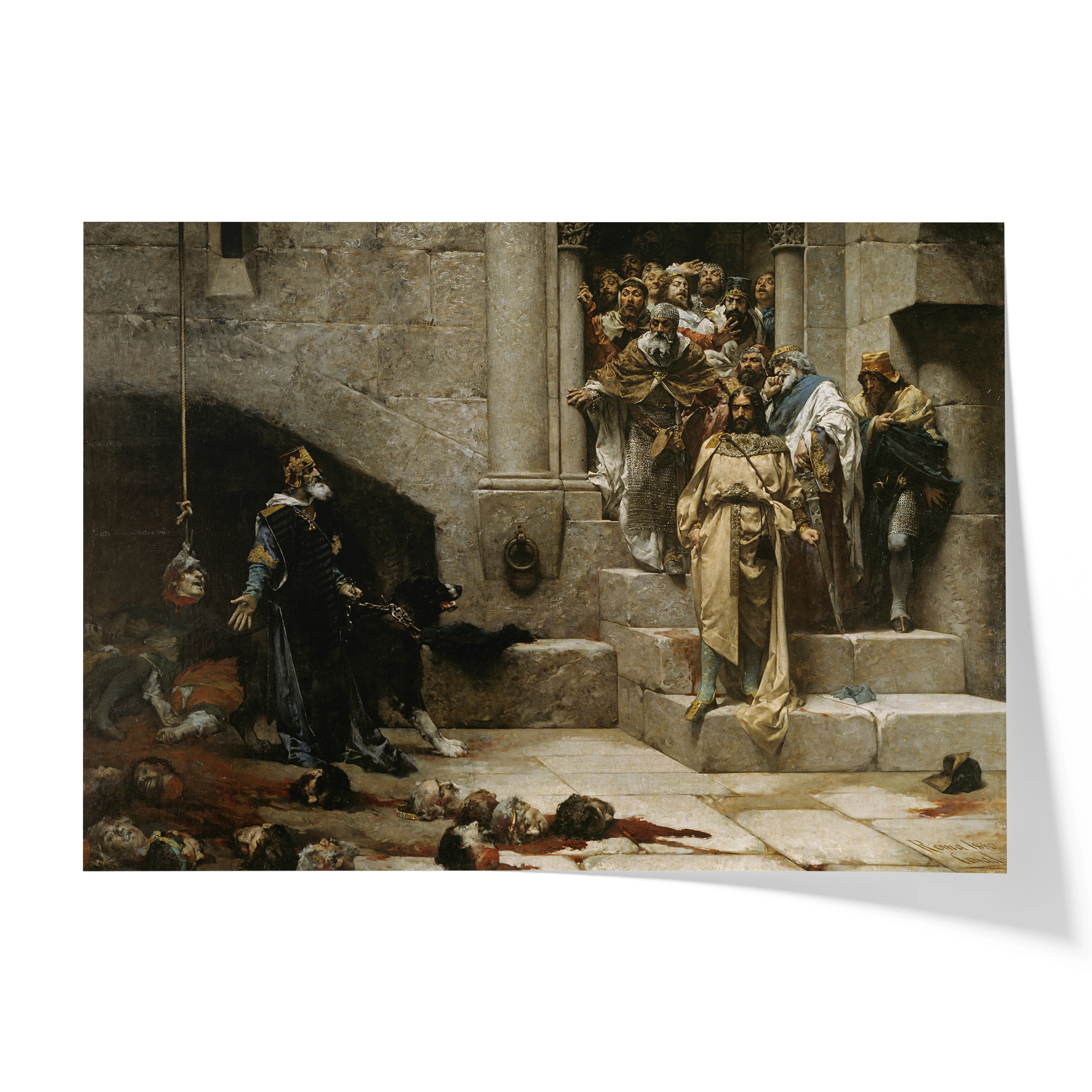
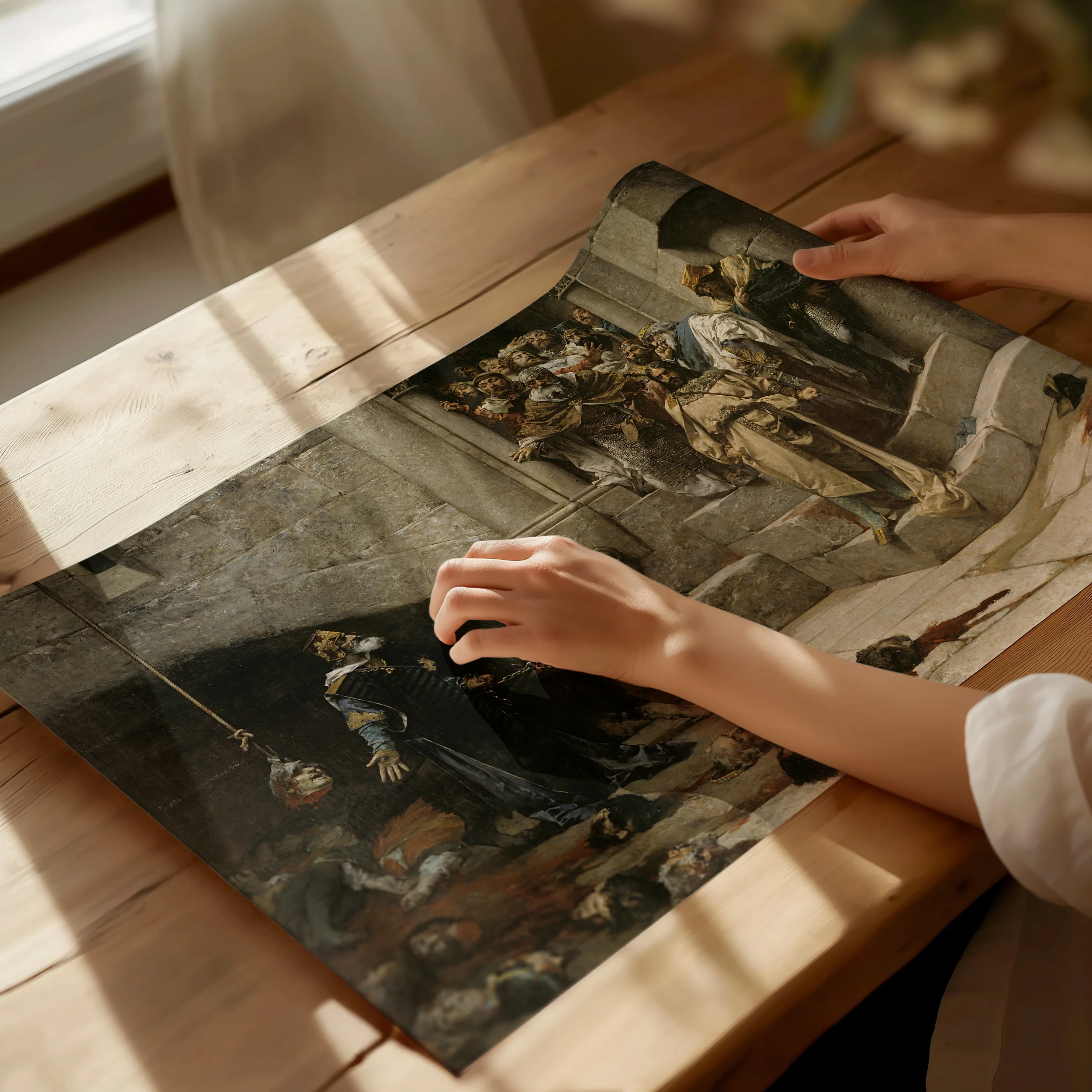
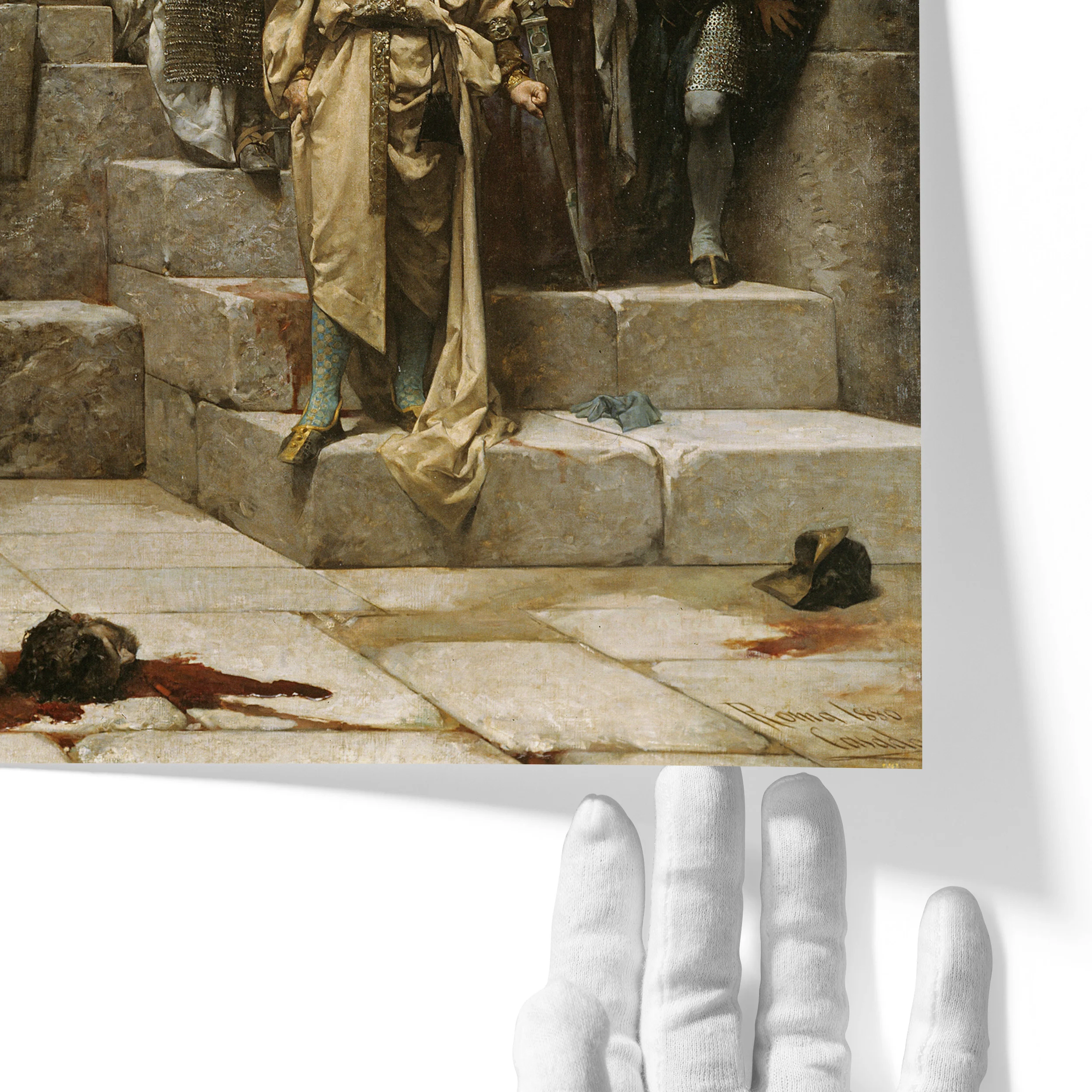
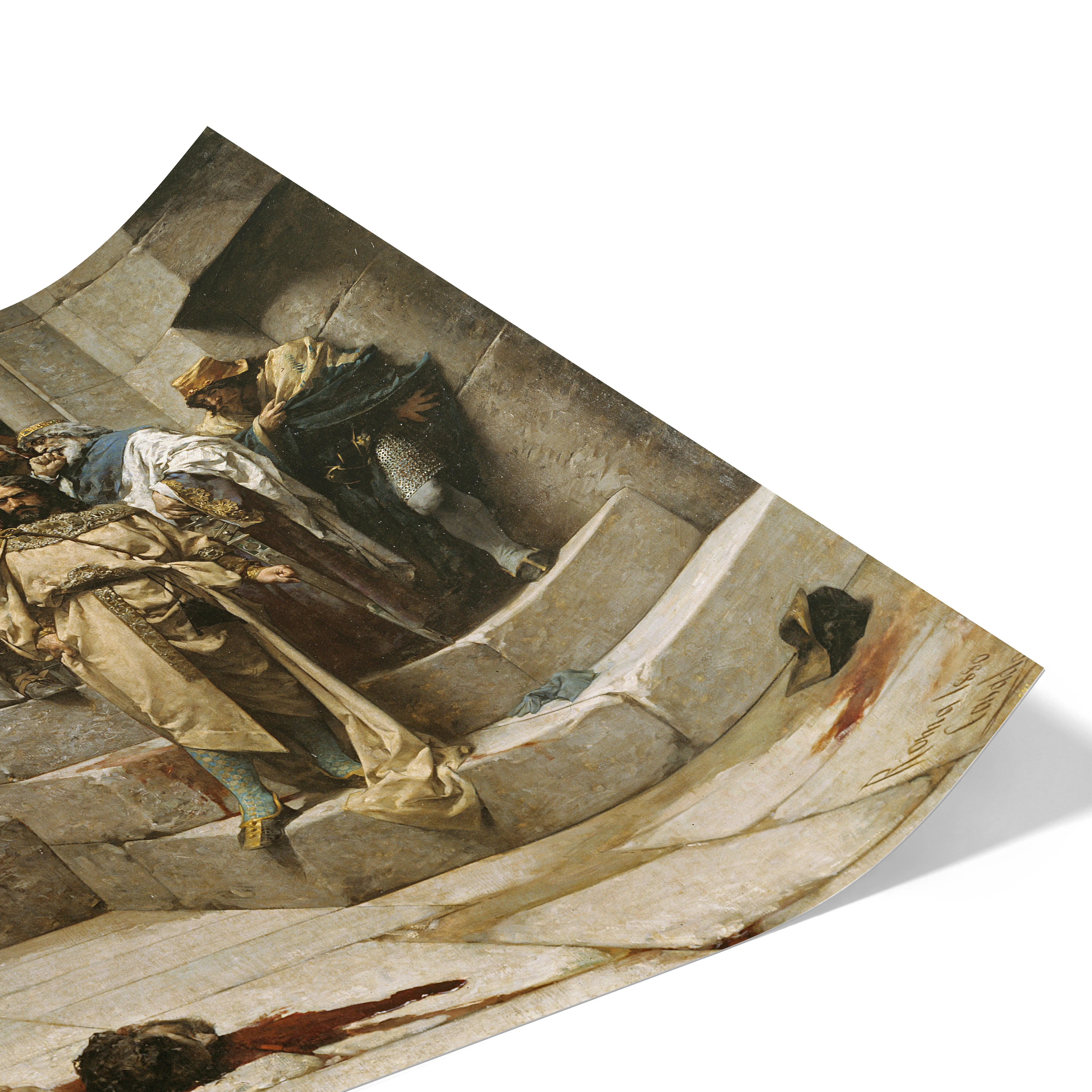
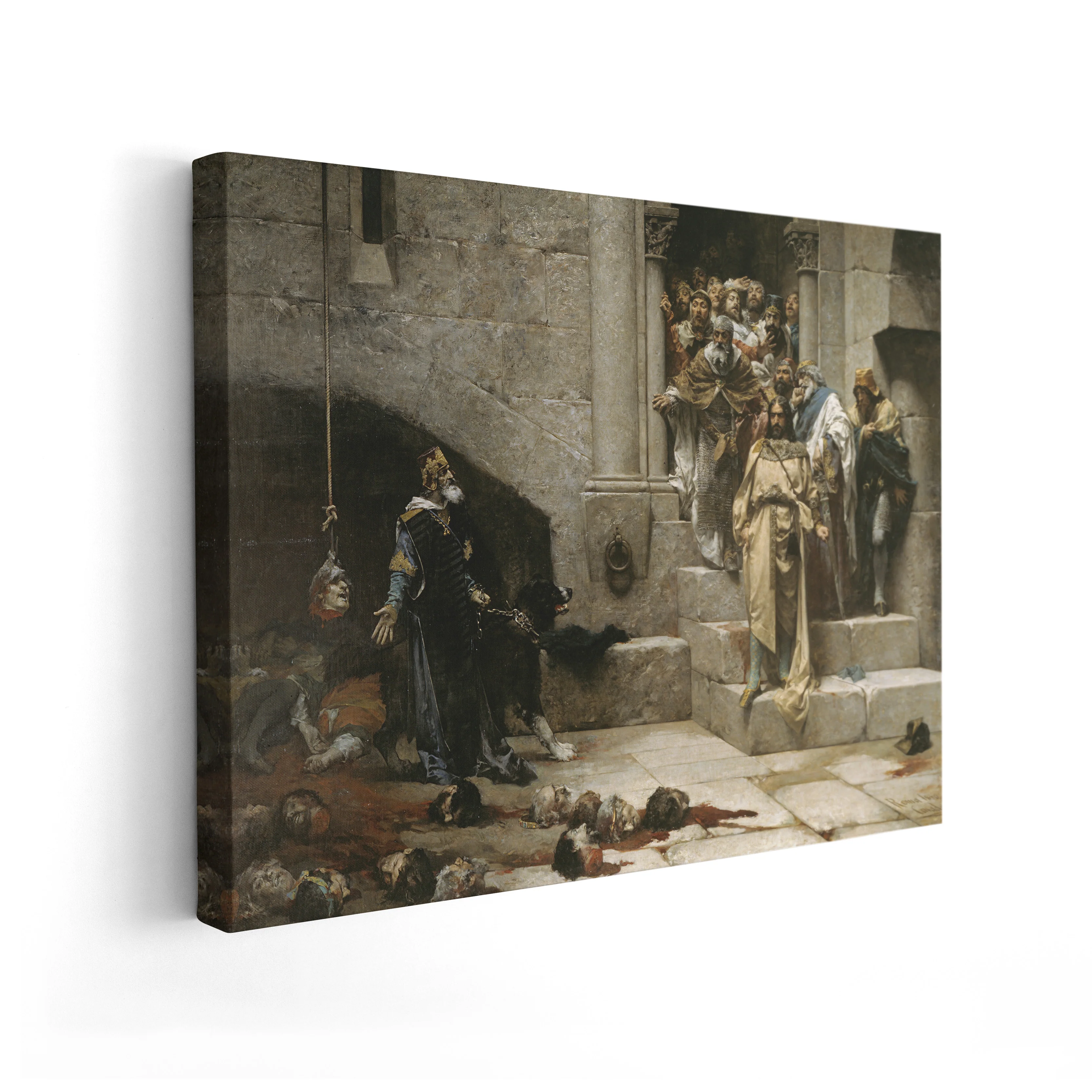
The Bell of Huesca (1880), painted by José Casado del Alisal, depicts one of the darkest and most legendary episodes of medieval Spanish history. The scene shows King Ramiro II of Aragon after executing several rebellious nobles, whose decapitated bodies lie on the ground while their heads form a macabre circle—symbolizing the infamous “bell” from which the painting takes its name. The king, calm and authoritative, gestures toward the center of the composition, asserting his will over those present. The drama of the moment, enhanced by dim lighting and subdued tones, conveys the violence and symbolic weight of this legend, which served as a warning to future conspirators. With academic precision, Casado del Alisal transforms a medieval fable into a powerful visual manifesto on authority, justice, and exemplary punishment.
Product Information
Product Information
Shipping & Returns
Shipping & Returns




The Bell of Huesca | José Casado del Alisal | 1880
The Bell of Huesca | José Casado del Alisal | 1880
About the artwork:
The Bell of Huesca (1880), painted by José Casado del Alisal, depicts one of the darkest and most legendary episodes of medieval Spanish history. The scene shows King Ramiro II of Aragon after executing several rebellious nobles, whose decapitated bodies lie on the ground while their heads form a macabre circle—symbolizing the infamous “bell” from which the painting takes its name. The king, calm and authoritative, gestures toward the center of the composition, asserting his will over those present. The drama of the moment, enhanced by dim lighting and subdued tones, conveys the violence and symbolic weight of this legend, which served as a warning to future conspirators. With academic precision, Casado del Alisal transforms a medieval fable into a powerful visual manifesto on authority, justice, and exemplary punishment.
Original: $297.82
-70%$297.82
$89.35Product Information
Product Information
Shipping & Returns
Shipping & Returns
Description
About the artwork:
The Bell of Huesca (1880), painted by José Casado del Alisal, depicts one of the darkest and most legendary episodes of medieval Spanish history. The scene shows King Ramiro II of Aragon after executing several rebellious nobles, whose decapitated bodies lie on the ground while their heads form a macabre circle—symbolizing the infamous “bell” from which the painting takes its name. The king, calm and authoritative, gestures toward the center of the composition, asserting his will over those present. The drama of the moment, enhanced by dim lighting and subdued tones, conveys the violence and symbolic weight of this legend, which served as a warning to future conspirators. With academic precision, Casado del Alisal transforms a medieval fable into a powerful visual manifesto on authority, justice, and exemplary punishment.