Lilith | John Collier | 1889
About the artwork:
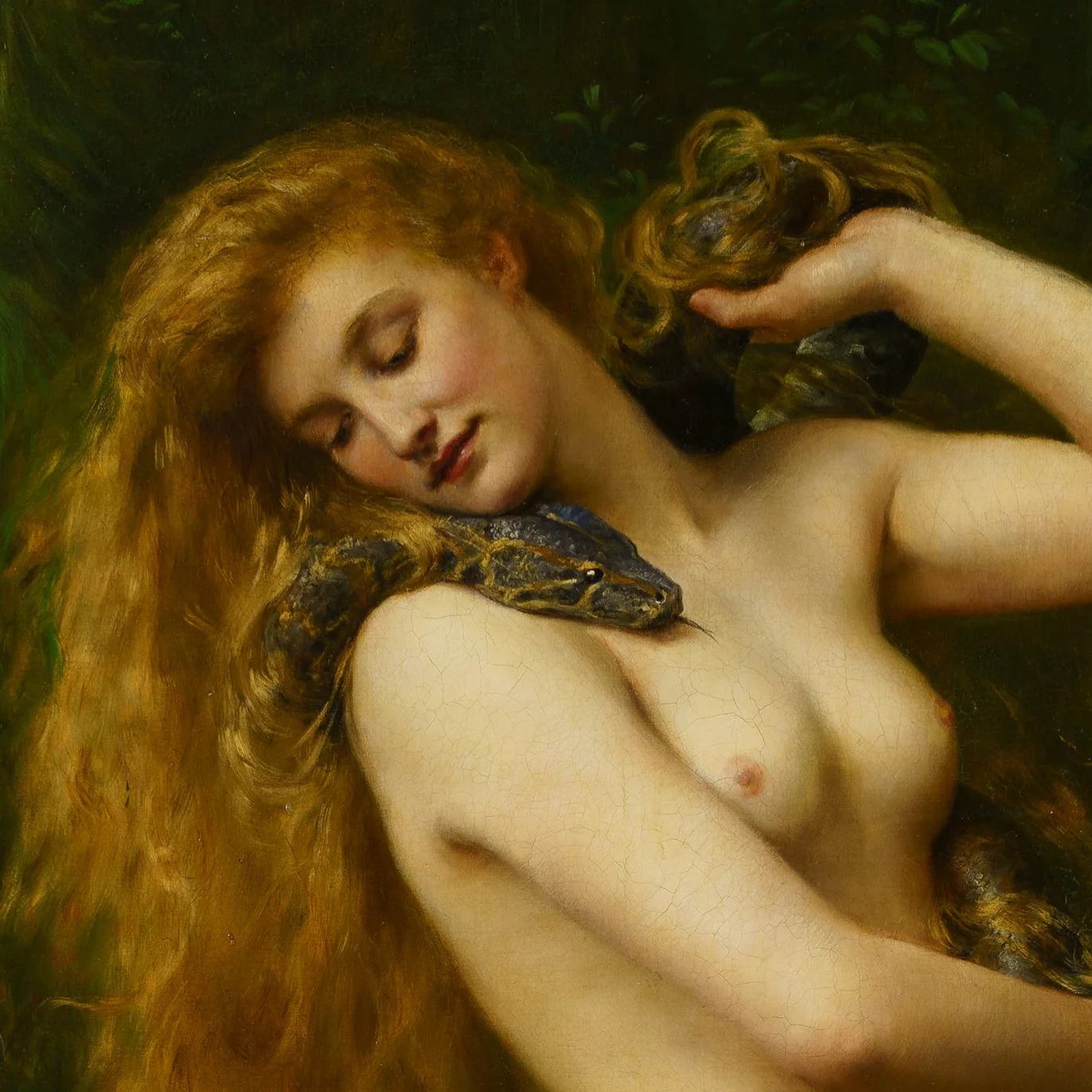
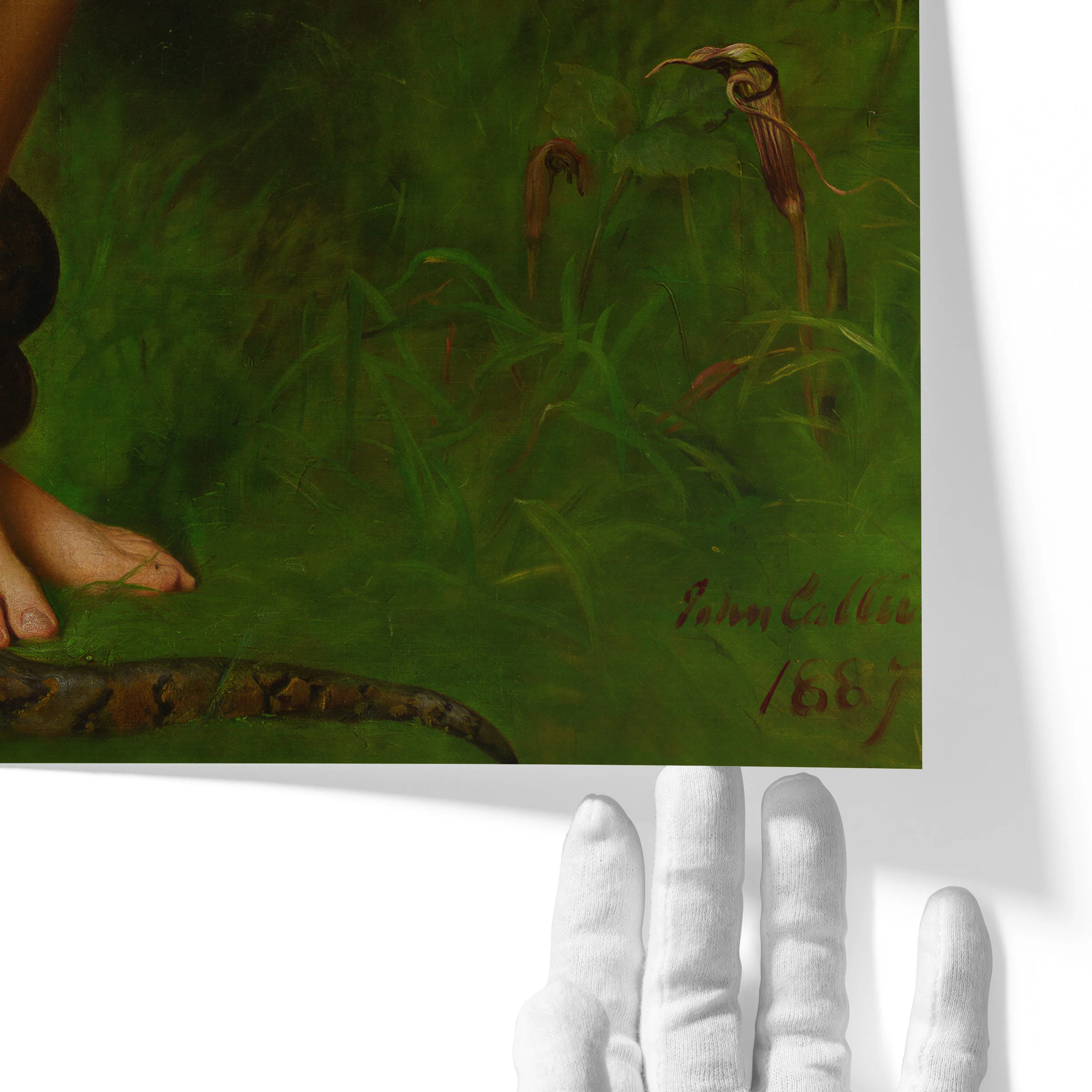
In Lilith (1889), John Collier presents a striking reinterpretation of the biblical and mythological figure as a calm yet unsettling embodiment of forbidden autonomy. Lilith stands nude against a dark, almost primordial background, her pale body rendered with Pre-Raphaelite clarity, while the serpent coils around her arm in a gesture that feels intimate rather than threatening. Collier strips the scene of overt drama and instead emphasizes psychological tension: Lilith’s detached gaze and relaxed posture suggest self-possession, not guilt, transforming her into a symbol of resistance to patriarchal and religious authority. The painting blurs the line between innocence and danger, beauty and transgression, inviting the viewer to question whether Lilith is a seductress, a victim of demonization, or simply a woman who refused submission. Through this quiet yet provocative composition, Collier aligns Lilith with late-Victorian anxieties about female independence, sexuality, and the fear of women who exist outside moral and social control.
Product Information
Product Information
Shipping & Returns
Shipping & Returns



Lilith | John Collier | 1889
Lilith | John Collier | 1889
About the artwork:
In Lilith (1889), John Collier presents a striking reinterpretation of the biblical and mythological figure as a calm yet unsettling embodiment of forbidden autonomy. Lilith stands nude against a dark, almost primordial background, her pale body rendered with Pre-Raphaelite clarity, while the serpent coils around her arm in a gesture that feels intimate rather than threatening. Collier strips the scene of overt drama and instead emphasizes psychological tension: Lilith’s detached gaze and relaxed posture suggest self-possession, not guilt, transforming her into a symbol of resistance to patriarchal and religious authority. The painting blurs the line between innocence and danger, beauty and transgression, inviting the viewer to question whether Lilith is a seductress, a victim of demonization, or simply a woman who refused submission. Through this quiet yet provocative composition, Collier aligns Lilith with late-Victorian anxieties about female independence, sexuality, and the fear of women who exist outside moral and social control.
Original: $504.35
-70%$504.35
$151.31Product Information
Product Information
Shipping & Returns
Shipping & Returns
Description
About the artwork:
In Lilith (1889), John Collier presents a striking reinterpretation of the biblical and mythological figure as a calm yet unsettling embodiment of forbidden autonomy. Lilith stands nude against a dark, almost primordial background, her pale body rendered with Pre-Raphaelite clarity, while the serpent coils around her arm in a gesture that feels intimate rather than threatening. Collier strips the scene of overt drama and instead emphasizes psychological tension: Lilith’s detached gaze and relaxed posture suggest self-possession, not guilt, transforming her into a symbol of resistance to patriarchal and religious authority. The painting blurs the line between innocence and danger, beauty and transgression, inviting the viewer to question whether Lilith is a seductress, a victim of demonization, or simply a woman who refused submission. Through this quiet yet provocative composition, Collier aligns Lilith with late-Victorian anxieties about female independence, sexuality, and the fear of women who exist outside moral and social control.