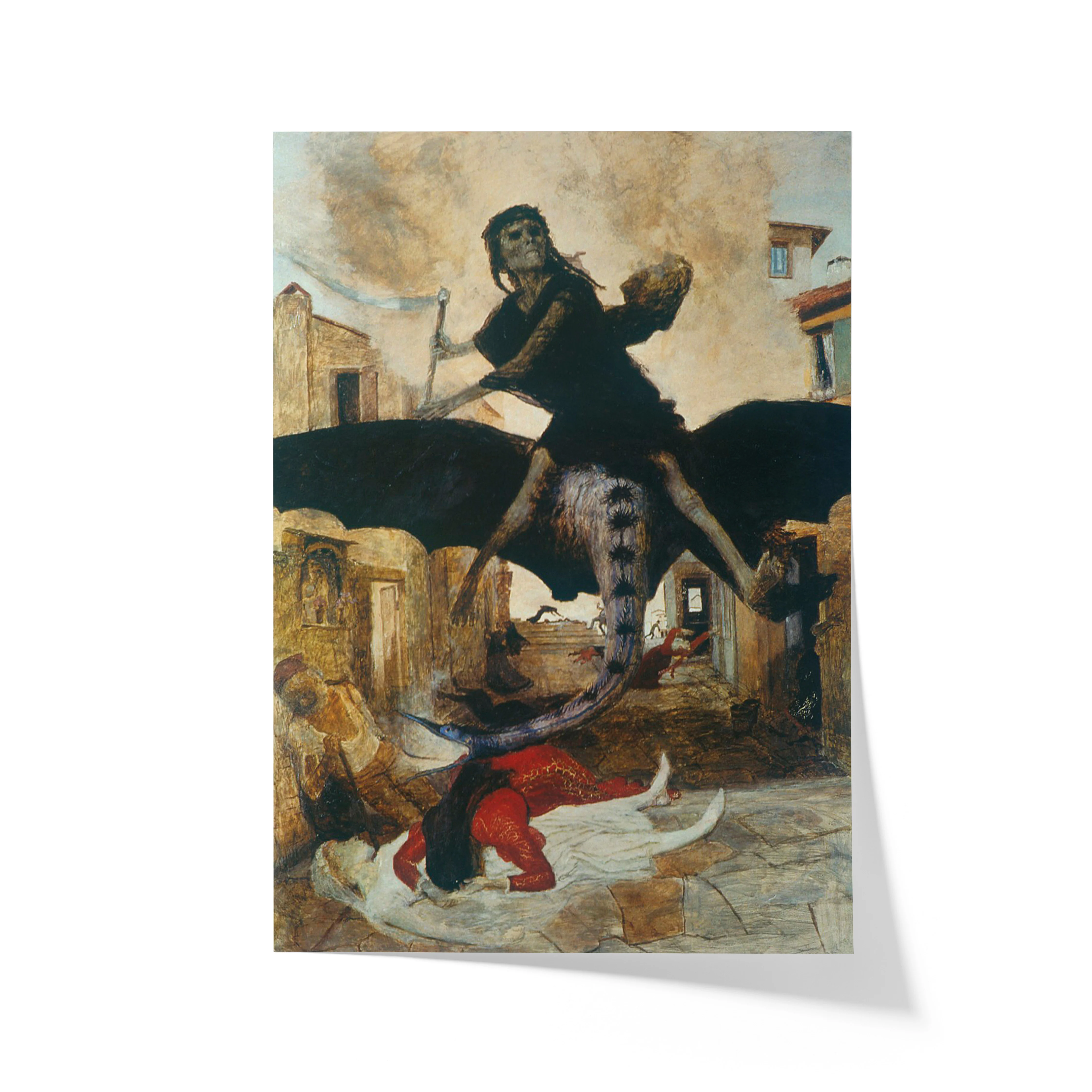
Medusa | Arnold Böcklin | 1878
About the artwork:
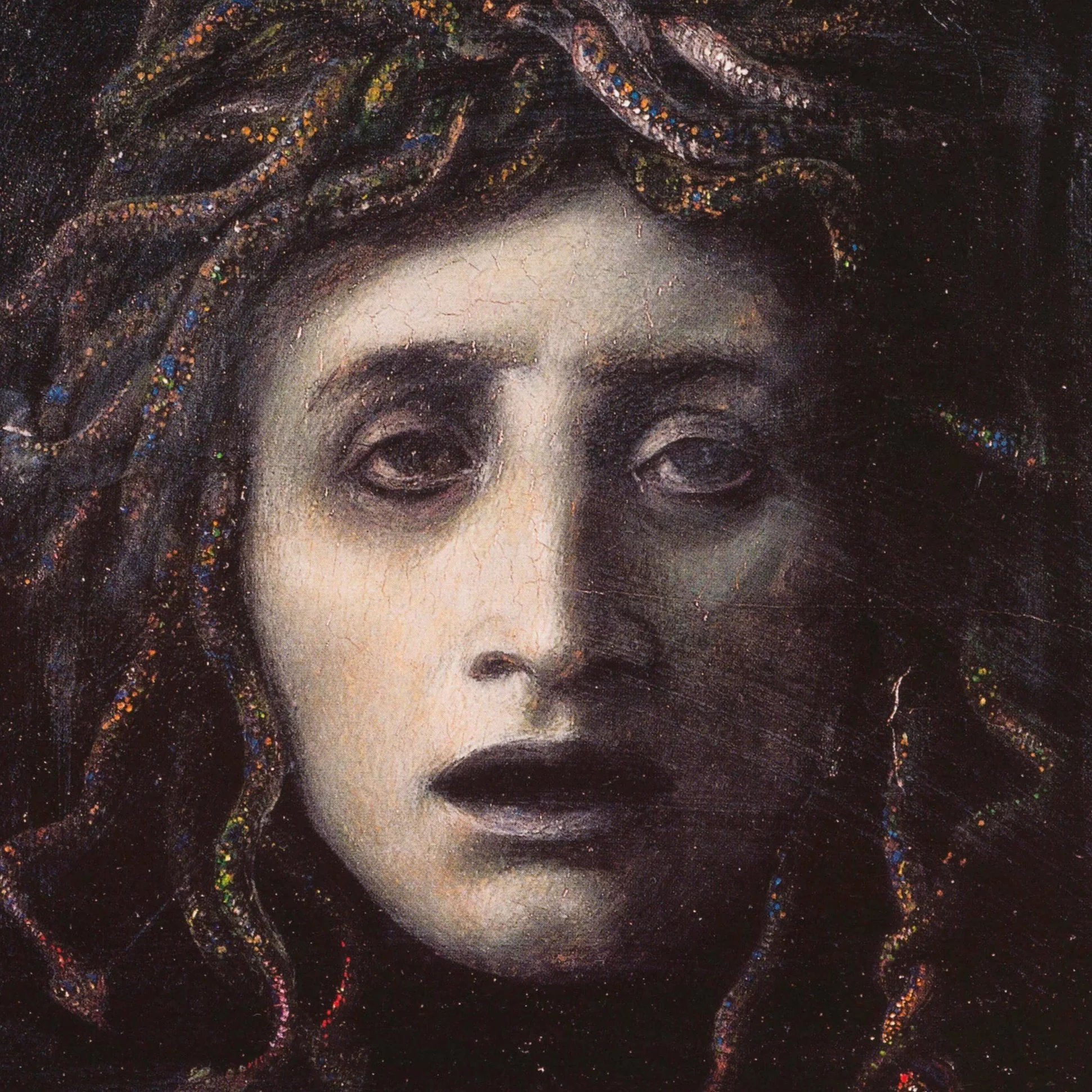
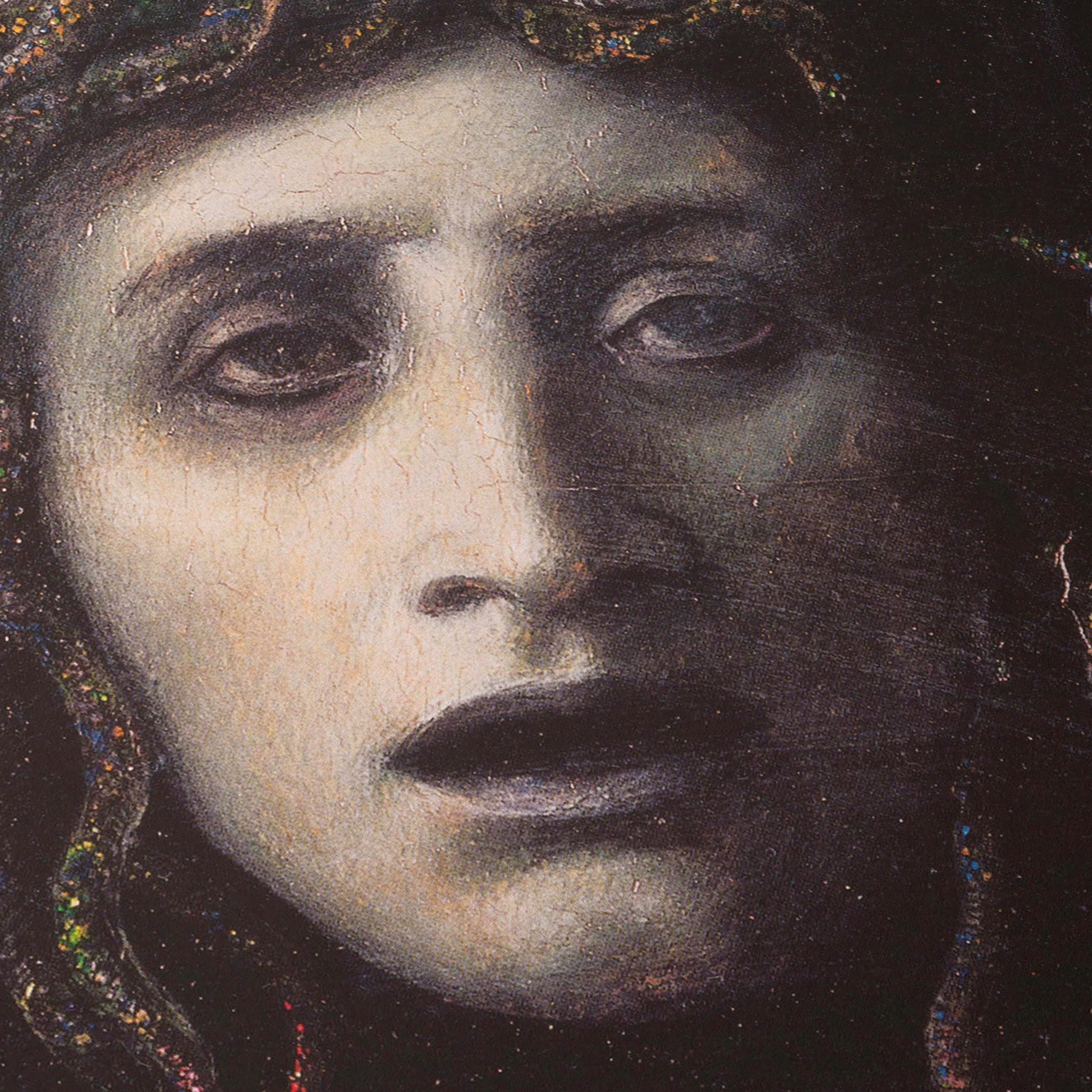
Arnold Böcklin’s "Medusa" (1878) offers a haunting vision of the mythological figure, departing from typical portrayals by focusing on her tragic suffering rather than her monstrous power. With a pallid, corpse-like complexion and disheveled, snake-filled hair, Medusa’s expression is one of despair, her wide eyes and slack mouth evoking an eerie sense of lifelessness. Böcklin emphasizes her humanity and vulnerability, contrasting with the usual depictions that highlight her as a fierce predator. The muted, dark palette and sparse background intensify her isolation, inviting viewers to feel sympathy rather than fear. In this portrayal, Böcklin captures the layered tragedy of Medusa’s transformation and isolation, as though she herself is imprisoned by her own power, condemned to a fate she did not choose. This depiction invites a more nuanced exploration of her story, casting Medusa as a symbol of suffering and unearned punishment rather than solely as a monstrous figure.
Product Information
Product Information
Shipping & Returns
Shipping & Returns



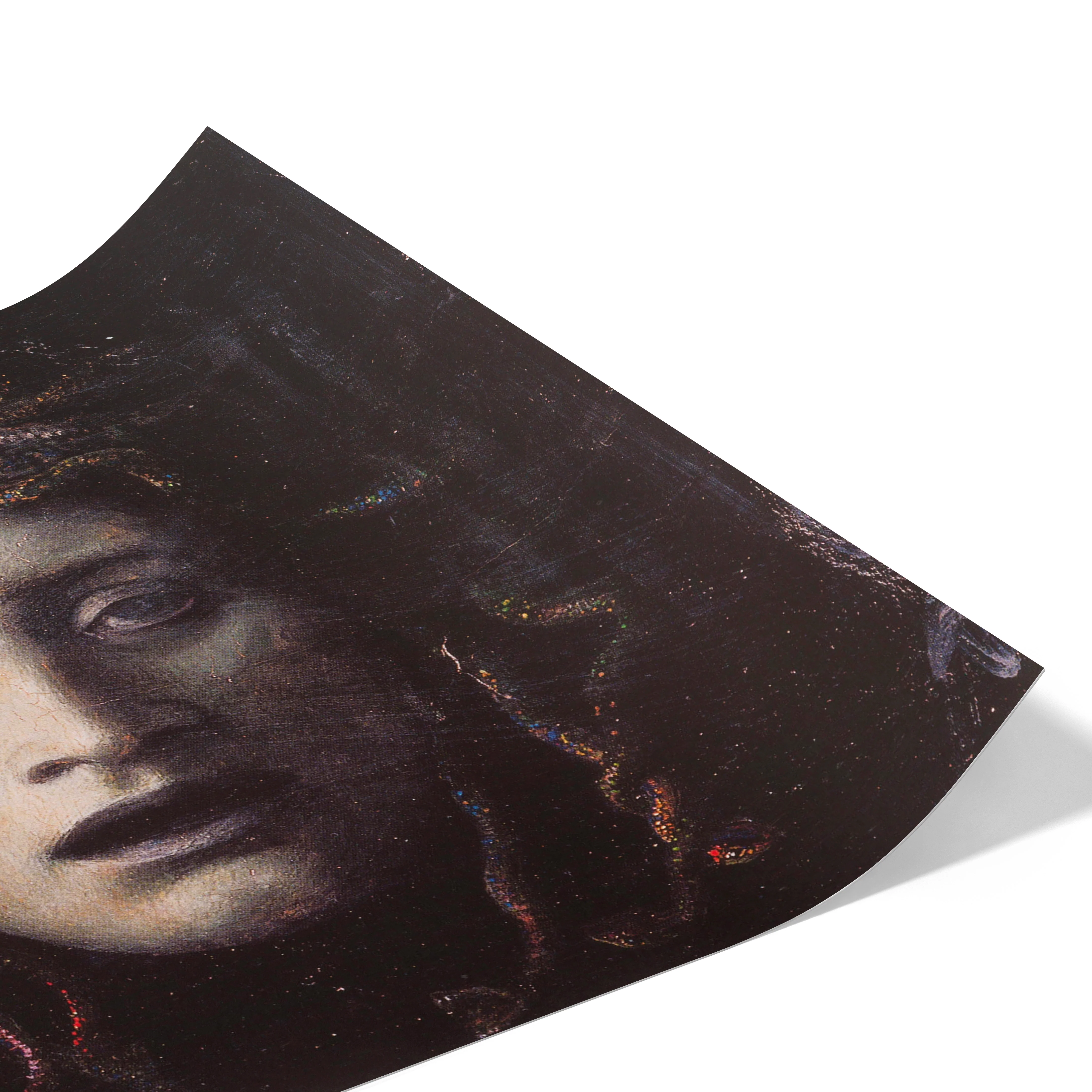

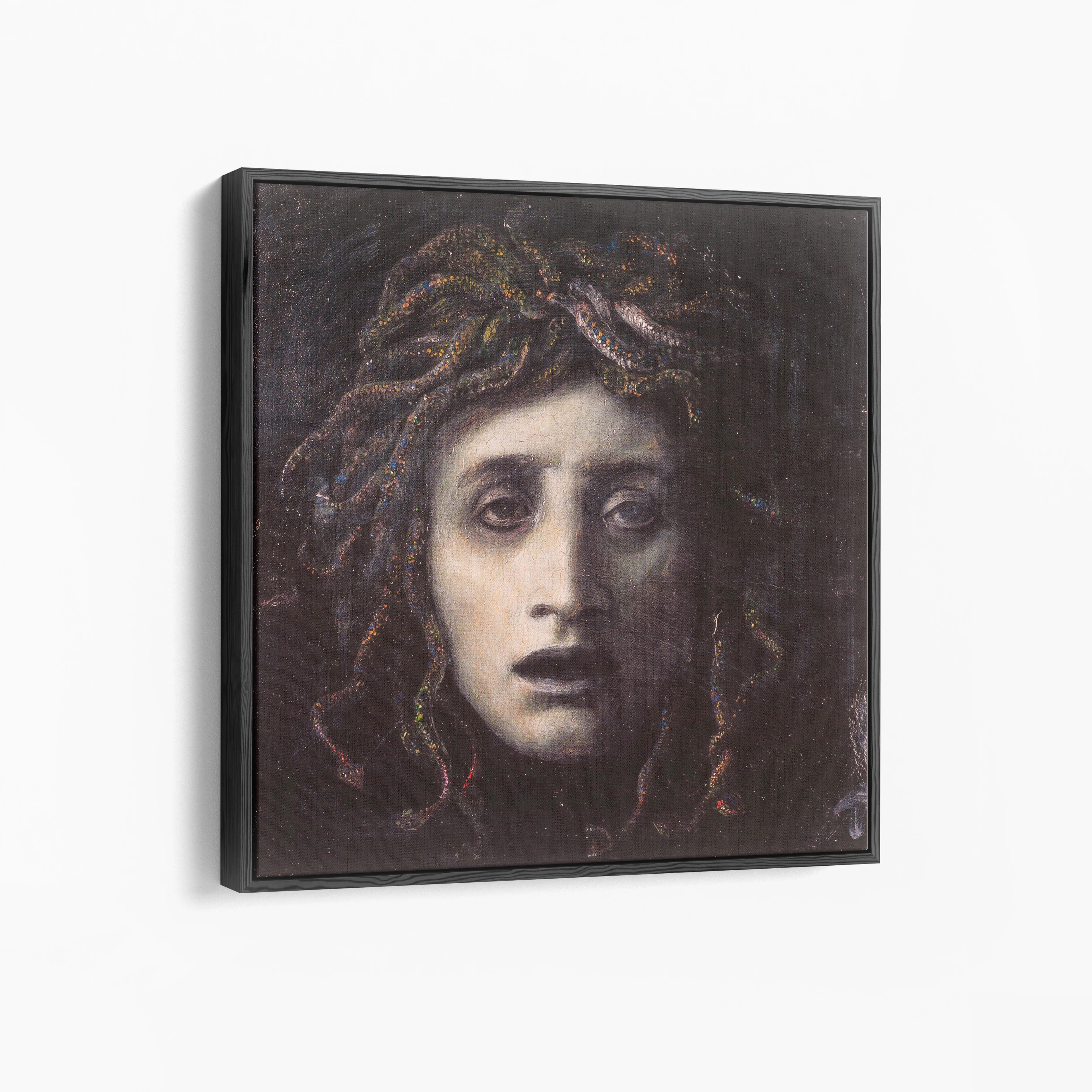
Medusa | Arnold Böcklin | 1878
Medusa | Arnold Böcklin | 1878
About the artwork:
Arnold Böcklin’s "Medusa" (1878) offers a haunting vision of the mythological figure, departing from typical portrayals by focusing on her tragic suffering rather than her monstrous power. With a pallid, corpse-like complexion and disheveled, snake-filled hair, Medusa’s expression is one of despair, her wide eyes and slack mouth evoking an eerie sense of lifelessness. Böcklin emphasizes her humanity and vulnerability, contrasting with the usual depictions that highlight her as a fierce predator. The muted, dark palette and sparse background intensify her isolation, inviting viewers to feel sympathy rather than fear. In this portrayal, Böcklin captures the layered tragedy of Medusa’s transformation and isolation, as though she herself is imprisoned by her own power, condemned to a fate she did not choose. This depiction invites a more nuanced exploration of her story, casting Medusa as a symbol of suffering and unearned punishment rather than solely as a monstrous figure.
Original: $459.85
-70%$459.85
$137.96Product Information
Product Information
Shipping & Returns
Shipping & Returns
Description
About the artwork:
Arnold Böcklin’s "Medusa" (1878) offers a haunting vision of the mythological figure, departing from typical portrayals by focusing on her tragic suffering rather than her monstrous power. With a pallid, corpse-like complexion and disheveled, snake-filled hair, Medusa’s expression is one of despair, her wide eyes and slack mouth evoking an eerie sense of lifelessness. Böcklin emphasizes her humanity and vulnerability, contrasting with the usual depictions that highlight her as a fierce predator. The muted, dark palette and sparse background intensify her isolation, inviting viewers to feel sympathy rather than fear. In this portrayal, Böcklin captures the layered tragedy of Medusa’s transformation and isolation, as though she herself is imprisoned by her own power, condemned to a fate she did not choose. This depiction invites a more nuanced exploration of her story, casting Medusa as a symbol of suffering and unearned punishment rather than solely as a monstrous figure.