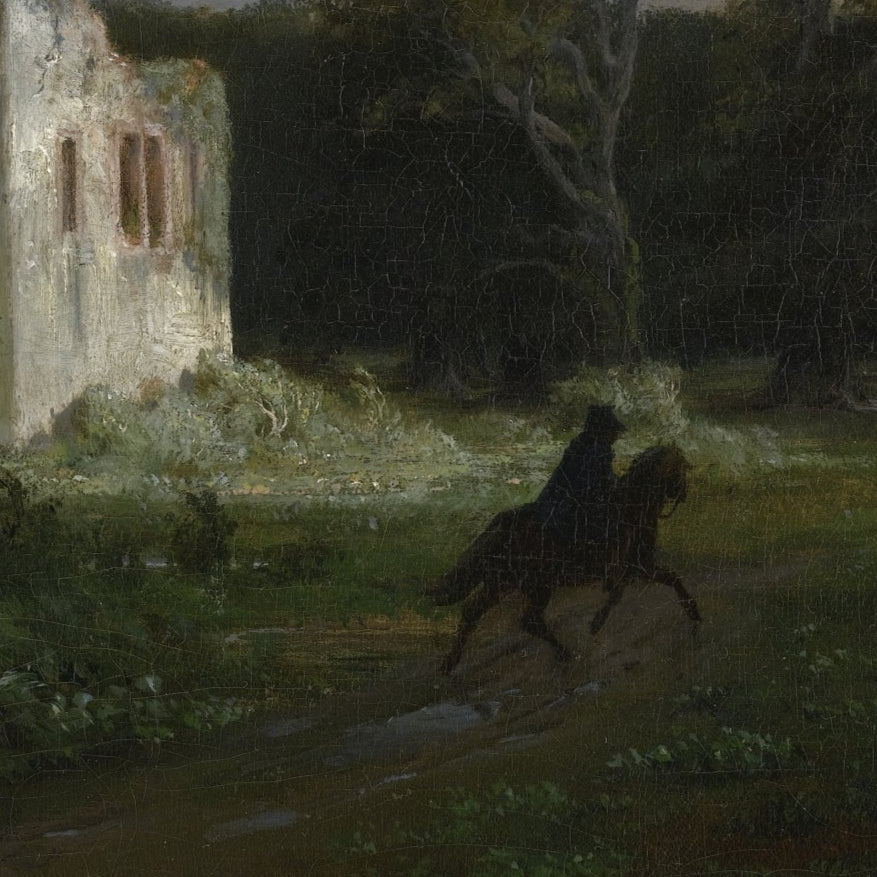
Plague | Arnold Böcklin | 1898
About the artwork:
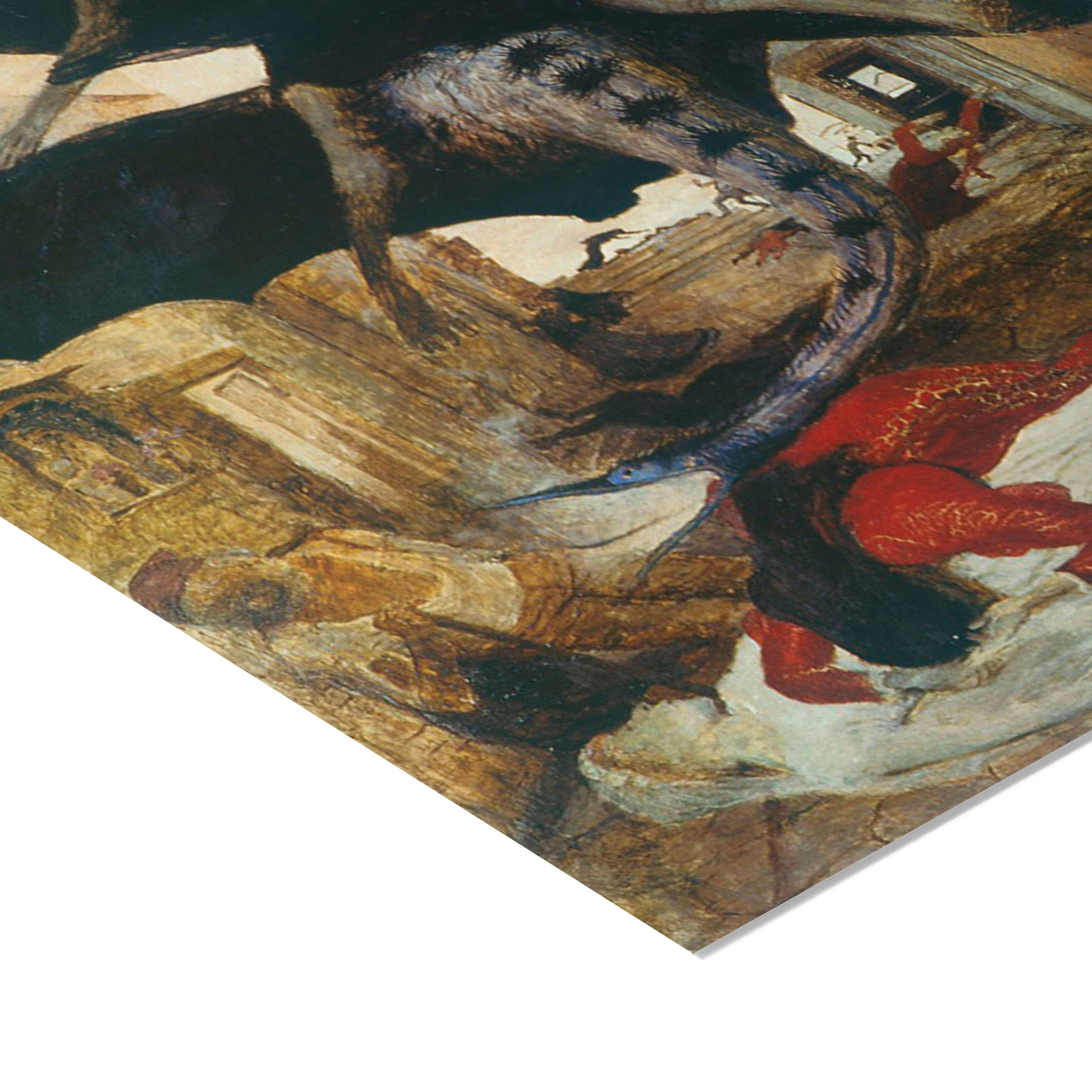
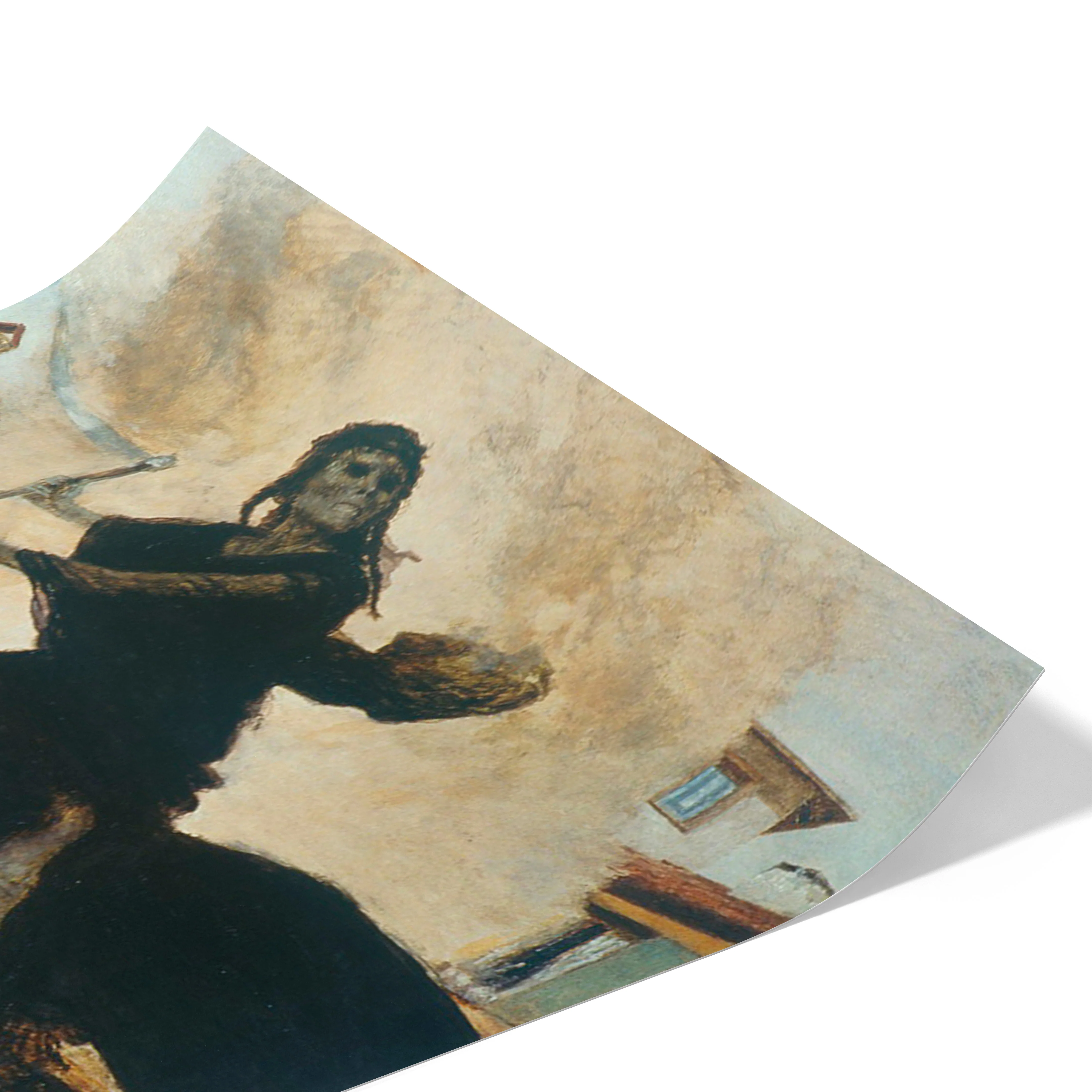
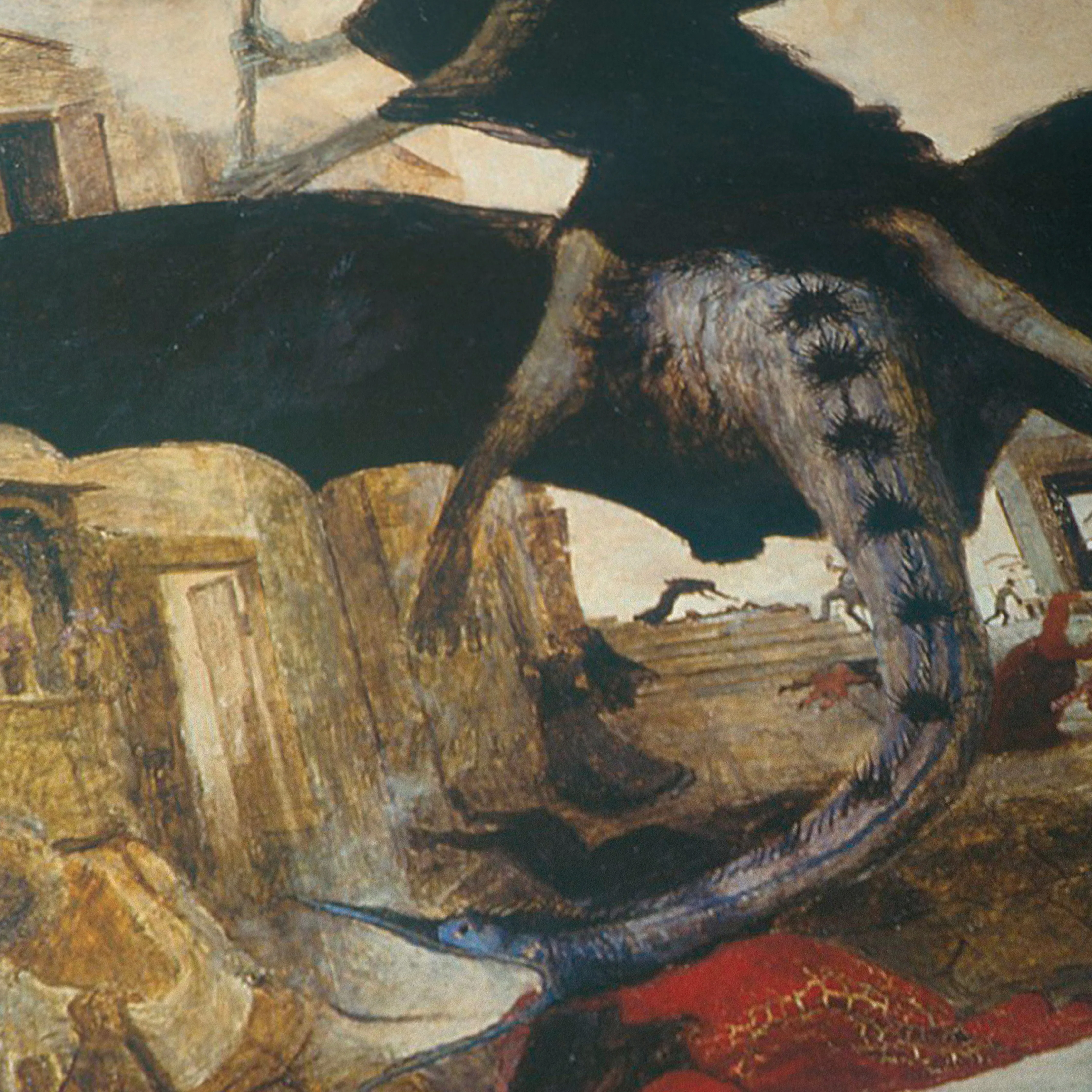
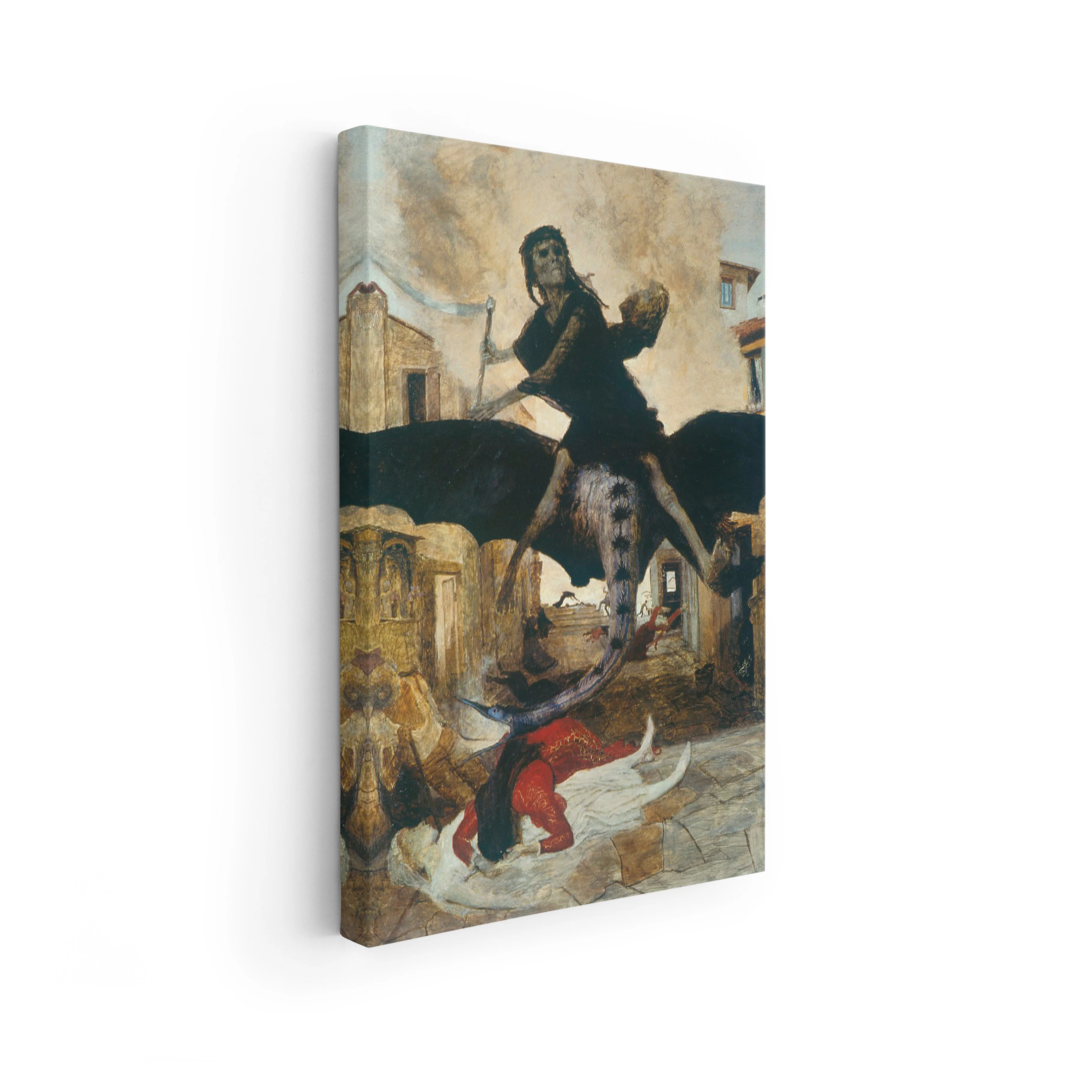
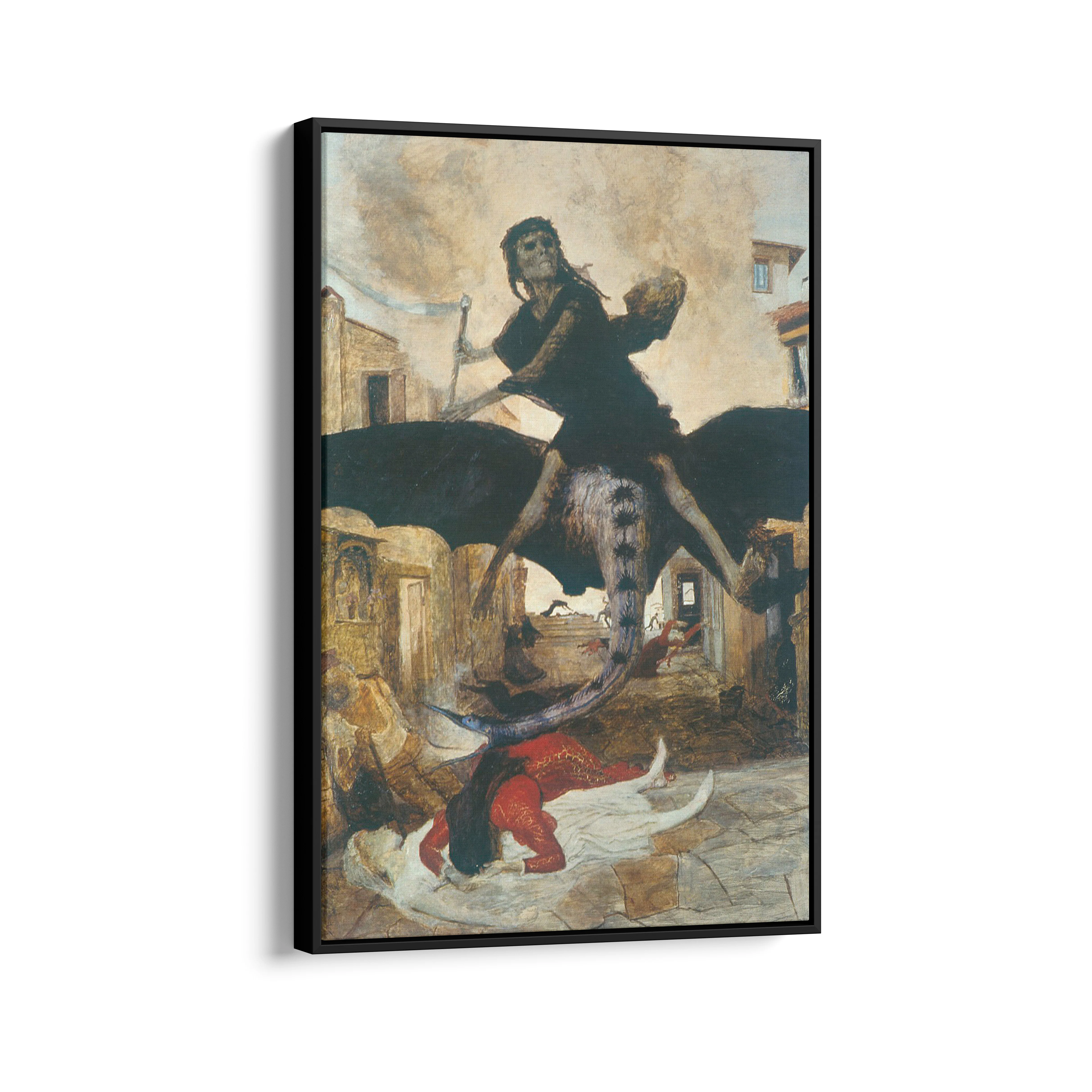
Arnold Böcklin’s Plague (1898) is a dark and harrowing depiction of the devastation wrought by pestilence, blending allegory with visceral imagery. The painting features a spectral, winged figure astride a skeletal horse, galloping through a city as it spreads death and chaos. The figure, embodying the personification of plague, wields a scythe, reinforcing its merciless and unstoppable nature. Böcklin's use of muted, almost sickly tones and turbulent brushwork creates a suffocating atmosphere, amplifying the sense of dread and despair. The architecture in the background is crumbling, while the anguished expressions of the fleeing figures convey the overwhelming panic and helplessness of those affected. The painting’s nightmarish quality reflects the Symbolist fascination with mortality and existential dread, while its allegorical elements connect it to the broader tradition of representing death as an active and inevitable force. Plague is a powerful meditation on human fragility, societal collapse, and the universal fear of disease and death.
Product Information
Product Information
Shipping & Returns
Shipping & Returns
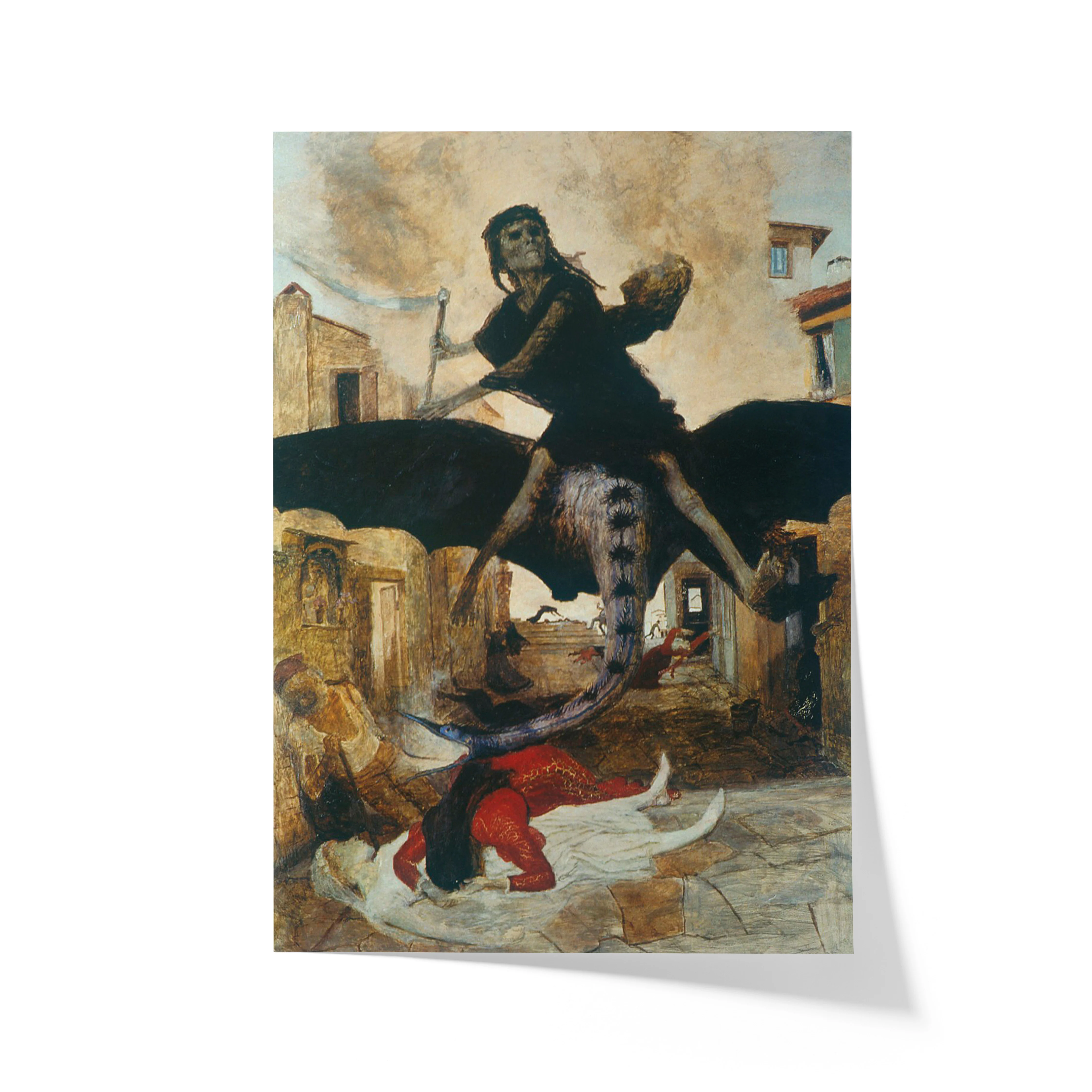

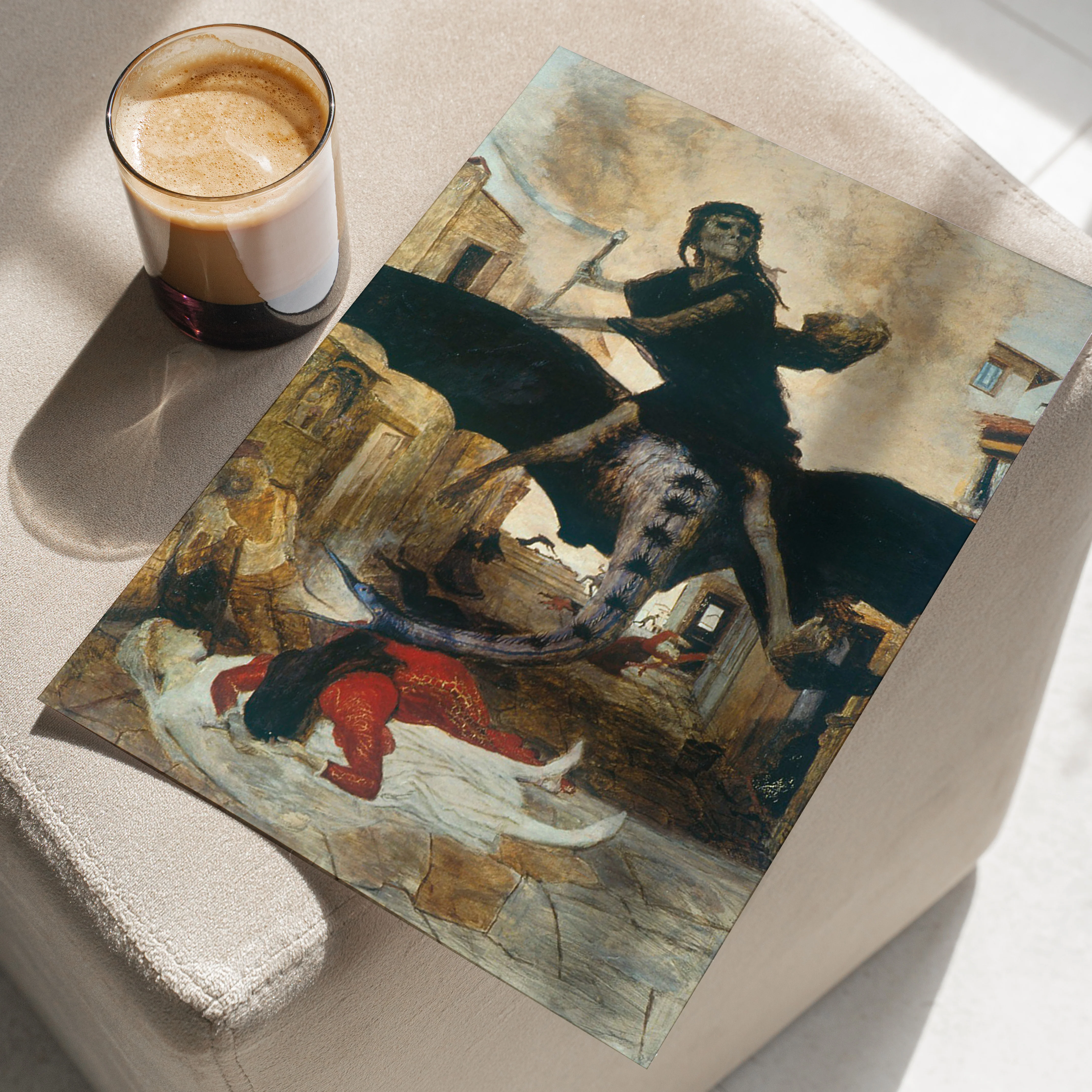
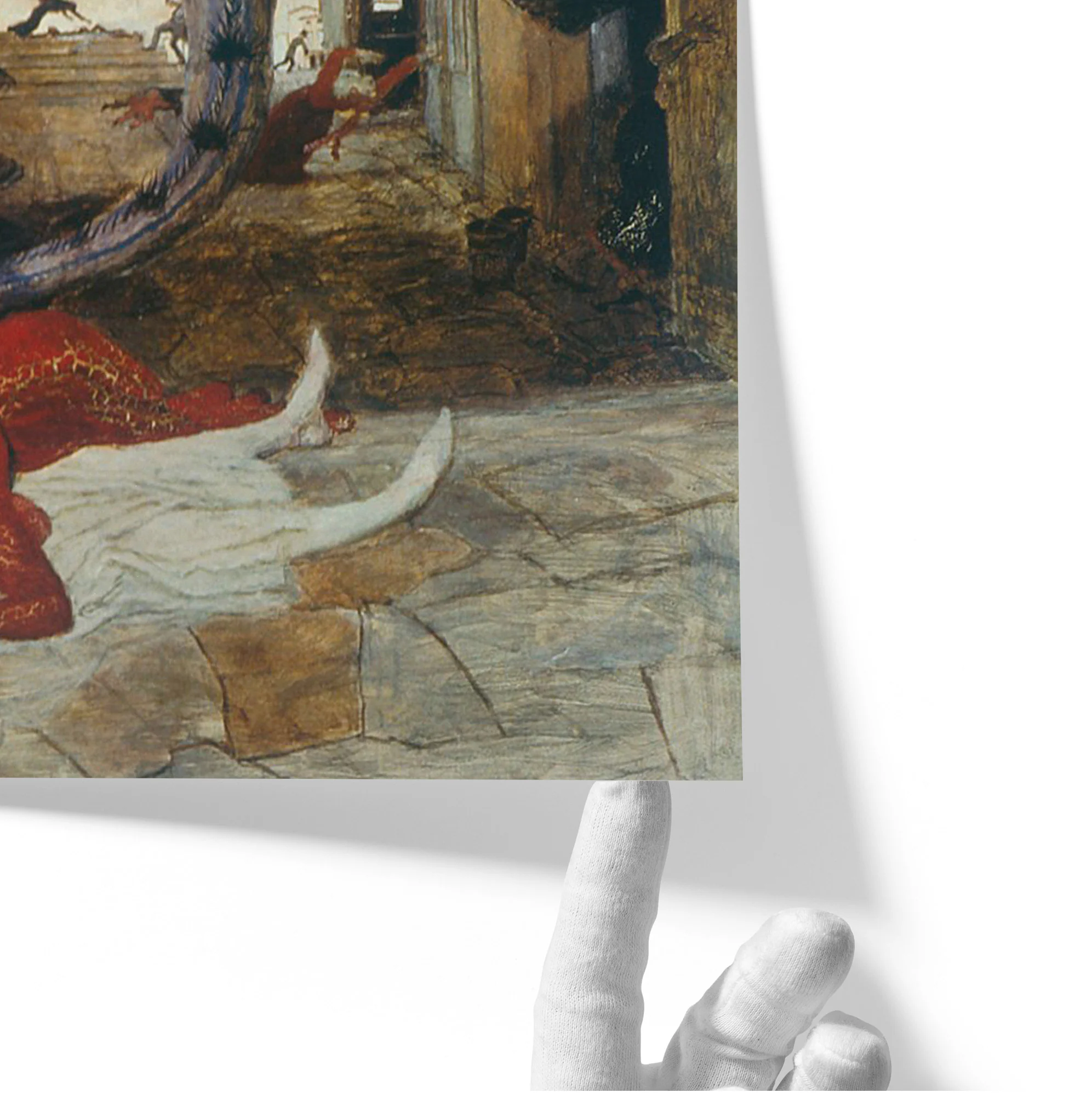
Plague | Arnold Böcklin | 1898
Plague | Arnold Böcklin | 1898
About the artwork:
Arnold Böcklin’s Plague (1898) is a dark and harrowing depiction of the devastation wrought by pestilence, blending allegory with visceral imagery. The painting features a spectral, winged figure astride a skeletal horse, galloping through a city as it spreads death and chaos. The figure, embodying the personification of plague, wields a scythe, reinforcing its merciless and unstoppable nature. Böcklin's use of muted, almost sickly tones and turbulent brushwork creates a suffocating atmosphere, amplifying the sense of dread and despair. The architecture in the background is crumbling, while the anguished expressions of the fleeing figures convey the overwhelming panic and helplessness of those affected. The painting’s nightmarish quality reflects the Symbolist fascination with mortality and existential dread, while its allegorical elements connect it to the broader tradition of representing death as an active and inevitable force. Plague is a powerful meditation on human fragility, societal collapse, and the universal fear of disease and death.
Original: $297.82
-70%$297.82
$89.35Product Information
Product Information
Shipping & Returns
Shipping & Returns
Description
About the artwork:
Arnold Böcklin’s Plague (1898) is a dark and harrowing depiction of the devastation wrought by pestilence, blending allegory with visceral imagery. The painting features a spectral, winged figure astride a skeletal horse, galloping through a city as it spreads death and chaos. The figure, embodying the personification of plague, wields a scythe, reinforcing its merciless and unstoppable nature. Böcklin's use of muted, almost sickly tones and turbulent brushwork creates a suffocating atmosphere, amplifying the sense of dread and despair. The architecture in the background is crumbling, while the anguished expressions of the fleeing figures convey the overwhelming panic and helplessness of those affected. The painting’s nightmarish quality reflects the Symbolist fascination with mortality and existential dread, while its allegorical elements connect it to the broader tradition of representing death as an active and inevitable force. Plague is a powerful meditation on human fragility, societal collapse, and the universal fear of disease and death.