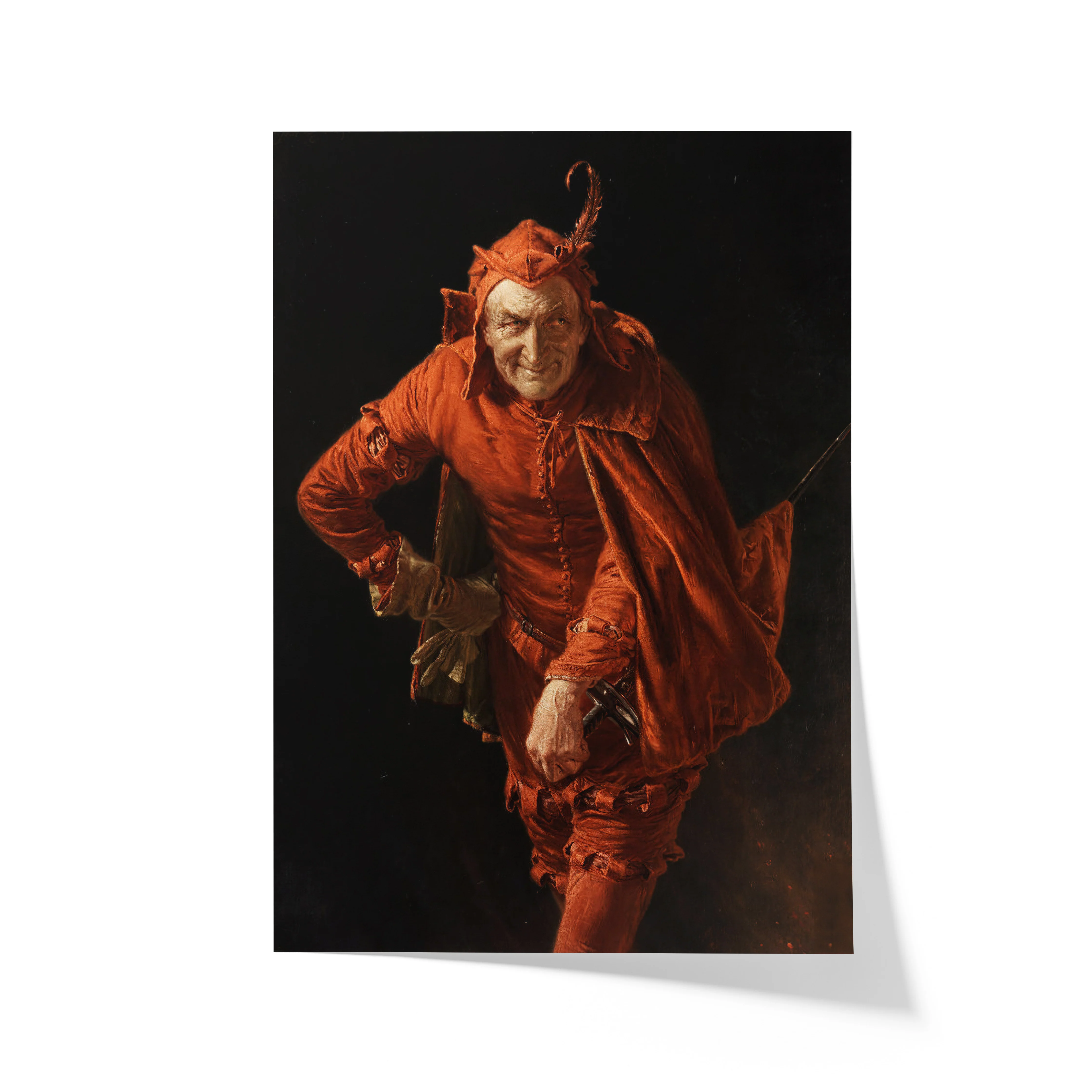
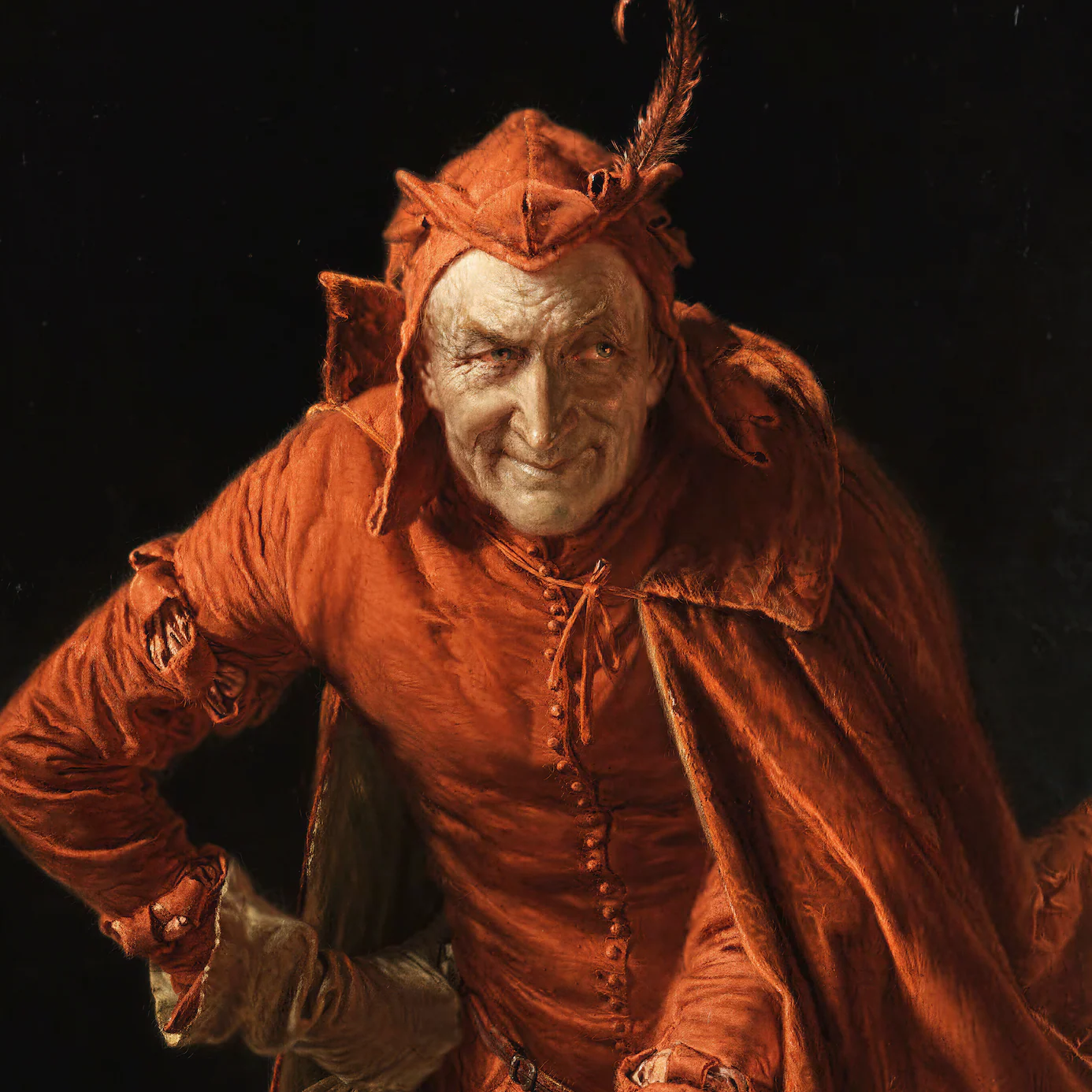
In the 1895 painting Mephisto by Eduard von Grützner, we’re confronted with the cunning figure of the demon Mephistopheles rendered with both theatrical flair and chilling precision. Grützner uses a rich palette of dark tones contrasted with piercing highlights to draw attention to the devilish grin, the exaggerated features, and the elegant yet menacing pose of his subject. This depiction leans into caricature; Mephisto seems almost poised mid-joke, yet there’s malevolence beneath the surface, suggesting temptation and manipulation rather than simple mischief. By placing this figure alone in sharp focus, Grützner shifts the narrative from grand drama to psychological portraiture—not just of the devil, but of what the devil represents: the darker undercurrents of human desire, irony, and power. In doing so, Grützner shows his usual mastery of genre and character (he is better known for his humorous monk scenes) but here he pushes into something more uncanny and provocative.
Mephisto | Eduard von Grützner | 1895
About the artwork:
Product Information
Product Information
Shipping & Returns
Shipping & Returns



Mephisto | Eduard von Grützner | 1895
Mephisto | Eduard von Grützner | 1895
About the artwork:
Select Select Size
Select Frame Options
From $89.35
Original: $297.82
-70%Mephisto | Eduard von Grützner | 1895—
$297.82
$89.35Product Information
Product Information
Shipping & Returns
Shipping & Returns
Description
About the artwork: