Mérode Altarpiece: Joseph | Robert Campin | c. 1427-32
About the artwork:
The Mérode Altarpiece, attributed to Robert Campin and his workshop and dated around 1427 to 1432, is one of the most important early Netherlandish paintings because it transforms the Annunciation into a scene that feels both sacred and strikingly domestic. Instead of placing the Virgin Mary in a monumental heavenly setting, Campin situates her in a detailed Flemish interior filled with symbolic objects that deepen the meaning of the scene, including the extinguished candle, the lilies, the book, and the small figure of Christ entering through the window carrying the cross, all of which reinforce themes of purity, incarnation, and divine intervention. The triptych format also matters, since the donors appear in the left wing as witnesses to the holy event, while Joseph in the right panel works in his carpenter’s shop, a space often interpreted as a quiet theological counterpoint to the Annunciation, linking everyday labor with salvation. What makes the painting especially significant is its combination of intense realism, devotional intimacy, and complex symbolism, which helped define a new direction in Northern Renaissance art.
Product Information
Product Information
Shipping & Returns
Shipping & Returns
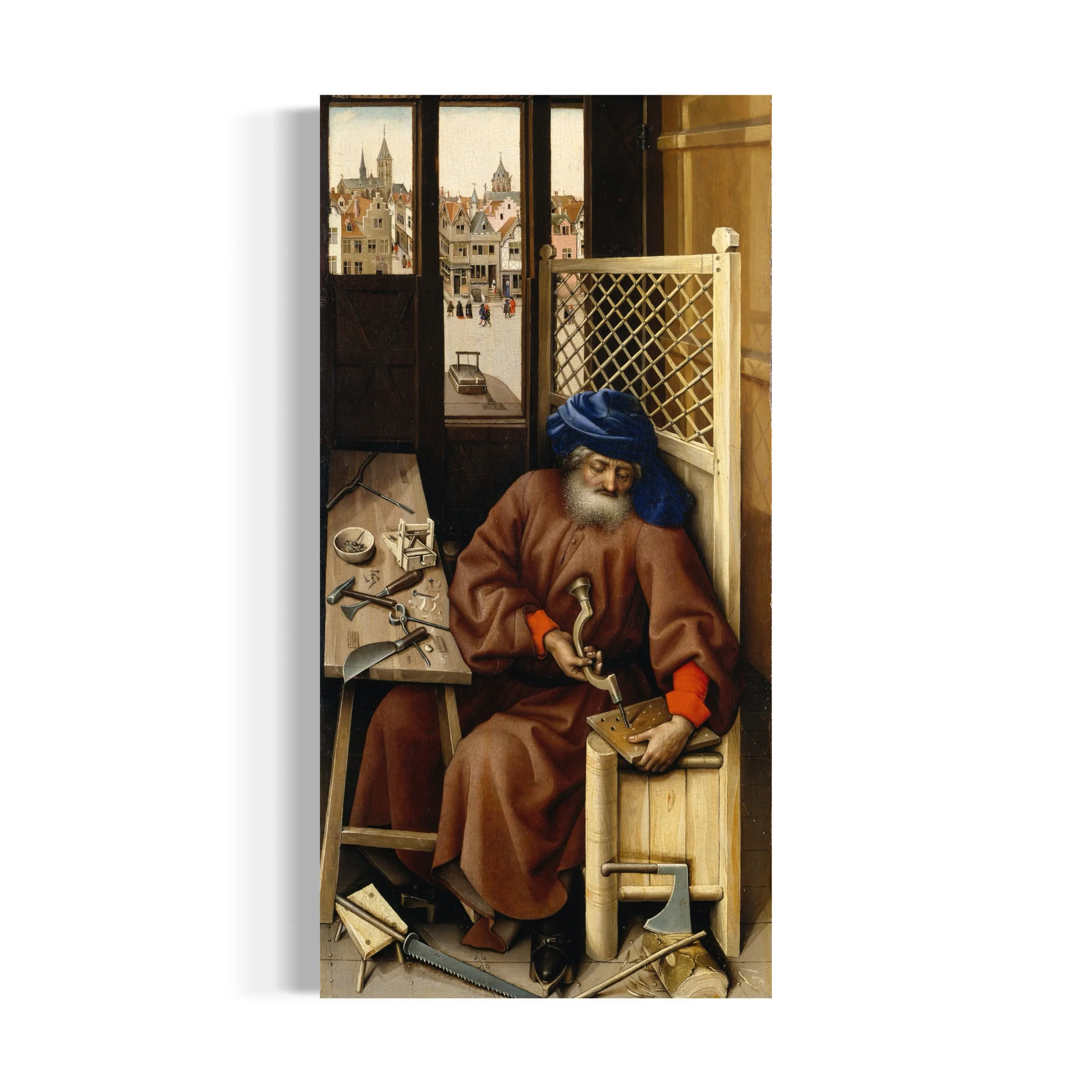


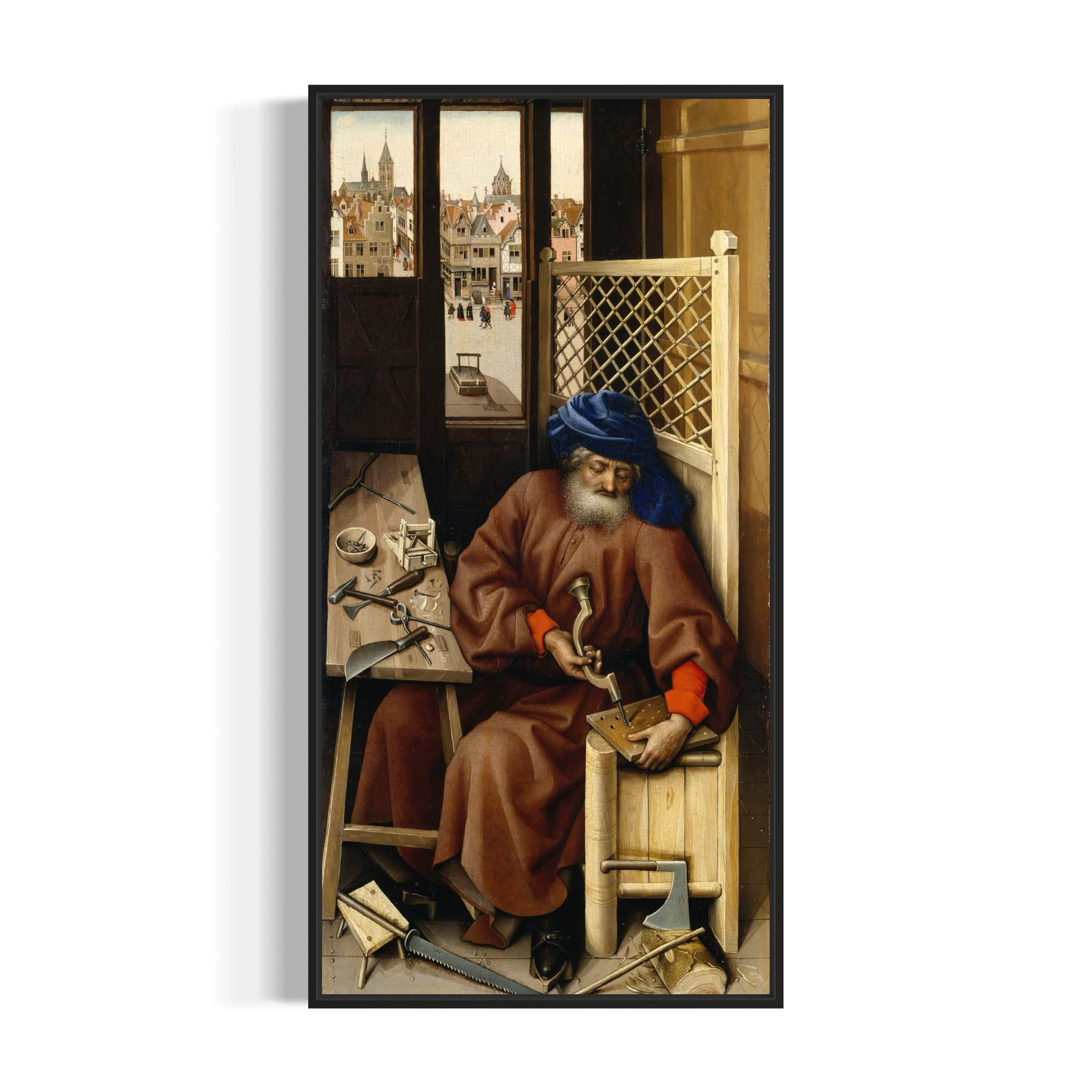
Mérode Altarpiece: Joseph | Robert Campin | c. 1427-32
Mérode Altarpiece: Joseph | Robert Campin | c. 1427-32
About the artwork:
The Mérode Altarpiece, attributed to Robert Campin and his workshop and dated around 1427 to 1432, is one of the most important early Netherlandish paintings because it transforms the Annunciation into a scene that feels both sacred and strikingly domestic. Instead of placing the Virgin Mary in a monumental heavenly setting, Campin situates her in a detailed Flemish interior filled with symbolic objects that deepen the meaning of the scene, including the extinguished candle, the lilies, the book, and the small figure of Christ entering through the window carrying the cross, all of which reinforce themes of purity, incarnation, and divine intervention. The triptych format also matters, since the donors appear in the left wing as witnesses to the holy event, while Joseph in the right panel works in his carpenter’s shop, a space often interpreted as a quiet theological counterpoint to the Annunciation, linking everyday labor with salvation. What makes the painting especially significant is its combination of intense realism, devotional intimacy, and complex symbolism, which helped define a new direction in Northern Renaissance art.
Original: $504.35
-70%$504.35
$151.31Product Information
Product Information
Shipping & Returns
Shipping & Returns
Description
About the artwork:
The Mérode Altarpiece, attributed to Robert Campin and his workshop and dated around 1427 to 1432, is one of the most important early Netherlandish paintings because it transforms the Annunciation into a scene that feels both sacred and strikingly domestic. Instead of placing the Virgin Mary in a monumental heavenly setting, Campin situates her in a detailed Flemish interior filled with symbolic objects that deepen the meaning of the scene, including the extinguished candle, the lilies, the book, and the small figure of Christ entering through the window carrying the cross, all of which reinforce themes of purity, incarnation, and divine intervention. The triptych format also matters, since the donors appear in the left wing as witnesses to the holy event, while Joseph in the right panel works in his carpenter’s shop, a space often interpreted as a quiet theological counterpoint to the Annunciation, linking everyday labor with salvation. What makes the painting especially significant is its combination of intense realism, devotional intimacy, and complex symbolism, which helped define a new direction in Northern Renaissance art.