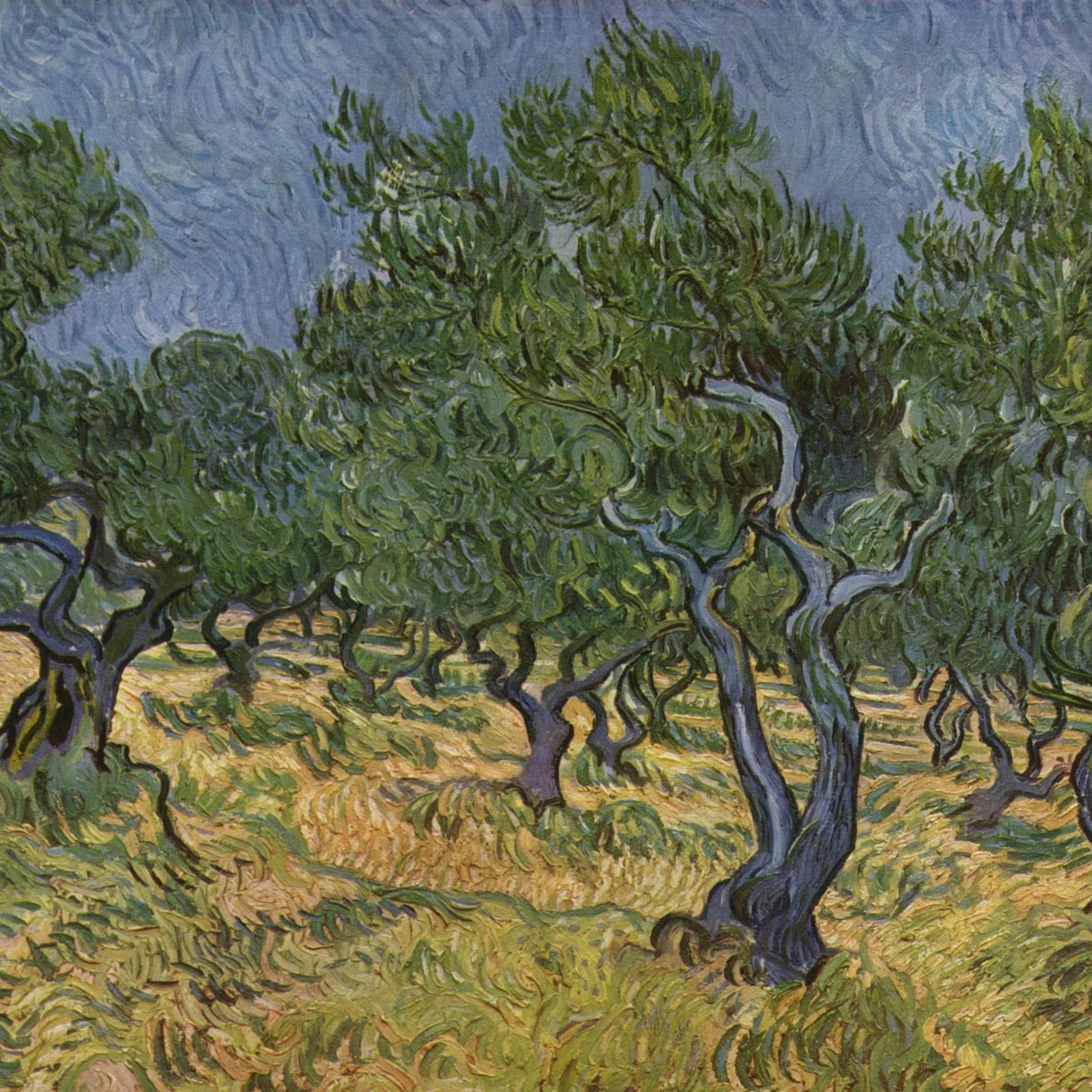
Van Gogh's Olive Trees series, painted in 1889 during his time at the asylum in Saint-Rémy-de-Provence, reflects the artist's deep spiritual connection with nature. The olive trees, their twisted, sinewy trunks and dynamic foliage, seem almost alive, embodying both the vitality and turbulence of the natural world. Van Gogh’s expressive brushwork and bold, rhythmic patterns capture the movement of light and shadow across the Provençal landscape, with the trees standing as silent witnesses to the eternal cycles of life. The earthy tones of the trees contrast with the radiant blues and yellows of the sky and ground, creating a sense of harmony amidst chaos. These works also carry a spiritual undertone, as Van Gogh associated the olive trees with Christ’s agony in the Garden of Gethsemane, infusing them with a sense of resilience and redemption. Through Olive Trees, Van Gogh transforms a simple grove into a profound meditation on struggle, faith, and the beauty of existence.