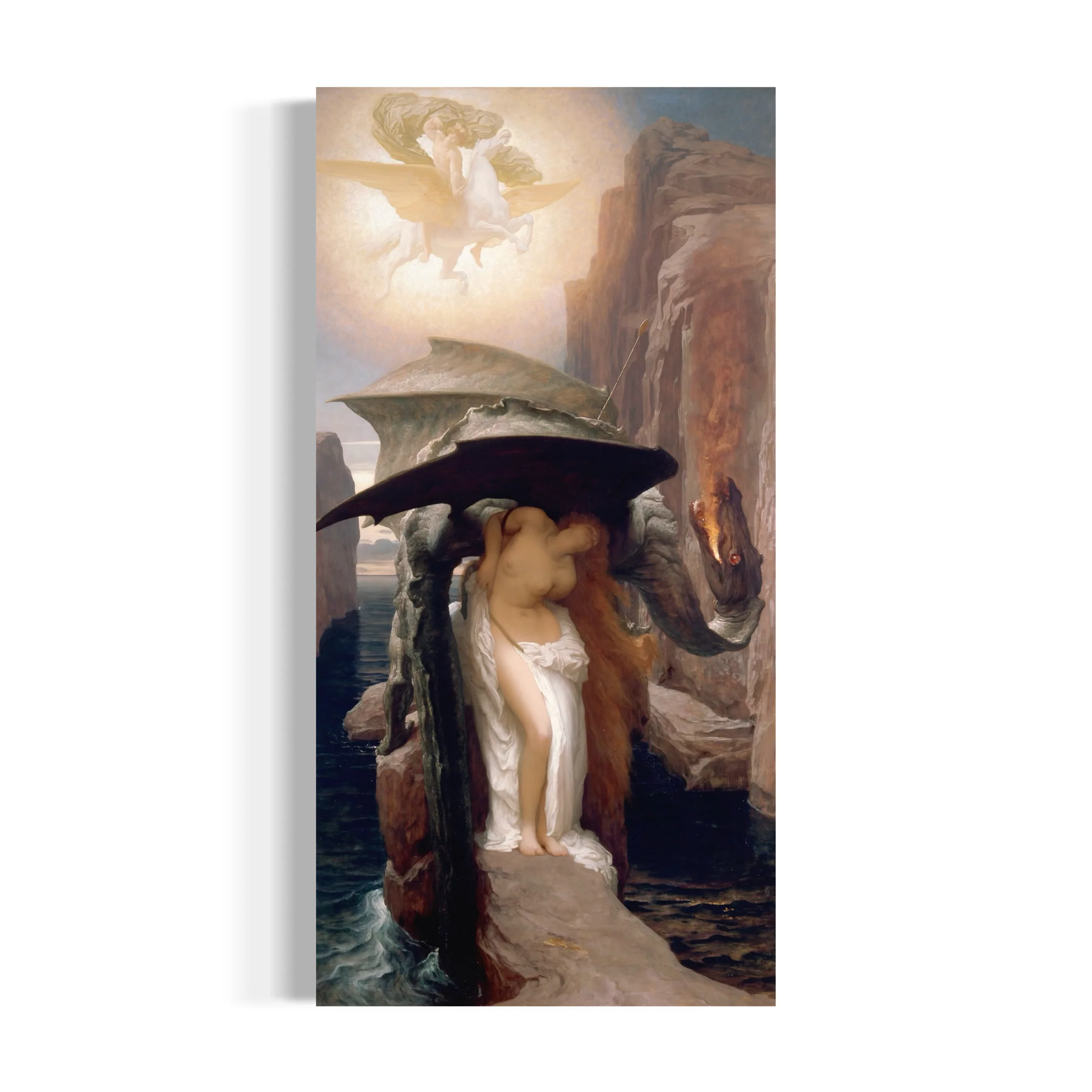
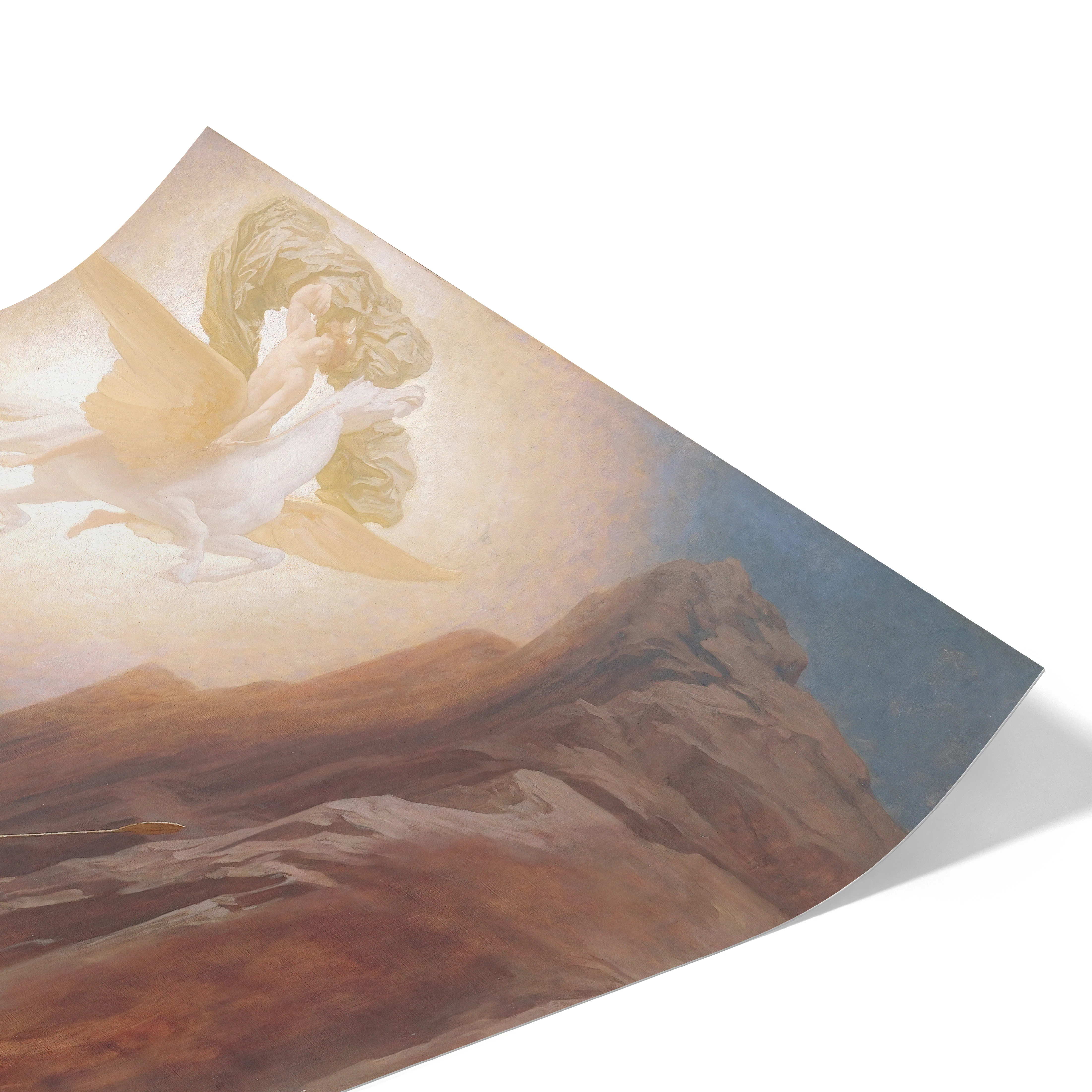
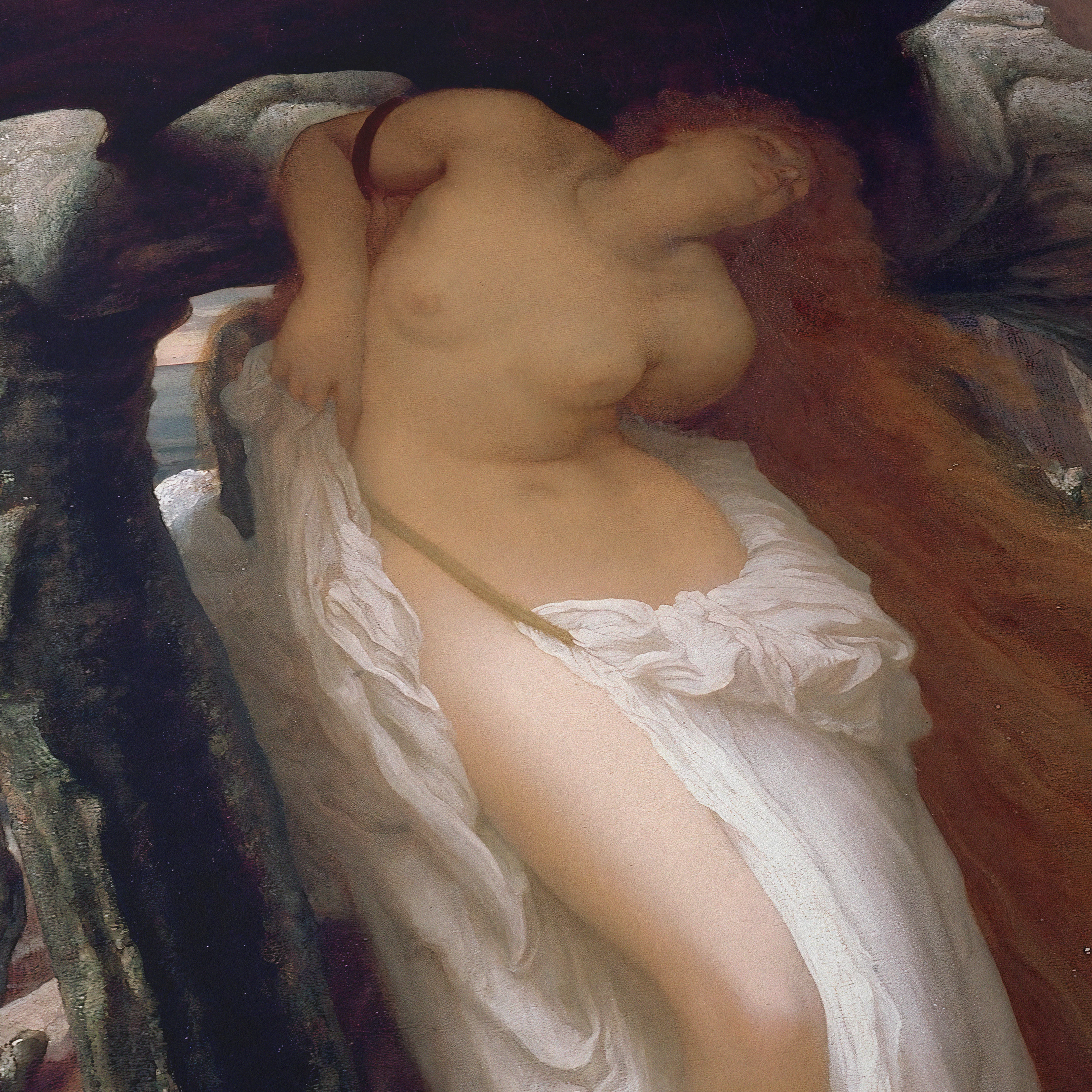
Frederic Leighton’s Perseus and Andromeda (1891) captures the climactic rescue from Greek mythology with both grandeur and intimacy, blending academic precision with dramatic tension. The painting shows the moment Perseus swoops down from the sky, framed in radiant light, to free Andromeda who is chained to a rock as a sacrifice to a sea monster. Leighton contrasts the soft, vulnerable beauty of Andromeda’s pale figure with the muscular dynamism of Perseus, emphasizing both her fragility and his heroism. The dragon-like creature emerging from the turbulent sea embodies menace, while the golden hues surrounding Perseus lend him a divine aura. Painted in the late Victorian era, the work reflects Leighton’s mastery of mythological subjects and his fascination with the idealized human form, fusing classical themes with the theatrical intensity admired by his contemporaries. It is both a celebration of myth and a showcase of Leighton’s technical brilliance in dramatizing the eternal struggle between danger, beauty, and salvation.