Satan Arousing the Rebel Angels | William Blake | 1808
About the artwork:
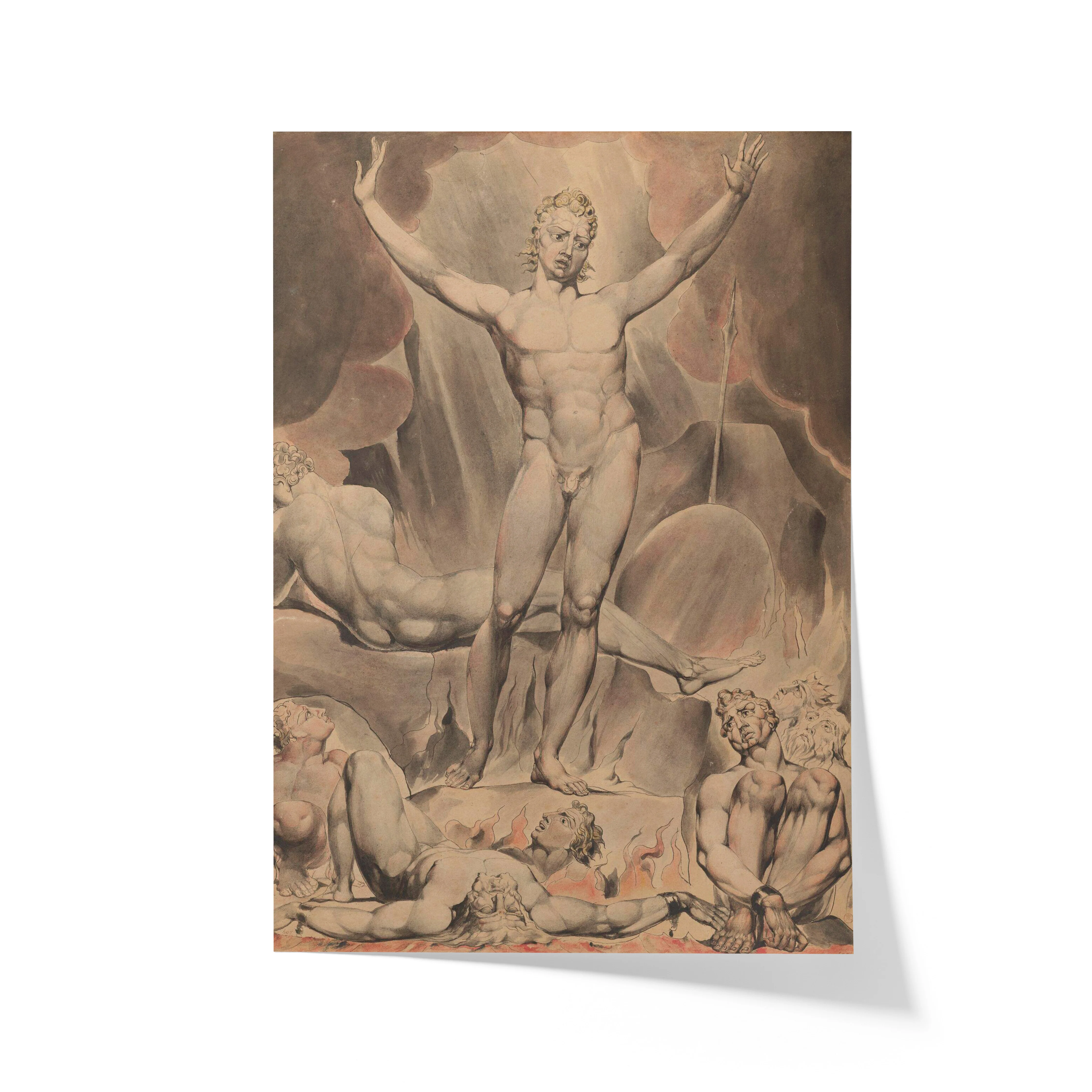
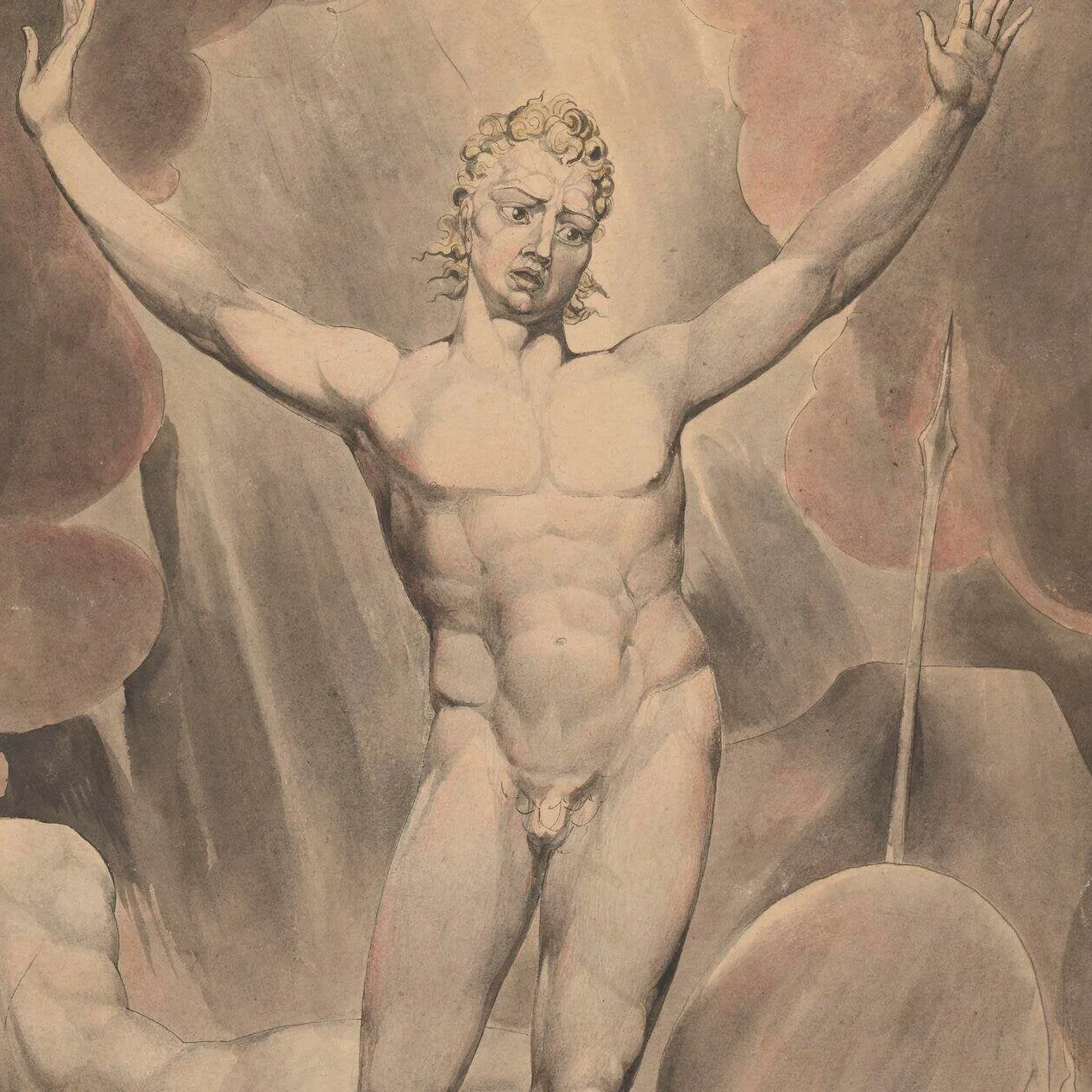
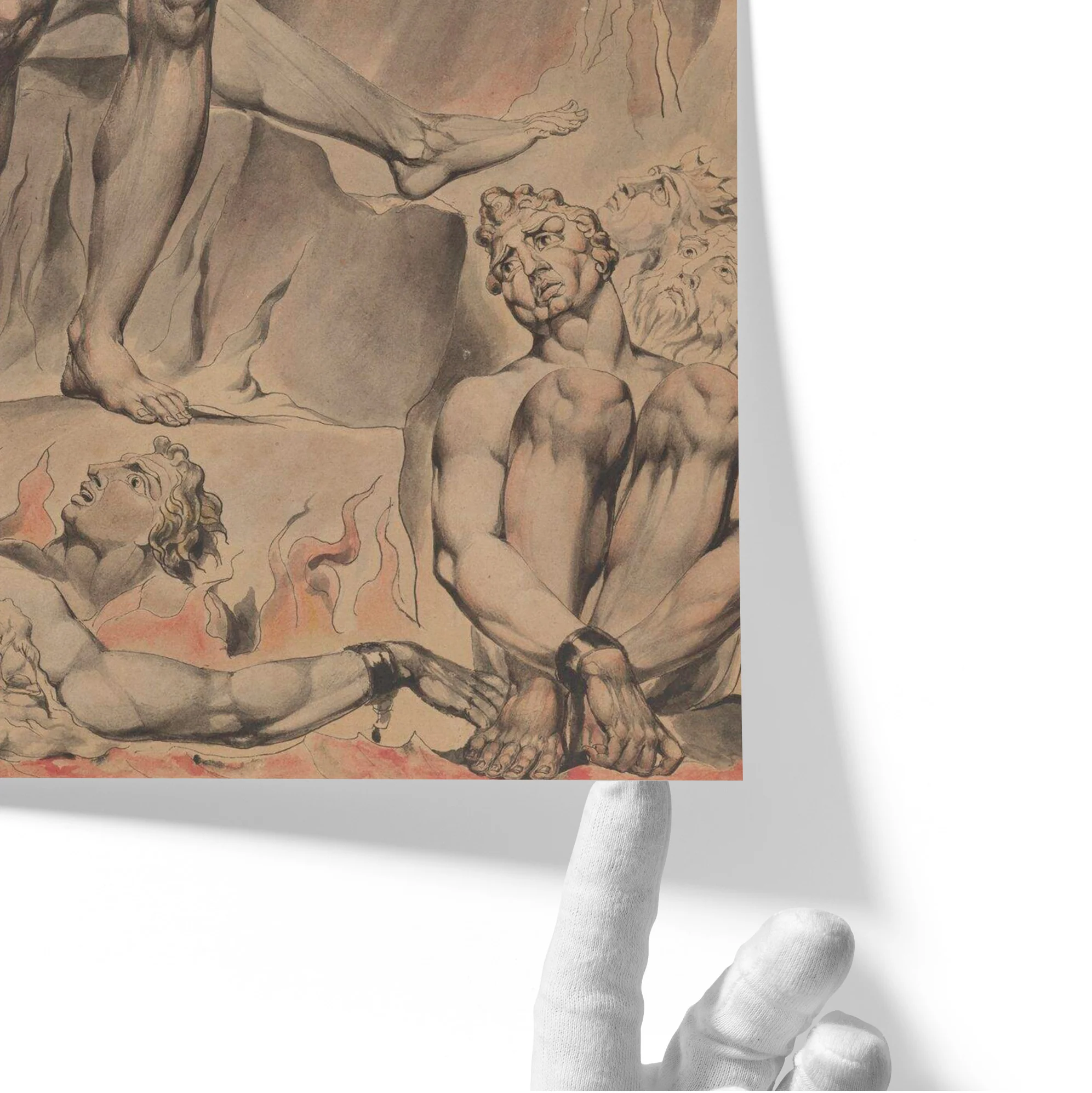
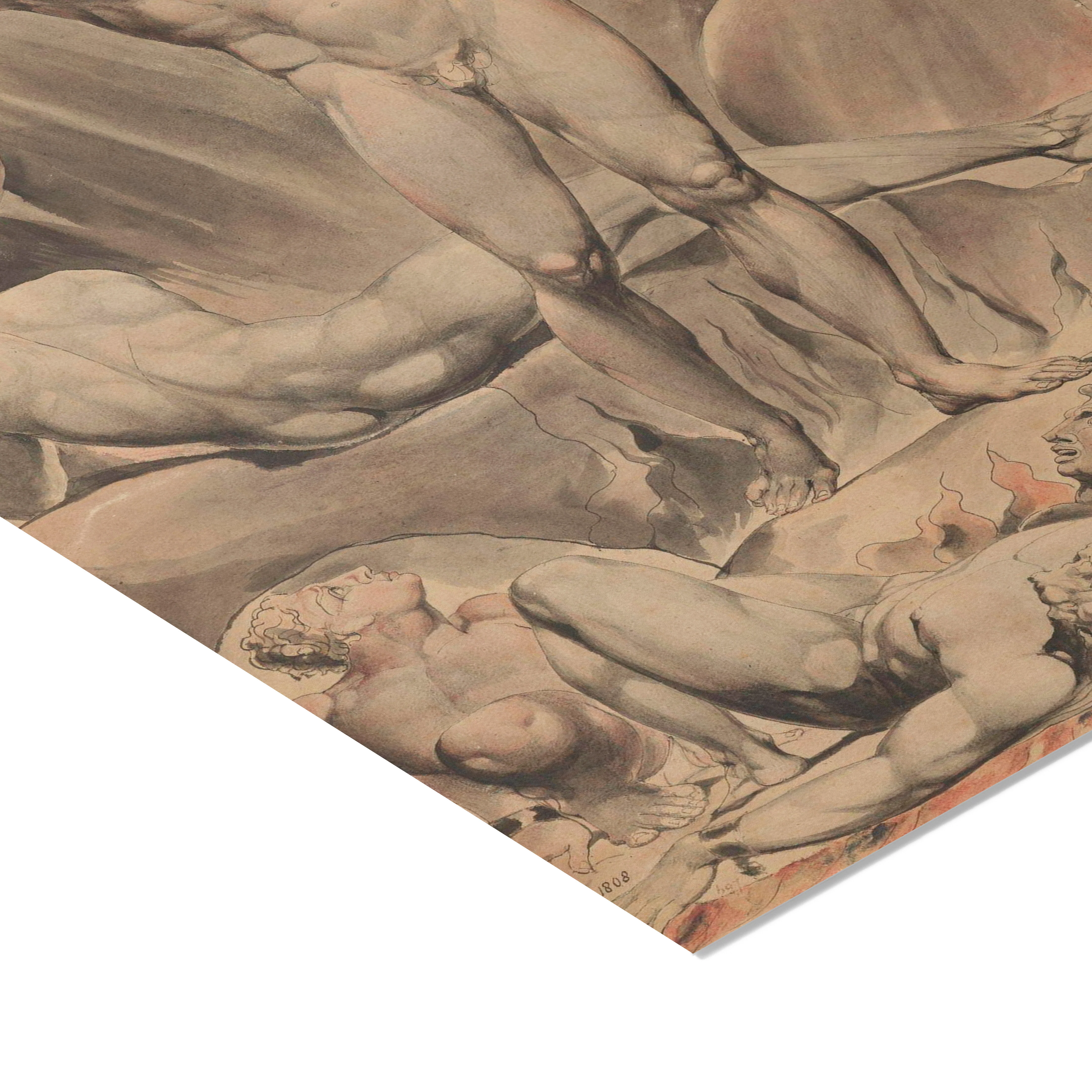
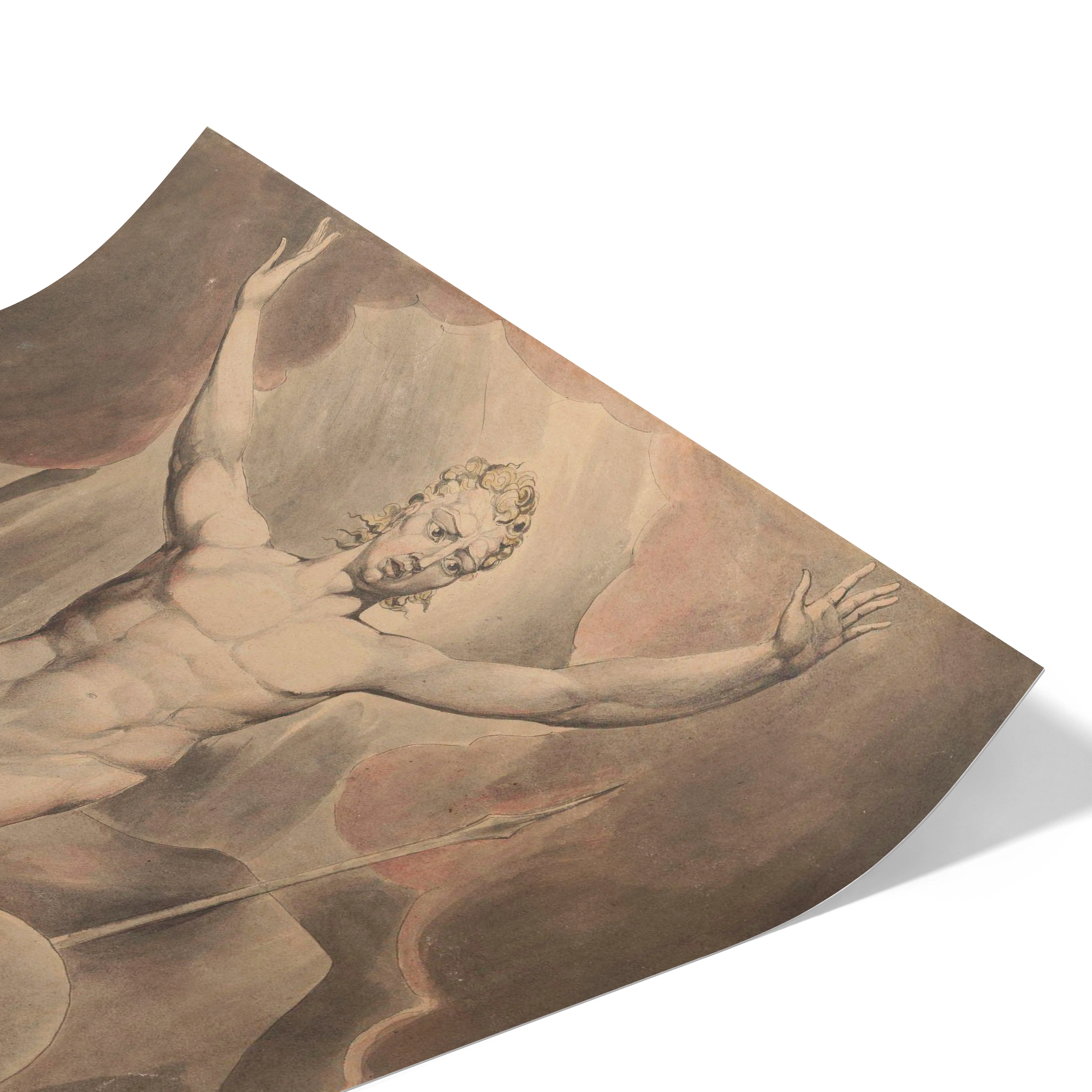
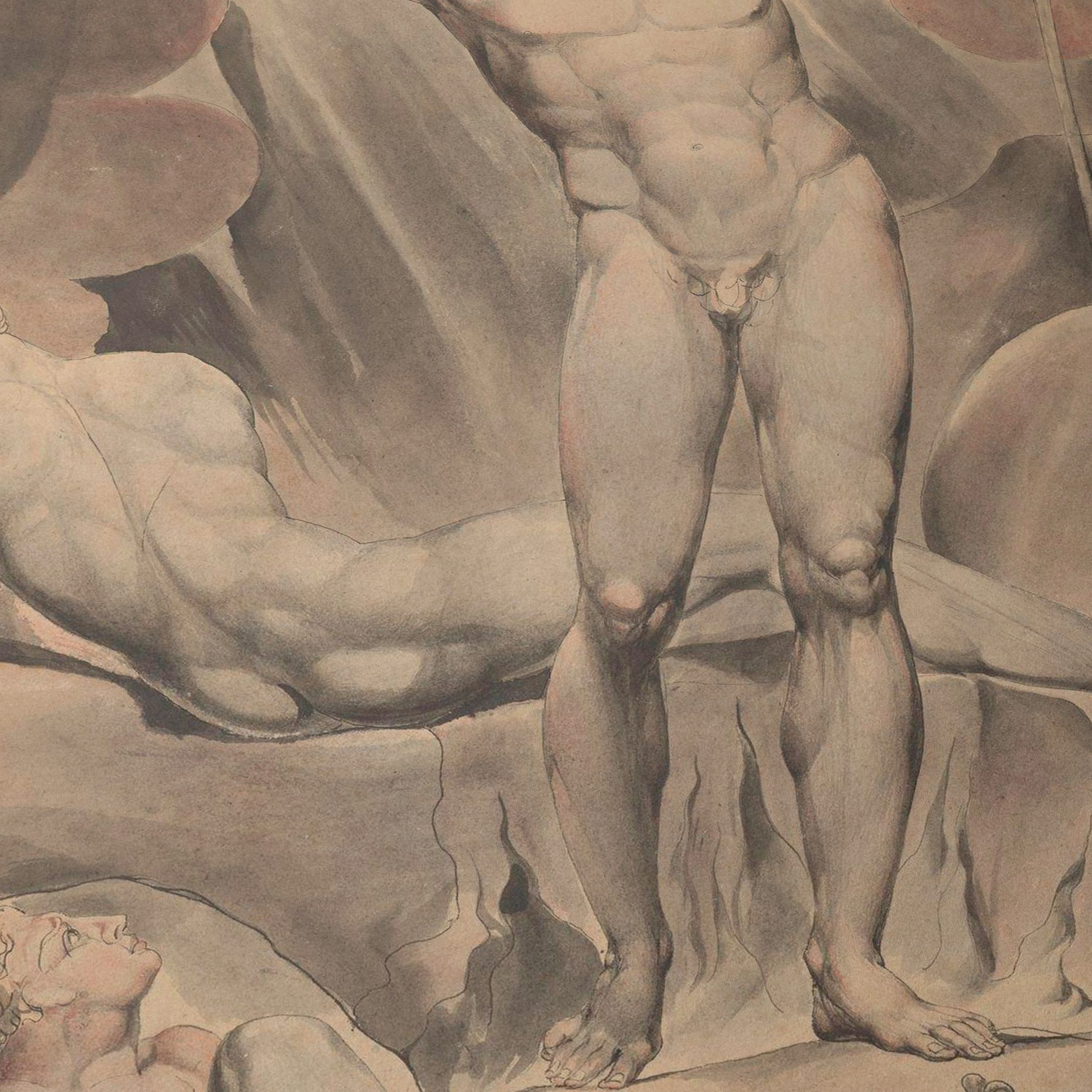
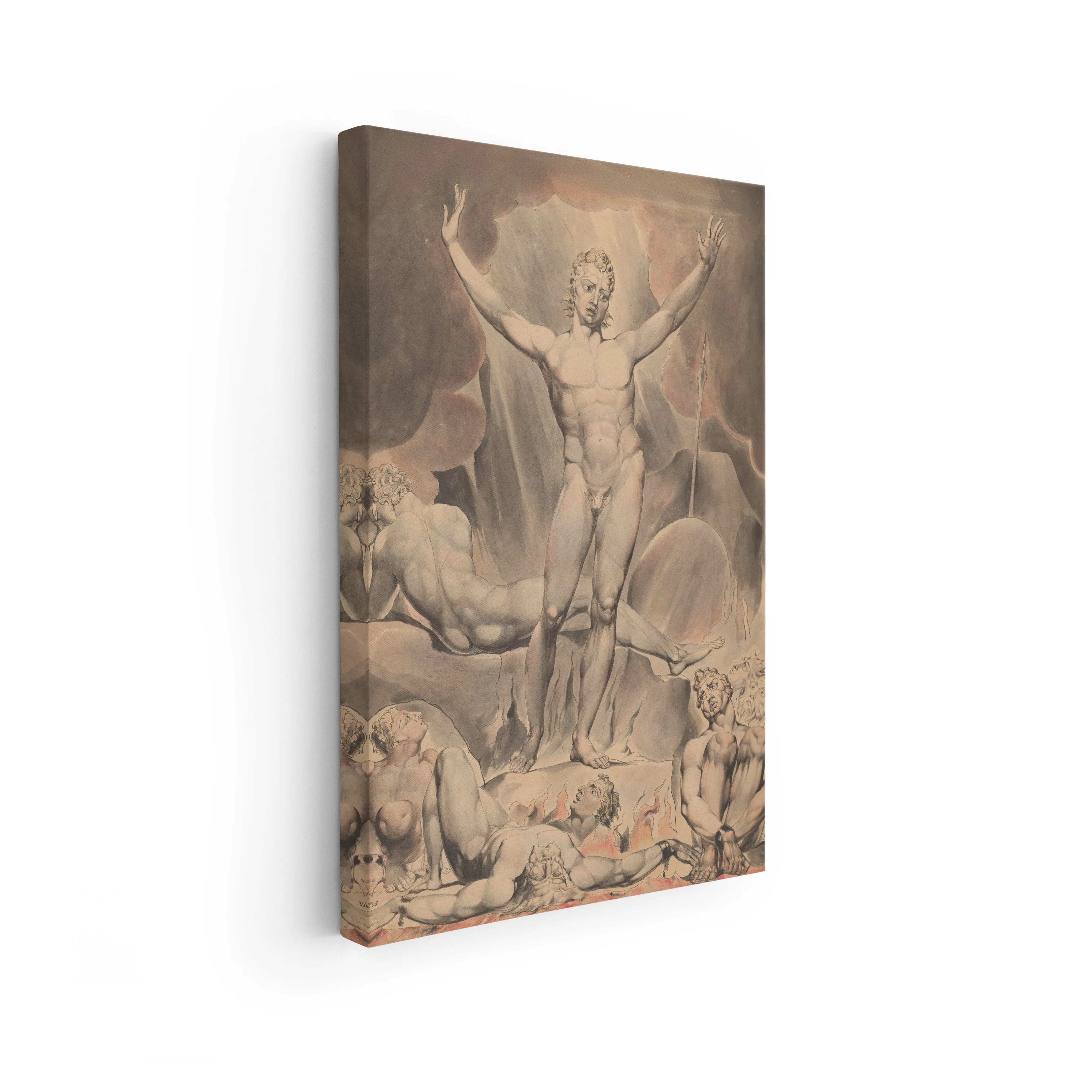
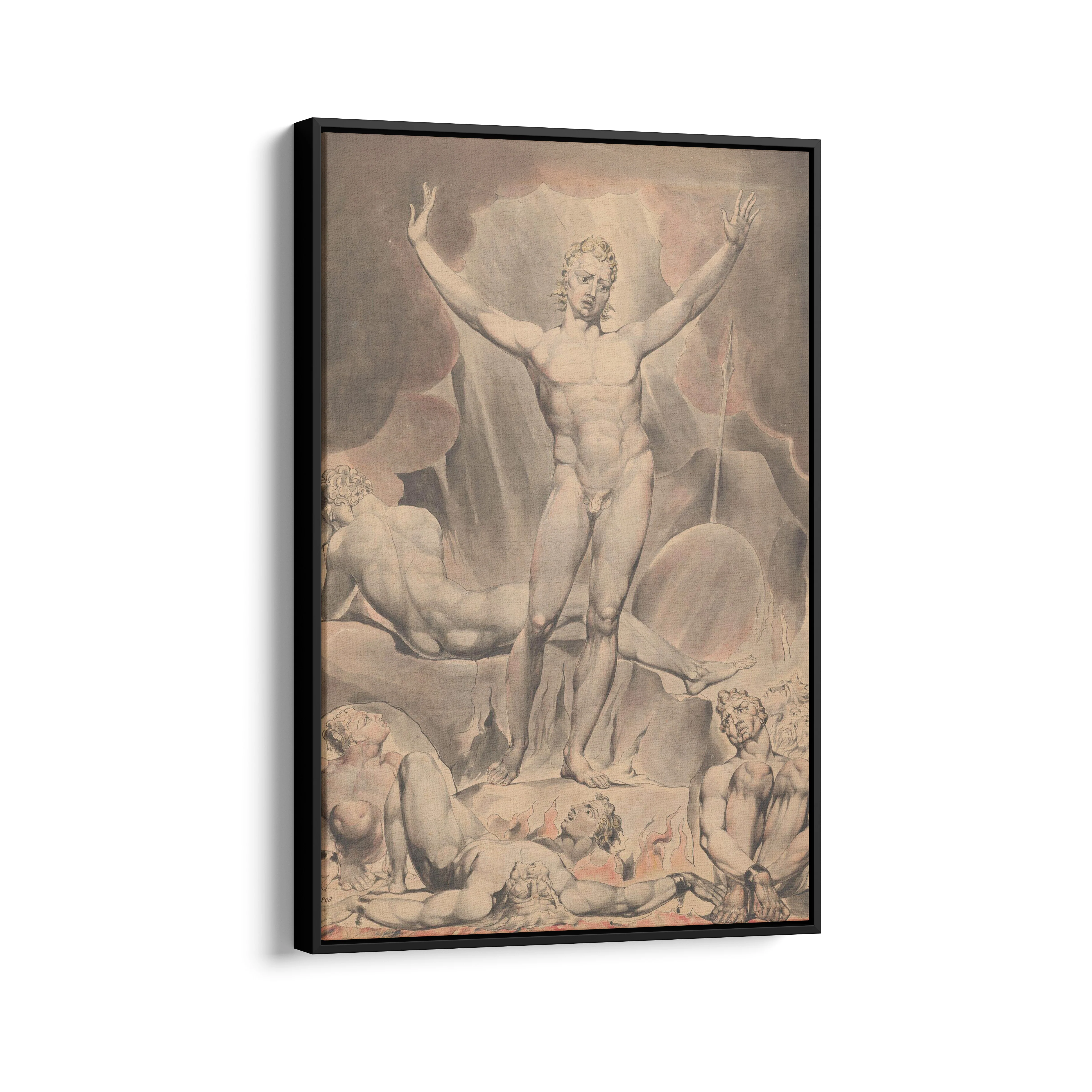
William Blake’s Satan Arousing the Rebel Angels is a powerful interpretation of Paradise Lost that presents rebellion not as heroic grandeur, but as a moment of corrupted energy and spiritual collapse. Blake places Satan at the center with an almost theatrical authority, yet the surrounding figures and turbulent movement make that authority feel unstable, as if charisma and ruin are emerging at the same time. The anatomy is exaggerated, the composition compressed, and the atmosphere charged with fire and tension, which reflects Blake’s habit of turning literary subjects into psychological visions rather than straightforward illustrations. Made in 1808 as part of his Milton series, the work shows how deeply Blake engaged with the moral and imaginative conflicts of Milton’s poem, using watercolor and line to give the scene both sculptural force and visionary intensity. The result is not just an image of fallen angels, but a study of ambition, persuasion, and the destructive glamour of evil.
Product Information
Product Information
Shipping & Returns
Shipping & Returns
Satan Arousing the Rebel Angels | William Blake | 1808
Satan Arousing the Rebel Angels | William Blake | 1808
About the artwork:
William Blake’s Satan Arousing the Rebel Angels is a powerful interpretation of Paradise Lost that presents rebellion not as heroic grandeur, but as a moment of corrupted energy and spiritual collapse. Blake places Satan at the center with an almost theatrical authority, yet the surrounding figures and turbulent movement make that authority feel unstable, as if charisma and ruin are emerging at the same time. The anatomy is exaggerated, the composition compressed, and the atmosphere charged with fire and tension, which reflects Blake’s habit of turning literary subjects into psychological visions rather than straightforward illustrations. Made in 1808 as part of his Milton series, the work shows how deeply Blake engaged with the moral and imaginative conflicts of Milton’s poem, using watercolor and line to give the scene both sculptural force and visionary intensity. The result is not just an image of fallen angels, but a study of ambition, persuasion, and the destructive glamour of evil.
Original: $297.82
-70%$297.82
$89.35Product Information
Product Information
Shipping & Returns
Shipping & Returns
Description
About the artwork:
William Blake’s Satan Arousing the Rebel Angels is a powerful interpretation of Paradise Lost that presents rebellion not as heroic grandeur, but as a moment of corrupted energy and spiritual collapse. Blake places Satan at the center with an almost theatrical authority, yet the surrounding figures and turbulent movement make that authority feel unstable, as if charisma and ruin are emerging at the same time. The anatomy is exaggerated, the composition compressed, and the atmosphere charged with fire and tension, which reflects Blake’s habit of turning literary subjects into psychological visions rather than straightforward illustrations. Made in 1808 as part of his Milton series, the work shows how deeply Blake engaged with the moral and imaginative conflicts of Milton’s poem, using watercolor and line to give the scene both sculptural force and visionary intensity. The result is not just an image of fallen angels, but a study of ambition, persuasion, and the destructive glamour of evil.