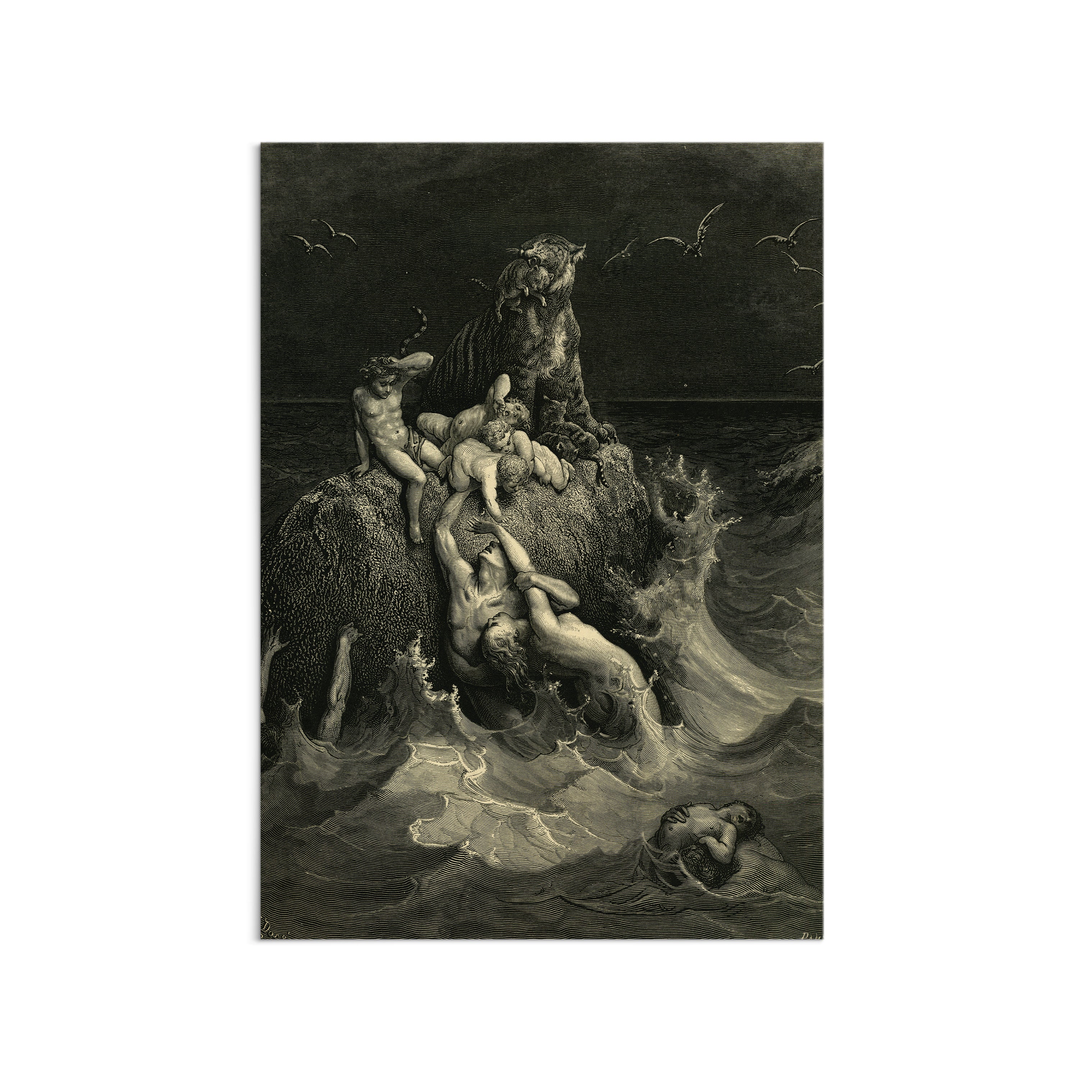
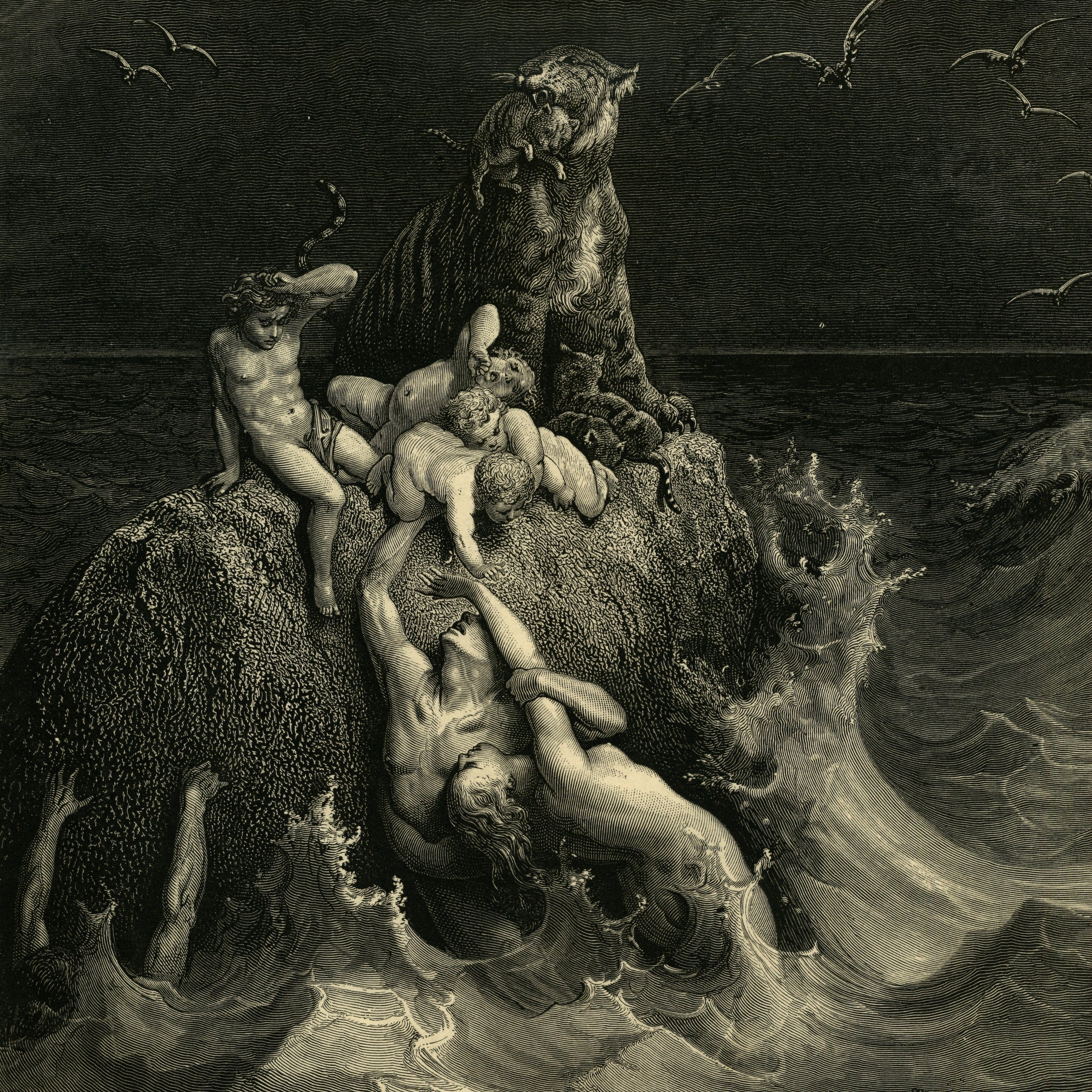
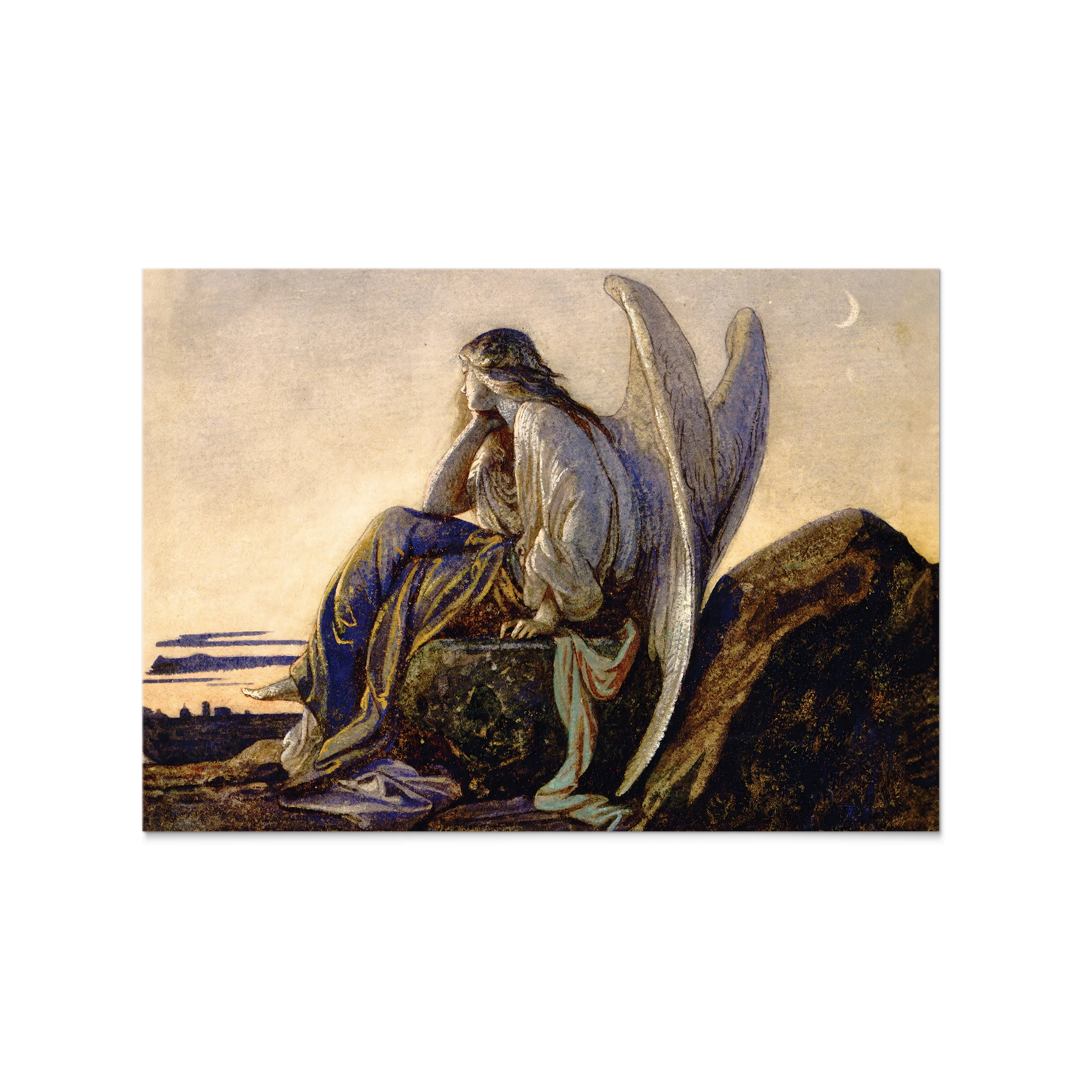
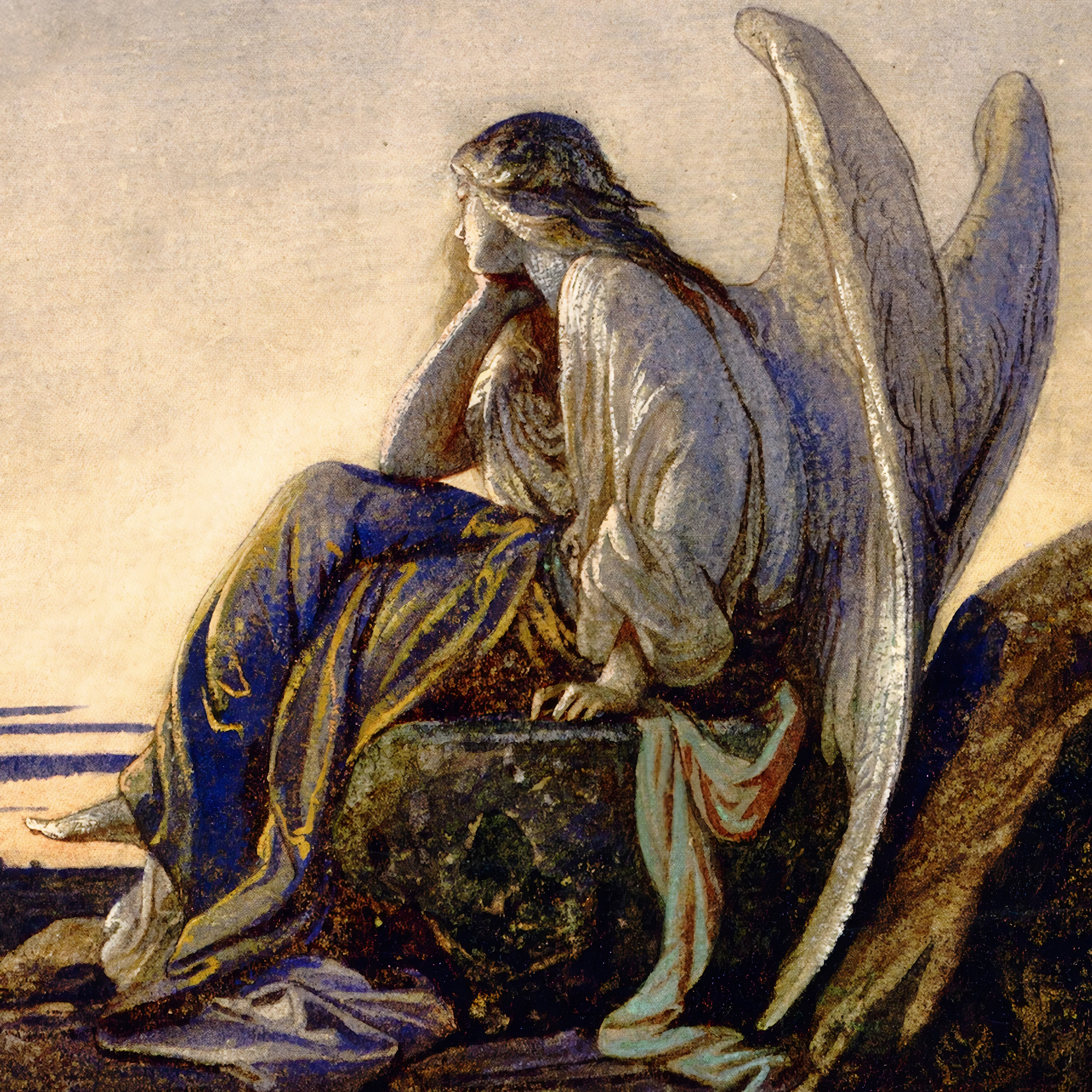
Scene of the Flood | Anne-Louis Girodet | c. 1806
About the artwork:
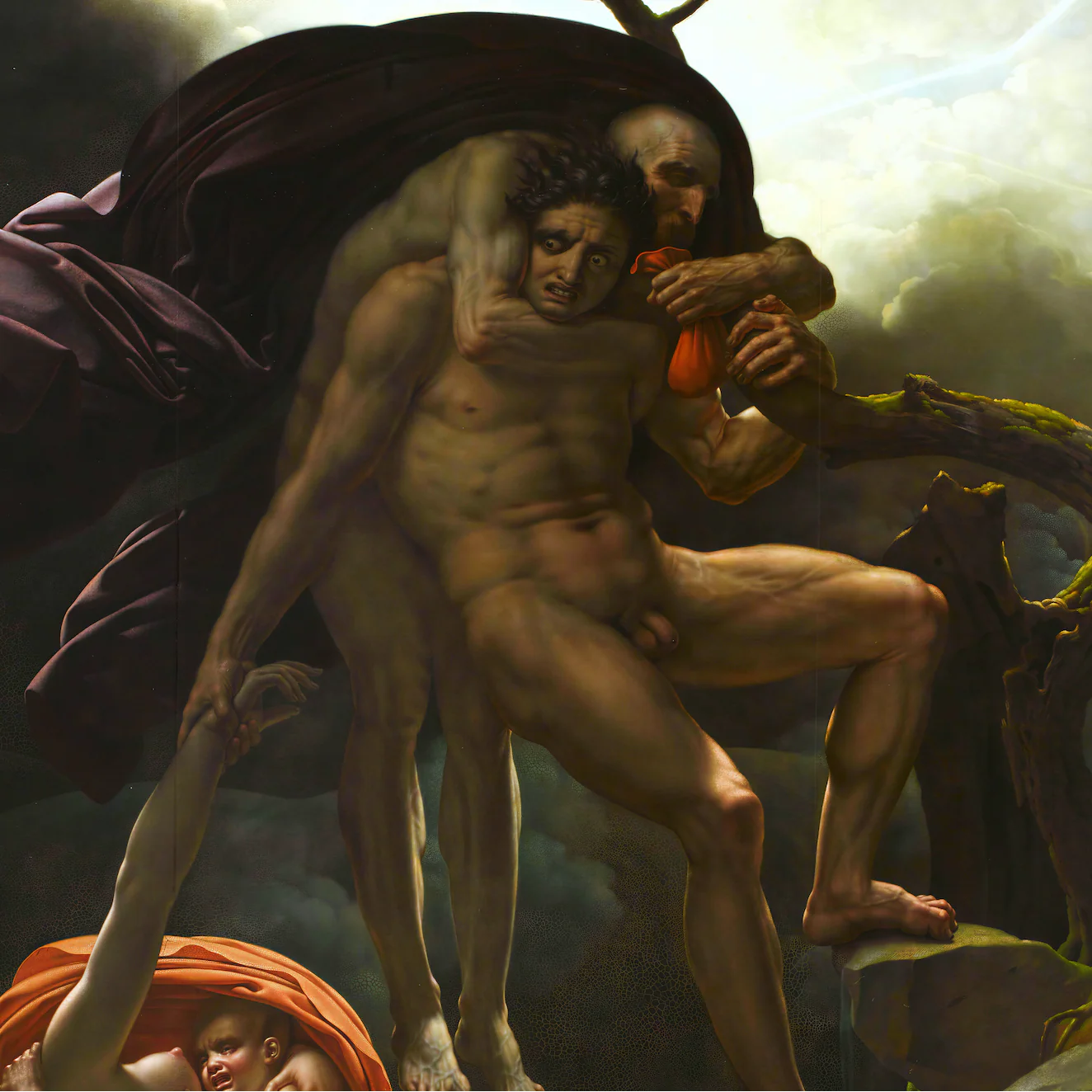
Anne Louis Girodet’s Scene of the Flood, exhibited at the Salon of 1806 and now in the Louvre, turns a natural disaster into a study of human desperation, physical strain, and fragile hope. Rather than presenting the broad, ordered grandeur expected from a traditional history painting, Girodet compresses the drama into a tightly wound group of figures clinging to survival, which gives the scene an almost theatrical intensity and pushes the viewer toward their fear rather than toward a distant narrative. The painting is especially important because it stands between Neoclassicism and Romanticism. Its anatomy and sculptural clarity still reflect Girodet’s academic training, yet the violent sky, emotional urgency, and sense of nature as an overwhelming force point clearly toward Romantic sensibility. A key detail is that Girodet later insisted the work was not meant as a direct representation of the Biblical Flood, explaining instead that it showed a sudden catastrophe caused by nature, which helps explain why the painting feels less like a religious illustration and more like a universal image of human vulnerability in times of collapse.
Product Information
Product Information
Shipping & Returns
Shipping & Returns
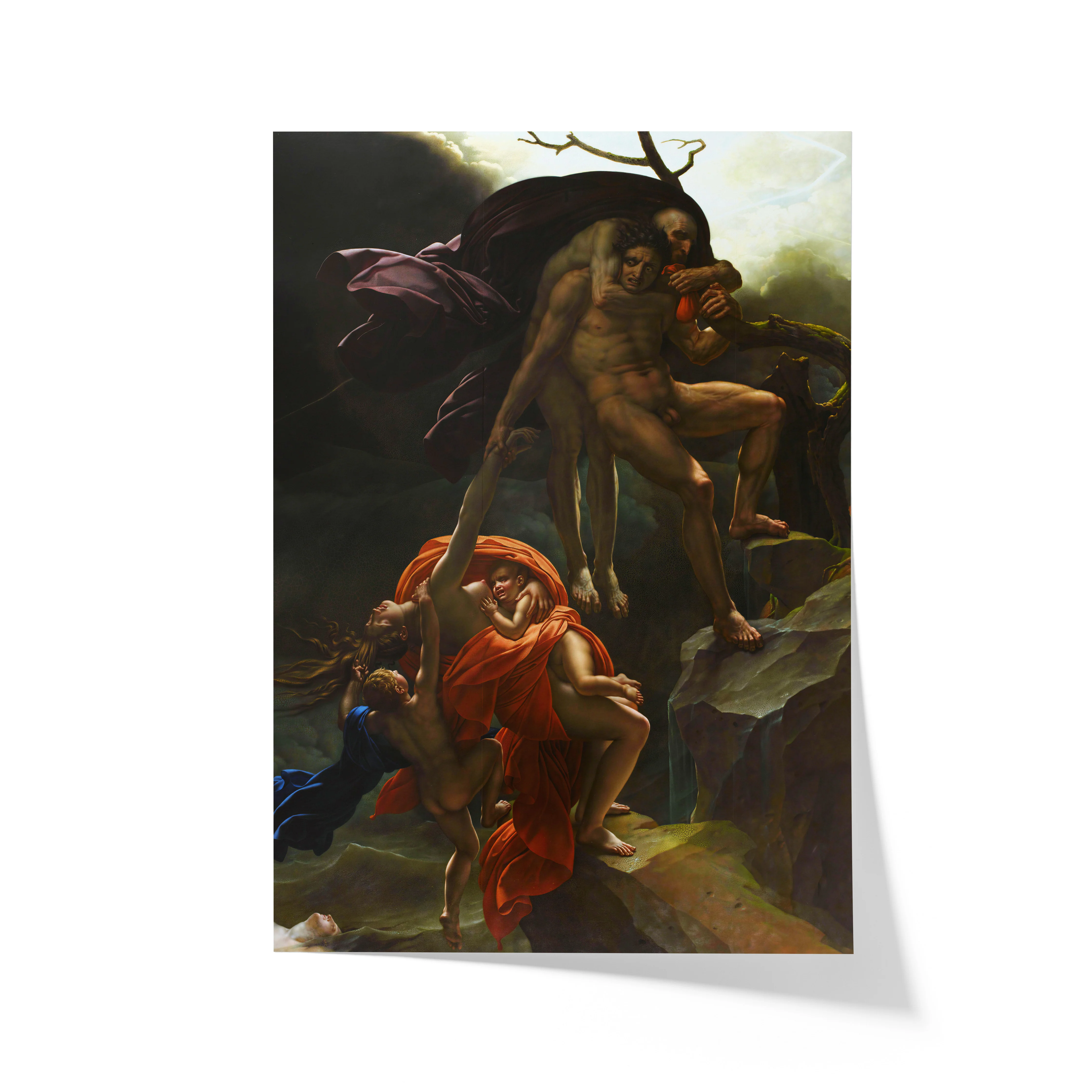


Scene of the Flood | Anne-Louis Girodet | c. 1806
Scene of the Flood | Anne-Louis Girodet | c. 1806
About the artwork:
Anne Louis Girodet’s Scene of the Flood, exhibited at the Salon of 1806 and now in the Louvre, turns a natural disaster into a study of human desperation, physical strain, and fragile hope. Rather than presenting the broad, ordered grandeur expected from a traditional history painting, Girodet compresses the drama into a tightly wound group of figures clinging to survival, which gives the scene an almost theatrical intensity and pushes the viewer toward their fear rather than toward a distant narrative. The painting is especially important because it stands between Neoclassicism and Romanticism. Its anatomy and sculptural clarity still reflect Girodet’s academic training, yet the violent sky, emotional urgency, and sense of nature as an overwhelming force point clearly toward Romantic sensibility. A key detail is that Girodet later insisted the work was not meant as a direct representation of the Biblical Flood, explaining instead that it showed a sudden catastrophe caused by nature, which helps explain why the painting feels less like a religious illustration and more like a universal image of human vulnerability in times of collapse.
Original: $297.82
-70%$297.82
$89.35Product Information
Product Information
Shipping & Returns
Shipping & Returns
Description
About the artwork:
Anne Louis Girodet’s Scene of the Flood, exhibited at the Salon of 1806 and now in the Louvre, turns a natural disaster into a study of human desperation, physical strain, and fragile hope. Rather than presenting the broad, ordered grandeur expected from a traditional history painting, Girodet compresses the drama into a tightly wound group of figures clinging to survival, which gives the scene an almost theatrical intensity and pushes the viewer toward their fear rather than toward a distant narrative. The painting is especially important because it stands between Neoclassicism and Romanticism. Its anatomy and sculptural clarity still reflect Girodet’s academic training, yet the violent sky, emotional urgency, and sense of nature as an overwhelming force point clearly toward Romantic sensibility. A key detail is that Girodet later insisted the work was not meant as a direct representation of the Biblical Flood, explaining instead that it showed a sudden catastrophe caused by nature, which helps explain why the painting feels less like a religious illustration and more like a universal image of human vulnerability in times of collapse.