Self-portrait as Zeuxis Laughing | Rembrandt | c. 1662
About the artwork:
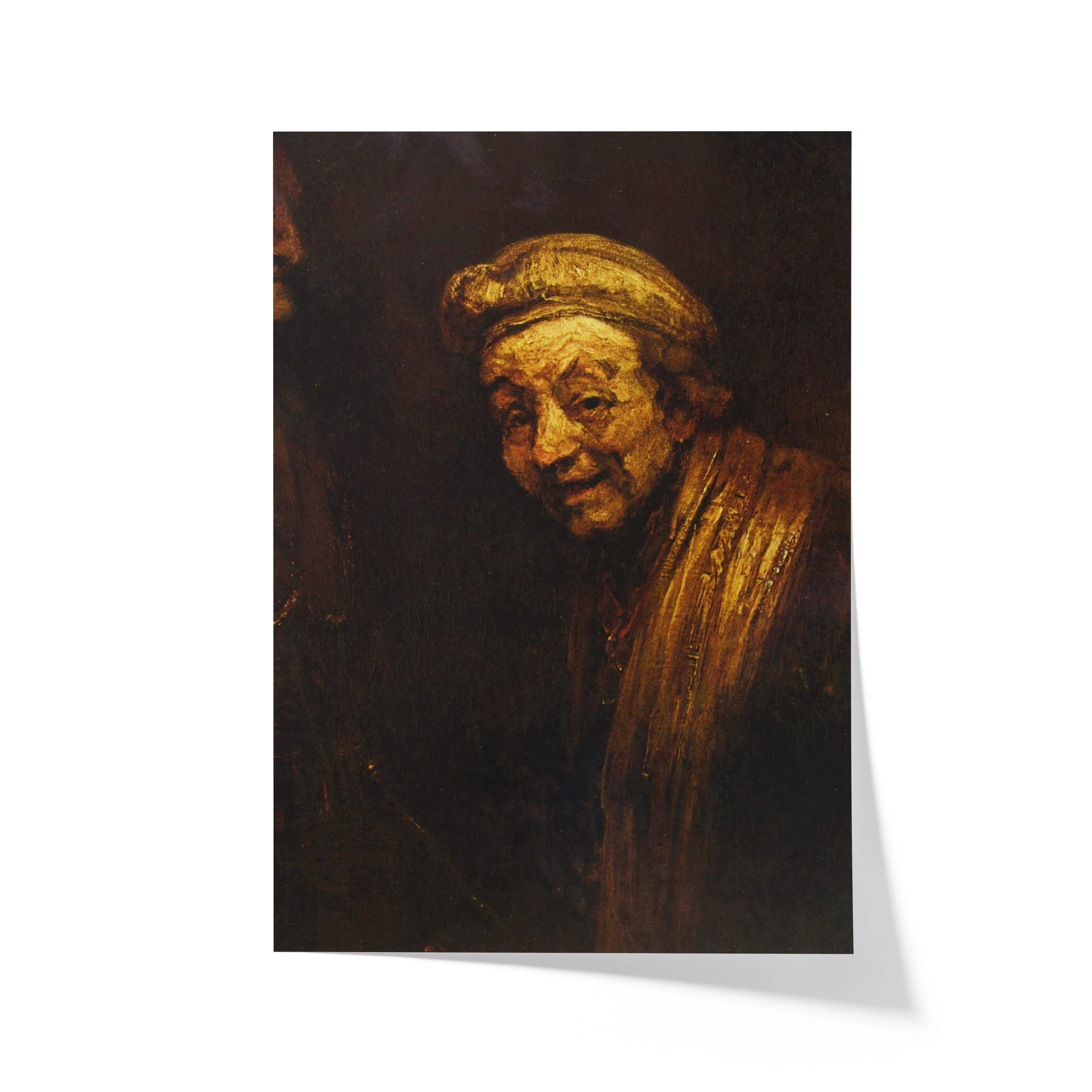
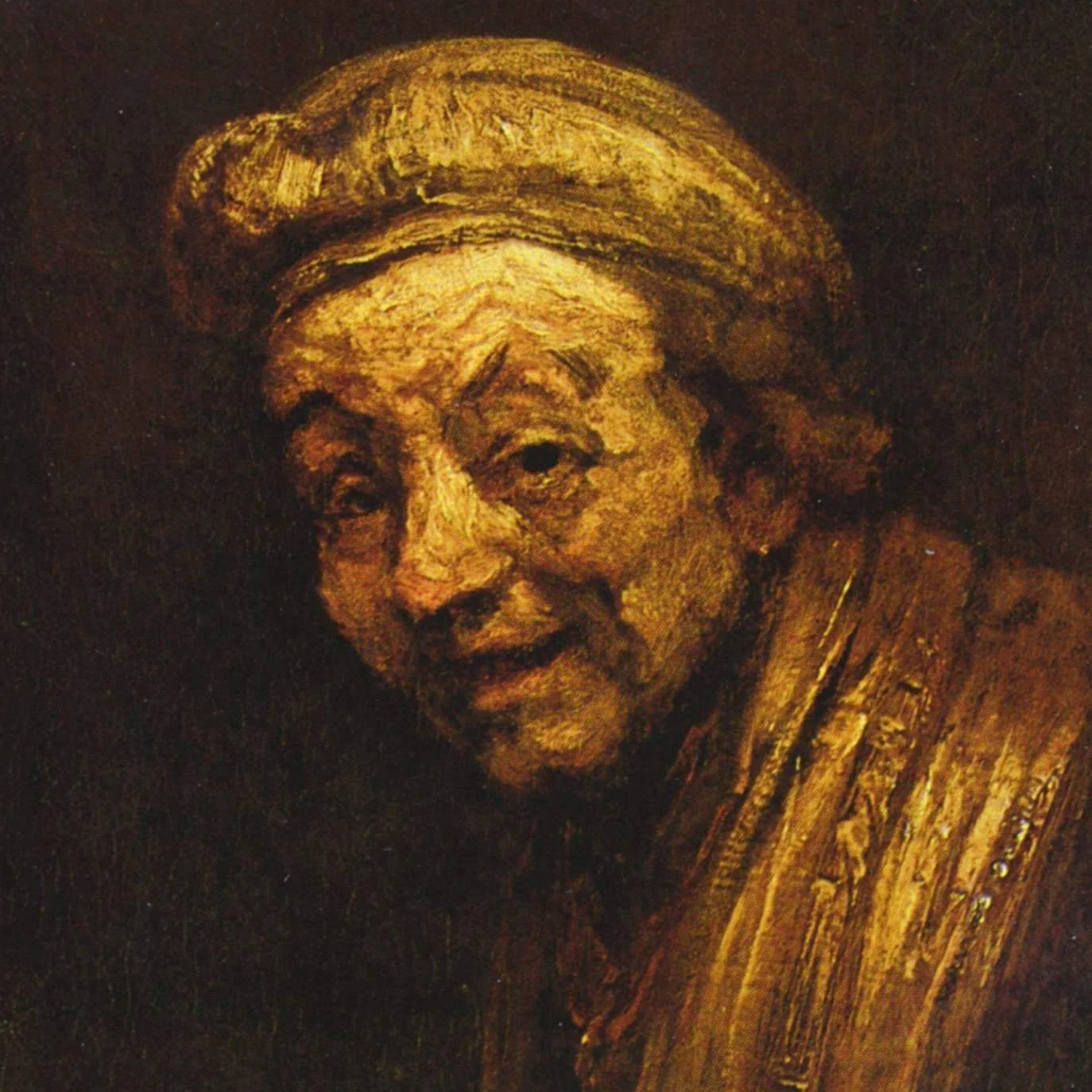
In this remarkable late self-portrait, Rembrandt embodies the ancient Greek painter Zeuxis, said to have died from laughter while painting an old woman. With a broad, almost mischievous grin, Rembrandt gazes toward the viewer, his eyes twinkling with wit and weariness. The deep lines across his face and the heavy folds of his skin bear the marks of age and hardship, yet the expression is one of ironic amusement—as if the artist is both mocking and embracing the absurdity of life.
By assuming the role of Zeuxis, Rembrandt aligns himself with the classical tradition while also making a subtle statement about the act of painting itself. Created during his final years, this self-portrait contrasts sharply with the solemn introspection of his other late works. Here, laughter becomes a defiant gesture—an artist who, after facing bankruptcy, public scorn, and personal loss, chooses not bitterness, but mirth. It is a portrait of resilience, aged wisdom, and a touch of theatrical self-mockery.
Product Information
Product Information
Shipping & Returns
Shipping & Returns



Self-portrait as Zeuxis Laughing | Rembrandt | c. 1662
Self-portrait as Zeuxis Laughing | Rembrandt | c. 1662
About the artwork:
In this remarkable late self-portrait, Rembrandt embodies the ancient Greek painter Zeuxis, said to have died from laughter while painting an old woman. With a broad, almost mischievous grin, Rembrandt gazes toward the viewer, his eyes twinkling with wit and weariness. The deep lines across his face and the heavy folds of his skin bear the marks of age and hardship, yet the expression is one of ironic amusement—as if the artist is both mocking and embracing the absurdity of life.
By assuming the role of Zeuxis, Rembrandt aligns himself with the classical tradition while also making a subtle statement about the act of painting itself. Created during his final years, this self-portrait contrasts sharply with the solemn introspection of his other late works. Here, laughter becomes a defiant gesture—an artist who, after facing bankruptcy, public scorn, and personal loss, chooses not bitterness, but mirth. It is a portrait of resilience, aged wisdom, and a touch of theatrical self-mockery.
Original: $297.82
-70%$297.82
$89.35Product Information
Product Information
Shipping & Returns
Shipping & Returns
Description
About the artwork:
In this remarkable late self-portrait, Rembrandt embodies the ancient Greek painter Zeuxis, said to have died from laughter while painting an old woman. With a broad, almost mischievous grin, Rembrandt gazes toward the viewer, his eyes twinkling with wit and weariness. The deep lines across his face and the heavy folds of his skin bear the marks of age and hardship, yet the expression is one of ironic amusement—as if the artist is both mocking and embracing the absurdity of life.
By assuming the role of Zeuxis, Rembrandt aligns himself with the classical tradition while also making a subtle statement about the act of painting itself. Created during his final years, this self-portrait contrasts sharply with the solemn introspection of his other late works. Here, laughter becomes a defiant gesture—an artist who, after facing bankruptcy, public scorn, and personal loss, chooses not bitterness, but mirth. It is a portrait of resilience, aged wisdom, and a touch of theatrical self-mockery.