✨ New Arrivals Just Dropped!Explore
HomeStore

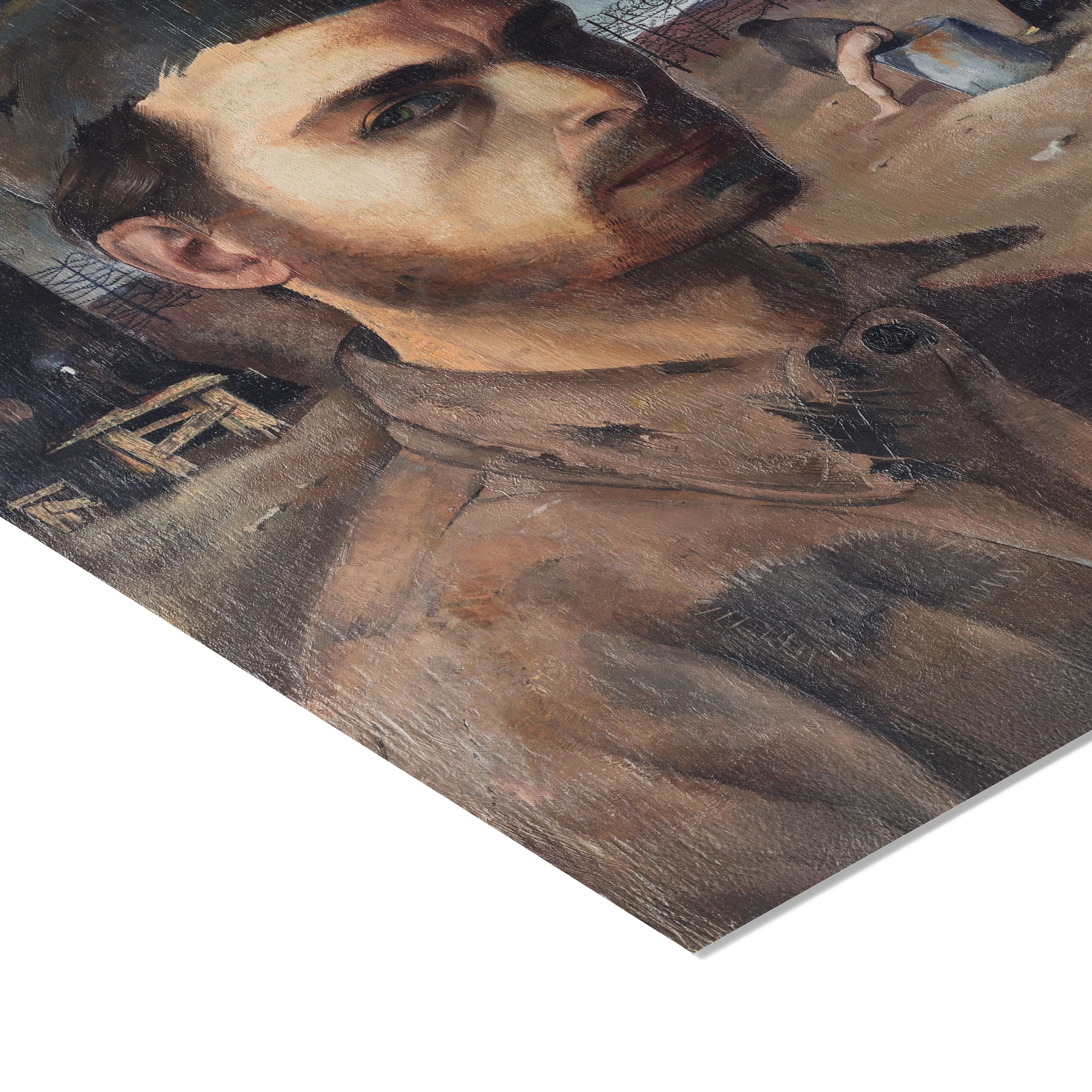
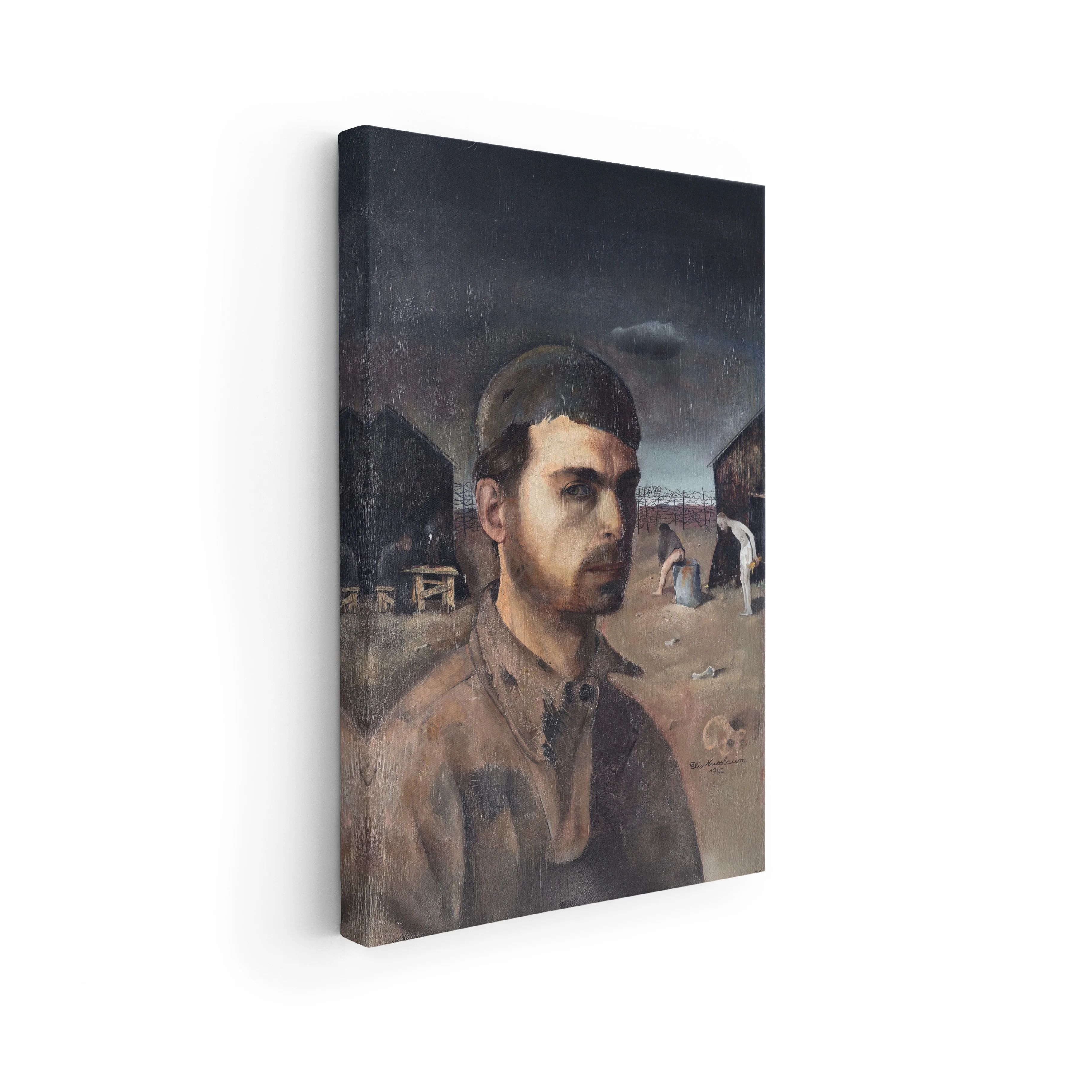
Self Portrait in The Camp | Felix Nussbaum | 1940

Product image 1
Product image 2
Product image 3
Product image 4
Product image 5
Product image 6
Product image 7
Product image 8
Product image 9

Self Portrait in The Camp | Felix Nussbaum | 1940

Self Portrait in The Camp | Felix Nussbaum | 1940

About the artwork:

Felix Nussbaum’s "Self-Portrait in the Camp" (1940) is a haunting depiction of the artist's experience as a persecuted Jewish man in Nazi-occupied Europe. In this stark and raw portrayal, Nussbaum presents himself against the bleak backdrop of a concentration camp, with his gaunt face and hollow eyes reflecting the fear, isolation, and despair he felt. The artist's tattered clothing and the barren, oppressive environment around him emphasize the dehumanization and suffering of those imprisoned. His direct gaze, however, confronts the viewer with a quiet defiance, as though bearing witness to the atrocities around him while refusing to be entirely consumed by them. The muted palette of greys and browns mirrors the desolate emotional landscape, and the sharp, angular lines of the composition create a sense of entrapment. Nussbaum’s self-portrait transcends the personal and becomes a powerful symbol of resilience in the face of overwhelming oppression.

Select Select Size
Select Frame Options
From $89.35

Original: $297.82

-70%
Self Portrait in The Camp | Felix Nussbaum | 1940

$297.82

$89.35

Product Information

Shipping & Returns

Description

About the artwork:
Felix Nussbaum’s "Self-Portrait in the Camp" (1940) is a haunting depiction of the artist's experience as a persecuted Jewish man in Nazi-occupied Europe. In this stark and raw portrayal, Nussbaum presents himself against the bleak backdrop of a concentration camp, with his gaunt face and hollow eyes reflecting the fear, isolation, and despair he felt. The artist's tattered clothing and the barren, oppressive environment around him emphasize the dehumanization and suffering of those imprisoned. His direct gaze, however, confronts the viewer with a quiet defiance, as though bearing witness to the atrocities around him while refusing to be entirely consumed by them. The muted palette of greys and browns mirrors the desolate emotional landscape, and the sharp, angular lines of the composition create a sense of entrapment. Nussbaum’s self-portrait transcends the personal and becomes a powerful symbol of resilience in the face of overwhelming oppression.