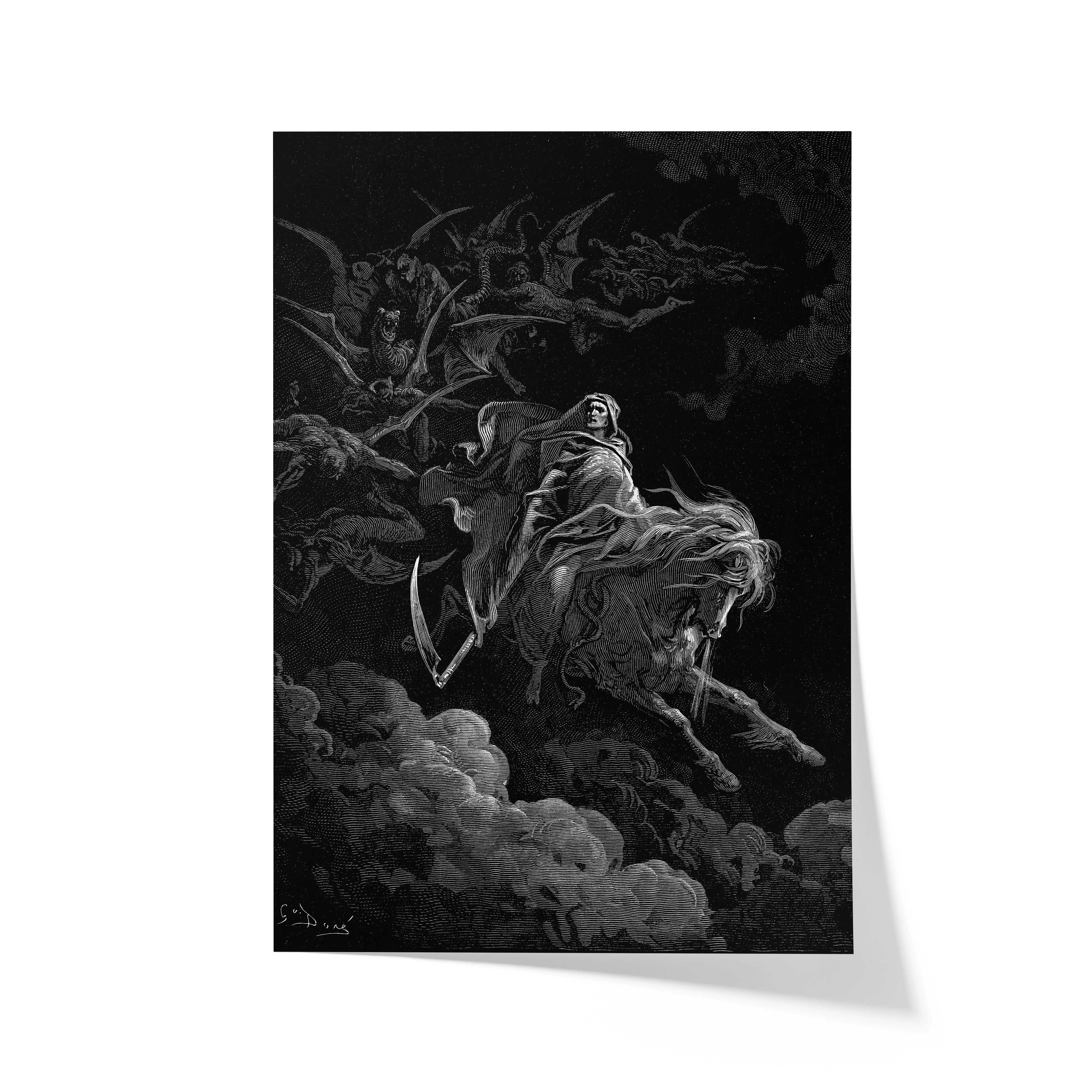
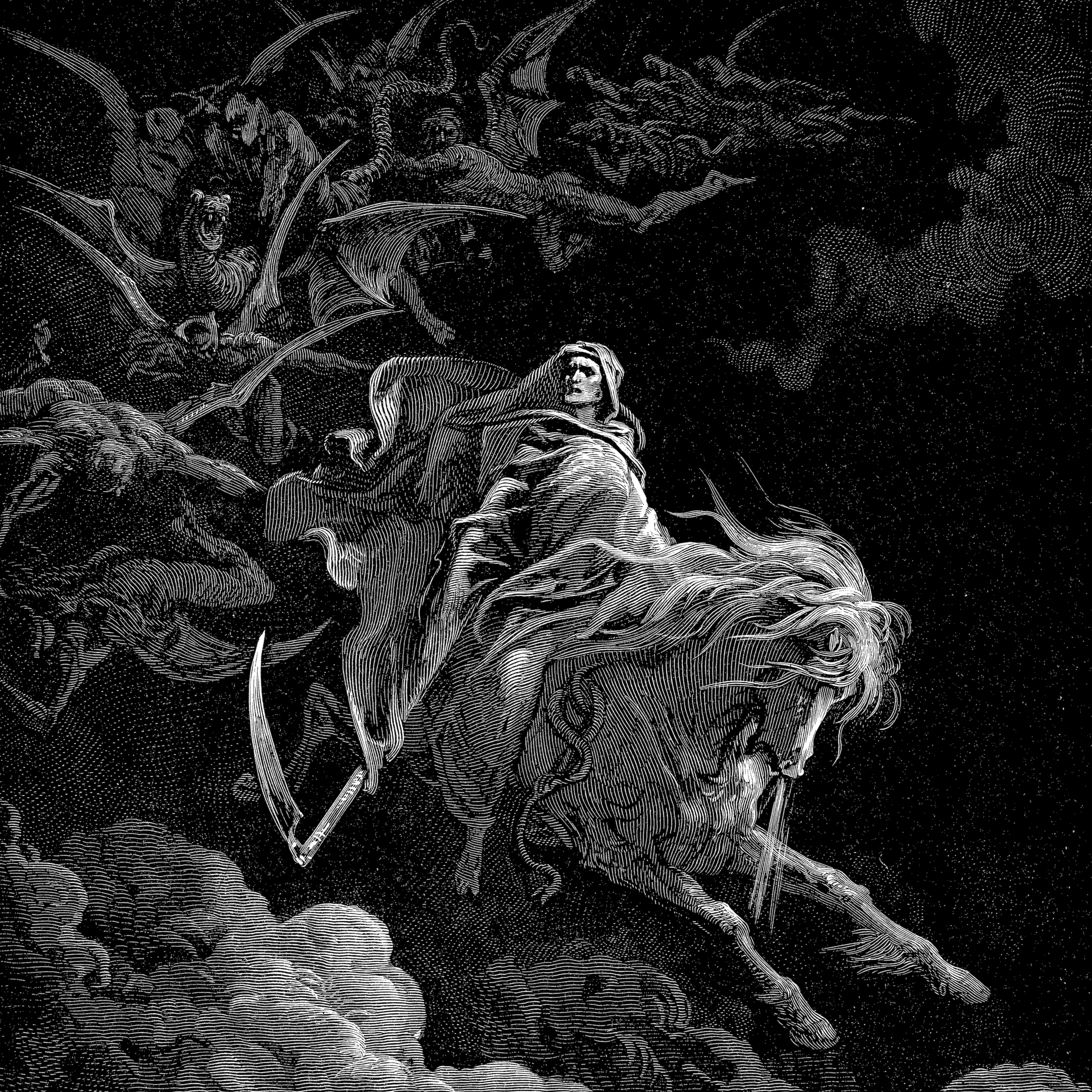
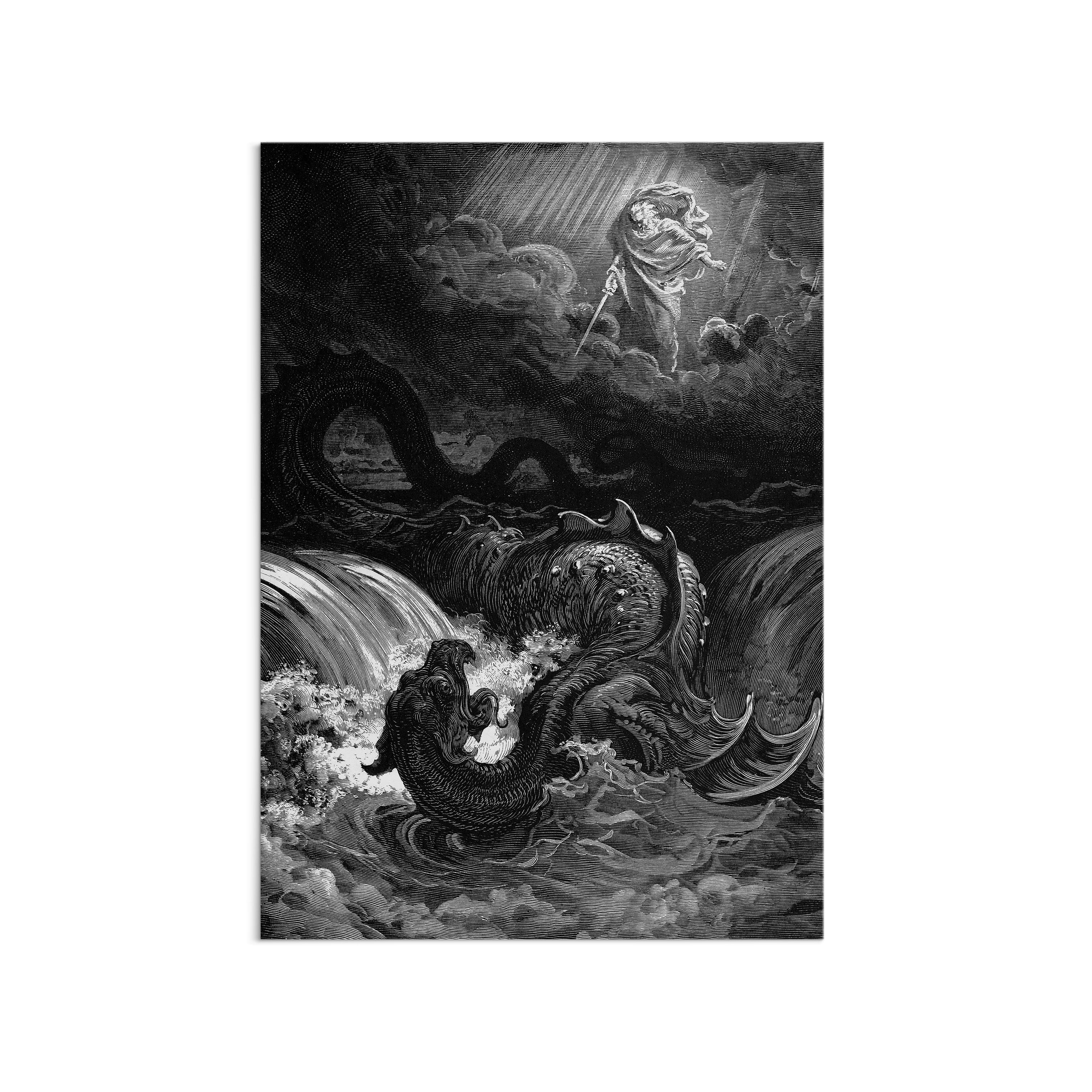
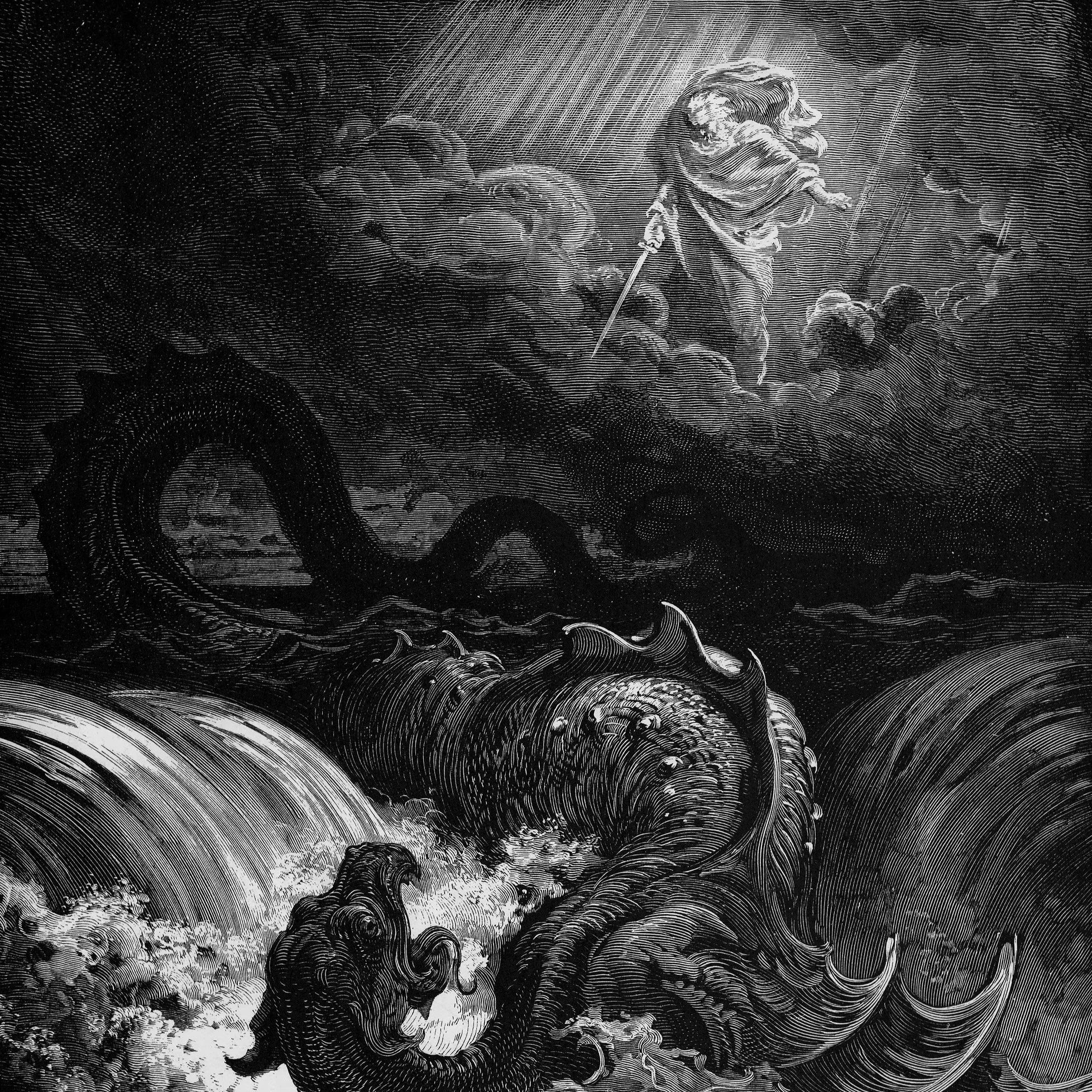
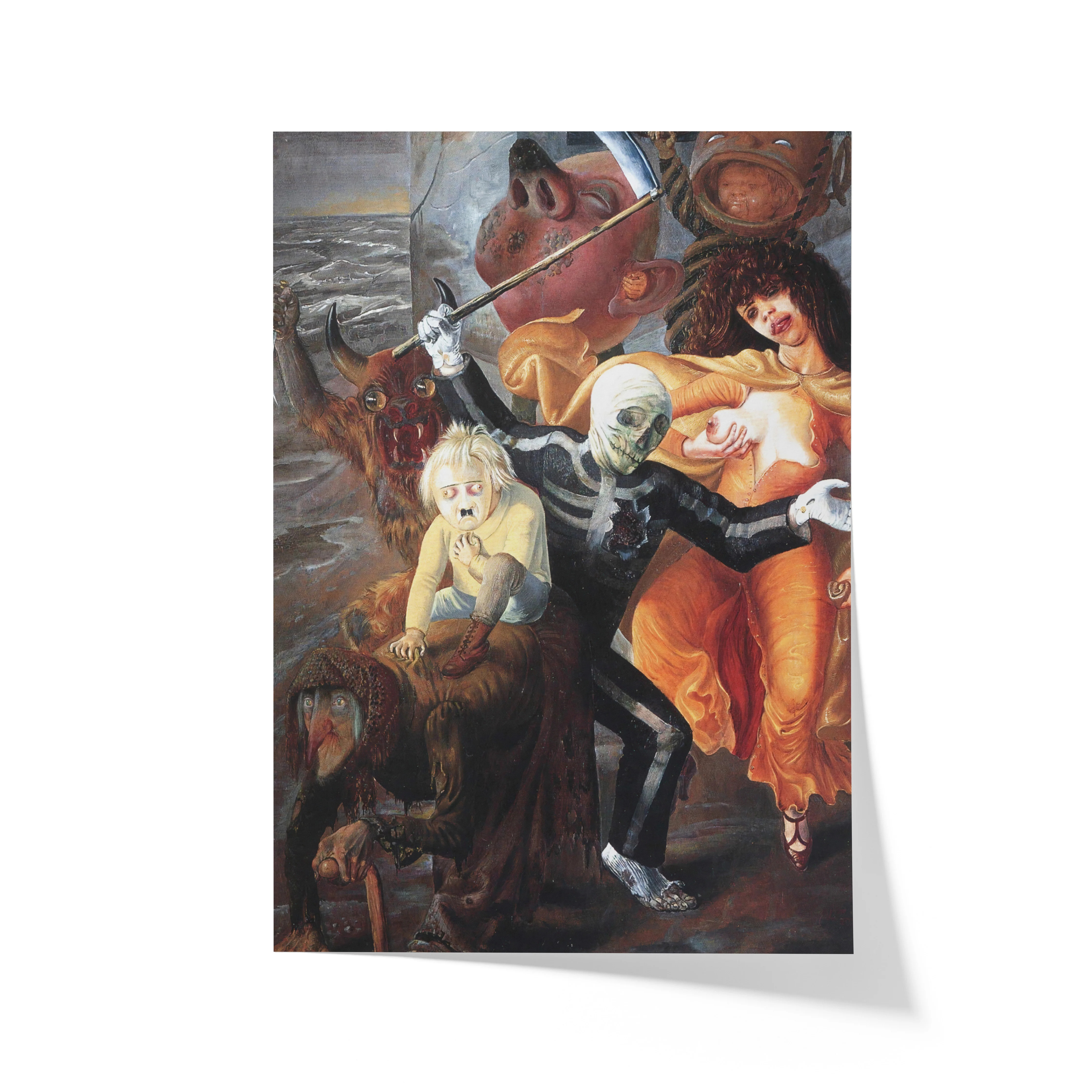
Seven Deadly Sins | Otto Dix | 1933
About the artwork:
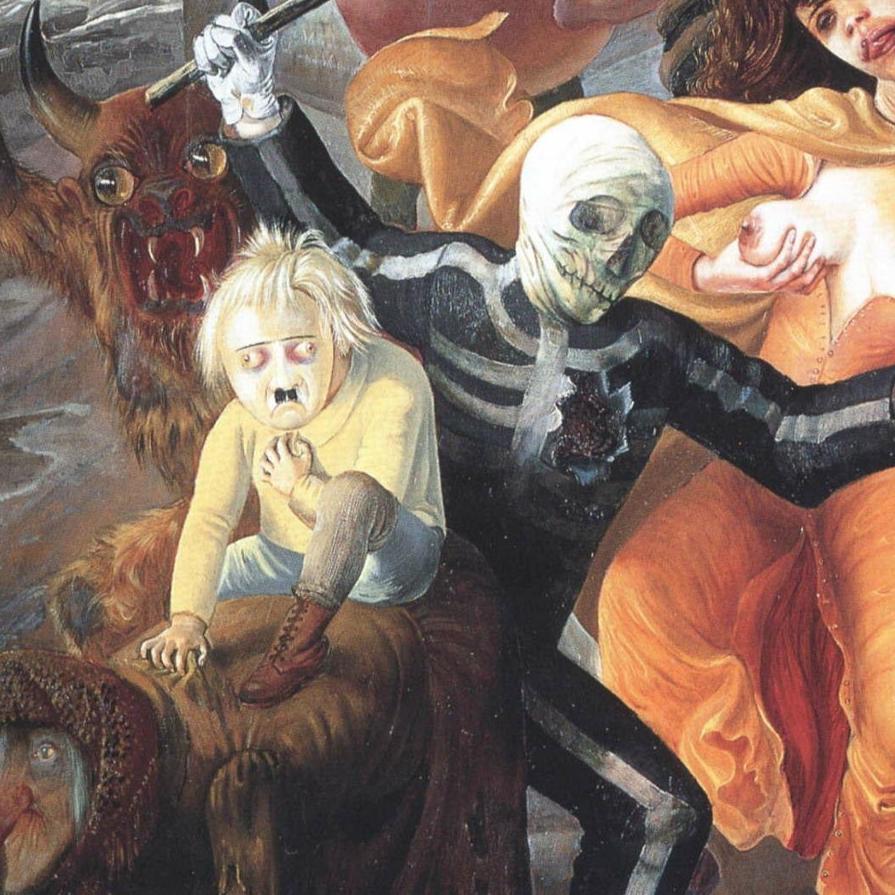
Otto Dix’s Seven Deadly Sins (1933) is a haunting allegory of human vice and political corruption, painted during the rise of the Nazi regime in Germany. The grotesque figures personifying the sins—Pride, Greed, Lust, Envy, Gluttony, Wrath, and Sloth—are rendered with Dix's characteristic unflinching realism and macabre distortion. Central to the composition is a blind, decrepit figure holding a scythe, embodying ignorance and death, a potent critique of society’s moral decay under fascism. The chaotic, cramped arrangement of the figures mirrors the societal turmoil and collective guilt of the time. Dix's use of muted, earthy tones combined with grotesque exaggeration creates a sense of unease, forcing the viewer to confront the darker aspects of humanity. By linking the personal flaws of the individual to the broader social and political collapse, Dix delivers a scathing indictment of both the moral failures of individuals and the complicity of society in its own downfall.
Product Information
Product Information
Shipping & Returns
Shipping & Returns


Seven Deadly Sins | Otto Dix | 1933
Seven Deadly Sins | Otto Dix | 1933
About the artwork:
Otto Dix’s Seven Deadly Sins (1933) is a haunting allegory of human vice and political corruption, painted during the rise of the Nazi regime in Germany. The grotesque figures personifying the sins—Pride, Greed, Lust, Envy, Gluttony, Wrath, and Sloth—are rendered with Dix's characteristic unflinching realism and macabre distortion. Central to the composition is a blind, decrepit figure holding a scythe, embodying ignorance and death, a potent critique of society’s moral decay under fascism. The chaotic, cramped arrangement of the figures mirrors the societal turmoil and collective guilt of the time. Dix's use of muted, earthy tones combined with grotesque exaggeration creates a sense of unease, forcing the viewer to confront the darker aspects of humanity. By linking the personal flaws of the individual to the broader social and political collapse, Dix delivers a scathing indictment of both the moral failures of individuals and the complicity of society in its own downfall.
Original: $297.82
-70%$297.82
$89.35Product Information
Product Information
Shipping & Returns
Shipping & Returns
Description
About the artwork:
Otto Dix’s Seven Deadly Sins (1933) is a haunting allegory of human vice and political corruption, painted during the rise of the Nazi regime in Germany. The grotesque figures personifying the sins—Pride, Greed, Lust, Envy, Gluttony, Wrath, and Sloth—are rendered with Dix's characteristic unflinching realism and macabre distortion. Central to the composition is a blind, decrepit figure holding a scythe, embodying ignorance and death, a potent critique of society’s moral decay under fascism. The chaotic, cramped arrangement of the figures mirrors the societal turmoil and collective guilt of the time. Dix's use of muted, earthy tones combined with grotesque exaggeration creates a sense of unease, forcing the viewer to confront the darker aspects of humanity. By linking the personal flaws of the individual to the broader social and political collapse, Dix delivers a scathing indictment of both the moral failures of individuals and the complicity of society in its own downfall.