The Acrobats | Gustave Doré | 1874
About the artwork:
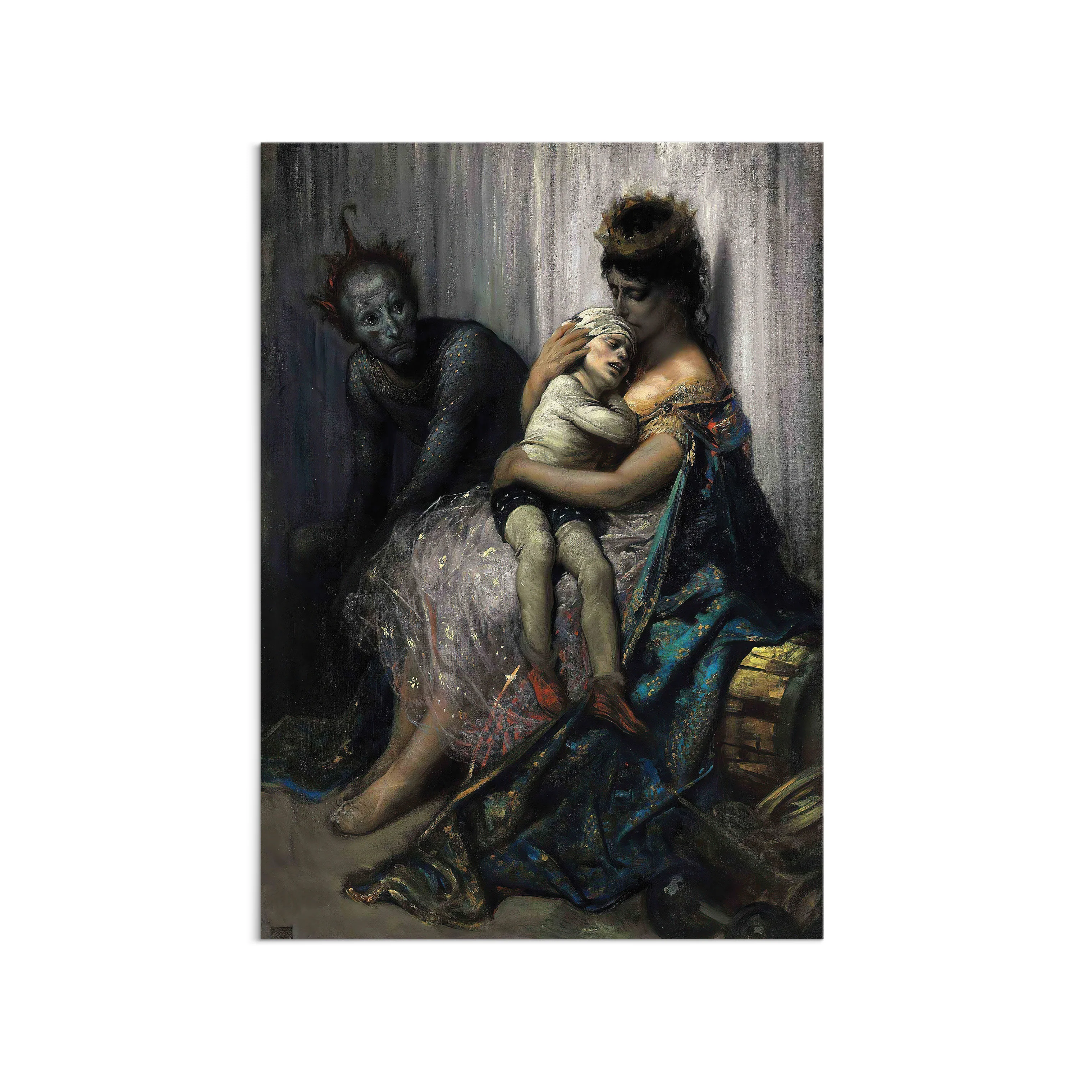
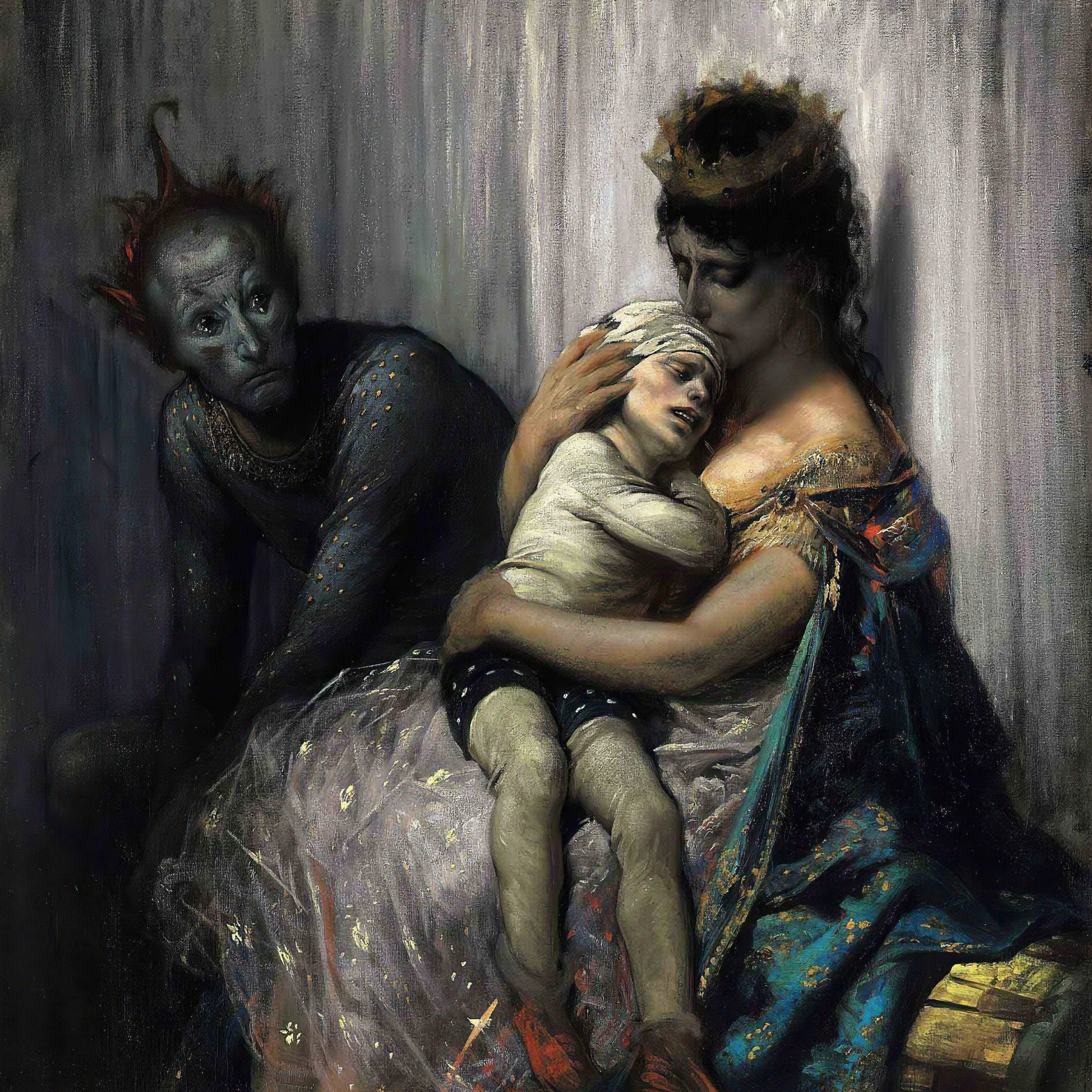
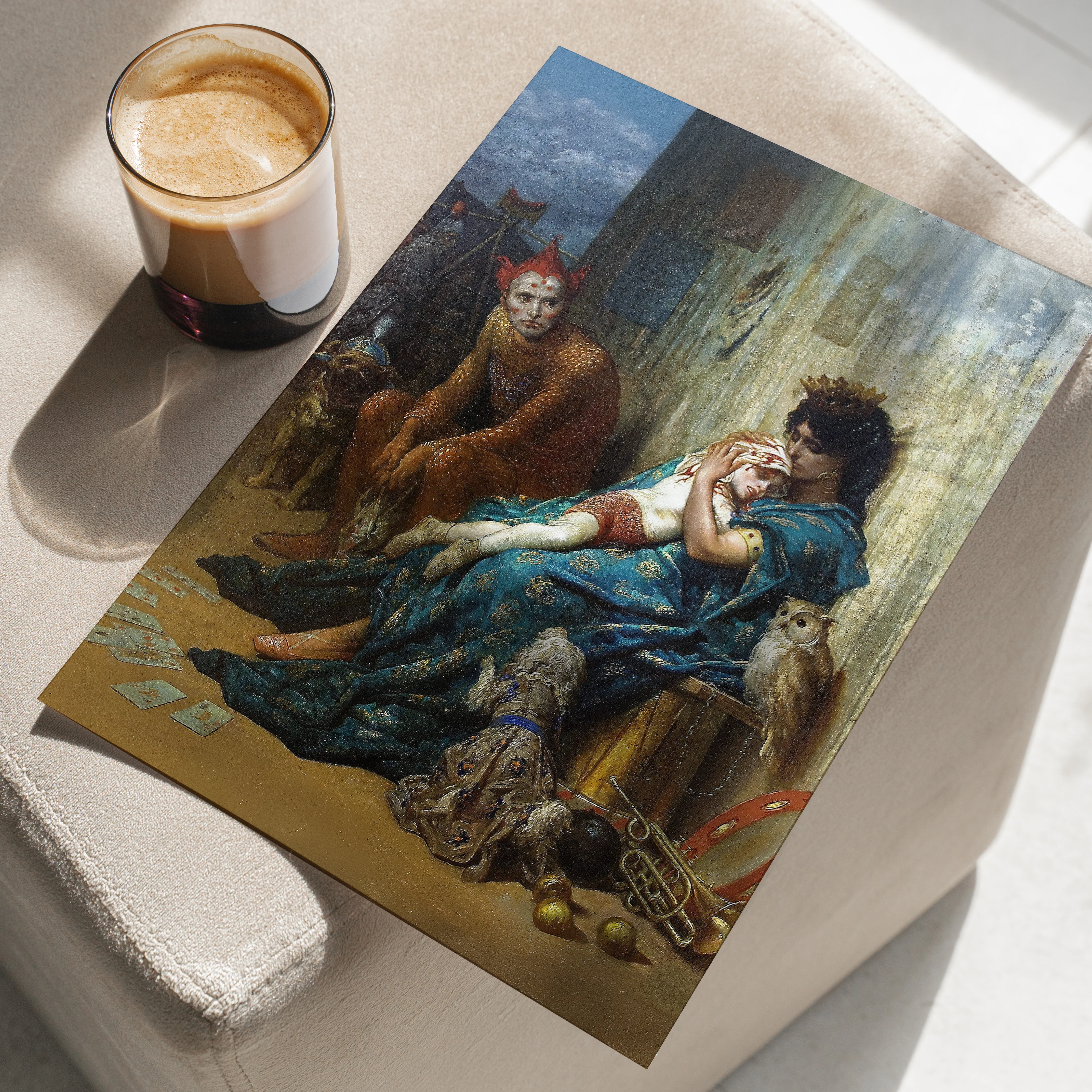
The Acrobats (1874), also known as Les Saltimbanques or The Wounded Child, is one of Gustave Doré’s most emotionally devastating paintings. It depicts a tragic moment just after a street performance: a young boy, likely injured or killed during a tightrope act, lies limp in his mother’s arms. She is dressed in a blue robe and sits in a pose reminiscent of the Virgin Mary in a Pietà, emphasizing themes of grief and sacrifice. The father, still in his clown costume, sits nearby in anguish, possibly regretting the role he played in pushing the child to perform. The audience is gone, but the family remains shattered. At their feet, animals—a white bichon, a bulldog, and an owl—add symbolic layers of innocence, loyalty, and ignored wisdom. Through this dark, theatrical composition, Doré critiques the exploitation of the vulnerable and confronts viewers with the silent tragedies hidden behind public entertainment.
Product Information
Product Information
Shipping & Returns
Shipping & Returns






The Acrobats | Gustave Doré | 1874
The Acrobats | Gustave Doré | 1874
About the artwork:
The Acrobats (1874), also known as Les Saltimbanques or The Wounded Child, is one of Gustave Doré’s most emotionally devastating paintings. It depicts a tragic moment just after a street performance: a young boy, likely injured or killed during a tightrope act, lies limp in his mother’s arms. She is dressed in a blue robe and sits in a pose reminiscent of the Virgin Mary in a Pietà, emphasizing themes of grief and sacrifice. The father, still in his clown costume, sits nearby in anguish, possibly regretting the role he played in pushing the child to perform. The audience is gone, but the family remains shattered. At their feet, animals—a white bichon, a bulldog, and an owl—add symbolic layers of innocence, loyalty, and ignored wisdom. Through this dark, theatrical composition, Doré critiques the exploitation of the vulnerable and confronts viewers with the silent tragedies hidden behind public entertainment.
Original: $297.82
-70%$297.82
$89.35Product Information
Product Information
Shipping & Returns
Shipping & Returns
Description
About the artwork:
The Acrobats (1874), also known as Les Saltimbanques or The Wounded Child, is one of Gustave Doré’s most emotionally devastating paintings. It depicts a tragic moment just after a street performance: a young boy, likely injured or killed during a tightrope act, lies limp in his mother’s arms. She is dressed in a blue robe and sits in a pose reminiscent of the Virgin Mary in a Pietà, emphasizing themes of grief and sacrifice. The father, still in his clown costume, sits nearby in anguish, possibly regretting the role he played in pushing the child to perform. The audience is gone, but the family remains shattered. At their feet, animals—a white bichon, a bulldog, and an owl—add symbolic layers of innocence, loyalty, and ignored wisdom. Through this dark, theatrical composition, Doré critiques the exploitation of the vulnerable and confronts viewers with the silent tragedies hidden behind public entertainment.