The Altarpiece No. 2 | Hilma af Klint | 1915
About the artwork:
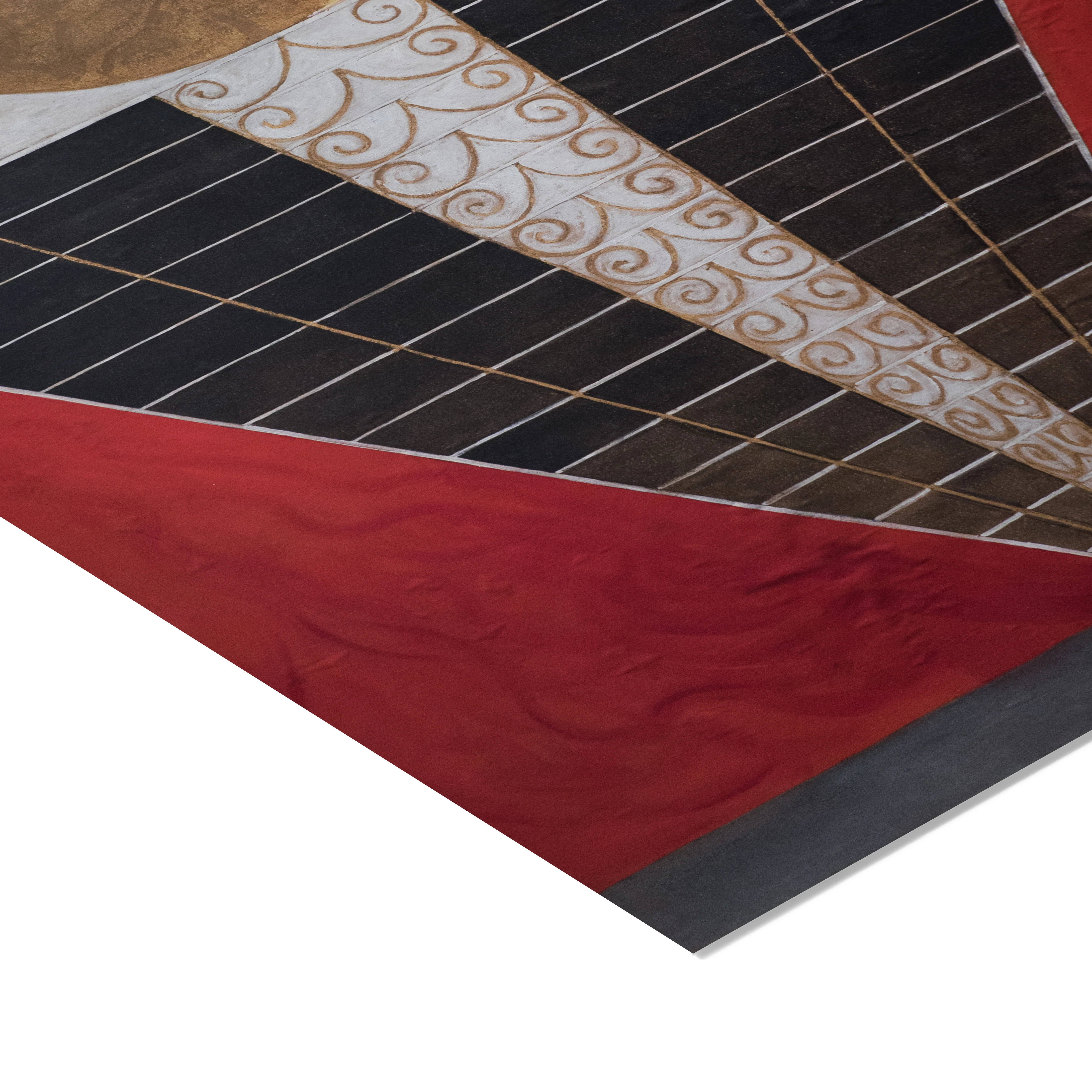
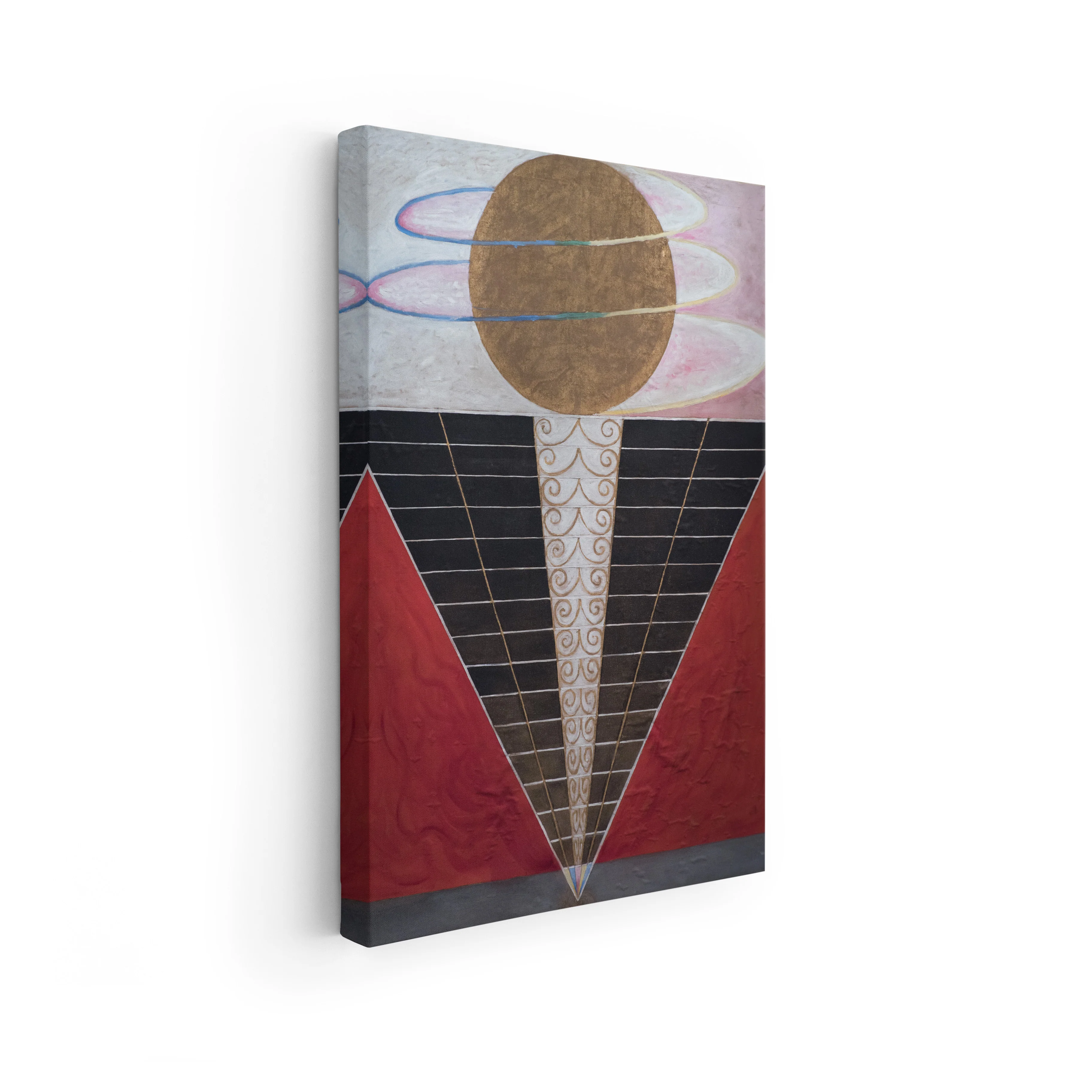
The Altarpiece No. 2 (1915) by Hilma af Klint is a mesmerizing example of her visionary approach to spiritual abstraction, blending geometric symbolism with radiant color to evoke a sense of transcendence. The composition is divided into structured planes of gold, pink, and blue, forming a triangular hierarchy that suggests a divine order, possibly referencing spiritual enlightenment or a cosmic balance. The presence of a central circle, often seen in her work, reinforces notions of unity, infinity, and the connection between the earthly and the divine. This painting, part of her larger Paintings for the Temple series, exemplifies her belief in art as a conduit for higher consciousness, created not merely for aesthetic purposes but as a medium for spiritual revelation. Af Klint’s work, long overlooked in the male-dominated art world, now stands as a crucial precursor to abstract art, predating the more widely recognized efforts of Kandinsky and Mondrian in non-representational painting.
Product Information
Product Information
Shipping & Returns
Shipping & Returns




The Altarpiece No. 2 | Hilma af Klint | 1915
The Altarpiece No. 2 | Hilma af Klint | 1915
About the artwork:
The Altarpiece No. 2 (1915) by Hilma af Klint is a mesmerizing example of her visionary approach to spiritual abstraction, blending geometric symbolism with radiant color to evoke a sense of transcendence. The composition is divided into structured planes of gold, pink, and blue, forming a triangular hierarchy that suggests a divine order, possibly referencing spiritual enlightenment or a cosmic balance. The presence of a central circle, often seen in her work, reinforces notions of unity, infinity, and the connection between the earthly and the divine. This painting, part of her larger Paintings for the Temple series, exemplifies her belief in art as a conduit for higher consciousness, created not merely for aesthetic purposes but as a medium for spiritual revelation. Af Klint’s work, long overlooked in the male-dominated art world, now stands as a crucial precursor to abstract art, predating the more widely recognized efforts of Kandinsky and Mondrian in non-representational painting.
Original: $297.82
-70%$297.82
$89.35Product Information
Product Information
Shipping & Returns
Shipping & Returns
Description
About the artwork:
The Altarpiece No. 2 (1915) by Hilma af Klint is a mesmerizing example of her visionary approach to spiritual abstraction, blending geometric symbolism with radiant color to evoke a sense of transcendence. The composition is divided into structured planes of gold, pink, and blue, forming a triangular hierarchy that suggests a divine order, possibly referencing spiritual enlightenment or a cosmic balance. The presence of a central circle, often seen in her work, reinforces notions of unity, infinity, and the connection between the earthly and the divine. This painting, part of her larger Paintings for the Temple series, exemplifies her belief in art as a conduit for higher consciousness, created not merely for aesthetic purposes but as a medium for spiritual revelation. Af Klint’s work, long overlooked in the male-dominated art world, now stands as a crucial precursor to abstract art, predating the more widely recognized efforts of Kandinsky and Mondrian in non-representational painting.