The Blind Girl | John Everett Millais | 1856
About the artwork:
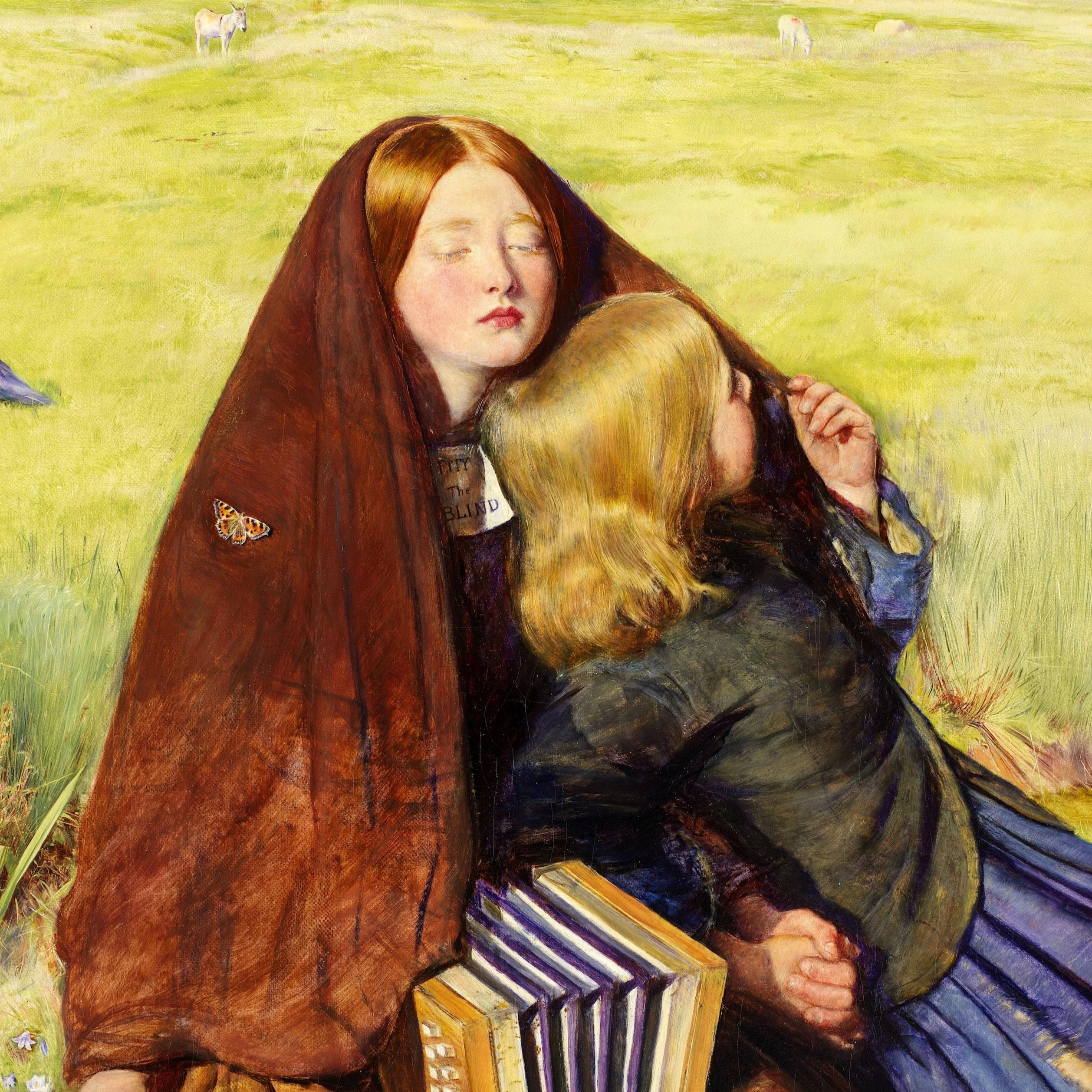
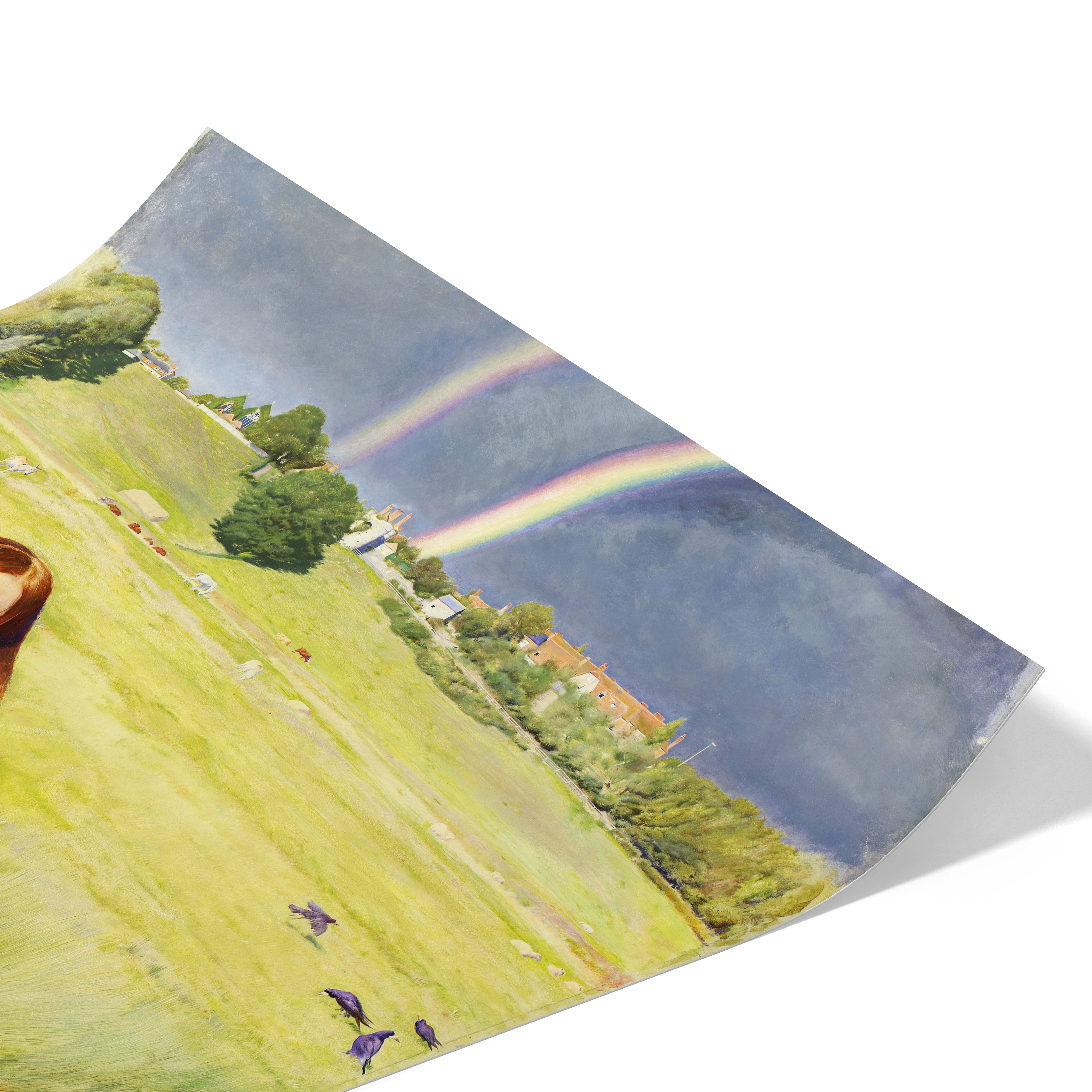
John Everett Millais's 1856 painting, "The Blind Girl," portrays two young female beggars, likely sisters, resting by a roadside after a rainstorm near Winchelsea, Sussex. The elder, blind, holds a concertina on her lap—a symbol of her means to earn a living—and wears a sign reading "Pity the Blind." She tilts her face upward, feeling the sun's warmth and touching a blade of grass, engaging her remaining senses. A tortoiseshell butterfly rests on her shawl, emphasizing her stillness. The younger sister gazes in awe at a vivid double rainbow arching over the landscape, highlighting the contrast between the sisters' experiences. This juxtaposition serves as an allegory of the senses, contrasting the blind girl's sensory engagement with her environment against her sister's visual wonder. The painting invites reflection on perception, empathy, and the varied ways individuals experience the world.
Product Information
Product Information
Shipping & Returns
Shipping & Returns





The Blind Girl | John Everett Millais | 1856
The Blind Girl | John Everett Millais | 1856
About the artwork:
John Everett Millais's 1856 painting, "The Blind Girl," portrays two young female beggars, likely sisters, resting by a roadside after a rainstorm near Winchelsea, Sussex. The elder, blind, holds a concertina on her lap—a symbol of her means to earn a living—and wears a sign reading "Pity the Blind." She tilts her face upward, feeling the sun's warmth and touching a blade of grass, engaging her remaining senses. A tortoiseshell butterfly rests on her shawl, emphasizing her stillness. The younger sister gazes in awe at a vivid double rainbow arching over the landscape, highlighting the contrast between the sisters' experiences. This juxtaposition serves as an allegory of the senses, contrasting the blind girl's sensory engagement with her environment against her sister's visual wonder. The painting invites reflection on perception, empathy, and the varied ways individuals experience the world.
Original: $297.82
-70%$297.82
$89.35Product Information
Product Information
Shipping & Returns
Shipping & Returns
Description
About the artwork:
John Everett Millais's 1856 painting, "The Blind Girl," portrays two young female beggars, likely sisters, resting by a roadside after a rainstorm near Winchelsea, Sussex. The elder, blind, holds a concertina on her lap—a symbol of her means to earn a living—and wears a sign reading "Pity the Blind." She tilts her face upward, feeling the sun's warmth and touching a blade of grass, engaging her remaining senses. A tortoiseshell butterfly rests on her shawl, emphasizing her stillness. The younger sister gazes in awe at a vivid double rainbow arching over the landscape, highlighting the contrast between the sisters' experiences. This juxtaposition serves as an allegory of the senses, contrasting the blind girl's sensory engagement with her environment against her sister's visual wonder. The painting invites reflection on perception, empathy, and the varied ways individuals experience the world.