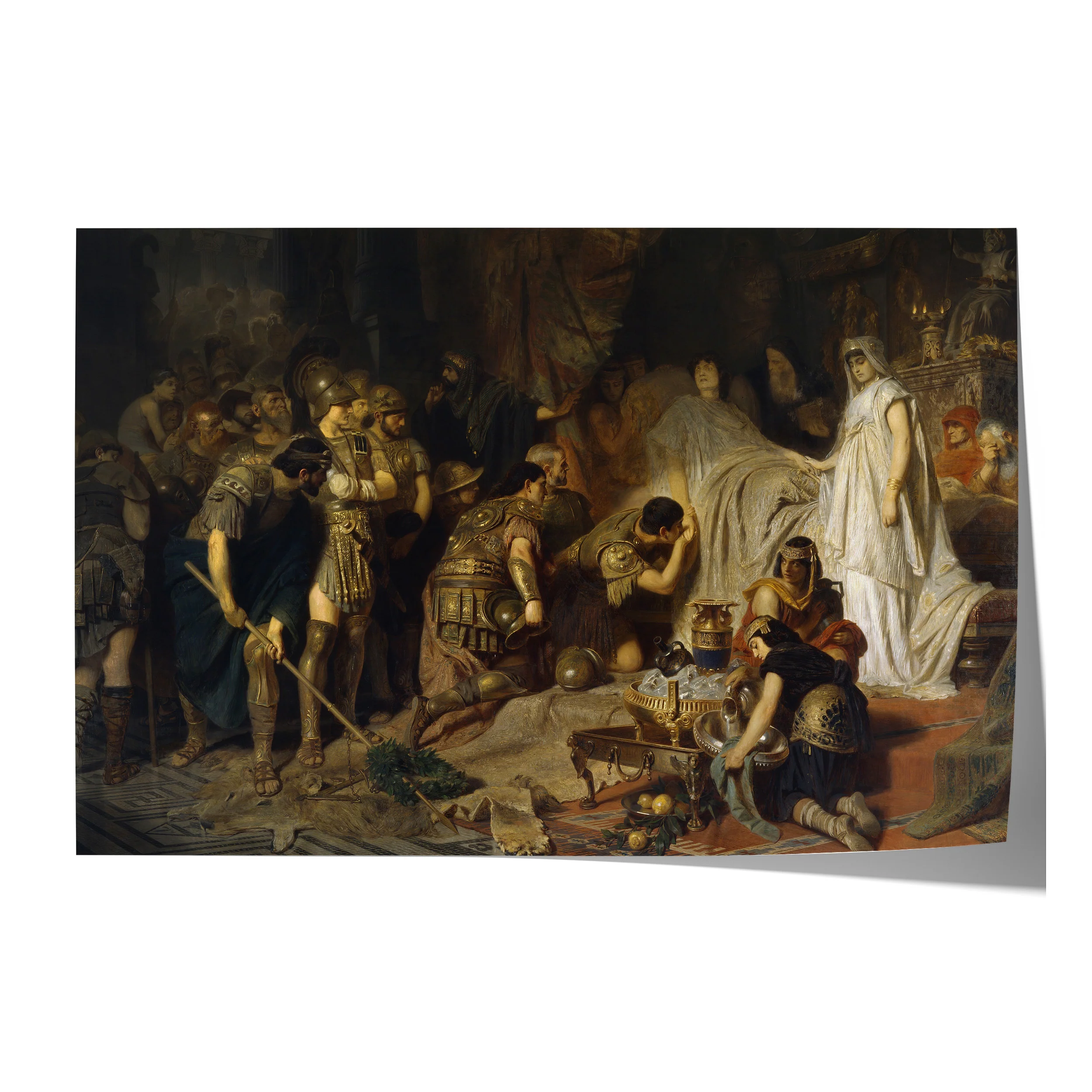
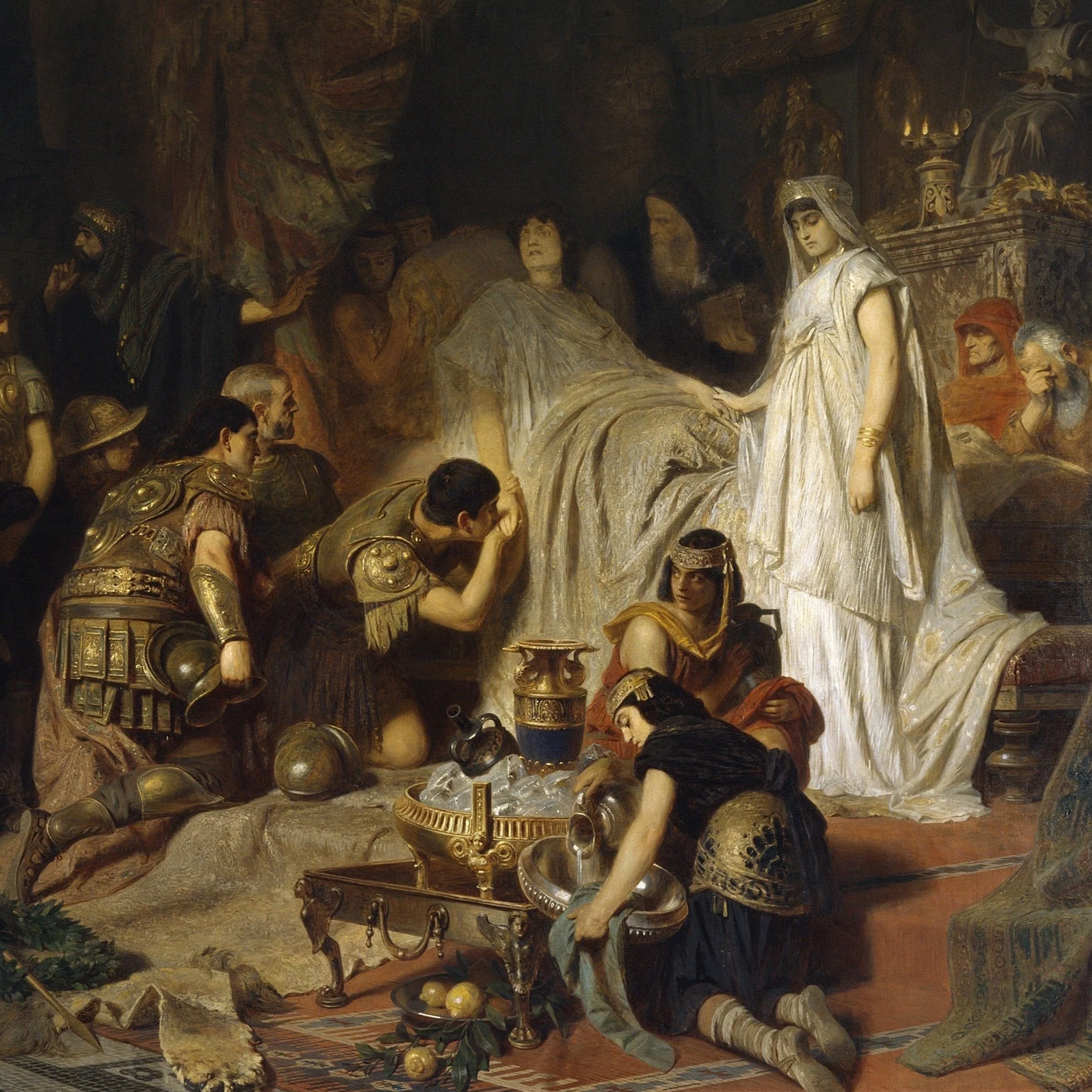
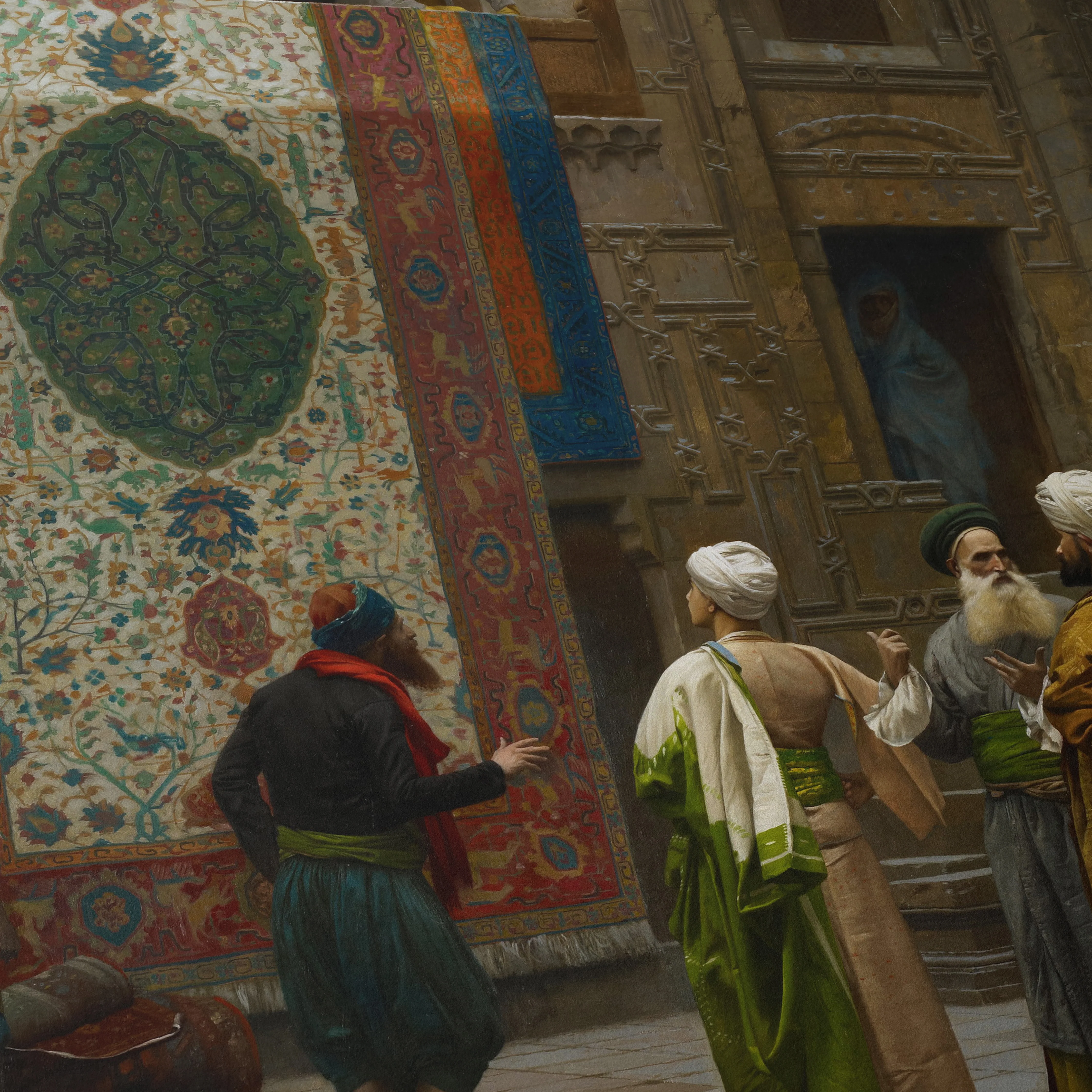
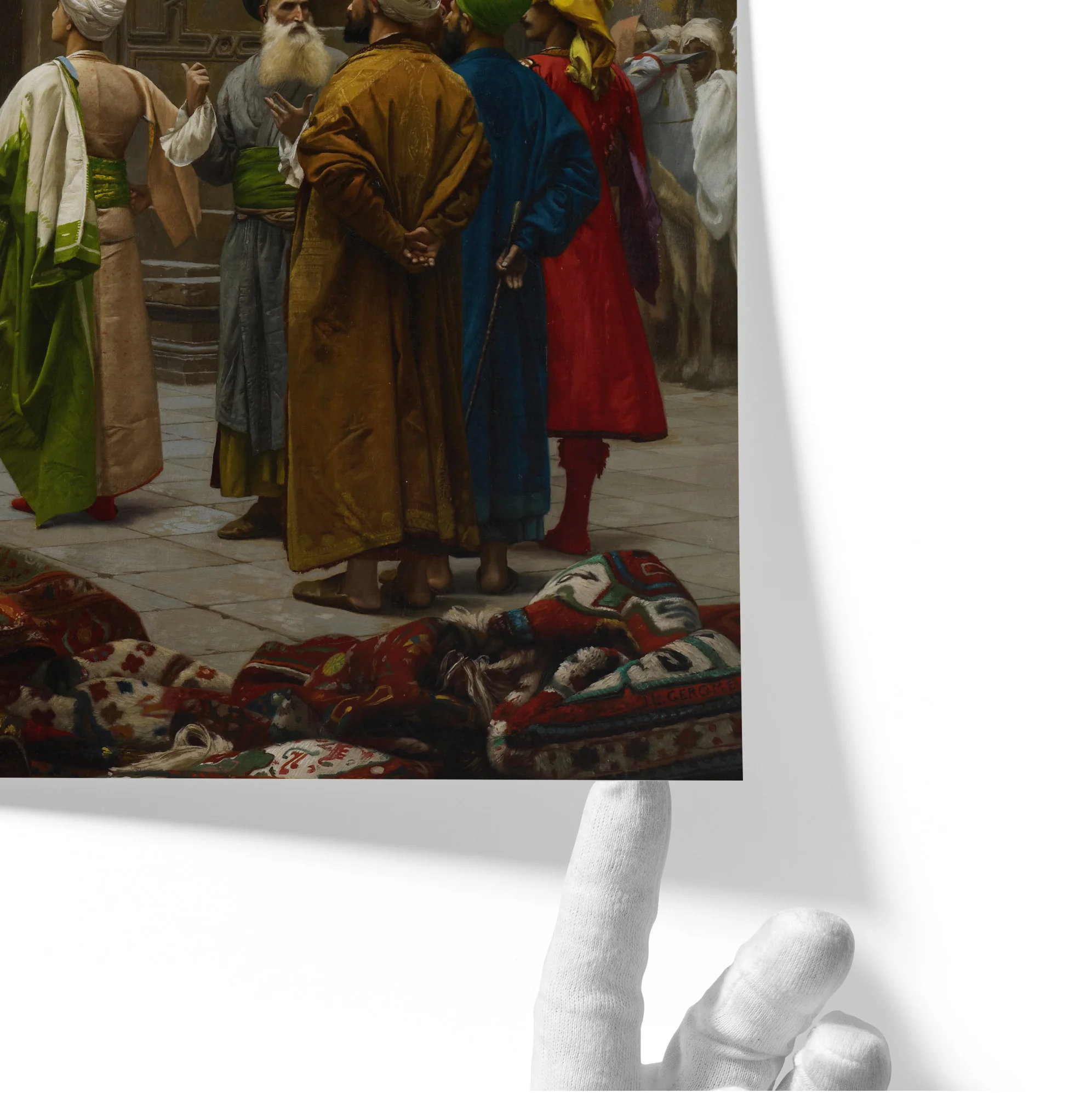
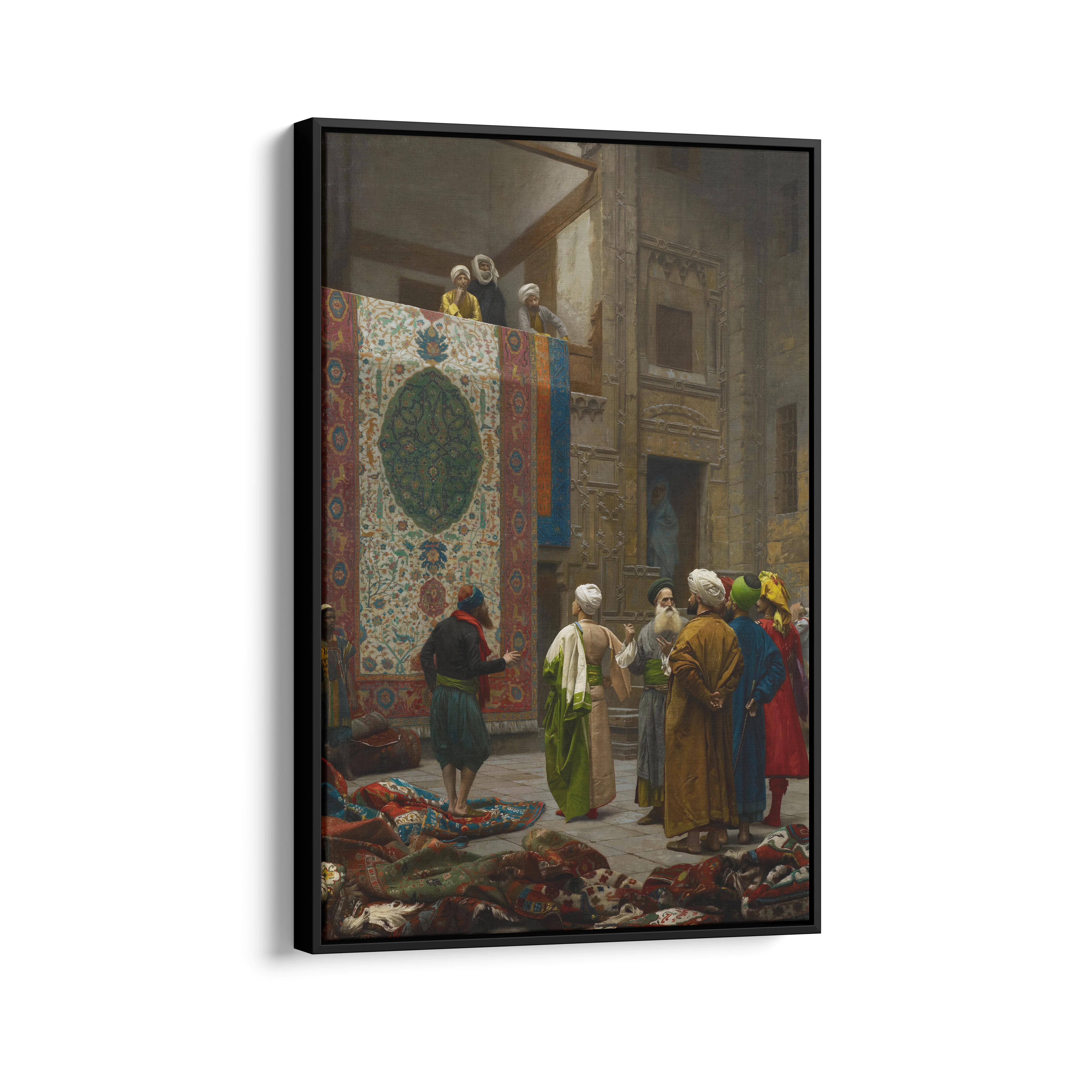
The Carpet Merchant (c. 1887) by Jean-Léon Gérôme exemplifies the artist’s fascination with the meticulous realism and theatricality that defined Orientalist painting in the 19th century. The scene depicts a group of men gathered in a richly ornamented courtyard, admiring a vibrant carpet displayed before them. Every surface—the marble walls, the hanging textiles, the intricate patterns—is rendered with photographic precision, reflecting Gérôme’s obsession with ethnographic accuracy and visual splendor. Yet beneath its dazzling detail lies a deeper layer: the painting is less about commerce than about spectacle, turning a mundane exchange into a performance of culture and taste for the Western viewer. It reveals how Gérôme, while portraying the East as mysterious and decorative, also shaped Europe’s perception of it—one that blurred the lines between admiration, fantasy, and control.
The Carpet Merchant | Jean-Léon Gerôme | c. 1887
About the artwork:
Product Information
Product Information
Shipping & Returns
Shipping & Returns
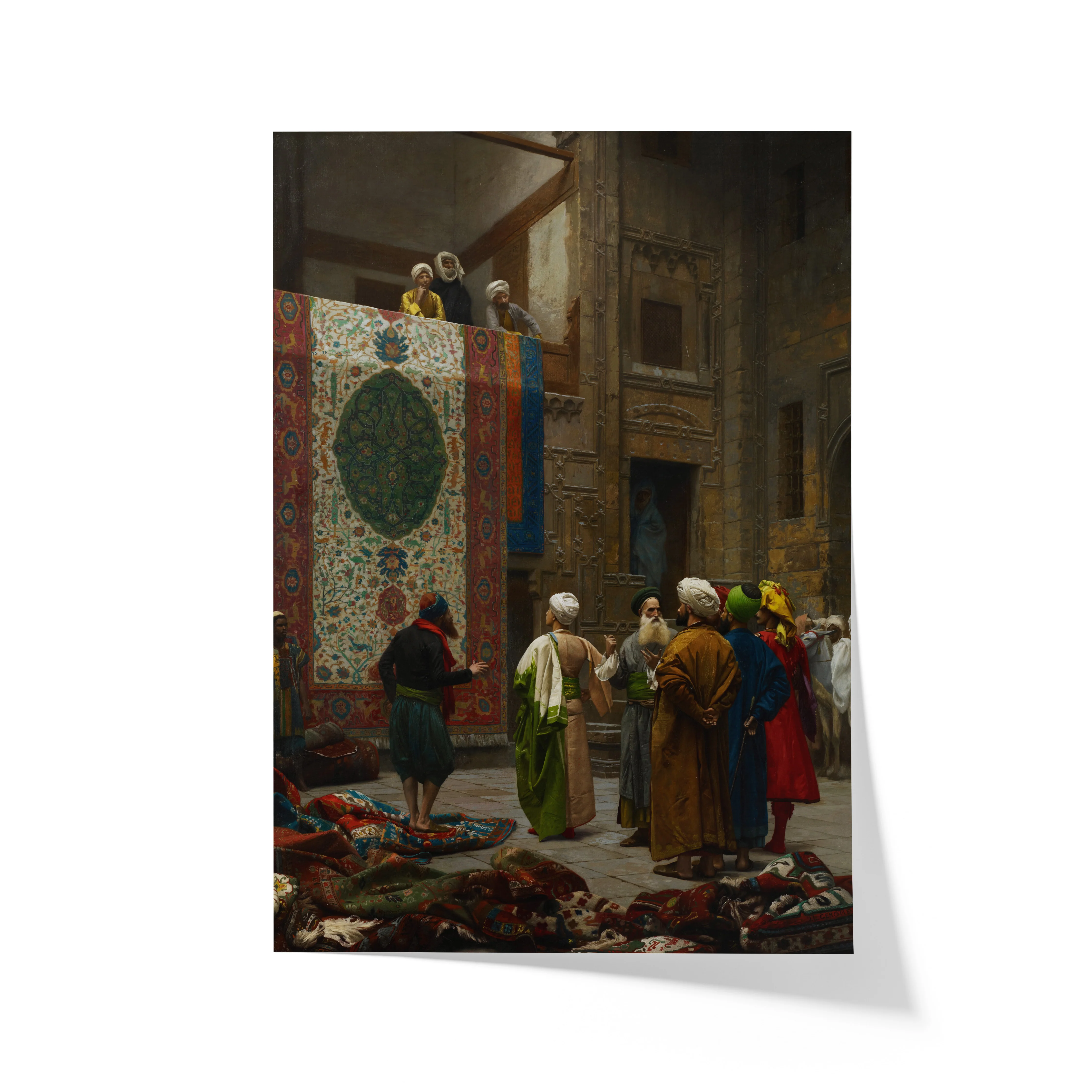



The Carpet Merchant | Jean-Léon Gerôme | c. 1887
The Carpet Merchant | Jean-Léon Gerôme | c. 1887
About the artwork:
Select Select Size
Select Frame Options
From $89.35
Original: $297.82
-70%The Carpet Merchant | Jean-Léon Gerôme | c. 1887—
$297.82
$89.35Product Information
Product Information
Shipping & Returns
Shipping & Returns
Description
About the artwork: