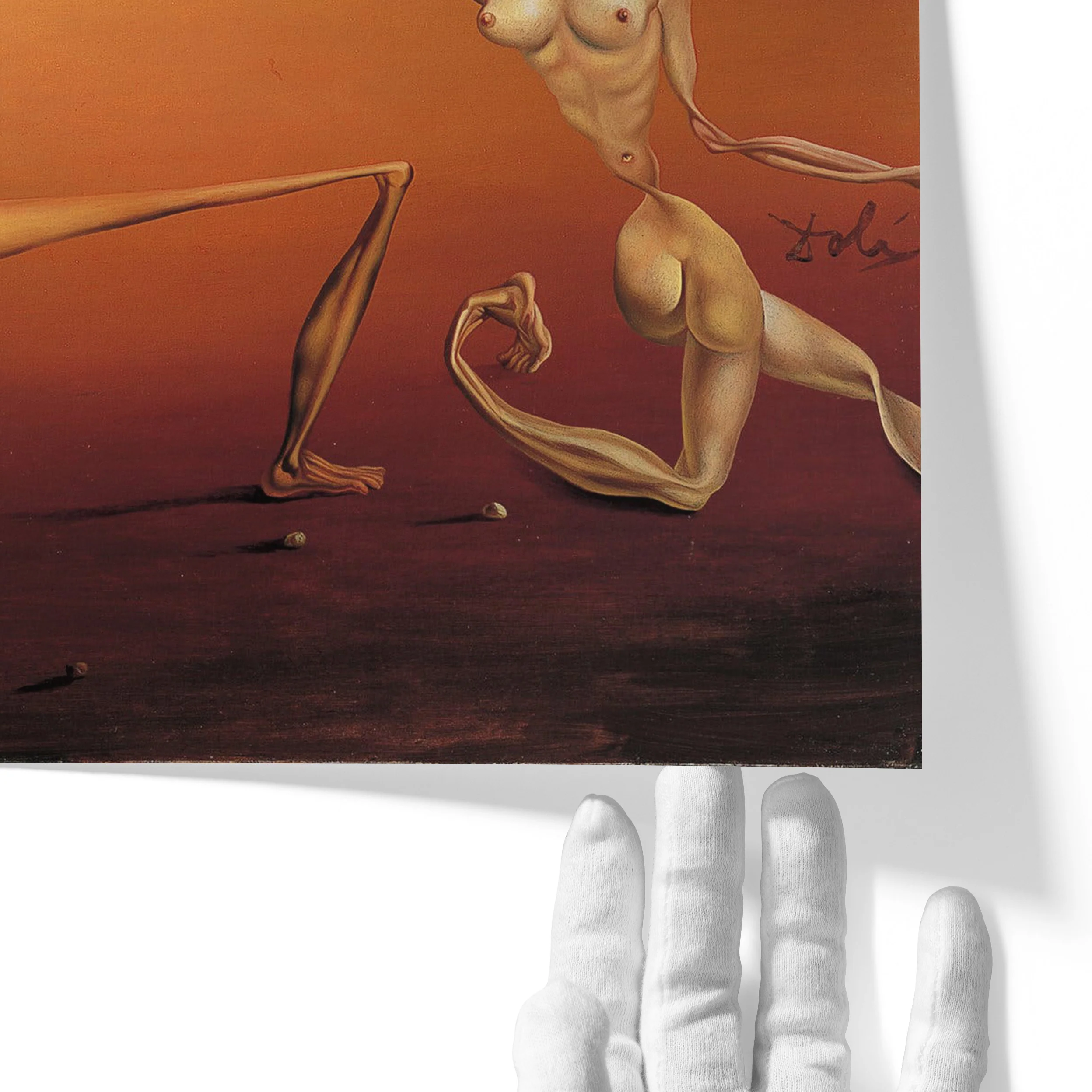
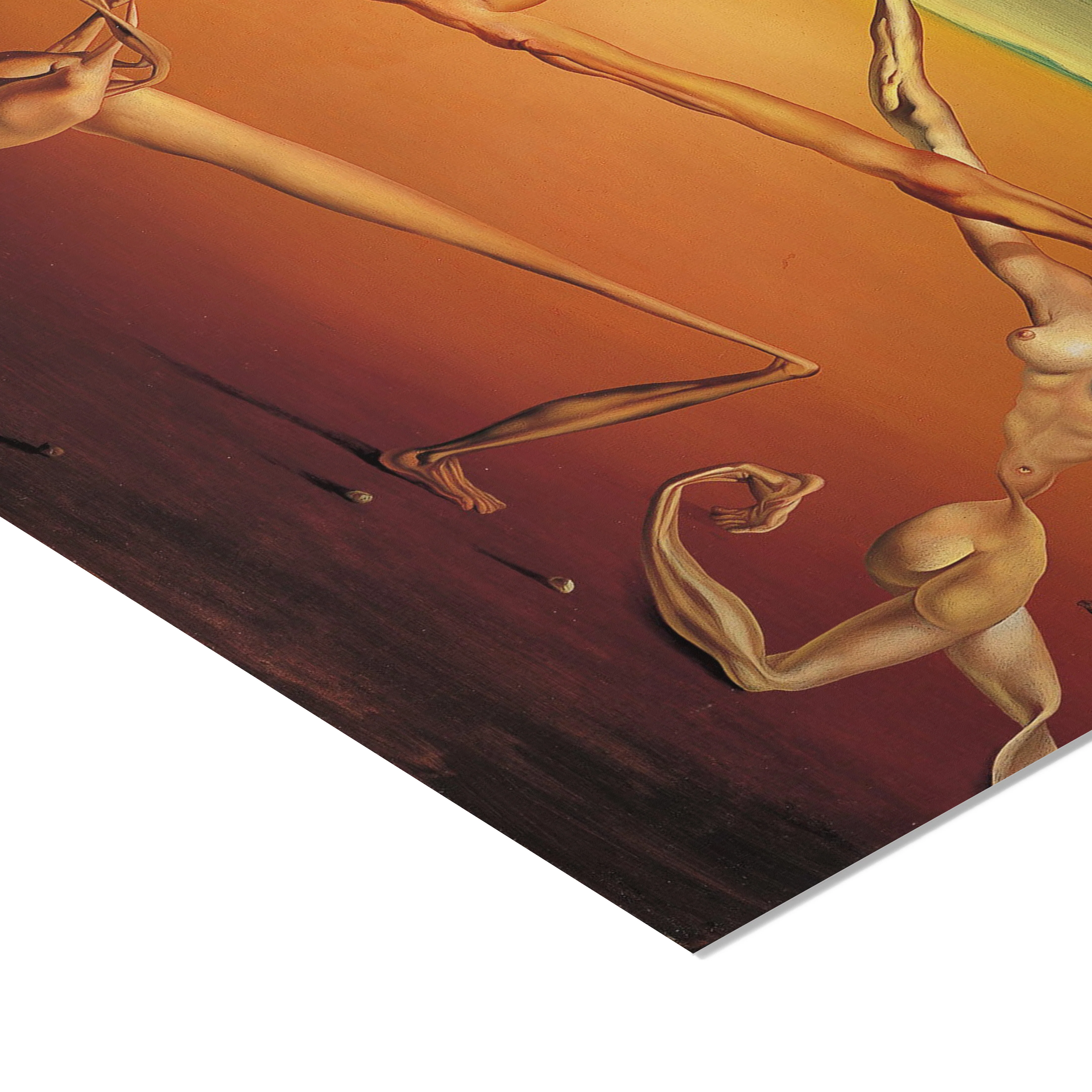
Salvador Dalí's The Dance (1957) is a vibrant exploration of movement, surrealism, and psychological complexity. The painting features figures that appear fluid and almost spectral, merging into the landscape as though they are both part of the environment and transcending it. Dalí's use of bold, swirling colors and elongated forms evokes a sense of rhythm and energy, imbuing the scene with an otherworldly dynamism. The dancers seem to defy gravity, their distorted bodies embodying the surrealist principle of breaking free from physical and conventional boundaries. This work reflects Dalí's fascination with the subconscious, as the dreamlike quality of the painting invites viewers to ponder the interplay between physical expression and inner emotion. By blending surreal distortion with the vitality of dance, The Dance serves as a poetic meditation on human creativity and its ability to transform reality.